Xulane Patch
Product Images NDC 0378-3340

View Photos of Packaging, Regulatory Labels, and Product Appearance

Product Visual Gallery

This gallery contains 23 technical images submitted to the FDA as part of the official labeling for Xulane (NDC 0378-3340). Unlike standard consumer photos, these assets often include clinical data figures, molecular chemical structures, and official manufacturer packaging layouts.

As provided by Mylan Pharmaceuticals Inc., these visuals offer a comprehensive scientific overview of the product's physical and chemical identity, aiding pharmacists and researchers in product verification and study.

FDA Label Image

Chance Of Getting Pregnant (Image 01)

Chance Of Getting Pregnant (Image 01)
This text seems to provide information about birth control methods and their effectiveness in preventing pregnancy. It mentions different methods, such as implants, injections, intrauterine devices, birth control pills, skin patches, vaginal rings, condoms, diaphragms, and spermicides. It also includes statistics on the number of pregnancies per 100 women in a year for different methods and suggests abstaining from sex during the most fertile days of the monthly cycle as a method of birth control.*
FDA Label Image

Choosing A Place On The Body For The Patch (Image 02)

FDA Label Image

How To Apply The Patch Figure 01 (Image 03)

FDA Label Image

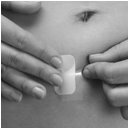
How To Apply The Patch Figure 02 (Image 04)

FDA Label Image

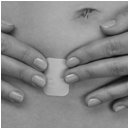
How To Apply The Patch Figure 03 (Image 05)

FDA Label Image

How To Apply The Patch Figure 04 (Image 06)

FDA Label Image

Figure 1: Likelihood Of Developing A Vte Within One Year Among Pregnant And Non-pregnant Women (Image 07)

FDA Label Image

Norelgestromin And Ethinyl Estradiol Structural Formula (Image 08)

Norelgestromin And Ethinyl Estradiol Structural Formula (Image 08)
norelgestromin and ethinyl estradiol are two hormones used together in various forms of hormonal birth control, such as the birth control patch. They work by preventing ovulation and thickening the cervical mucus to prevent sperm from reaching the egg.*
FDA Label Image

Figure 2: Mean Serum Ngmn Concentrations (ng/ml) In Healthy Female Volunteers Following Application Of Norelgestromin And Ethinyl Estradiol Transdermal System On The Buttock For Three Consecutive Cycles (vertical Arrow Indicates Time Of Patch Removal) (Image 09)

FDA Label Image

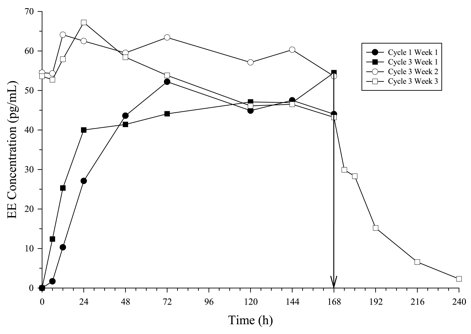
Figure 3: Mean Serum Ee Concentrations (pg/ml) In Healthy Female Volunteers Following Application Of Norelgestromin And Ethinyl Estradiol Transdermal System On The Buttock For Three Consecutive Cycles (vertical Arrow Indicates Time Of Patch Removal.) (Image 10)

FDA Label Image

Figure 4: Mean Serum Concentration-time Profiles Of Ngmn Following Once-daily Administration Of An Oral Contraceptive For Two Cycles Or Application Of Norelgestromin And Ethinyl Estradiol Transdermal System For Two Cycles To The Buttock In Healthy Female Volunteers. [oral Contraceptive: Cycle 2, Days 15 To 21, Norelgestromin And Ethinyl Estradiol Transdermal System: Cycle 2, Week 3] (Image 11)

FDA Label Image

Figure 5: Mean Serum Concentration-time Profiles Of Ee Following Once-daily Administration Of An Oral Contraceptive For Two Cycles Or Application Of Norelgestromin And Ethinyl Estradiol Transdermal System For Two Cycles To The Buttock In Healthy Female Volunteers. [oral Contraceptive: Cycle 2, Days 15 To 21, Norelgestromin And Ethinyl Estradiol Transdermal System: Cycle 2, Week 3] (Image 12)

FDA Label Image

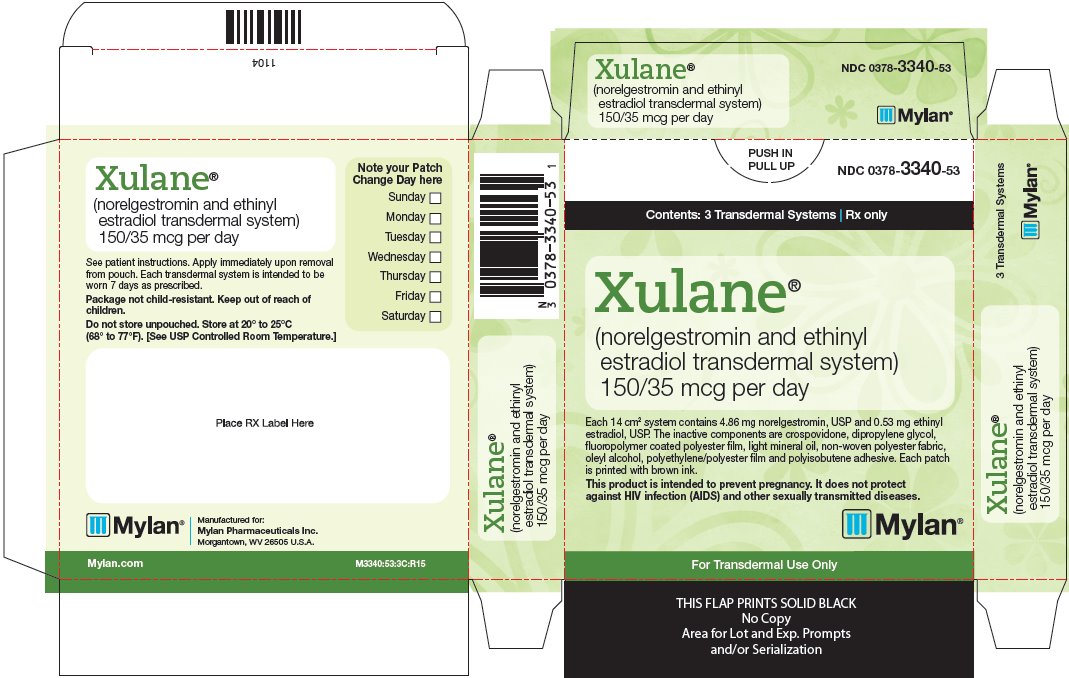
Xulane Transdermal System 150/35 Mcg Per Day Carton (Image 13)

Xulane Transdermal System 150/35 Mcg Per Day Carton (Image 13)
Xulanee NoC 0576-3340-53 is a transdermal system used to prevent pregnancy. It contains norelgestromin and ethinyl estradiol and must be stored at controlled room temperature. Each pack contains a pouch to be used daily that delivers 150/35 mcg per day. It does not protect against sexually transmitted diseases. Lot and Exp prompts and/or Serialization are found in the area mentioned.*
FDA Label Image

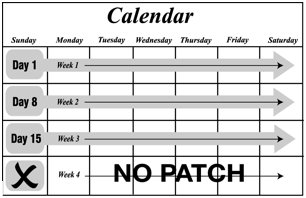
Patch Calendar (Image 14)

FDA Label Image

Likelihood Of Developing A Serious Blood Clot (venous Thromboembolism [vte]) (Image 15)

Likelihood Of Developing A Serious Blood Clot (venous Thromboembolism [vte]) (Image 15)
This text appears to be discussing the risks of CHC (combination hormonal contraception) and pregnancy after the postpartum period (13 weeks after giving birth). It provides pregnancy data based on the actual duration of pregnancy and cites a model that assumes pregnancy duration is nine months, indicating a rate of 7 to 27 per 10,000 Women Years (WY).*
FDA Label Image

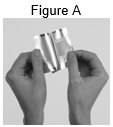
Instructions For Use Figure A (Image 16)

FDA Label Image

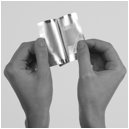
Instructions For Use Figure B (Image 17)

FDA Label Image

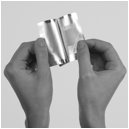
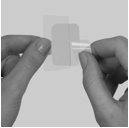
Instructions For Use Step 1 (Image 18)

FDA Label Image

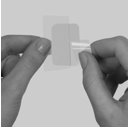
Instructions For Use Step 2 Figure 1 (Image 19)

FDA Label Image

Instructions For Use Step 2 Figure 2 (Image 20)

FDA Label Image

Instructions For Use Step 2 Figure 3 (Image 21)

FDA Label Image

Instructions For Use Step 2 Figure 4 (Image 22)

FDA Label Image

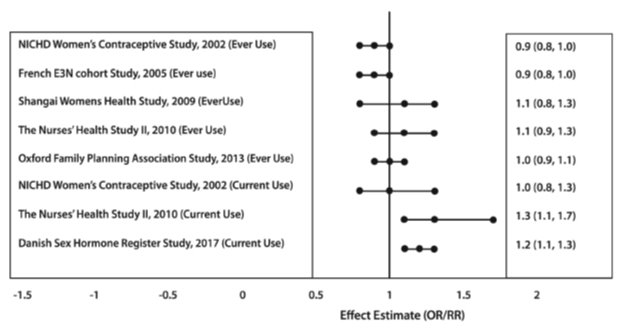
Image 23

Image 23
This is a list of different studies related to women's health and contraceptive use. It includes the name of the study, the year it was conducted, and whether it refers to ever or current use of contraceptives. The text at the bottom does not provide any useful information and appears to be unrelated.*

* These product label images have been analyzed using experimental machine learning. Please verify findings with the primary label text.