Levalbuterol Solution
Product Images NDC 0378-9692

15 FDA label images from Mylan Pharmaceuticals Inc. · Packaging, Regulatory Labels, and Product Appearance

Product Visual Gallery

This gallery contains 15 technical images submitted to the FDA as part of the official labeling for Levalbuterol (NDC 0378-9692). Unlike standard consumer photos, these assets often include clinical data figures, molecular chemical structures, and official manufacturer packaging layouts.

As provided by Mylan Pharmaceuticals Inc., these visuals offer a comprehensive scientific overview of the product's physical and chemical identity, aiding pharmacists and researchers in product verification and study.

FDA Label Image

Levalbuterol Inhalation Solution 0.31 mg Carton Label (Image 01)
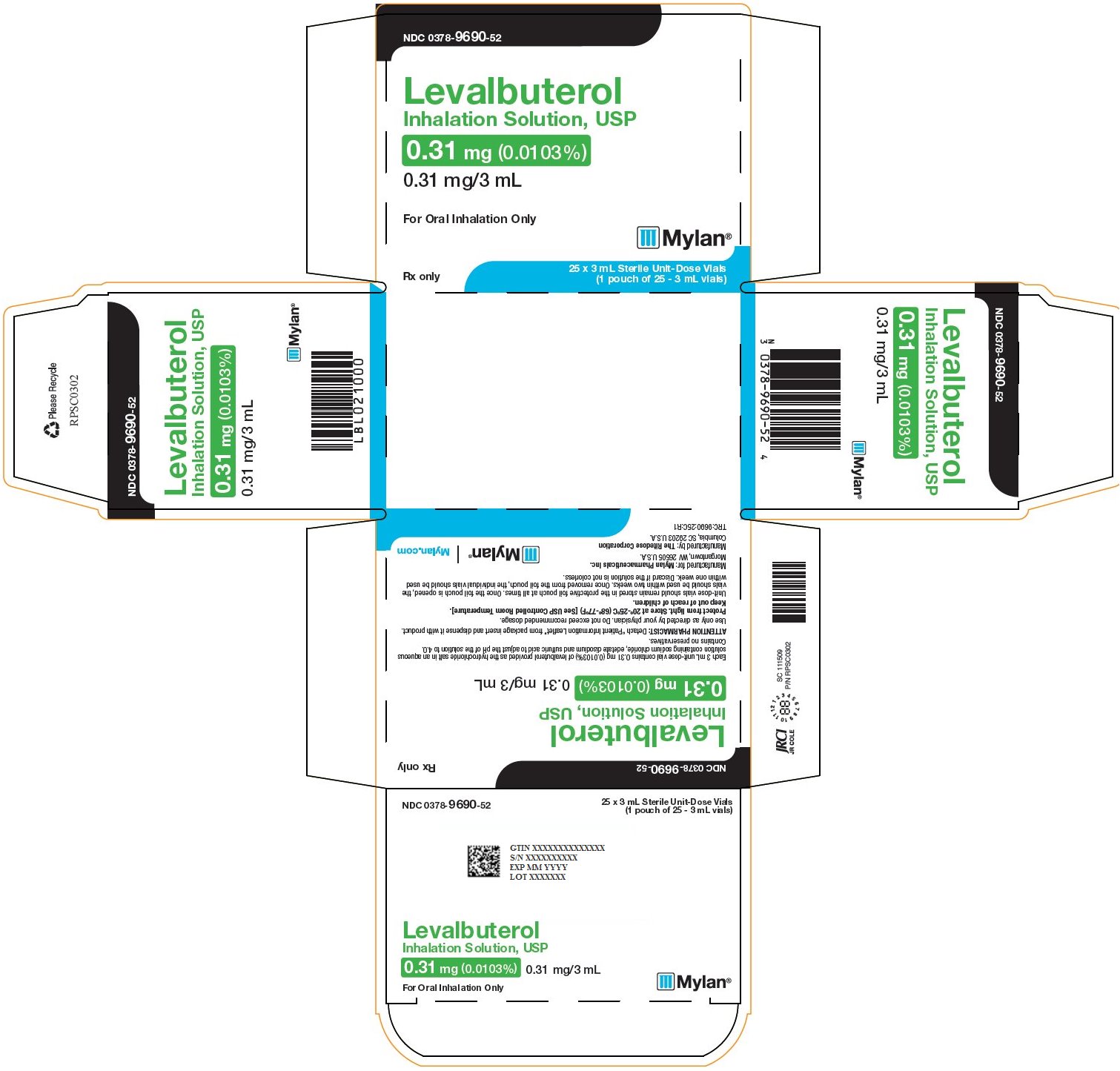
Levalbuterol Inhalation Solution 0.31 mg Carton Label (Image 01)
Levalbuterol 0.31 mg/3 mL inhalation solution carton label by Mylan Pharmaceuticals Inc. for respiratory inhalation use. Packaging states 'For Oral Inhalation Only' and contains 25 sterile unit-dose vials, each vial 3 mL dose. The label includes the NDC number 0378-9690-52 and features Mylan branding.*
FDA Label Image

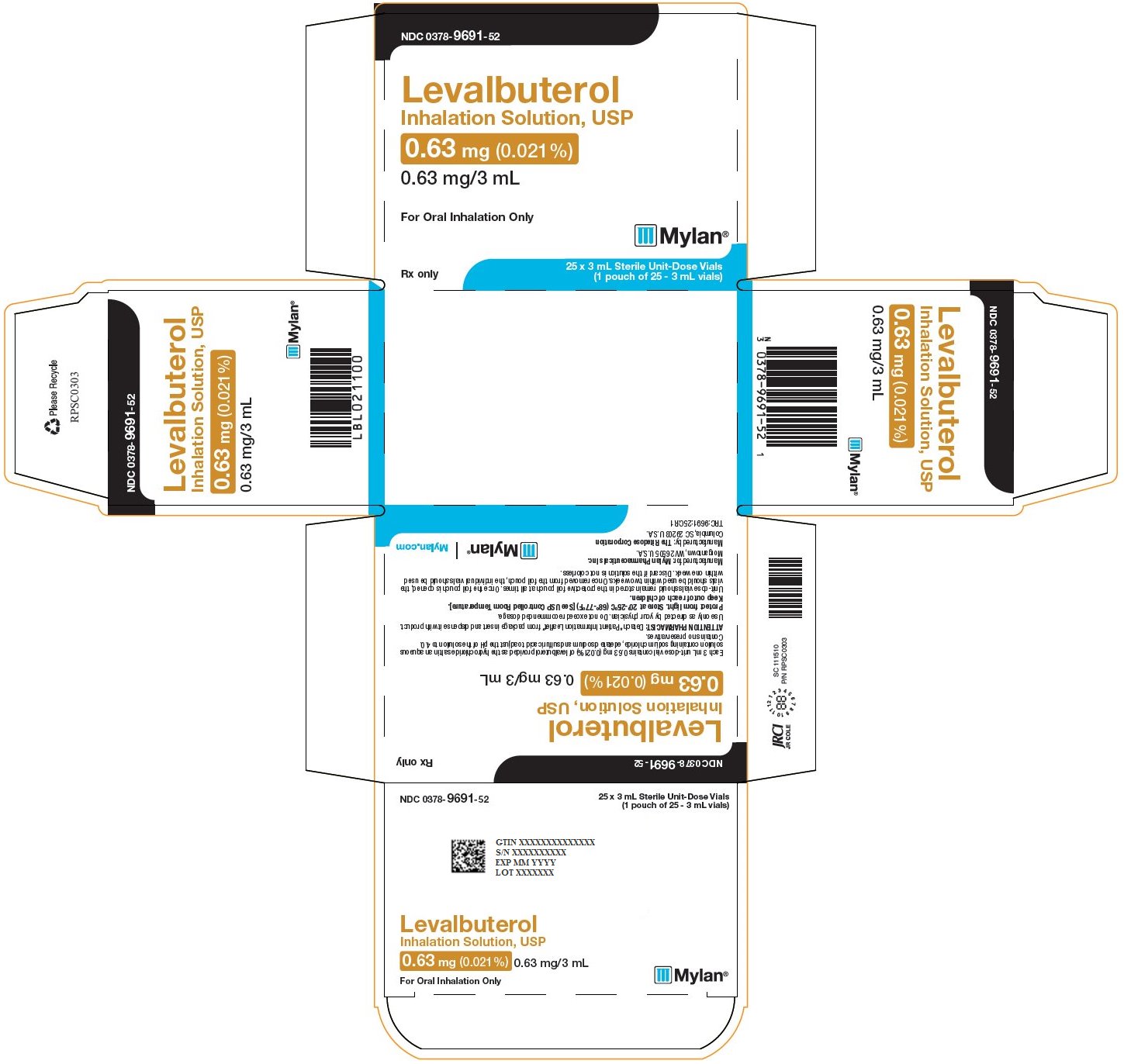
Levalbuterol Inhalation Solution 0.63 mg Carton Label (Image 02)

Levalbuterol Inhalation Solution 0.63 mg Carton Label (Image 02)
Packaging label for Levalbuterol Inhalation Solution, USP 0.63 mg/3 mL by Mylan Pharmaceuticals Inc. The label indicates the solution is for oral inhalation and includes 25 x 3 mL sterile unit-dose vials (one pouch). The NDC on the label is 0378-9691-52.*
FDA Label Image

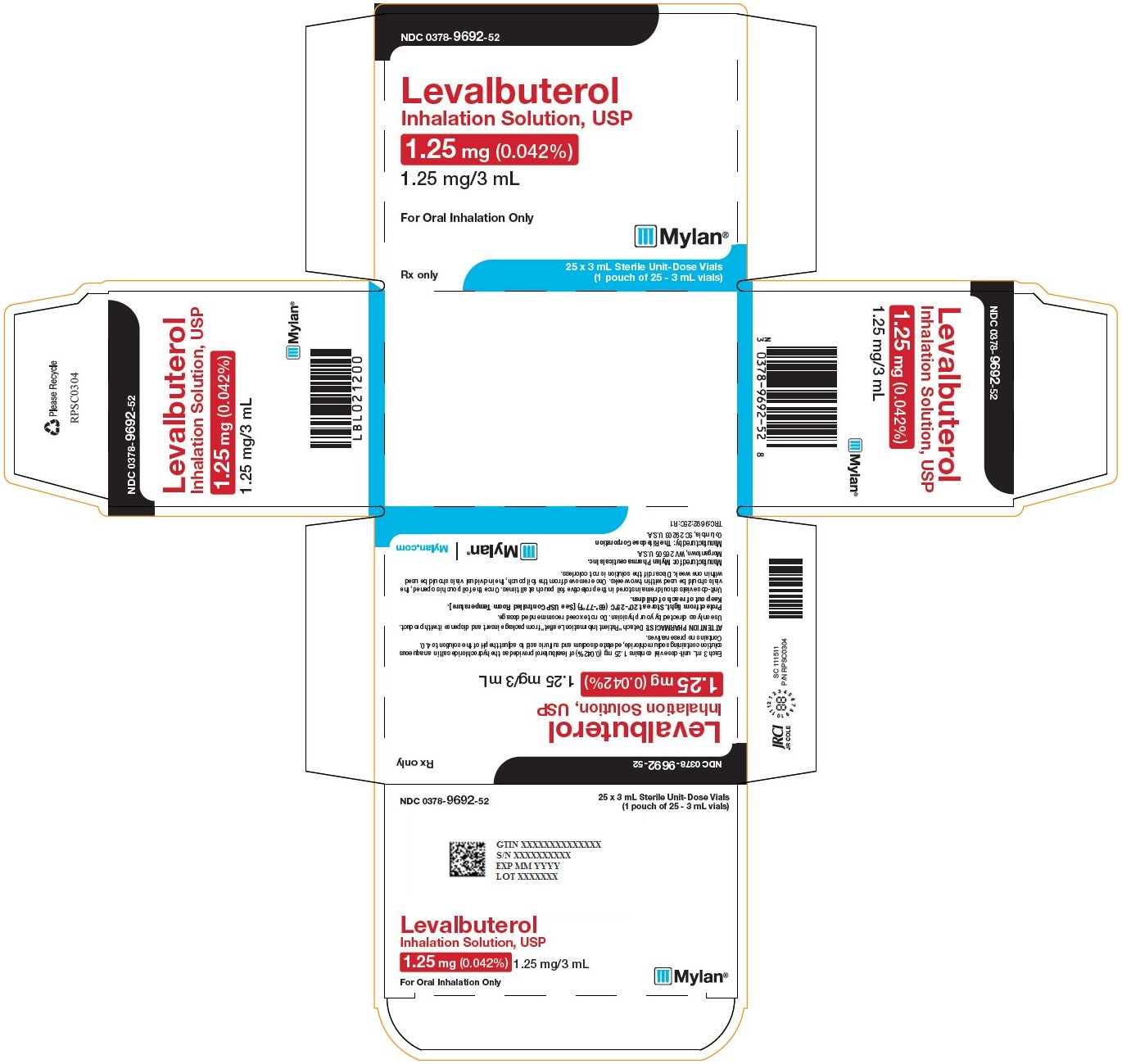
Levalbuterol Inhalation Solution 1.25 mg Carton Label (Image 03)

Levalbuterol Inhalation Solution 1.25 mg Carton Label (Image 03)
Packaging label for Levalbuterol Inhalation Solution, USP 1.25 mg (0.042%) per 3 mL by Mylan Pharmaceuticals Inc. The label indicates a respiratory inhalation solution for oral use, contained in sterile unit-dose vials with a package size of 25 vials of 3 mL each. The National Drug Code (NDC) is 0378-9692-52.*
FDA Label Image

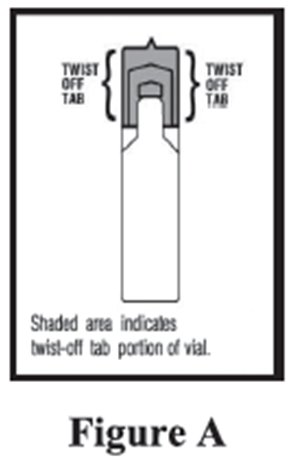
Figure A (Image 04)

Figure A (Image 04)
Illustration showing a vial with shaded areas indicating the twist-off tab portions on both sides of the vial cap, labeled as 'twist off tab.' The diagram highlights how to identify and remove the twist-off tab section of the vial.*
FDA Label Image

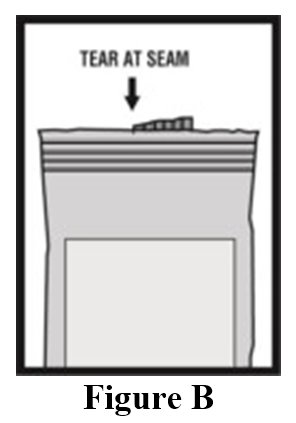
Figure B (Image 05)

Figure B (Image 05)
Illustration showing a segmented tear strip at the top of a sealed pouch or packet, labeled 'TEAR AT SEAM' with an arrow indicating where to open. This figure is likely included in packaging or instructions for a pharmaceutical product.*
FDA Label Image

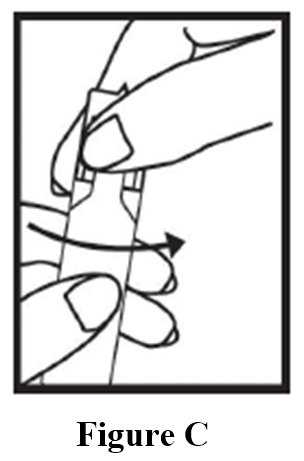
Figure C (Image 06)

Figure C (Image 06)
An instructional illustration labeled as Figure C showing a hand twisting or opening a small vial or ampule, possibly demonstrating preparation for use of a respiratory inhalation solution like Levalbuterol.*
FDA Label Image

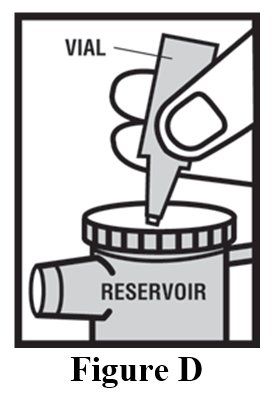
Figure D (Image 07)

Figure D (Image 07)
An instructional illustration labeled Figure D showing a hand holding a vial positioned above a reservoir component, indicating insertion or connection of the vial to the reservoir.*
FDA Label Image

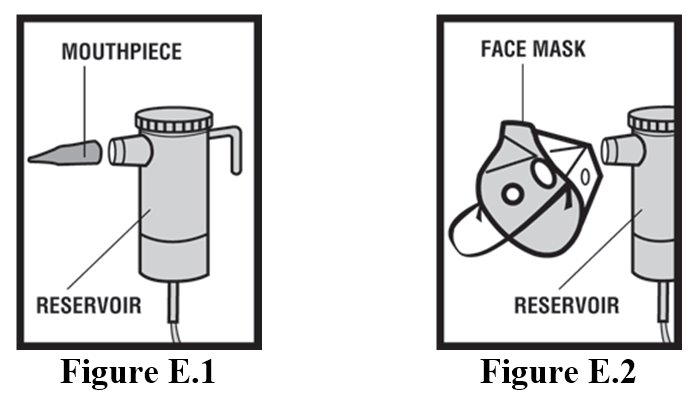
Figures E.1 And E.2 (Image 08)

Figures E.1 And E.2 (Image 08)
Illustration showing two configurations of a respiratory inhalation device for Levalbuterol solution. Figure E.1 labels the mouthpiece and reservoir components, and Figure E.2 labels the face mask and reservoir components used for delivering the medication.*
FDA Label Image

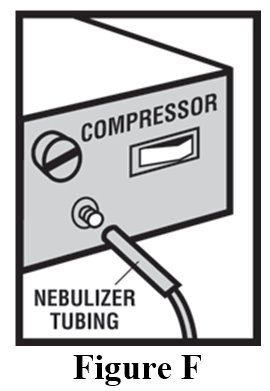
Figure F (Image 09)

Figure F (Image 09)
An instructional illustration labeled 'Figure F' showing a nebulizer tubing connected to a compressor. The image highlights the connection point between the nebulizer tubing and the compressor device, with the label 'COMPRESSOR' and the tubing clearly visible.*
FDA Label Image

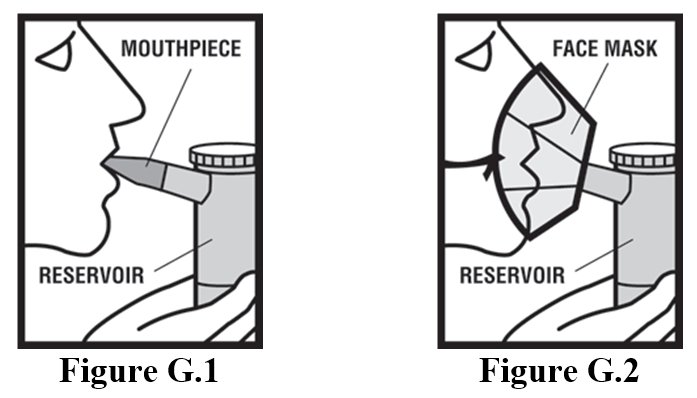
Figures G.1 And G.2 (Image 10)

Figures G.1 And G.2 (Image 10)
Illustration showing two methods of using a respiratory inhalation solution device. Figure G.1 depicts a person using a mouthpiece attached to a reservoir. Figure G.2 shows a person wearing a face mask connected to a reservoir for inhalation.*
FDA Label Image

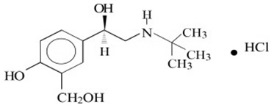
Chemical Structure (Levalbuterol 01)

Chemical Structure (Levalbuterol 01)
Chemical structure of levalbuterol hydrochloride depicted as a molecular diagram showing its hydroxyl groups, phenyl ring, and tertiary butylamine group with the hydrochloride (HCl) salt.*
FDA Label Image

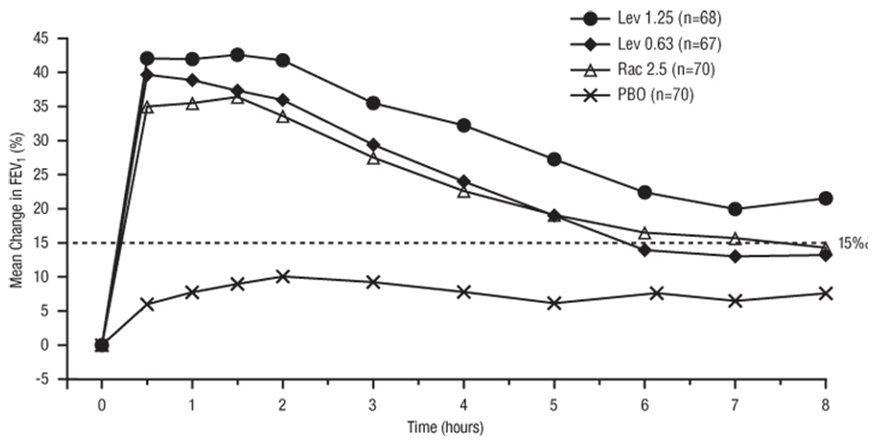
Figure 1 (Levalbuterol 02)

Figure 1 (Levalbuterol 02)
A line graph depicting mean change in FEV1 (%) over time (hours) for different treatments: Levalbuterol 1.25 mg, Levalbuterol 0.63 mg, Racemic 2.5 mg, and placebo. The graph shows percentage improvement in lung function measured up to 8 hours post-dose, highlighting comparative performance of these respiratory inhalation solutions.*
FDA Label Image

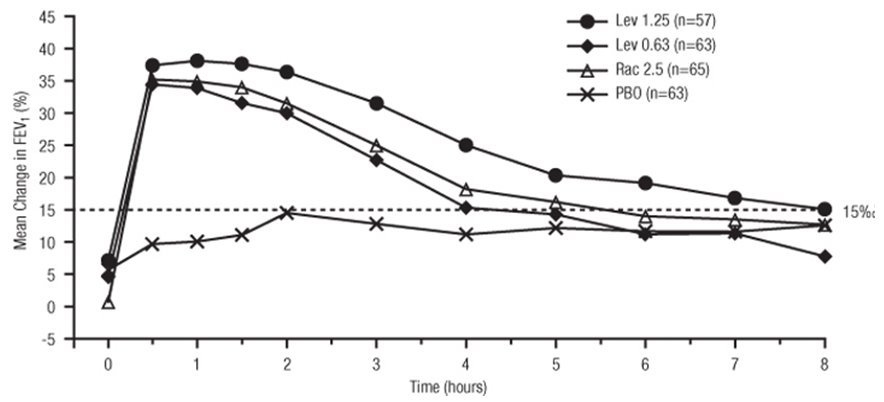
Figure 2 (Levalbuterol 03)

Figure 2 (Levalbuterol 03)
A line graph depicting mean change in FEV1 (%) over time (hours) for different Levalbuterol and comparator doses. It shows four curves representing Levalbuterol 1.25 mg, Levalbuterol 0.63 mg, Racemic 2.5 mg, and placebo (PBO) over an 8-hour period, with mean FEV1 changes peaking near 1 hour and declining thereafter. A horizontal dashed line marks 15% mean change in FEV1.*
FDA Label Image

Figure 3 (Levalbuterol 04)

Figure 3 (Levalbuterol 04)
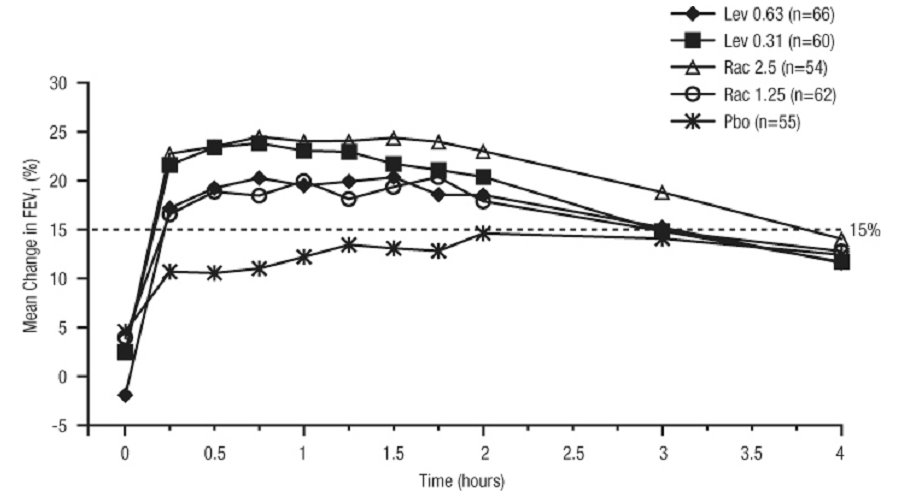
Line graph showing mean change in FEV1 (%) over 4 hours comparing Levalbuterol at doses 0.31 mg and 0.63 mg, Racemic mixture at 1.25 mg and 2.5 mg, and placebo. The x-axis represents time in hours, and the y-axis represents mean change in FEV1 percentage, with a reference line at 15%. Data points indicate sample sizes for each group.*
FDA Label Image

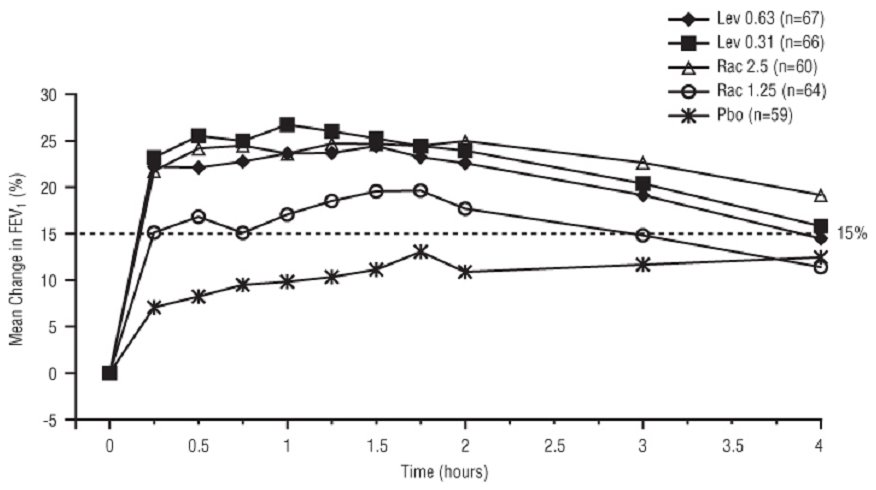
Figure 4 (Levalbuterol 05)

Figure 4 (Levalbuterol 05)
Line graph depicting mean change in FEV1 (%) over time (hours) for different dosages of Levalbuterol (0.63 mg and 0.31 mg), Racemic mixtures (2.5 mg and 1.25 mg), and placebo groups. The graph includes data points and lines representing each group, showing the trend of FEV1 changes from 0 to 4 hours.*

* About these descriptions: Image descriptions on this page are generated by automated AI analysis of the product label images from the manufacturer's FDA label submission (SPL). They are provided for reference only and may contain errors or omissions. Always rely on the printed label itself and the official FDA labeling, and consult a pharmacist or healthcare professional with any questions about this product.