Ampicillin
Product Images NDC 0404-9816

8 FDA label images from Henry Schein, Inc. · Packaging, Regulatory Labels, and Product Appearance

Product Visual Gallery

This gallery contains 8 technical images submitted to the FDA as part of the official labeling for Ampicillin (NDC 0404-9816). Unlike standard consumer photos, these assets often include clinical data figures, molecular chemical structures, and official manufacturer packaging layouts.

As provided by Henry Schein, Inc., these visuals offer a comprehensive scientific overview of the product's physical and chemical identity, aiding pharmacists and researchers in product verification and study.

FDA Label Image

Formula1.jpg (Formula1)

Formula1.jpg (Formula1)
Chemical structure diagram of the active ingredient shown, which is Ampicillin. The diagram illustrates the specific arrangement of atoms and bonds characteristic of the Ampicillin molecule.*
FDA Label Image

Image1.jpg (Image1)

Image1.jpg (Image1)
A data table titled 'Susceptibility Test Interpretive Criteria' detailing susceptibility test result criteria for various pathogens including Enterobacteriaceae, Enterococcus spp., Haemophilus influenzae and Haemophilus parainfluenzae, Streptococcus spp. (beta-hemolytic and viridans groups), and Neisseria meningitidis. The table includes disk diffusion zone diameter in millimeters and minimal inhibitory concentration (MIC) in mcg/mL values categorized as susceptible, intermediate, or resistant.*
FDA Label Image

Image2.jpg (Image2)

Image2.jpg (Image2)
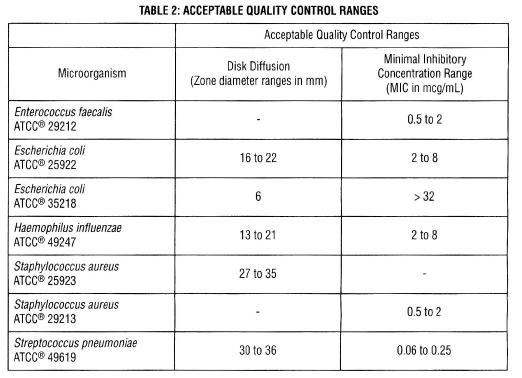
A data table titled 'TABLE 2: ACCEPTABLE QUALITY CONTROL RANGES' listing microorganisms with corresponding disk diffusion zone diameter ranges in millimeters and minimal inhibitory concentration ranges (MIC in mcg/mL). Microorganisms include various strains such as Enterococcus faecalis, Escherichia coli, Haemophilus influenzae, Staphylococcus aureus, and Streptococcus pneumoniae.*
FDA Label Image

Image3.jpg (Image3)

Image3.jpg (Image3)
A dosage table for neonates (up to 28 days postnatal age) with bacterial meningitis and septicemia. It lists dosing recommendations in mg/kg/day based on gestational age (weeks) and postnatal age (days), including frequency of divided doses every 8 or 12 hours.*
FDA Label Image

Image4.jpg (Image4)

Image4.jpg (Image4)
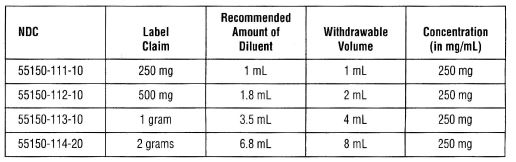
A data table listing various NDC codes for ampicillin, showing label claims of 250 mg, 500 mg, 1 gram, and 2 grams. The table includes recommended amounts of diluent, withdrawable volumes, and concentrations, all at 250 mg/mL.*
FDA Label Image

Image5.jpg (Image5)

Image5.jpg (Image5)
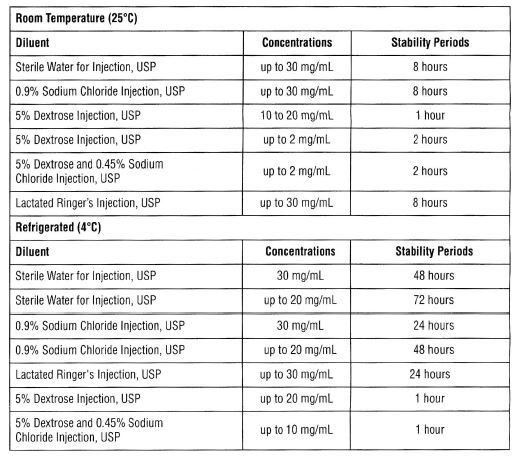
A stability data table for Ampicillin reconstituted in various diluents at room temperature (25°C) and refrigerated (4°C) conditions. It lists different diluents, their concentrations in mg/mL, and corresponding stability periods ranging from 1 hour to 72 hours.*
FDA Label Image

Image6.jpg (Image6)

Image6.jpg (Image6)
A table listing different NDCs for Ampicillin for Injection USP in various vial sizes: 250 mg in 10 mL, 500 mg in 10 mL, 1 g in 15 mL, and 2 g in 24 mL. Each packaging is a box of 10 vials.*
FDA Label Image

Label1.jpg (Label1)

Label1.jpg (Label1)
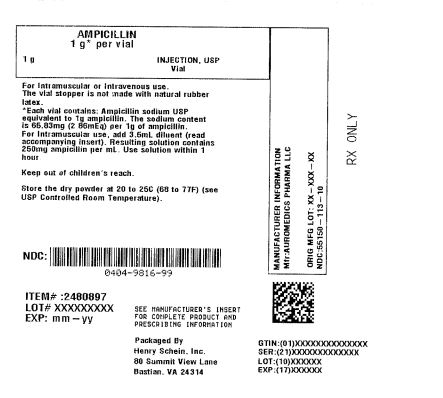
Label for AMPICILLIN 1 g per vial for injection, USP, distributed by Henry Schein, Inc. It is a single-dose vial for intramuscular or intravenous use. The label includes storage instructions, the product NDC 0404-9816-99, and a note that the vial stopper is not made with natural rubber latex. It refers to the manufacturer's insert for complete product and prescribing information.*

* About these descriptions: Image descriptions on this page are generated by automated AI analysis of the product label images from the manufacturer's FDA label submission (SPL). They are provided for reference only and may contain errors or omissions. Always rely on the printed label itself and the official FDA labeling, and consult a pharmacist or healthcare professional with any questions about this product.