Bupivacaine Hydrochloride And Epinephrine
Product Images NDC 0404-9828

9 FDA label images from Henry Schein, Inc. · Packaging, Regulatory Labels, and Product Appearance

Product Visual Gallery

This gallery contains 9 technical images submitted to the FDA as part of the official labeling for Bupivacaine Hydrochloride And Epinephrine (NDC 0404-9828). Unlike standard consumer photos, these assets often include clinical data figures, molecular chemical structures, and official manufacturer packaging layouts.

As provided by Henry Schein, Inc., these visuals offer a comprehensive scientific overview of the product's physical and chemical identity, aiding pharmacists and researchers in product verification and study.

FDA Label Image

Formula1.jpg (Formula1)

Formula1.jpg (Formula1)
Chemical structure of Bupivacaine Hydrochloride, showing the molecular arrangement including a piperidine ring, amide linkage, and aromatic ring with methyl substitutions, annotated with hydrochloride and water components.*
FDA Label Image

Formula2.jpg (Formula2)

Formula2.jpg (Formula2)
Chemical structure diagram of the active ingredient in Bupivacaine Hydrochloride and Epinephrine, showing a molecular formula with a benzene ring, hydroxyl groups, and an amine side chain.*
FDA Label Image

Image1.jpg (Image1)

Image1.jpg (Image1)
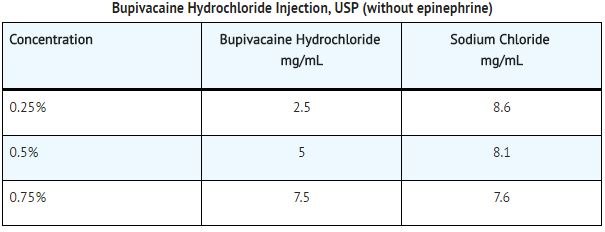
A table presenting concentrations of Bupivacaine Hydrochloride Injection, USP (without epinephrine). It lists three concentration levels (0.25%, 0.5%, 0.75%) alongside corresponding Bupivacaine Hydrochloride (mg/mL) values (2.5, 5, 7.5) and Sodium Chloride (mg/mL) values (8.6, 8.1, 7.6).*
FDA Label Image

Image2.jpg (Image2)

Image2.jpg (Image2)
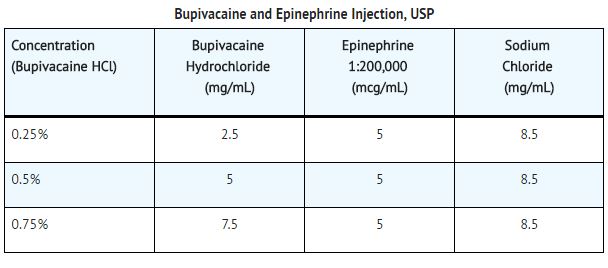
Table presenting concentrations of Bupivacaine Hydrochloride and Epinephrine in Bupivacaine and Epinephrine Injection, USP. It lists Bupivacaine HCl percentages (0.25%, 0.5%, 0.75%) and corresponding Bupivacaine Hydrochloride (2.5, 5, 7.5 mg/mL), Epinephrine (5 mcg/mL), and Sodium Chloride (8.5 mg/mL) concentrations.*
FDA Label Image

Image3.jpg (Image3)

Image3.jpg (Image3)
Data table listing types of nerve blocks and corresponding concentrations of Bupivacaine Hydrochloride and Epinephrine. It includes local infiltration, peripheral nerve block, retrobulbar block, sympathetic block, lumbar epidural, caudal, epidural test dose, and dental blocks with varying strengths and epinephrine ratios.*
FDA Label Image

Image4.jpg (Image4)

Image4.jpg (Image4)
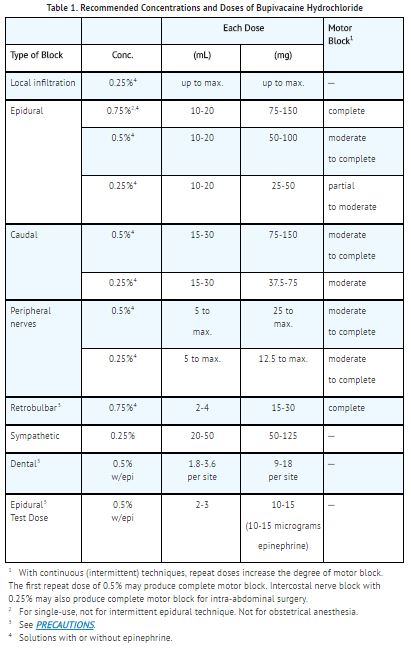
A data table titled 'Recommended Concentrations and Doses of Bupivacaine Hydrochloride' detailing various block types. It lists concentration percentages, dose volumes (mL), dose amounts (mg), and associated motor block degrees for local infiltration, epidural, caudal, peripheral nerves, retrobulbar, sympathetic, dental, and epidural test dose applications.*
FDA Label Image

Image5.jpg (Image5)

Image5.jpg (Image5)
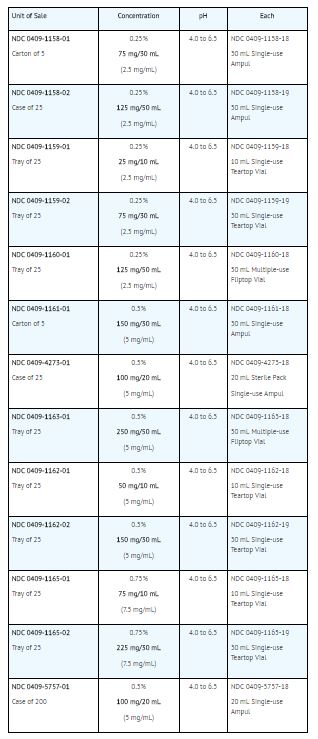
A table listing various units of sale, concentrations, pH ranges, and NDC codes for Bupivacaine Hydrochloride and Epinephrine products. It includes data on cartons, cases, and trays with different dosages and packaging forms, detailing volumes from 5 mL to 30 mL in single-use and multi-use vials and ampuls.*
FDA Label Image

Image6.jpg (Image6)

Image6.jpg (Image6)
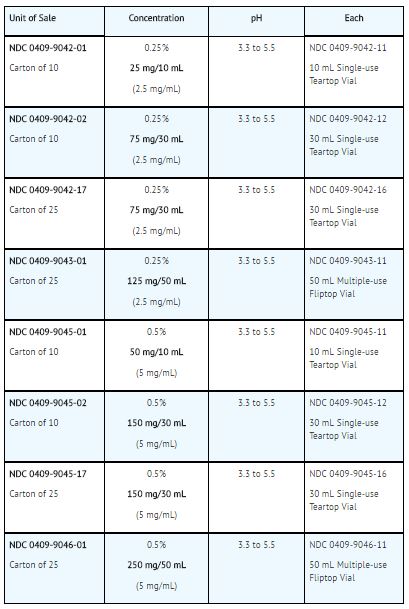
A data table showing packaging details for Bupivacaine Hydrochloride and Epinephrine by Henry Schein, Inc. It lists units of sale, concentration, pH range (3.3 to 5.5), and corresponding NDC numbers for cartons and various single-use and multiple-use vial sizes from 10 mL to 50 mL.*
FDA Label Image

Label1.jpg (Label1)

Label1.jpg (Label1)
Label for Bupivacaine Hydrochloride and Epinephrine 0.25% with epinephrine 1:200,000 injection, single dose vial, 30 ml, packaged by Henry Schein, Inc. The label includes storage instructions, usage warnings, and manufacturer information, along with barcodes, lot number, and expiration date fields.*

* About these descriptions: Image descriptions on this page are generated by automated AI analysis of the product label images from the manufacturer's FDA label submission (SPL). They are provided for reference only and may contain errors or omissions. Always rely on the printed label itself and the official FDA labeling, and consult a pharmacist or healthcare professional with any questions about this product.