Midazolam Hydrochloride Injection, Solution
Product Images NDC 0404-9916

25 FDA label images from Henry Schein, Inc. · Packaging, Regulatory Labels, and Product Appearance

Product Visual Gallery

This gallery contains 25 technical images submitted to the FDA as part of the official labeling for Midazolam Hydrochloride (NDC 0404-9916). Unlike standard consumer photos, these assets often include clinical data figures, molecular chemical structures, and official manufacturer packaging layouts.

As provided by Henry Schein, Inc., these visuals offer a comprehensive scientific overview of the product's physical and chemical identity, aiding pharmacists and researchers in product verification and study.

FDA Label Image

Formula1.jpg (Formula1)

Formula1.jpg (Formula1)
Chemical structure of Midazolam Hydrochloride showing its molecular framework including aromatic rings, nitrogen atoms, a fluorine atom, and a chlorine atom with the hydrochloride (HCl) component.*
FDA Label Image

Formula2.jpg (Formula2)

Formula2.jpg (Formula2)
Chemical structure diagram showing the interconversion between Midazolam and its open-ring form. The diagram depicts the molecular structure of Midazolam on the left and the open-ring form on the right, indicating a reversible chemical reaction.*
FDA Label Image

Image1.jpg (Image1)

Image1.jpg (Image1)
A line graph titled 'pH Dependence of Open-ring Form in Water' showing the percentage of open-ring form versus pH. The y-axis represents % open-ring form ranging from 0 to 60, and the x-axis represents pH from 2.5 to 5.5. The graph shows a sharp decline in the percent open-ring form as pH increases from 2.5 to about 4.5, then levels off near zero at higher pH values.*
FDA Label Image

Image2.jpg (Image2)

Image2.jpg (Image2)
A data table listing local effects at the intramuscular injection site with associated percentages: pain (3.7%), induration (0.5%), redness (0.5%), and muscle stiffness (0.3%). The table also references headache with a frequency of 1.3%.*
FDA Label Image

Image3.jpg (Image3)

Image3.jpg (Image3)
A data table presenting the local effects at the intravenous site and related adverse events with corresponding percentages. Effects include tenderness (5.6%), pain during injection (5.0%), redness (2.6%), induration (1.7%), and phlebitis (0.4%), along with systemic reactions such as hiccoughs, nausea, vomiting, coughing, oversedation, headache, and drowsiness with their respective incidence rates.*
FDA Label Image

Image4.jpg (Image4)

Image4.jpg (Image4)
This image shows a detailed drug facts and dosing instructions panel for Midazolam Hydrochloride 5 mg/mL injection solution by Henry Schein, Inc. It covers dosing recommendations for intramuscular, intravenous, induction of anesthesia, injectable conscious sedation, continuous infusion, and pediatric patients, including precautions, administration guidance, and dose adjustments.*
FDA Label Image

Image5.jpg (Image5)

Image5.jpg (Image5)
A data table titled 'Assessment Categories' presenting a scoring system for responsiveness based on speech, facial expression, and eyes. It ranges from 5 (alert) to 1 (deep sleep), detailing different levels of response to stimuli, speech characteristics, facial relaxation, and eye appearance, used for clinical assessment scoring.*
FDA Label Image

Image6.jpg (Image6)

Image6.jpg (Image6)
A data table showing age ranges from 1 to 17 years compared with OAA/S scores ranging from 1 (deep sleep) to 5 (alert). The table lists the number of subjects (n) per age group and the distribution percentages of each OAA/S score within those groups, totaling 90 subjects overall.*
FDA Label Image

Image7.jpg (Image7)

Image7.jpg (Image7)
A detailed text panel with dosing information for Midazolam Hydrochloride injection, solution. It covers intramuscular, intravenous by intermittent injection, continuous intravenous infusion, and specific pediatric dosing guidelines for non-neonatal and neonatal patients, including sedation use in critical care and anesthesia settings. The text includes dosing recommendations, precautions, and warnings related to sedation and respiratory monitoring.*
FDA Label Image

Image8.jpg (Image8)

Image8.jpg (Image8)
A data table listing units of sale and concentrations of Midazolam Hydrochloride injection sold in boxes. It shows NDCs for boxes of 10 and 25 vials with concentrations of 1 mg/mL in different total volumes, including 2 mg/2 mL and 5 mg/5 mL strengths.*
FDA Label Image

Image9.jpg (Image9)

Image9.jpg (Image9)
A table listing units of sale and concentrations for Midazolam Hydrochloride injection. It shows two entries: one with NDC 0409-2308-01, a box of 10 with 5 mg/mL concentration, and another with NDC 0409-2308-02, a box of 10 with 10 mg/2 mL (equivalent to 5 mg/mL) concentration.*
FDA Label Image

Image10.jpg (Image10)

Image10.jpg (Image10)
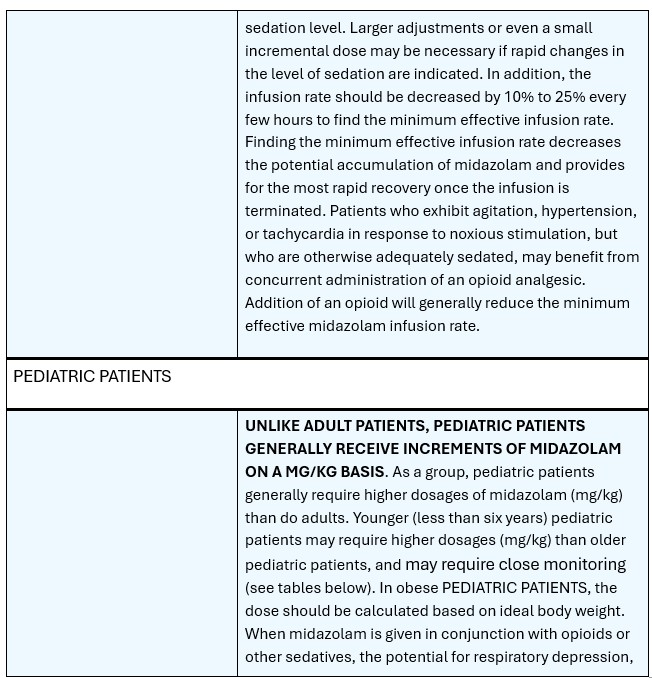
Text panel from Midazolam Hydrochloride injection label describing dosing considerations for sedation infusion rates and special instructions for pediatric patients, including dosing on a mg/kg basis, higher dosage requirements compared to adults, and monitoring guidance.*
FDA Label Image

Image11.jpg (Image11)

Image11.jpg (Image11)
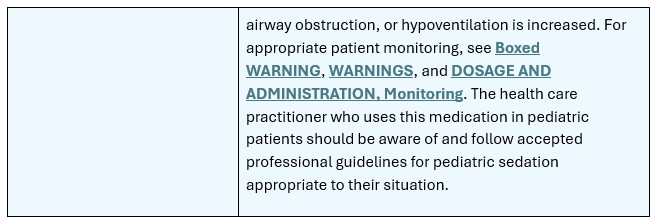
This image shows a text excerpt related to warnings and monitoring for a medication, mentioning airway obstruction, hypoventilation, and guidance for pediatric sedation. It references sections on Boxed Warning, Warnings, and Dosage and Administration for appropriate patient monitoring instructions.*
FDA Label Image

Image12.jpg (Image12)

Image12.jpg (Image12)
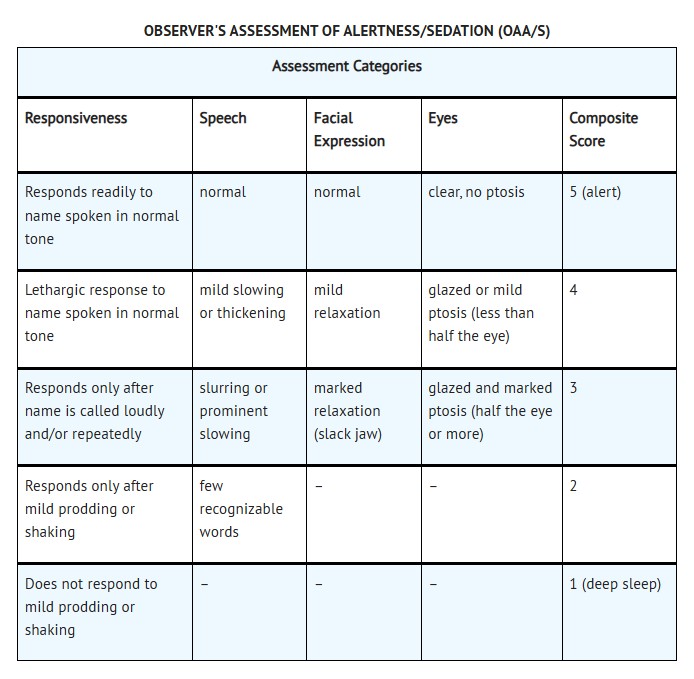
A data table titled "Observer's Assessment of Alertness/Sedation (OAA/S)" showing assessment categories for responsiveness, speech, facial expression, eyes, and composite score. The table describes behavioral and physical responses corresponding to composite scores from 5 (alert) to 1 (deep sleep).*
FDA Label Image

Image13.jpg (Image13)

Image13.jpg (Image13)
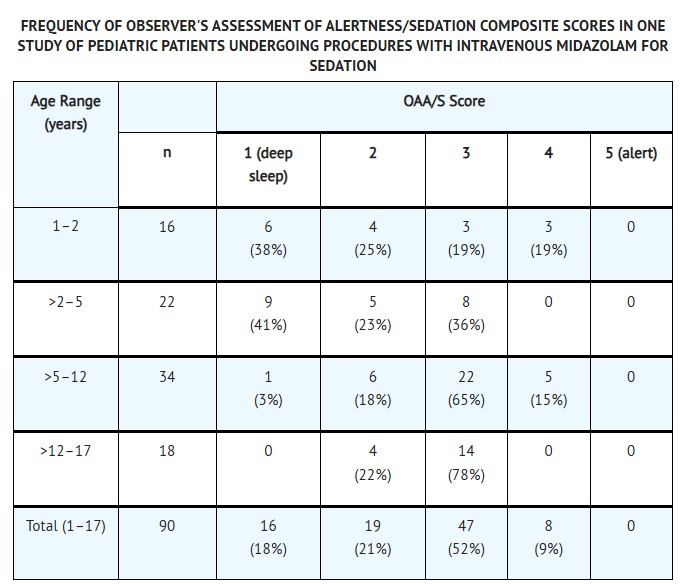
Data table showing the frequency of observer's assessment of alertness/sedation composite scores in pediatric patients aged 1 to 17 years undergoing procedures with intravenous midazolam. The table categorizes patients into four age ranges, presenting the number and percentage of observations across sedation scores from 1 (deep sleep) to 5 (alert). Total counts and percentages are included for all age groups combined.*
FDA Label Image

Image14.jpg (Image14)

Image14.jpg (Image14)
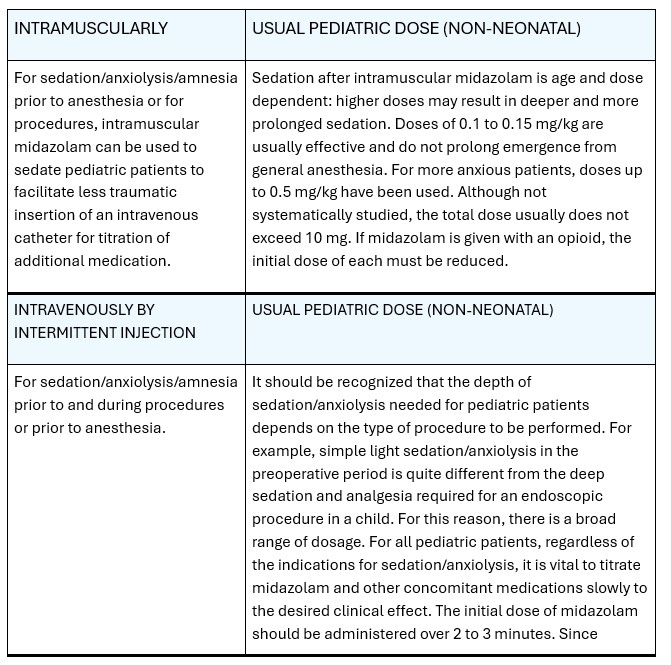
This text panel provides dosing information for Midazolam Hydrochloride injection solution, detailing usual pediatric doses for intramuscular and intravenous use. It explains sedation and anxiolysis use prior to anesthesia or procedures, dose ranges, administration guidelines, and considerations for titration in pediatric patients.*
FDA Label Image

Image15.jpg (Image15)

Image15.jpg (Image15)
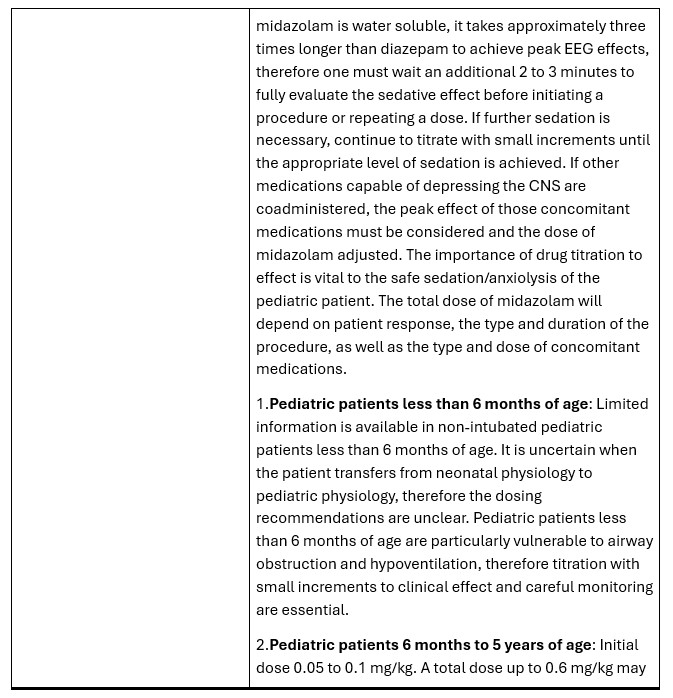
Text panel describing dosing considerations for Midazolam Hydrochloride injection, focusing on sedation titration and pediatric patient dosing guidelines for those less than 6 months old and from 6 months to 5 years of age. It includes notes on sedation evaluation, dose adjustment, and monitoring in pediatric use.*
FDA Label Image

Image16.jpg (Image16)

Image16.jpg (Image16)
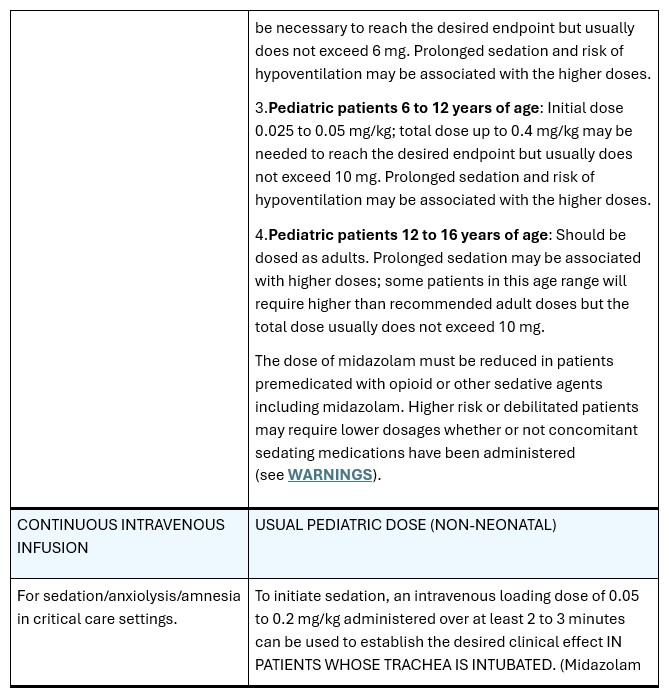
A text panel excerpt providing dosing information for Midazolam Hydrochloride injection. It includes pediatric dosing guidelines by age group, warnings about sedation and hypoventilation risks, and notes on dose adjustments for patients on opioids or sedatives. The panel also details continuous intravenous infusion dosing for sedation and anxiolysis in critical care settings, particularly for intubated patients.*
FDA Label Image

Image17.jpg (Image17)

Image17.jpg (Image17)
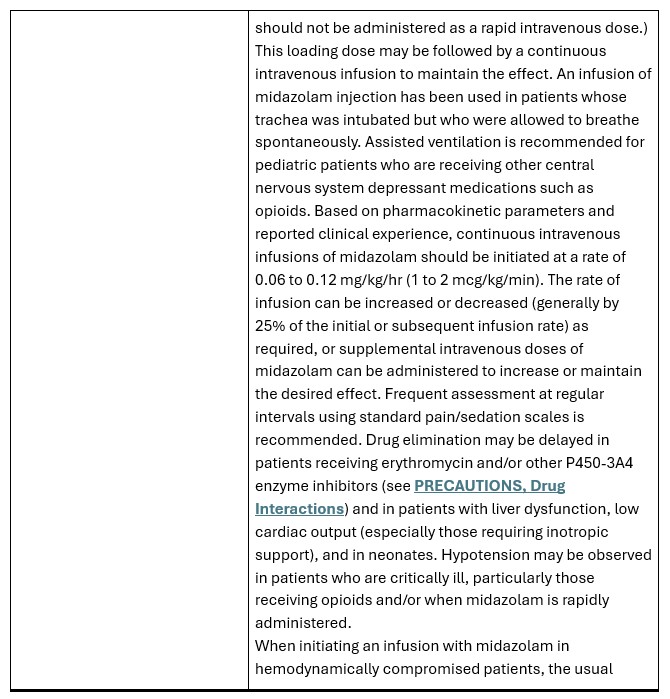
A text panel excerpt from midazolam hydrochloride injection prescribing information. It discusses intravenous infusion dosing guidelines, cautions for pediatric and critically ill patients, dose adjustments, drug interactions, and recommendations for monitoring sedation and pain scores during administration.*
FDA Label Image

Image18.jpg (Image18)

Image18.jpg (Image18)
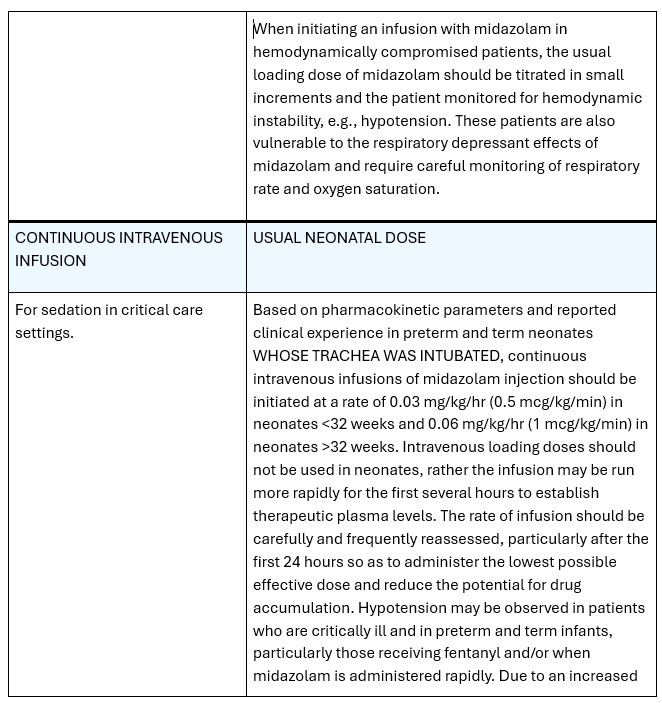
Text panel from the Midazolam Hydrochloride injection product describing dosage guidance for continuous intravenous infusion and usual neonatal dose. It includes details on sedation use in critical care settings, dosage rates for neonates based on gestational age, recommendations against intravenous loading doses in neonates, and cautions about hypotension and monitoring requirements in vulnerable patients.*
FDA Label Image

Image19.jpg (Image19)

Image19.jpg (Image19)
A partial text panel from a drug label discussing sedation risks. It warns of the risk of apnea and advises extreme caution when sedating preterm and former preterm patients whose trachea is not intubated.*
FDA Label Image

Image20.jpg (Image20)

Image20.jpg (Image20)
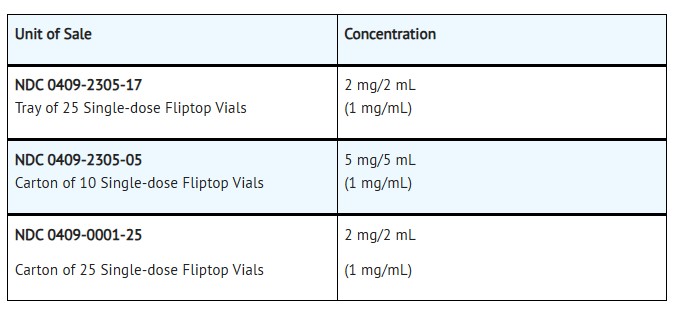
Table presenting unit of sale and concentration for Midazolam Hydrochloride injection solution, showing three NDC entries with packaging details such as trays and cartons of single-dose fliptop vials and concentrations ranging from 1 mg/mL to 2 mg/2 mL for different package sizes.*
FDA Label Image

Image21.jpg (Image21)

Image21.jpg (Image21)
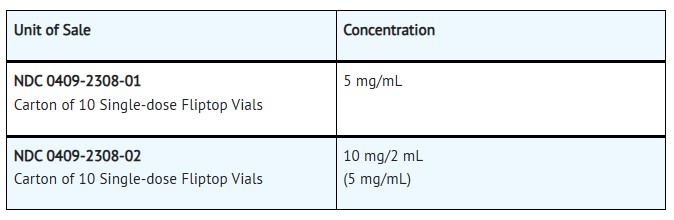
A table showing unit of sale and concentration details for Midazolam Hydrochloride injection. It lists two NDCs: 0409-2308-01 for a carton of 10 single-dose fliptop vials at 5 mg/mL concentration, and 0409-2308-02 for a carton of 10 single-dose fliptop vials at 10 mg/2 mL (5 mg/mL) concentration.*
FDA Label Image

Label1.jpg (Label1)

Label1.jpg (Label1)
Label for Midazolam Hydrochloride Injection USP, 5 mg/mL in a 1 mL single dose fliptop vial. The label indicates use for intravenous or intramuscular administration, preservative free and sterile. Packaged by Henry Schein, Inc., located in Bastian, VA, with instructions to discard unused portions and store at controlled room temperature (20 to 25°C). Includes NDC barcode and manufacturer information.*
FDA Label Image

Label2.jpg (Label2)

Label2.jpg (Label2)
Label for Midazolam Injection USP, 10 mg/2 mL single dose fliptop vial. The label indicates intravenous or intramuscular use, preservative-free, sterile, and storage at 20 to 25°C (68 to 77°F). It is packaged by Henry Schein, Inc. with address in Bastian, VA. The label includes NDC barcode 0401-9916-02 and instructions to discard unused portion and keep out of children's reach.*

* About these descriptions: Image descriptions on this page are generated by automated AI analysis of the product label images from the manufacturer's FDA label submission (SPL). They are provided for reference only and may contain errors or omissions. Always rely on the printed label itself and the official FDA labeling, and consult a pharmacist or healthcare professional with any questions about this product.