Sensorcaine Injection, Solution
Product Images NDC 0404-9947
View Photos of Packaging, Regulatory Labels, and Product Appearance
Product Visual Gallery
This gallery contains 10 technical images submitted to the FDA as part of the official labeling for Sensorcaine (NDC 0404-9947). Unlike standard consumer photos, these assets often include clinical data figures, molecular chemical structures, and official manufacturer packaging layouts.
As provided by Henry Schein, Inc., these visuals offer a comprehensive scientific overview of the product's physical and chemical identity, aiding pharmacists and researchers in product verification and study.
Formula2 (Formula2)
Image1.jpg (Image1)
This text is a warning and cautionary notice about the use of local anesthetics. It warns against using 0.75% concentration of sensorcaine injection for obstetrical anesthesia and only recommends it for surgical procedures. It also states that clinicians should only use local anesthetics if they are educated in the management of toxicity and other acute emergencies. In addition, it advises against using freshly mixed or intermittent local anesthetics with bupivacaine, and warns about the use of bupivacaine for intravenous regional anesthesia (Bier Block) due to a lack of information on safe dosages and techniques. Finally, it identifies that intra-articular infusions of local anesthetics is an unapproved use and have been linked to chondrolysis, specifically in the shoulder joint.*
Image2.jpg (Image2)
This text provides a list of drugs associated with Methemoglobinemia, including their classes and examples. The list includes nitrates and nitrites, local anesthetics, antineoplastic agents, antibiotics, antimalarials, anticonvulsants, and other drugs such as acetaminophen, metoclopramide, quinine, and sulfasalazine.*
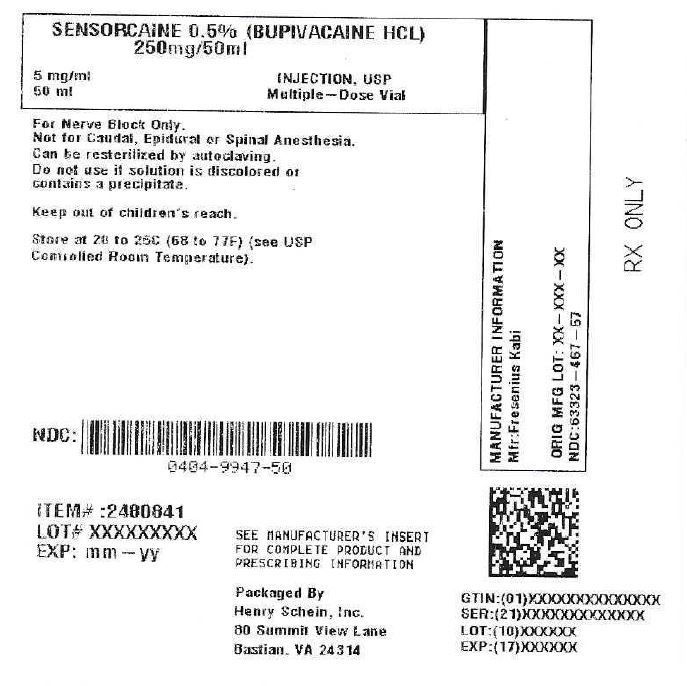
Label1.jpg (Label1)
SENSORCAINE 0.5% is a type of anesthetic provided in a 50mL multi-dose vial with 2560my/50m of bupivacaine hydrochloride solution for injection. The solution is suitable for nerve block only and must not be used for spinal anesthesia, gaural or epiduval. It can be resterilized by autoclaving. One must avoid using the solution if it is discolored or has a precipitae. Keep it out of children's reach and store it at the temperature recommended by the USP. It is a prescription drug from Henry Schein, Inc. with a unique identifier number like ORIG MFG LOT, NDC, GTIN, SER, and LOT. *
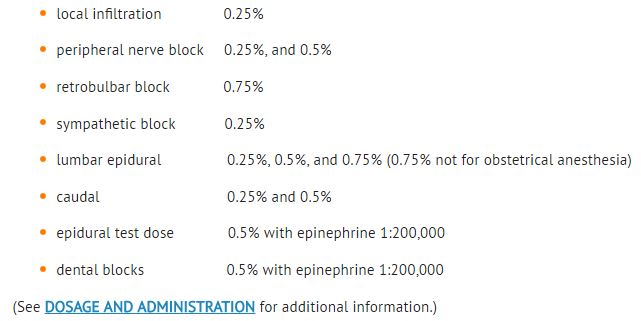
Table1.jpg (Table1)
This is a list of different types of anesthesia and their corresponding percentages for administration. These include local infiltration, peripheral nerve block, retrobulbar block, sympathetic block, lumbar epidural, caudal, epidural test dose, and dental blocks. The percentages used vary depending on the type of anesthesia and its purpose. Additional information can be found in the dosage and administration section.*
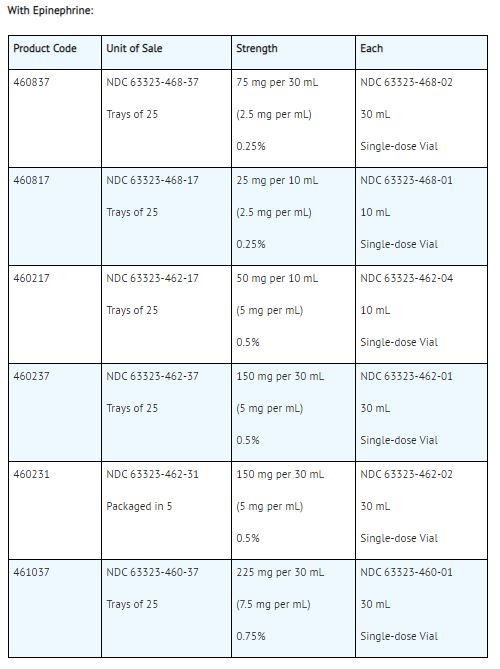
Table2.jpg (Table2)
Table3.jpg (Table3)
This is a product catalog for epinephrine injections with different concentrations (0.25%, 0.5%, and 0.75%) and volumes (30mL, 10mL) available for purchase. The product codes, strength and packaging information is provided for each variant. The injections are available as single-dose via in trays of 25 units per tray.*
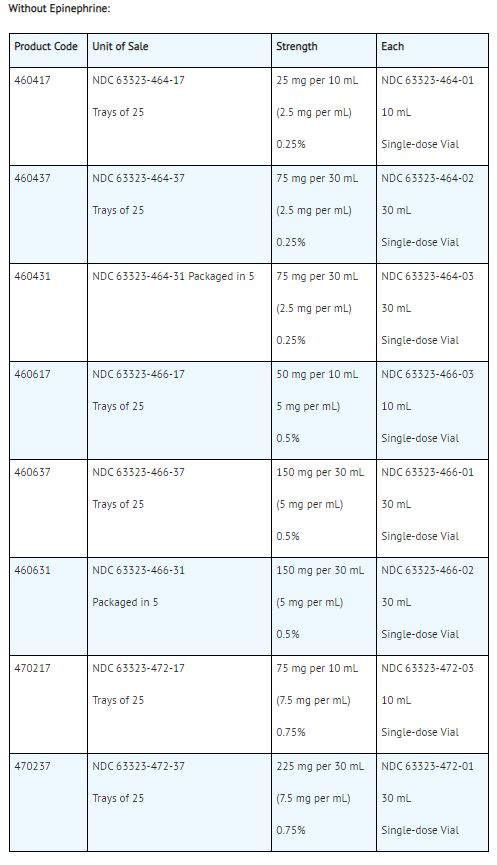
Table4.jpg (Table4)
This is a list of pharmaceutical products available in different strengths and quantities. The products do not contain epinephrine and are packaged in trays of 25 units. The products are available in different strengths (5mg per 10ml, 75mg per 30ml, 150mg per 30ml) and are mainly single-dose via. Product codes and NDC numbers are provided.*
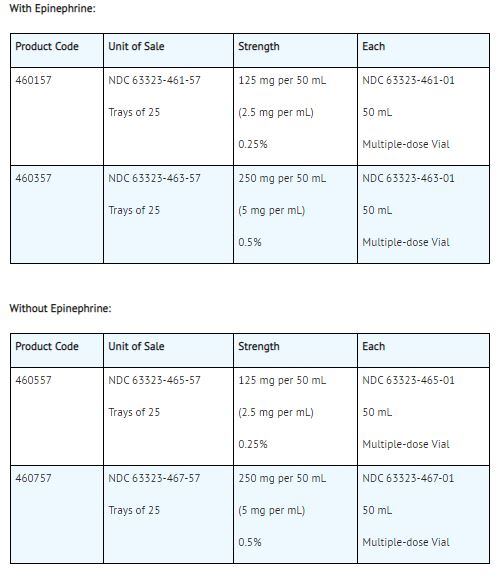
Table5.jpg (Table5)
This is a product description of different vials with and without Epinephrine (adrenaline), which are available for sale, along with their respective product codes, strengths and units of sale. The text mentions vials dosed at 0.5%, multiple-dose vials at 0.5%, vials with Epinephrine and without Epinephrine for strength 125mg, trays of strength 25mg, and vials for strength 250mg with a concentration of 5mg per ml.*
* These product label images have been analyzed using experimental machine learning. Please verify findings with the primary label text.