Xylocaine Injection, Solution
Product Images NDC 0404-9975

View Photos of Packaging, Regulatory Labels, and Product Appearance

Product Visual Gallery

This gallery contains 9 technical images submitted to the FDA as part of the official labeling for Xylocaine (NDC 0404-9975). Unlike standard consumer photos, these assets often include clinical data figures, molecular chemical structures, and official manufacturer packaging layouts.

As provided by Henry Schein, Inc, these visuals offer a comprehensive scientific overview of the product's physical and chemical identity, aiding pharmacists and researchers in product verification and study.

FDA Label Image

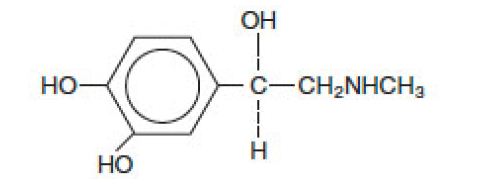
Formula1.jpg (Formula1)

FDA Label Image

Formula2.jpg (Formula2)

FDA Label Image

Image1.jpg (Image1)

Image1.jpg (Image1)
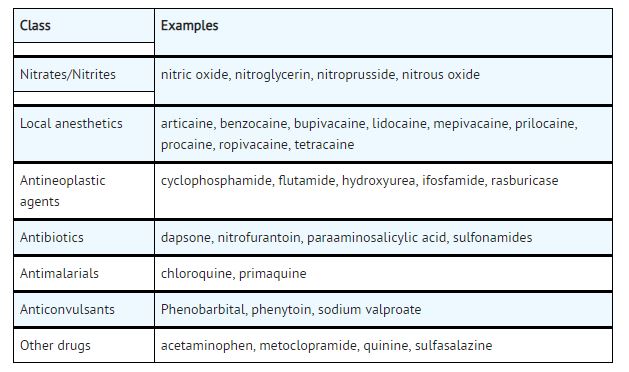
This text provides a list of different classes of drugs and specific examples of drugs in each class, including nitrates/nitrites, local anesthetics, antineoplastic agents, antibiotics, antimalarials, anticonvulsants, and other drugs such as acetaminophen, metoclopramide, quinine, and sulfasalazine.*
FDA Label Image

Image2.jpg (Image2)

Image2.jpg (Image2)
This is a chart showing recommended concentrations, volumes, and total doses of lidocaine hydrochloride for various procedures, such as infiltration, nerve blocks, and central neural blocks. The concentrations range from 0.5 to 2%, and the volumes and total doses vary depending on the specific procedure being performed. Lidocaine hydrochloride is a medication used for local anesthesia.*
FDA Label Image

Image3.jpg (Image3)

Image3.jpg (Image3)
Xylocaine is a medication that is made up of Lidocaine HCl Injection, USP. It is available in different strengths and is sold in units of 25 vials. Each vial has a certain amount of medication in it, depending on the strength purchased. The strengths available are 0.5%, 1%, and 2%, with corresponding NDC codes. The medication is administered through injection and is contained in a multiple-dose vial.*
FDA Label Image

Image4.jpg (Image4)

Image4.jpg (Image4)
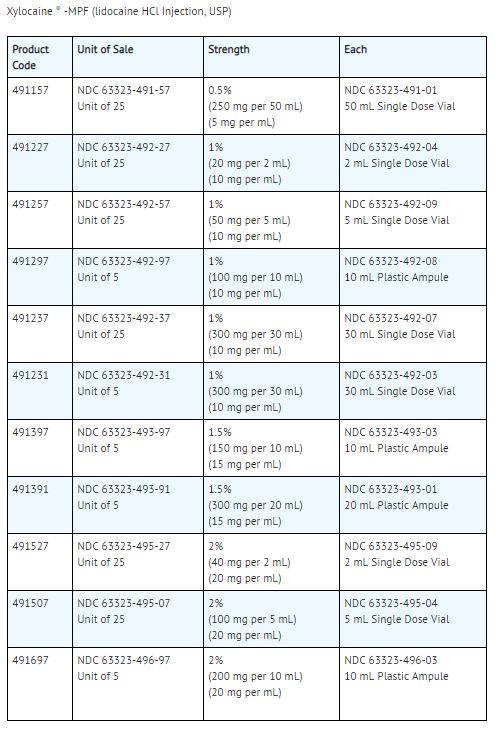
This is a list of different lidocaine HCL injection products, with their corresponding strengths and packaging characteristics. The information includes the product code, National Drug Code (NDC) number, unit of sale, strength, amount of lidocaine HCL per mL, and type of packaging (single dose vial or plastic ampule).*
FDA Label Image

Image5.jpg (Image5)

Image5.jpg (Image5)
Xylocaine is a solution for injection containing lidocaine HCL and epinephrine with varying strengths of mg per 10 mL or mg per 20 mL. It is available in multiple dose vials and can be sold in units of 25. The NDC number is provided for each strength variation. The solution is used for anesthesia and contains epinephrine to reduce bleeding and prolong the effects of the lidocaine. Xylocaine is available in 1% and 2% doses and is sold in multidose vials.*
FDA Label Image

Image6.jpg (Image6)

Image6.jpg (Image6)
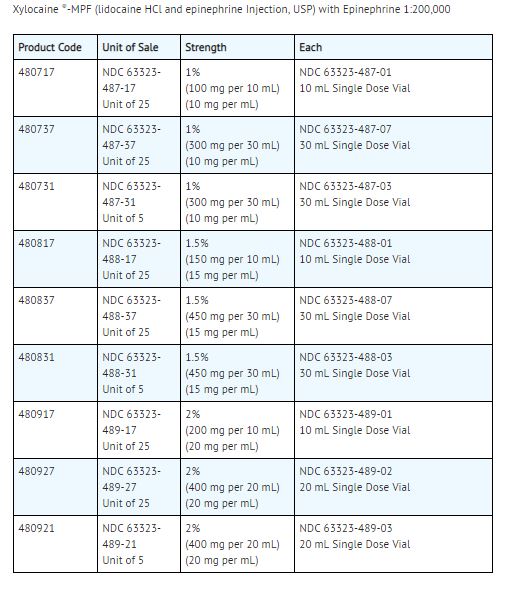
Lidocaine HCL and Epinephrine Injection, USP is a medication available in various strengths and packaging options. It is used as a local anesthetic in medical settings. The product code, unit of sale, strength, and size of each option are listed in the text.*
FDA Label Image

Label1.jpg (Label1)

Label1.jpg (Label1)
This is a description of Yvlocaine 0.50, which is a lidocaine HCL and apinephring 1:200,008 injection with a 250mg/50ml dosage, used for infiltration and nerve block, but not for caudal or epidural use. It is filled under nitrogen, and contains epinephrine. It is sterile, non-pyrogenic, and needs to be protected from light. The storage temperature should be between 20 to 25°C. The packaging is done by Henry Schein, Inc, and it comes with a lot number.*

* These product label images have been analyzed using experimental machine learning. Please verify findings with the primary label text.