Lisdexamfetamine Dimesylate Tablet, Chewable
Product Images NDC 0406-5129

View Photos of Packaging, Regulatory Labels, and Product Appearance

Product Visual Gallery

This gallery contains 15 technical images submitted to the FDA as part of the official labeling for Lisdexamfetamine Dimesylate (NDC 0406-5129). Unlike standard consumer photos, these assets often include clinical data figures, molecular chemical structures, and official manufacturer packaging layouts.

As provided by Specgx Llc, these visuals offer a comprehensive scientific overview of the product's physical and chemical identity, aiding pharmacists and researchers in product verification and study.

FDA Label Image

Chemical Structure (Lisdexamfetamine Chewable Tabs 1)

FDA Label Image

10 mg Label (Lisdexamfetamine Chewable Tabs 10)

10 mg Label (Lisdexamfetamine Chewable Tabs 10)
This is a description of Lisdexamfetamine Dimesylate Chewable Tablets, each tablet containing 10 mg of medication. The pharmacist should dispense the Medication Guide provided separately with each patient. Patients are advised to chew the tablets completely before swallowing and not to swallow them whole. The medication is manufactured by SpecGAL LLC and more information can be found at malinchodt.com. The usual dosage and storage instructions are provided, including storing the tablets at 20-25°C (68-77°F).*
FDA Label Image

20 mg Label (Lisdexamfetamine Chewable Tabs 11)

20 mg Label (Lisdexamfetamine Chewable Tabs 11)
This text appears to provide instructions and information about a medication called Lisdexamfetamine Dimesylate in chewable tablet form. The recommended usage includes chewing the tablets before swallowing. It also suggests referring to the package insert for dosage information. Additionally, it indicates that the medication guide should be dispensed by the pharmacist to each patient separately. The text also includes some alphanumeric codes and contact information related to the medication.*
FDA Label Image

30 mg Label (Lisdexamfetamine Chewable Tabs 12)

FDA Label Image

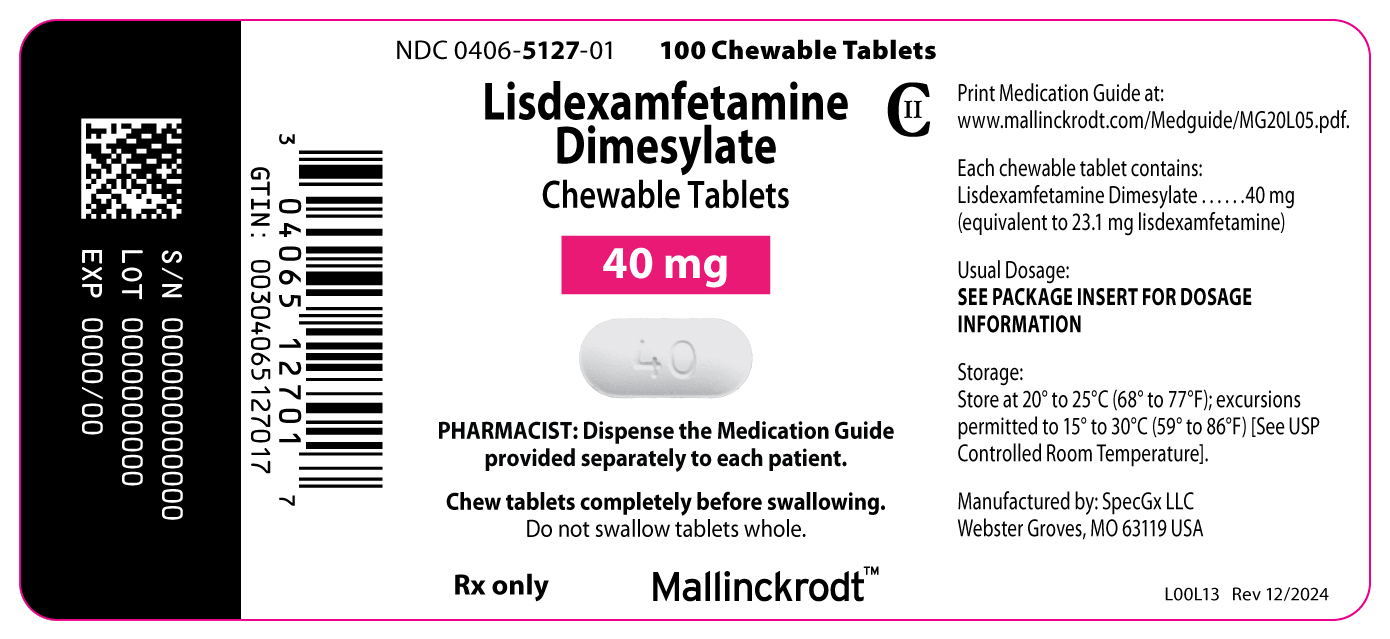
Lisdexamphetamine 40 mg Tablet (Lisdexamfetamine Chewable Tabs 13)

Lisdexamphetamine 40 mg Tablet (Lisdexamfetamine Chewable Tabs 13)
This text provides information on Lisdexamfetamine Dimesylate Chewable Tablets, including dosage instructions, storage guidelines, and manufacturer details. The tablets are provided separately to each patient and should be chewed completely before swallowing. The medication guide should be dispensed by the pharmacist, and the dosage information can be found in the package insert. The tablets contain 40mg of Lisdexamfetamine Dimesylate, equivalent to 23.1 mg of lisdexamfetamine. Storage should be at 20° to 25°C (68° to 77°F), with excursions permitted to 15° to 30°C (59° to 86°F). The tablets are manufactured by SpecGx LLC in the USA.*
FDA Label Image

Lisdexamphetamine 50 mg Tablet (Lisdexamfetamine Chewable Tabs 14)

Lisdexamphetamine 50 mg Tablet (Lisdexamfetamine Chewable Tabs 14)
This is a description of Lisdexamfetamine Dimesylate Chewable Tablets provided by Mallinckrodt Pharmaceuticals. It includes information about each tablet containing 50 mg of Lisdexamfetamine Dimesylate, with the dosage equivalent to 28.9 mg of lisdexamfetamine. It is recommended to chew the tablets completely before swallowing and not to swallow them whole. The instructions advise storing the tablets at 20° to 25°C (68° to 77°F) with excursions permitted to 15°to 30°C (59° to 86°F). Pharmacists are instructed to dispense the Medication Guide and patients can print the guide from the mentioned website. The usual dosage information can be found in the package insert. The tablets are manufactured by SpecGx LLC in Webster Groves, MO, USA.*
FDA Label Image

Lisdexamphetamine 60 mg Tablet (Lisdexamfetamine Chewable Tabs 15)

Lisdexamphetamine 60 mg Tablet (Lisdexamfetamine Chewable Tabs 15)
This text includes information about a medication called Lisdexamfetamine Dimesylate, which is available in chewable tablet form. The text provides instructions for patients to chew the tablets before swallowing and not swallow them whole. The usual dosage information is available in the package insert. The medication contains 60mg of Lisdexamfetamine Dimesylate, equivalent to 34.7 mg lisdexamfetamine. The storage instructions recommend storing the medication at 20° to 25°C (68° to 77°F). Additional details include the manufacturer information and a reference to a Medication Guide that can be found online.*
FDA Label Image

Figure 1 (Lisdexamfetamine Chewable Tabs 2)

Figure 1 (Lisdexamfetamine Chewable Tabs 2)
This document provides information on PK fold change and 90% confidence intervals for special population groups based on gender (male/female), age categories (65-74 years and >=75 years), and renal impairment levels (mild, moderate, severe, and end-stage renal disease). The data presented includes changes in AUC and Cmax relative to a reference group.*
FDA Label Image

Figure 2 (Lisdexamfetamine Chewable Tabs 3)

Figure 2 (Lisdexamfetamine Chewable Tabs 3)
This text appears to show a comparison of changes in drug levels (PK) such as Guanfacine, Venlafaxine, and Omeprazole. The data includes fold changes and 90% confidence intervals for various time points. It indicates a relative change compared to a reference point, potentially providing insights into the pharmacokinetics of these drugs.*
FDA Label Image

Figure 3 (Lisdexamfetamine Chewable Tabs 4)

Figure 3 (Lisdexamfetamine Chewable Tabs 4)
This text appears to be a list of interacting drugs and various substrates. The mentioned drugs include Guanfacine and Venlafaxine, as well as substrates for different cytochrome P450 enzymes such as CYP1A2 (Caffeine), CYP2D6 (Dextromethorphan), CYP2C19 (Omeprazole), and CYP3A (Midazolam). The text also references terms like PK, AUC, Conax, Fold Change, and 90% CI, suggesting it may relate to pharmacokinetics or clinical trial data analysis. Additionally, there seems to be data presented in relation to fold change and comparisons to a reference, with specific numerical values provided.*
FDA Label Image

Figure 4 (Lisdexamfetamine Chewable Tabs 5)

Figure 4 (Lisdexamfetamine Chewable Tabs 5)
This text appears to show the SKAMP Deportment scores for a study comparing a placebo treatment to Lisdexamfetamine Dimesylate. The scores are listed for different time points post-dose in hours. The data includes LS Mean (SE) values for both treatments, possibly representing the level of deportment behavior observed in the study participants. The scores seem to range from 0.0 to 20, with some values in between.*
FDA Label Image

Figure 5 (Lisdexamfetamine Chewable Tabs 6)

Figure 5 (Lisdexamfetamine Chewable Tabs 6)
This text appears to be a graph illustrating the proportion of subjects with relapse or treatment failure over time, comparing the effects of Lisdexamfetamine Dimesylate versus a placebo. The X-axis shows time in days after randomization, while the Y-axis indicates the percentage of subjects. The data points displayed are 5, 10, 15, 20, 25, 30, 35, 40, 45, 50, and 55.*
FDA Label Image

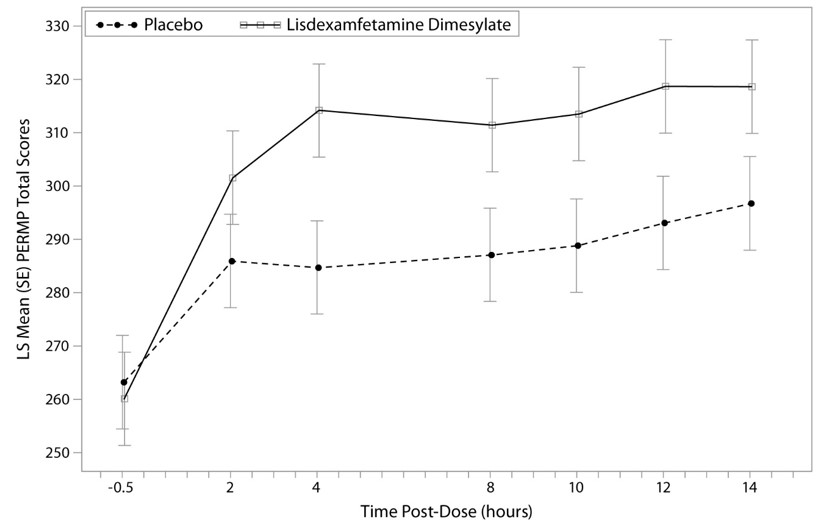
Figure 6 (Lisdexamfetamine Chewable Tabs 7)

Figure 6 (Lisdexamfetamine Chewable Tabs 7)
This text provides information on LS Mean (SE) PERMP Total Scores comparing Placebo and Lisdexamfetamine Dimesylate over different time points post-dose (10 and 12 hours). The scores range from 250 to 330.*
FDA Label Image

Figure (Lisdexamfetamine Chewable Tabs 8)

Figure (Lisdexamfetamine Chewable Tabs 8)
This text provides data on the percentage of relapse/treatment failure over time for placebo and Lisdexamfetamine Dimesylate. The graph shows the percentages at various time points following randomization, up to 40 days.*
FDA Label Image

Figure 8 (Lisdexamfetamine Chewable Tabs 9)

Figure 8 (Lisdexamfetamine Chewable Tabs 9)
Proportion of subjects with relapse over time after randomization, comparing Lisdexamfetamine Dimesylate to Placebo. The data shows the percentage of subjects experiencing relapse at different time points (in days). For Lisdexamfetamine Dimesylate, the proportion ranges from 0% to 105%, while for Placebo, it ranges from 0% to 76%.*

* These product label images have been analyzed using experimental machine learning. Please verify findings with the primary label text.