Other
Addiction, Abuse, and Misuse
Because the use of Fentanyl Citrate Injection exposes patients and other users to the risks of opioid addiction, abuse, and misuse, which can lead to overdose and death. Assess each patient’s risk prior to prescribing and reassess all patients regularly for the development of these behaviors and conditions [see Warnings and Precautions (5.1)].
Life-Threatening Respiratory Depression
Serious, life-threatening, or fatal respiratory depression may occur with use of Fentanyl Citrate Injection especially during initiation or following a dosage increase. To reduce the risk of respiratory depression, proper dosing and titration of Fentanyl Citrate Injection are essential [see Warnings and Precautions (5.2)].
Risks From Concomitant Use With Benzodiazepines Or Other CNS Depressants
Concomitant use of opioids with benzodiazepines or other central nervous system (CNS) depressants, including alcohol, may result in profound sedation, respiratory depression, coma, and death. Reserve concomitant prescribing of Fentanyl Citrate Injection and benzodiazepines or other CNS depressants for use in patients for whom alternative treatment options are inadequate [see Warnings and Precautions (5.3), Drug Interactions (7)].
Cytochrome P450 3A4 Interaction
The concomitant use of Fentanyl Citrate Injection with all cytochrome P450 3A4 inhibitors may result in an increase in fentanyl plasma concentrations, which could increase or prolong adverse reactions and may cause potentially fatal respiratory depression. In addition, discontinuation of a concomitantly used cytochrome P450 3A4 inducer may result in an increase in fentanyl plasma concentration. Monitor patients receiving Fentanyl Citrate Injection and any CYP3A4 inhibitor or inducer [see Warnings and Precautions (5.4), Drug Interactions (7), Clinical Pharmacology (12.3)].
Premedication in Adults
50 to 100 mcg (0.05 to 0.1 mg) (1 to 2 mL) may be administered intramuscularly 30 to 60 minutes prior to surgery.
Adjunct to General Anesthesia
See Dosage Range Charts below.
TOTAL DOSAGE (expressed as fentanyl base) | ||
Low Dose – | Moderate Dose – | High Dose – |
2 mcg/kg | 2–20 mcg/kg | 20–50 mcg/kg |
| ||
MAINTENANCE DOSE (expressed as fentanyl base) | ||
Low Dose – | Moderate Dose – | High Dose – |
2 mcg/kg | 2–20 mcg/kg | 20–50 mcg/kg |
Adjunct to Regional Anesthesia
50 to 100 mcg (0.05 to 0.1 mg) (1 to 2 mL) may be administered intramuscularly or slowly intravenously, over one to two minutes, when additional analgesia is required.
Postoperatively (recovery room)
50 to 100 mcg (0.05 to 0.1 mg) (1 to 2 mL) may be administered intramuscularly for the control of pain, tachypnea and emergence delirium. The dose may be repeated in one to two hours as needed.
For Induction and Maintenance in Children 2 to 12 Years of Age
A reduced dose as low as 2 to 3 mcg/kg is recommended.
As a General Anesthetic
As a technique to attenuate the responses to surgical stress without the use of additional anesthetic agents, doses of 50 to 100 mcg/kg (0.05 to 0.1 mg/kg) (1 to 2 mL/kg) may be administered with oxygen and a muscle relaxant. In certain cases, doses up to 150 mcg/kg (0.15 mg/kg) (3 mL/kg) may be necessary to produce this anesthetic effect. It has been used for open heart surgery and certain other major surgical procedures in patients for whom protection of the myocardium from excess oxygen demand is particularly indicated, and for certain complicated neurological and orthopedic procedures.
Risk Summary
Use of opioid analgesics for an extended period of time during pregnancy may cause Neonatal Opioid Withdrawal Syndrome. Available data with Fentanyl Citrate Injection in pregnant women are insufficient to inform a drug‑associated risk for major birth defects and miscarriage or adverse maternal outcomes. There are adverse outcomes reported with fetal exposure to opioid analgesics (see Clinical Considerations).
In animal reproduction studies, fentanyl administration to pregnant rats during organogenesis was embryocidal at doses within the range of the human recommended dosing. No evidence of malformations was noted in animal studies completed to date [see Data]. The estimated background risk of major birth defects and miscarriage for the indicated population is unknown. All pregnancies have a background risk of birth defect, loss, or other adverse outcomes.
The background risk of major birth defects and miscarriage for the indicated population is unknown. All pregnancies have a background risk of birth defect, loss, or other adverse outcomes. In the U.S. general population, the estimated background risk of major birth defects and miscarriage in clinically recognized pregnancies is 2 to 4% and 15 to 20%, respectively.
Clinical Considerations
Fetal/Neonatal Adverse Reactions
Use of opioid analgesics for an extended period of time during pregnancy for medical or nonmedical purposes can result in physical dependence in the neonate and neonatal opioid withdrawal syndrome shortly after birth.
Neonatal opioid withdrawal syndrome presents as irritability, hyperactivity and abnormal sleep pattern, high pitched cry, tremor, vomiting, diarrhea and failure to gain weight. The onset, duration, and severity of neonatal opioid withdrawal syndrome vary based on the specific opioid used, duration of use, timing and amount of last maternal use, and rate of elimination of the drug by the newborn. Observe newborns for symptoms of neonatal opioid withdrawal syndrome and manage accordingly.
Labor or Delivery
Opioids cross the placenta and may produce respiratory depression and psycho-physiologic effects in neonates. An opioid antagonist, such as naloxone, must be available for reversal of opioid-induced respiratory depression in the neonate. Fentanyl Citrate Injection is not recommended for use in pregnant women during or immediately prior to labor, when other analgesic techniques are more appropriate. Opioid analgesics, including Fentanyl Citrate Injection, can prolong labor through actions which temporarily reduce the strength, duration, and frequency of uterine contractions. However, this effect is not consistent and may be offset by an increased rate of cervical dilation, which tends to shorten labor. Monitor neonates exposed to opioid analgesics during labor for signs of excess sedation and respiratory depression.
Data
Animal Data
Fentanyl has been shown to embryocidal in pregnant rats at doses of 30 mcg/kg intravenously (0.05 times the human dose of 100 mcg/kg on a mg/m2 basis) and 160 mcg/kg subcutaneously (0.26 times the human dose of 100 mcg/kg on a mg/m2 basis). There was no evidence of teratogenicity reported.
No evidence of malformations or adverse effects on the fetus was reported in a published study in which pregnant rats were administered fentanyl continuously via subcutaneously implanted osmotic minipumps at doses of 10, 100, or 500 mcg/kg/day starting 2-weeks prior to breeding and throughout pregnancy. The high dose was approximately 0.81 times the human dose of 100 mcg/kg on a mg/m2 basis.
Risk Summary
Fentanyl is present in breast milk. However, there is insufficient information to determine the effects of fentanyl on the breastfed infant and the effects of fentanyl on milk production.
The developmental and health benefits of breastfeeding should be considered along with the mother's clinical need for Fentanyl Citrate Injection and any potential adverse effects on the breastfed infant from Fentanyl Citrate Injection or from the underlying maternal condition.
Clinical Considerations
Monitor infants exposed to Fentanyl Citrate Injection through breast milk for excess sedation and respiratory depression. Withdrawal symptoms can occur in breastfed infants when maternal administration of an opioid analgesic is stopped, or when breast-feeding is stopped.
Infertility
Use of opioids for an extended period of time may cause reduced fertility in females and males of reproductive potential. It is not known whether these effects on fertility are reversible [see Adverse Reactions (6), Clinical Pharmacology (12.2), Nonclinical Toxicology (13.1)].
Risks Specific to Abuse of Fentanyl Citrate Injection
Abuse of Fentanyl Citrate Injection poses a risk of overdose and death. The risk is increased with concurrent use of Fentanyl Citrate Injection with alcohol and/or other CNS depressants.
Parenteral drug abuse is commonly associated with transmission of infectious diseases such as hepatitis and HIV.
Clinical Presentation
Acute overdose with fentanyl can be manifested by respiratory depression, somnolence progressing to stupor or coma, skeletal muscle flaccidity, cold and clammy skin, constricted pupils, and in some cases, pulmonary edema, bradycardia, hypotension, hypoglycemia, partial or complete airway obstruction, atypical snoring, and death. Marked mydriasis rather than miosis may be seen with hypoxia in overdose situations [see Clinical Pharmacology (12.2)].
Treatment of Overdose
In case of overdose, priorities are the reestablishment of a patent and protected airway and institution of assisted or controlled ventilation, if needed. Employ other supportive measures (including oxygen and vasopressors) in the management of circulatory shock and pulmonary edema as indicated. Cardiac arrest or arrhythmias will require advanced life-support measures.
Opioid antagonists, such as naloxone, are specific antidotes to respiratory depression resulting from opioid overdose. For clinically significant respiratory or circulatory depression secondary to fentanyl overdose, administer an opioid antagonist.
Because the duration of opioid reversal is expected to be less than the duration of action of fentanyl in Fentanyl Citrate Injection, carefully monitor the patient until spontaneous respiration is reliably re-established. If the response to an opioid antagonist is suboptimal or only brief in nature, administer additional antagonist as directed by the product's prescribing information.
In an individual physically-dependent on opioids, administration of the recommended usual dosage of the antagonist will precipitate an acute withdrawal syndrome. The severity of the withdrawal symptoms experienced will depend on the degree of physical dependence and the dose of the antagonist administered. If a decision is made to treat serious respiratory depression in the physically-dependent patient, administration of the antagonist should be initiated with care and by titration with smaller than usual doses of the antagonist.
Effects on the Central Nervous System
Fentanyl produces respiratory depression by direct action on brain stem respiratory centers. The respiratory depression involves a reduction in the responsiveness of the brain stem respiratory centers to both increases in carbon dioxide tension and electrical stimulation.
Fentanyl causes miosis, even in total darkness. Pinpoint pupils are a sign of opioid overdose but are not pathognomonic (e.g., pontine lesions of hemorrhagic or ischemic origins may produce similar findings). Marked mydriasis rather than miosis may be seen due to hypoxia in overdose situations.
Effects on the Gastrointestinal Tract and Other Smooth Muscle
Fentanyl causes a reduction in motility associated with an increase in smooth muscle tone in the antrum of the stomach and duodenum. Digestion of food in the small intestine is delayed and propulsive contractions are decreased. Propulsive peristaltic waves in the colon are decreased, while tone may be increased to the point of spasm resulting in constipation. Other opioid-induced effects may include a reduction in biliary and pancreatic secretions, spasm of sphincter of Oddi, and transient elevations in serum amylase.
Effects on the Cardiovascular System
Fentanyl produces peripheral vasodilation which may result in orthostatic hypotension or syncope. Manifestations of histamine release and/or peripheral vasodilation may include pruritus, flushing, red eyes, sweating, and/or orthostatic hypotension.
Effects on the Endocrine System
Opioids inhibit the secretion of adrenocorticotropic hormone (ACTH), cortisol, and luteinizing hormone (LH) in humans [see Adverse Reactions (6)]. They also stimulate prolactin, growth hormone (GH) secretion, and pancreatic secretion of insulin and glucagon.
Use of opioids for an extended period of time may influence the hypothalamic-pituitary-gonadal axis, leading to androgen deficiency that may manifest as low libido, impotence, erectile dysfunction, amenorrhea, or infertility. The causal role of opioids in the clinical syndrome of hypogonadism is unknown because the various medical, physical, lifestyle, and psychological stressors that may influence gonadal hormone levels have not been adequately controlled for in studies conducted to date [see Adverse Reactions (6)].
Effects on the Immune System
Opioids have been shown to have a variety of effects on components of the immune system in in vitro and animal models. The clinical significance of these findings is unknown. Overall, the effects of opioids appear to be modestly immunosuppressive.
Concentration–Efficacy Relationships
A dose of 100 mcg (0.1 mg) (2.0 mL) of Fentanyl Citrate Injection is approximately equivalent in analgesic activity to 10 mg of morphine or 75 mg of meperidine.
The minimum effective analgesic concentration will vary widely among patients, especially among patients who have been previously treated with opioid agonists. The minimum effective analgesic concentration of fentanyl for any individual patient may increase over time due to an increase in pain, the development of a new pain syndrome and/or the development of analgesic tolerance [see Dosage and Administration (2.1, 2.2)].
The onset of action of fentanyl is almost immediate when the drug is given intravenously; however, the maximal analgesic effect may not be noted for several minutes. The usual duration of action of the analgesic effect is 30 to 60 minutes after a single intravenous dose of up to 100 mcg (0.1 mg) (2 mL). Following intramuscular administration, the onset of action is from seven to eight minutes, and the duration of action is one to two hours.
Concentration–Adverse Reaction Relationships
There is a relationship between increasing fentanyl plasma concentration and increasing frequency of dose-related opioid adverse reactions such as nausea, vomiting, CNS effects, and respiratory depression. In opioid-tolerant patients, the situation may be altered by the development of tolerance to opioid-related adverse reactions [see Dosage and Administration (2.1, 2.2)].
The onset of action of fentanyl is almost immediate when the drug is given intravenously; however, the maximal respiratory depressant effect may not be noted for several minutes. As with longer acting opioid analgesics, the duration of the respiratory depressant effect of fentanyl may be longer than the analgesic effect. The following observations have been reported concerning altered respiratory response to CO2 stimulation following administration of fentanyl citrate:
- Diminished sensitivity to CO2 stimulation may persist longer than depression of respiratory rate. (Altered sensitivity to CO2 stimulation has been demonstrated for up to four hours following a single dose of 600 mcg (0.6 mg) (12 mL) fentanyl citrate to healthy volunteers). Fentanyl frequently slows the respiratory rate, duration and degree of respiratory depression being dose-related.
- The peak respiratory depressant effect of a single intravenous dose of Fentanyl Citrate Injection is noted 5 to 15 minutes following injection [see Warnings and Precautions (5.2)].
Distribution
Fentanyl plasma protein binding decreases with increasing ionization of the drug. Alterations in pH may affect its distribution between plasma and the central nervous system. It accumulates in skeletal muscle and fat, and is released slowly into the blood. The volume of distribution for fentanyl is 4 L/kg. It has a distribution time of 1.7 minutes and redistribution time of 13 minutes.
Elimination
The terminal elimination half-life is 219 minutes.
Fentanyl, which is primarily transformed in the liver, demonstrates a high first-pass clearance and releases approximately 75% of an intravenous dose in urine, mostly as metabolites with less than 10% representing the unchanged drug. Approximately 9% of the dose is recovered in the feces, primarily as metabolites.
Carcinogenesis
Long-term studies in animals to evaluate the carcinogenic potential of Fentanyl Citrate Injection have not been conducted.
Mutagenesis
Studies in animals to evaluate the mutagenic potential of Fentanyl Citrate Injection have not been conducted.
Impairment of Fertility
Decreased pregnancy rates occurred in a multigenerational study in which pregnant rats were treated subcutaneously during the first 21 days of pregnancy with 160 mcg/kg to 1250 mcg/kg fentanyl (0.26 times to 2.0 times a human dose of 100 mcg/kg based on body surface area).
Studies in animals to characterize the effect of fentanyl on male fertility have not been conducted.
Addiction, Abuse, and Misuse
Inform patients that the use of Fentanyl Citrate Injection, even when taken as recommended, can result in addiction, abuse, and misuse, which can lead to overdose and death [see Warnings and Precautions (5.1)].
Life-Threatening Respiratory Depression
Inform patients of the risk of life-threatening respiratory depression, including information that the risk is greatest when starting Fentanyl Citrate Injection or when the dosage is increased, and that it can occur even at recommended dosages [see Warnings and Precautions (5.2)].
Hyperalgesia and Allodynia
Advise patients to inform their healthcare provider if they experience symptoms of hyperalgesia, including worsening pain, increased sensitivity to pain, or new pain [see Warnings and Precautions (5.7), Adverse Reactions (6)].
Serotonin Syndrome
Inform patients that opioids could cause a rare but potentially life-threatening condition called serotonin syndrome resulting from concomitant administration of serotonergic drugs. Warn patients of the symptoms of serotonin syndrome and to seek medical attention right away if symptoms develop after discharge from the hospital. Instruct patients to inform their healthcare provider if they are taking, or plan to take serotonergic medications [see Warnings and Precautions (5.8), Drug Interactions (7)].
Constipation
Advise patients of the potential for severe constipation, including management instructions and when to seek medical attention [see Clinical Pharmacology (12.2)].
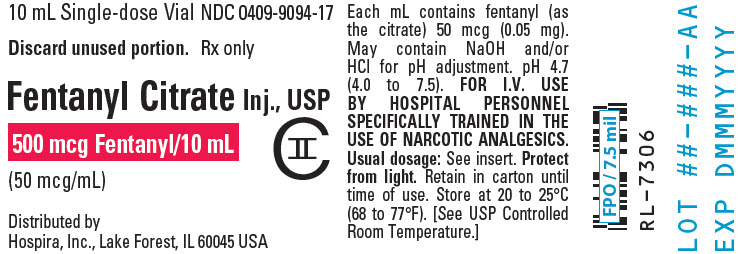
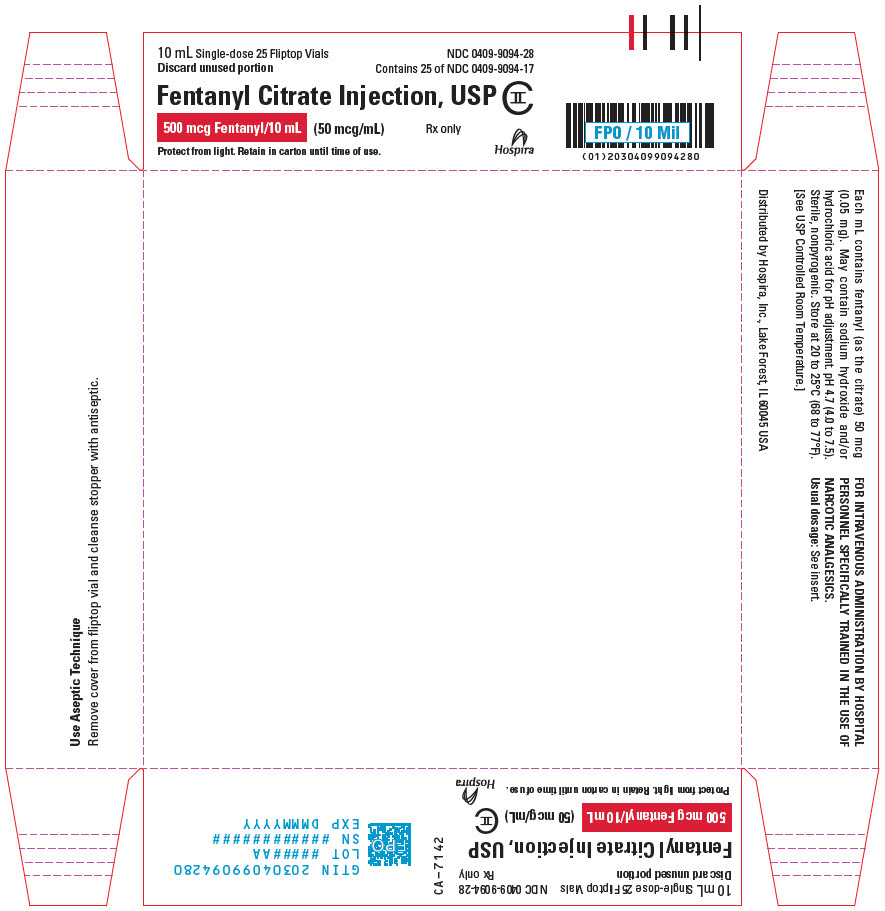
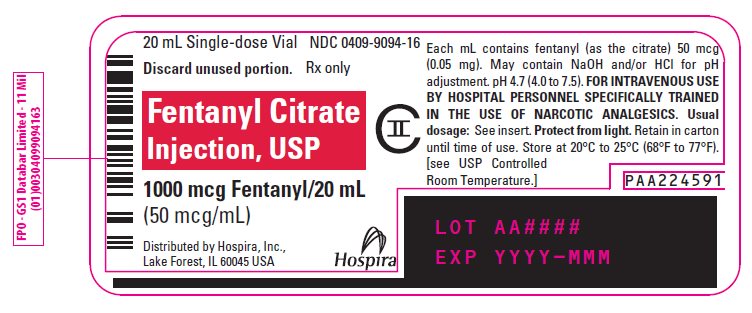
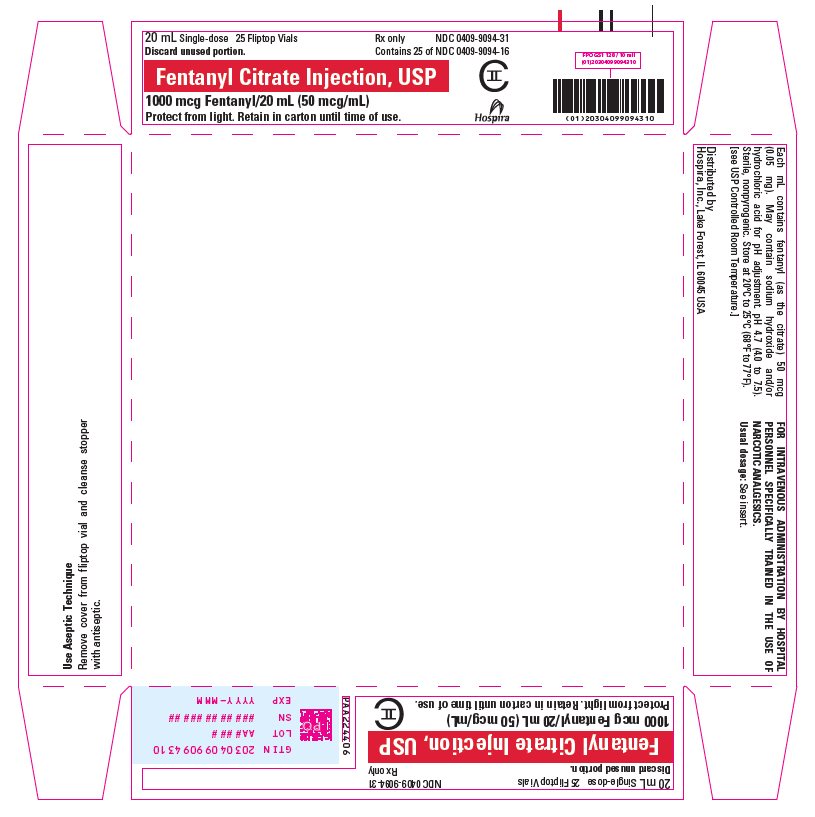
Distributed by Hospira, Inc., Lake Forest, IL 60045 USA

Logo (Fentanyl 02)
For Medical Information about Fentanyl Citrate Injection, please visit www.pfizermedinfo.com or call 1‑800-438-1985.
LAB-0843-6.0