Budesonide And Formoterol Fumarate Dihydrate Aerosol, Metered
Product Images NDC 0480-3081

View Photos of Packaging, Regulatory Labels, and Product Appearance

Product Visual Gallery

This gallery contains 16 technical images submitted to the FDA as part of the official labeling for Budesonide And Formoterol Fumarate Dihydrate (NDC 0480-3081). Unlike standard consumer photos, these assets often include clinical data figures, molecular chemical structures, and official manufacturer packaging layouts.

As provided by Teva Pharmaceuticals, Inc., these visuals offer a comprehensive scientific overview of the product's physical and chemical identity, aiding pharmacists and researchers in product verification and study.

FDA Label Image

1 (Image 1)

1 (Image 1)
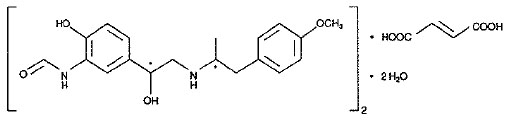
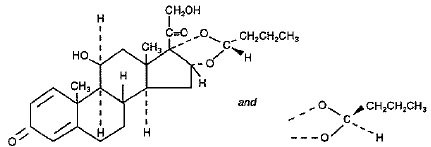
Chemical structure diagram showing the molecular structure of budesonide and formoterol fumarate dihydrate, the active ingredients in the product Budesonide and formoterol fumarate dihydrate.*
FDA Label Image

1 (Image 10)

1 (Image 10)
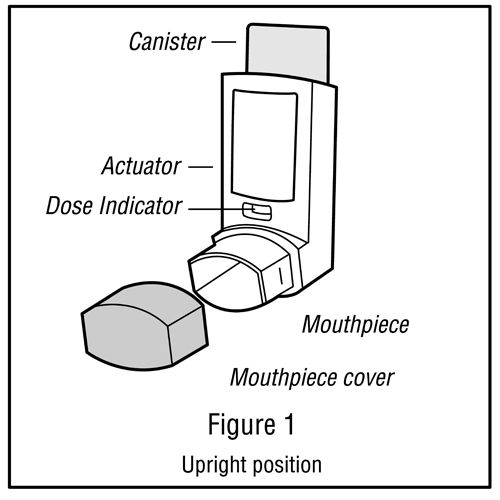
An instructional diagram showing an upright aerosol metered-dose inhaler with labeled parts: canister, actuator, dose indicator, mouthpiece, and mouthpiece cover. The illustration is titled 'Figure 1 Upright position' and depicts proper device orientation for use.*
FDA Label Image

2 (Image 11)

2 (Image 11)
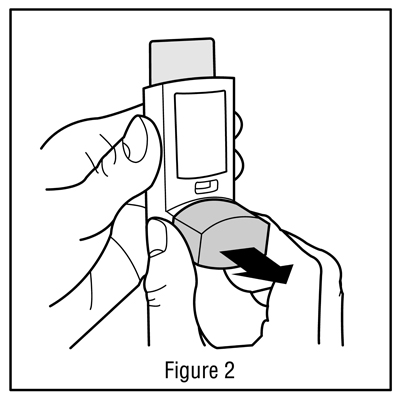
Illustration showing a person holding a metered-dose inhaler, specifically demonstrating the removal or placement of the mouthpiece cover with an arrow indicating the direction of movement.*
FDA Label Image

34 (Image 12)

34 (Image 12)
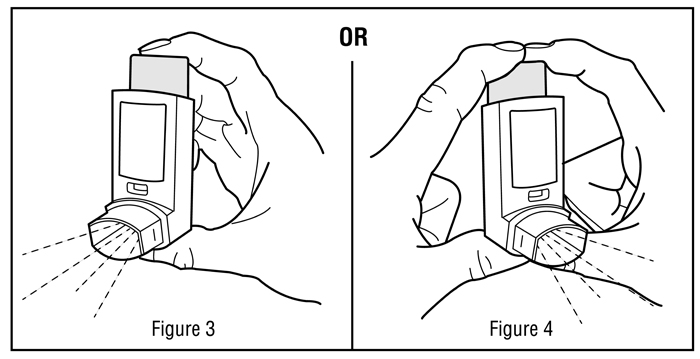
An instructional diagram showing two ways to use a metered-dose inhaler. Figure 3 depicts holding the inhaler upright, pressing down on the canister to release spray, while Figure 4 illustrates pressing the inhaler with the mouthpiece oriented differently to deliver aerosol spray, demonstrating proper inhalation techniques.*
FDA Label Image

5 (Image 13)

5 (Image 13)
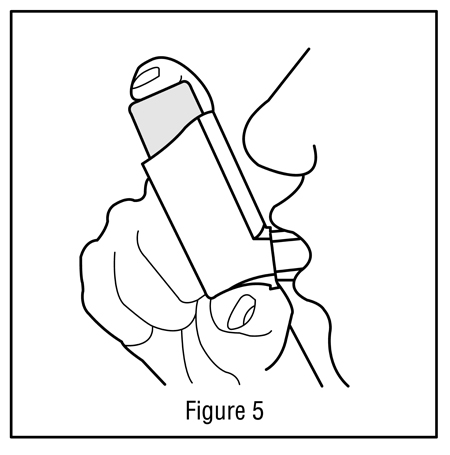
An instructional diagram illustrating the correct use of a metered dose aerosol inhaler held close to a person's mouth for respiratory inhalation. The image shows a hand gripping the inhaler with the mouth positioned nearby, demonstrating typical usage technique.*
FDA Label Image

1 (Image 14)

1 (Image 14)
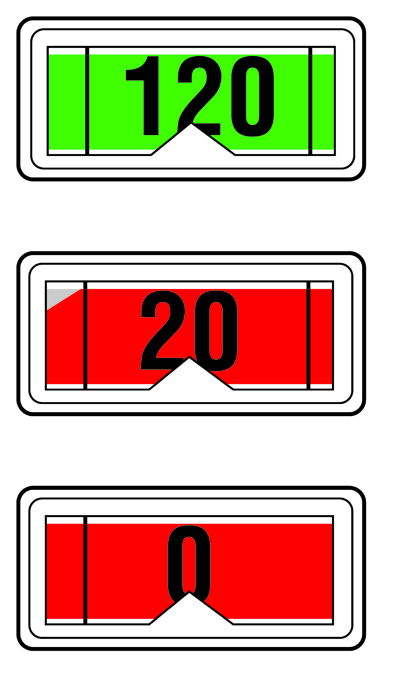
An illustration showing three dose counters for a metered aerosol inhaler. The counters display numbers 120 (green background), 20 (red background), and 0 (red background), indicating remaining doses in the inhaler.*
FDA Label Image

1 (Image 15)

1 (Image 15)
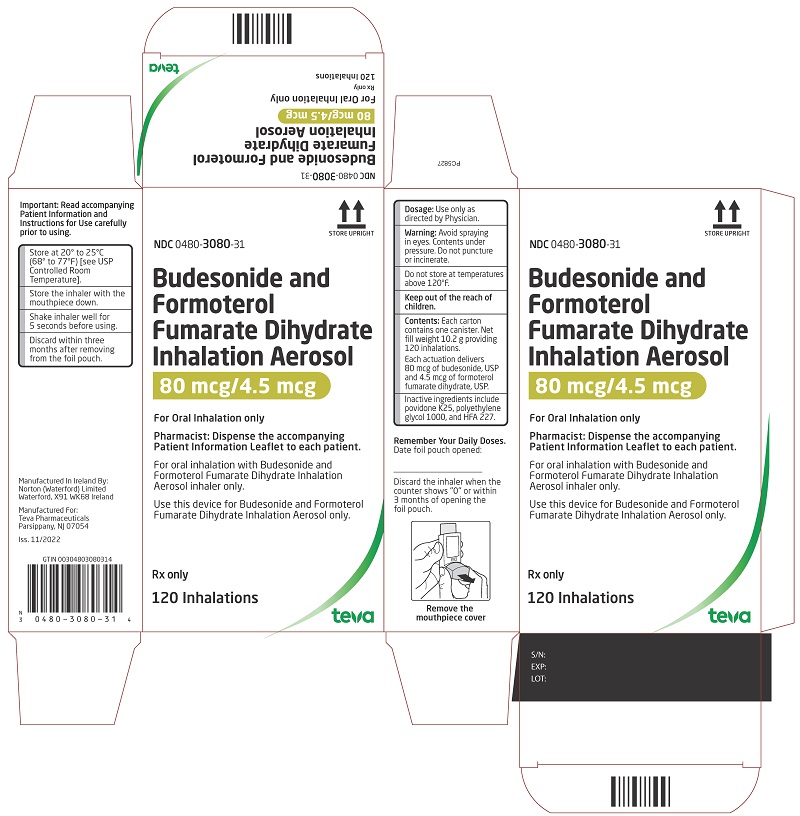
Packaging label for Budesonide and Formoterol Fumarate Dihydrate Inhalation Aerosol 80 mcg/4.5 mcg by Teva Pharmaceuticals, Inc. The label indicates this is a metered aerosol for oral inhalation, containing 120 inhalations. It includes storage instructions, warnings, inactive ingredients, and directions for patient use. The label features barcodes, NDC 0480-3080-31, and emphasizes dispensing an accompanying patient information leaflet.*
FDA Label Image

1 (Image 16)

1 (Image 16)
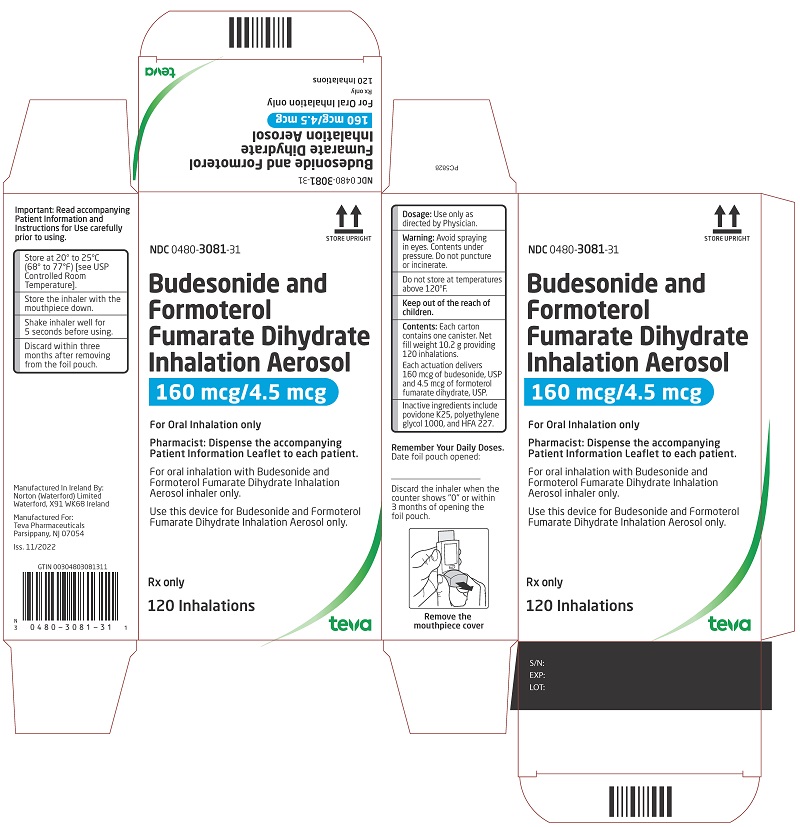
Packaging label for Budesonide and Formoterol Fumarate Dihydrate Inhalation Aerosol, 160 mcg/4.5 mcg strength. The metered aerosol is for oral inhalation only and contains 120 inhalations. Manufactured by Teva Pharmaceuticals, Inc. The label includes storage instructions, dosing warnings, and usage directions, with branding and barcodes visible.*
FDA Label Image

1 (Image 2)

1 (Image 2)
Chemical structure of budesonide and formoterol fumarate dihydrate showing the molecular arrangement of the active ingredients with associated fumaric acid and water components.*
FDA Label Image

1 (Image 3)

1 (Image 3)
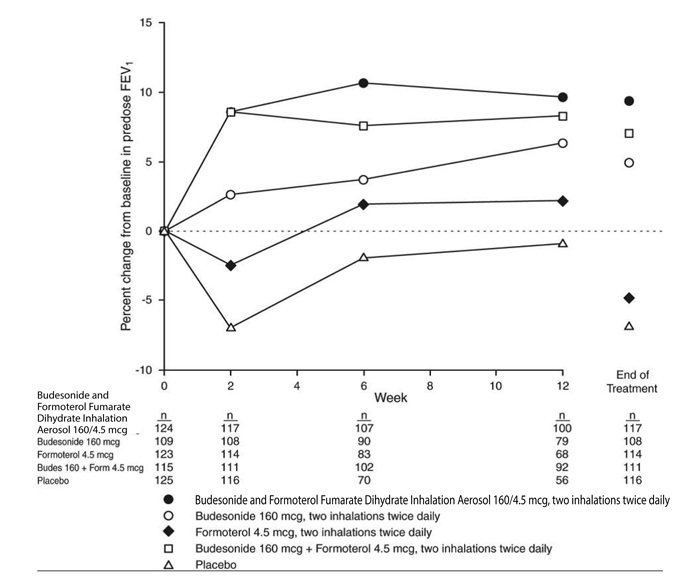
A line graph depicting the percent change from baseline in predose FEV1 over a 12-week period for different treatments with Budesonide, Formoterol fumarate dihydrate, their combination at 160/4.5 mcg, and a placebo group. The x-axis represents weeks, and the y-axis shows the percent change in FEV1. Data points are shown with distinct markers for each treatment group along with the number of subjects at different weeks.*
FDA Label Image

2 (Image 4)

2 (Image 4)
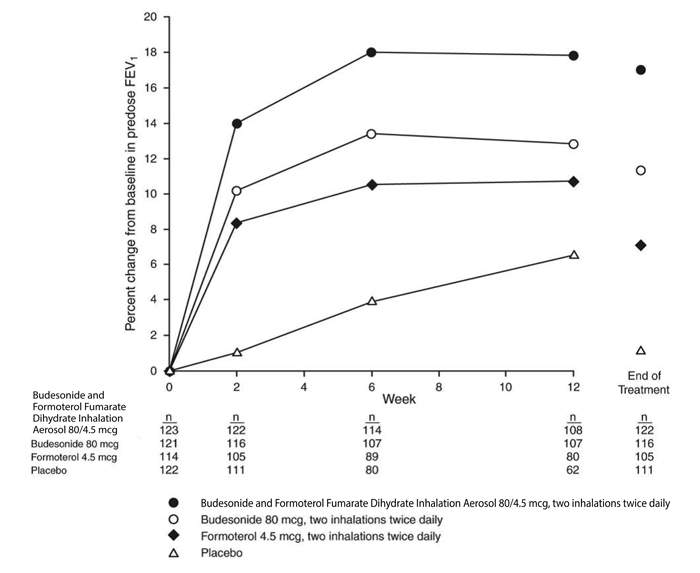
This line graph displays the percent change from baseline in pre-dose FEV1 over 12 weeks for four treatment groups: Budesonide and Formoterol Fumarate Dihydrate Inhalation Aerosol 80/4.5 mcg, Budesonide 80 mcg, Formoterol 4.5 mcg, and placebo. The graph shows a comparison of their effects on lung function during and at the end of treatment.*
FDA Label Image

3 (Image 5)

3 (Image 5)
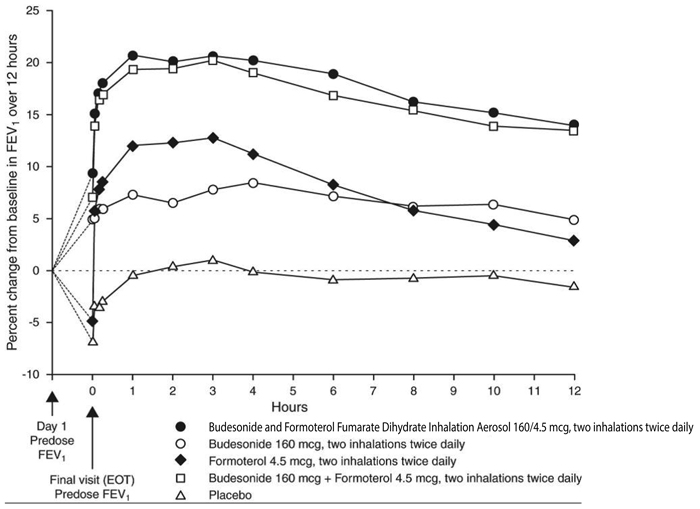
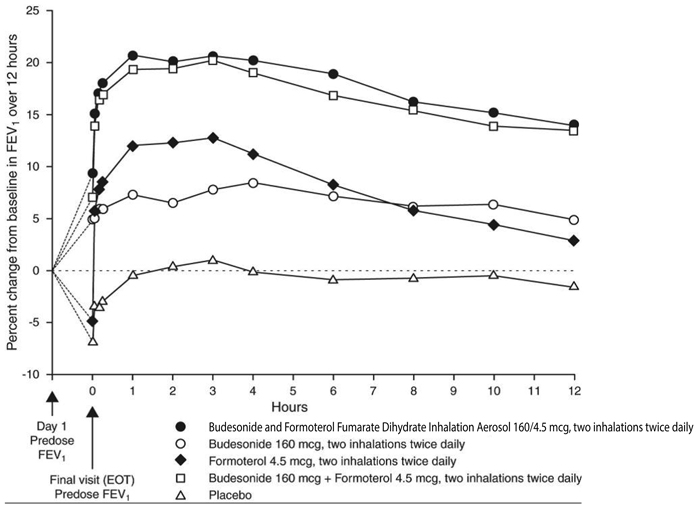
A line graph showing percent change from baseline in FEV1 over 12 hours among different treatment groups. The treatments compared include Budesonide and Formoterol Fumarate Dihydrate Inhalation Aerosol 160/4.5 mcg, Budesonide 160 mcg, Formoterol 4.5 mcg, Budesonide 160 mcg + Formoterol 4.5 mcg, and placebo. The x-axis represents hours from dose, and the y-axis represents percent change in FEV1. Data points show peak improvements and decline over time for each treatment.*
FDA Label Image

4 (Image 6)

4 (Image 6)
A line graph depicting the percent change from baseline in FEV1 over 12 hours for different treatments including Budesonide and Formoterol Fumarate Dihydrate Inhalation Aerosol (160/4.5 mcg), Budesonide 160 mcg, Formoterol 4.5 mcg, combination therapy, and placebo. The x-axis represents time in hours, and the y-axis shows percent change in FEV1. The graph compares the efficacy of these inhalation treatments in improving lung function over time.*
FDA Label Image

5 (Image 7)

5 (Image 7)
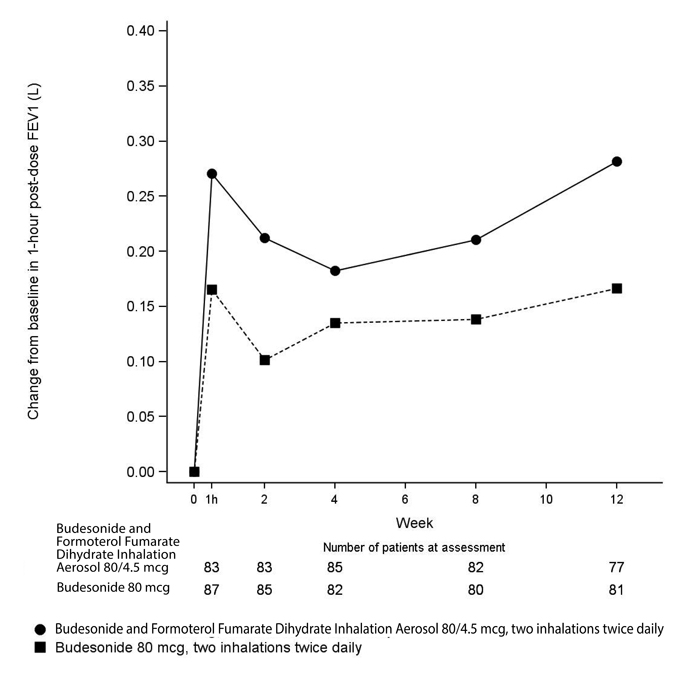
A line graph showing change from baseline in 1-hour post-dose FEV1 (L) over a 12-week period comparing Budesonide and Formoterol Fumarate Dihydrate Inhalation Aerosol 80/4.5 mcg and Budesonide 80 mcg, both administered as two inhalations twice daily. The graph illustrates higher FEV1 improvement for the combination aerosol than Budesonide alone across the assessment weeks.*
FDA Label Image

6 (Image 8)

6 (Image 8)
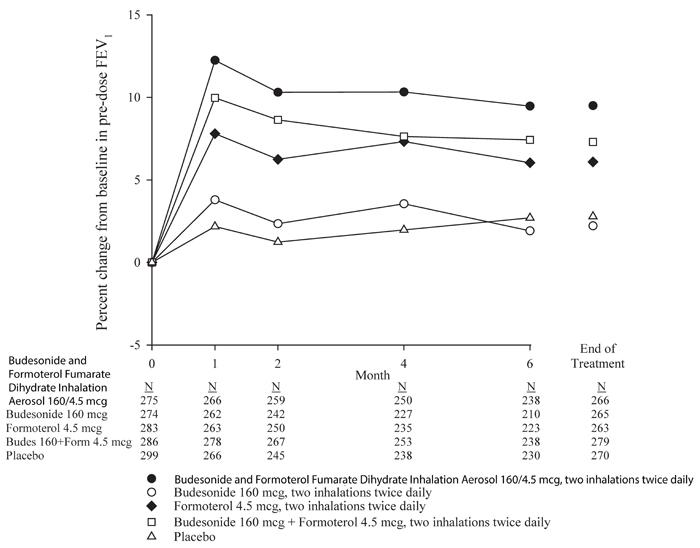
Line graph showing percent change from baseline in pre-dose FEV1 over 6 months and at end of treatment for different treatments: Budesonide and Formoterol Fumarate Dihydrate Inhalation Aerosol 160/4.5 mcg (two inhalations twice daily), Budesonide 160 mcg (two inhalations twice daily), Formoterol 4.5 mcg (two inhalations twice daily), Budesonide 160 mcg + Formoterol 4.5 mcg (two inhalations twice daily), and placebo. The graph includes sample sizes at each time point.*
FDA Label Image

7 (Image 9)

7 (Image 9)
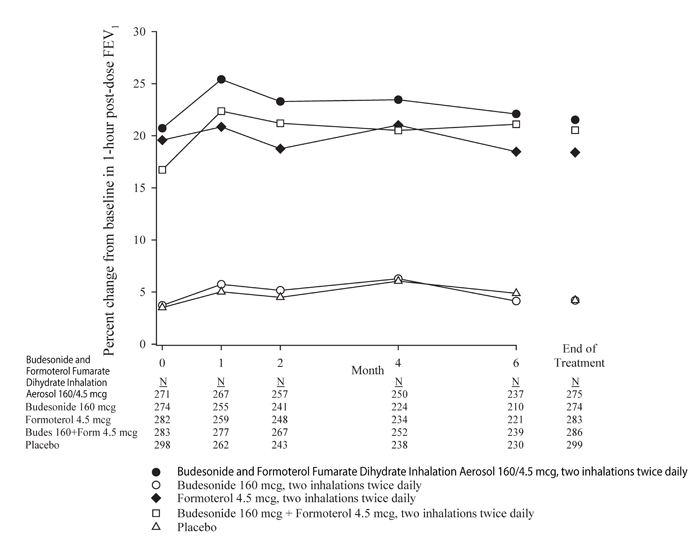
A line graph depicting percent change from baseline in 1-hour post-dose FEV1 over a six-month treatment period for different inhalation aerosols including Budesonide and Formoterol Fumarate Dihydrate inhalation aerosol at 160/4.5 mcg, Budesonide 160 mcg, Formoterol 4.5 mcg, their combination, and placebo. The x-axis represents time in months, and the y-axis shows percent change from baseline. Multiple datasets with distinct markers track changes, showing efficacy trends for each treatment group.*

* About these descriptions: Image descriptions on this page are generated by automated AI analysis of the product label images from the manufacturer's FDA label submission (SPL). They are provided for reference only and may contain errors or omissions. Always rely on the printed label itself and the official FDA labeling, and consult a pharmacist or healthcare professional with any questions about this product.