Clarithromycin Tablet, Film Coated, Extended Release
Product Images NDC 0527-1930

View Photos of Packaging, Regulatory Labels, and Product Appearance

Product Visual Gallery

This gallery contains 4 technical images submitted to the FDA as part of the official labeling for Clarithromycin (NDC 0527-1930). Unlike standard consumer photos, these assets often include clinical data figures, molecular chemical structures, and official manufacturer packaging layouts.

As provided by Lannett Company, Inc., these visuals offer a comprehensive scientific overview of the product's physical and chemical identity, aiding pharmacists and researchers in product verification and study.

FDA Label Image

Clarithromycin Extended-release Tablets Usp, 500 mg (Clar Er Container Label 500mg)
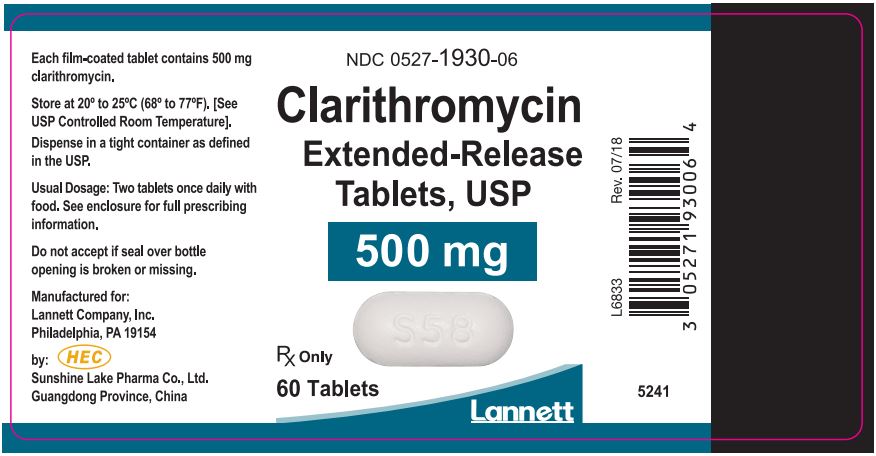
Clarithromycin Extended-release Tablets Usp, 500 mg (Clar Er Container Label 500mg)
Each tablet of this medicine contains 500mg of clarithromycin. It is recommended to store the medicine at a temperature between 20°C to 25°C. The medicine should be dispensed in a tightly closed container, as defined in the USP Extended-Release Tablets label. The usual dosage is two tablets with food once daily. The medicine should not be accepted if the seal over the bottle is already broken or missing. The information enclosed provides the full prescribing information. The medicine is manufactured by Sunshine Lake Pharma Co, Ltd, in China and is distributed by Lannett Company, Inc. It contains 60 tablets.*
FDA Label Image

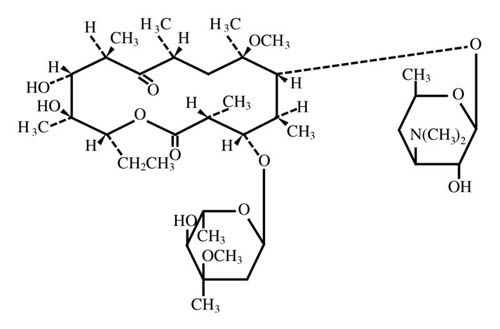
Chemical Structure For Clarithromycin (Clarithromycin Tab Stucture)

FDA Label Image

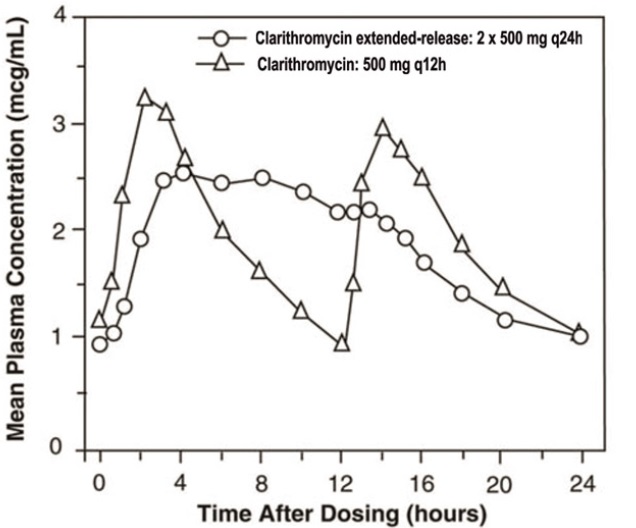
Steady State Graph (Clarithromycin Tabs Steady Graph)

Steady State Graph (Clarithromycin Tabs Steady Graph)
This is a graph displaying the mean plasma concentration (mcg/mL) over time after dosing of Clarithromycin extended-release (2 x 500 mg q24h) and Clarithromycin (500 mg q12h). The x-axis shows the time in hours (up to 24 hours) and the y-axis shows the mean plasma concentration in mcg/mL.*
FDA Label Image

Logo (Logo0001 01)

* These product label images have been analyzed using experimental machine learning. Please verify findings with the primary label text.