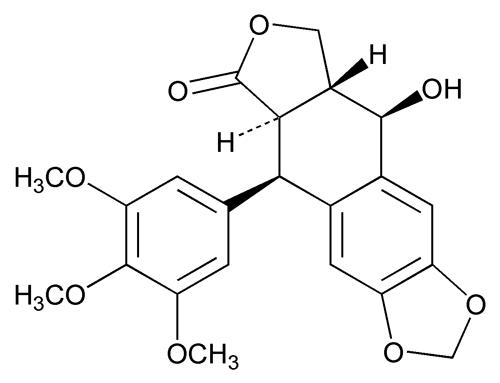
An 80-week carcinogenicity study in the mouse was performed using a 0.5% podofilox solution applied dermally at 0.04, 0.2 and 1.0 mg/kg/day. There were no differences between the podofilox treated mice at any dose level and vehicle control in the incidence of neoplasia. Published animal studies, in general, have not shown the drug substance, podofilox, to be carcinogenic.2,3,4,5,6 There are published reports that, in mouse studies, crude podophyllin resin (containing podofilox) applied topically to the cervix produced changes resembling carcinoma in situ.7 These changes were reversible at five weeks after cessation of treatment. In one reported experiment, epidermal carcinoma of the vagina and cervix was found in 1 out of 18 mice after 120 applications of podophyllin8 (the drug was applied twice weekly over a 15-month period).
Podofilox was not mutagenic in the Ames plate reverse mutation assay at concentrations up to 5 mg/plate, with and without metabolic activation. No cell transformation related to potential oncogenicity was observed in BALB/3T3 cells after exposure to podofilox at concentrations up to 0.008 mcg/mL, without metabolic activation and 12 mcg/mL podofilox with metabolic activation. Results from the mouse micronucleus in vivo assay using podofilox 0.5% solution at doses up to 25 mg/kg (75 mg/m2), indicate that podofilox should be considered a potential clastogen (a chemical that induces disruption and breakage of chromosomes).
Daily topical application of 0.5% podofilox solution at doses up to the equivalent of 0.2 mg/kg (1.18 mg/m2, approximately equivalent to the human daily dose) to rats throughout gametogenesis, mating, gestation, parturition and lactation for two generations demonstrated no impairment of fertility.