Other
Hepatotoxicity:
Clinical hepatitis and hepatic decompensation, including some fatalities, have been reported. Extra vigilance is warranted in patients with chronic hepatitis B or hepatitis C co-infection, as these patients have an increased risk of hepatotoxicity [see Warnings and Precautions (5.1)].
Intracranial Hemorrhage:
Both fatal and non-fatal intracranial hemorrhage have been reported [see Warnings and Precautions (5.2)].
Less Common Adverse Reactions
Other adverse reactions reported in <2% of adult patients (n=1474) treated with APTIVUS/ritonavir 500/200 mg in Phase 2 and 3 clinical trials are listed below by body system:
Blood and Lymphatic System Disorders: thrombocytopenia
Gastrointestinal Disorders: abdominal distension, dyspepsia, flatulence, gastroesophageal reflux disease, pancreatitis
General Disorders: influenza-like illness, malaise
Hepatobiliary Disorders: hepatitis, hepatic failure, hyperbilirubinemia, cytolytic hepatitis, toxic hepatitis, hepatic steatosis
Immune System Disorders: hypersensitivity
Investigations: hepatic enzymes increased, liver function test abnormal, lipase increased
Metabolism and Nutrition Disorders: anorexia, decreased appetite, diabetes mellitus, facial wasting, hyperamylasemia, hypercholesterolemia, hyperglycemia, mitochondrial toxicity
Musculoskeletal and Connective Tissue Disorders: muscle cramp
Nervous System Disorders: dizziness, intracranial hemorrhage, somnolence
Psychiatric Disorders: sleep disorder
Renal and Urinary Disorders: renal insufficiency
Skin and Subcutaneous System Disorders: exanthem, lipoatrophy, lipodystrophy acquired, lipohypertrophy, pruritus
Laboratory Abnormalities
Treatment-emergent laboratory abnormalities reported at 48 weeks in the controlled clinical trials 1182.12 and 1182.48 in adults are summarized in Table 3 below.
| Randomized, Controlled Clinical Trials 1182.12 and 1182.48 | |||
|---|---|---|---|
| Percentage of Patients (rate per 100 patient-exposure years) | |||
| Limit | APTIVUS/ritonavir (500/200 mg BID) + OBR (n=738) | Comparator PI/ritonavir + OBR* (n=724) | |
| *Comparator PI/ritonavir: lopinavir/ritonavir 400/100 mg BID, indinavir/ritonavir 800/100 mg BID, saquinavir/ritonavir 1000/100 mg BID, amprenavir/ritonavir 600/100 mg BID | |||
| Hematology | |||
| WBC count decrease | |||
| Grade 3 | <2.0 × 10³/µL | 5.4% (5.6) | 4.8% (7.7) |
| Grade 4 | <1.0 × 10³/µL | 0.3% (0.3) | 1.1% (1.7) |
| Chemistry | |||
| Amylase | |||
| Grade 3 | >2.5 × ULN | 5.7% (5.9) | 6.4% (10.4) |
| Grade 4 | >5 × ULN | 0.3% (0.3) | 0.7% (1.1) |
| ALT | |||
| Grade 2 | >2.5-5 × ULN | 14.9% (16.5) | 7.5% (12.4) |
| Grade 3 | >5-10 × ULN | 5.6% (5.7) | 1.7% (2.6) |
| Grade 4 | >10 × ULN | 4.1% (4.1) | 0.4% (0.7) |
| AST | |||
| Grade 2 | >2.5-5 × ULN | 9.9% (10.5) | 8.0% (13.3) |
| Grade 3 | >5-10 × ULN | 4.5% (4.6) | 1.4% (2.2) |
| Grade 4 | >10 × ULN | 1.6% (1.6) | 0.4% (0.6) |
| ALT and/or AST | |||
| Grade 2-4 | >2.5 × ULN | 26.0% (31.5) | 13.7% (23.8) |
| Cholesterol | |||
| Grade 2 | >300 – 400 mg/dL | 15.6% (17.7) | 6.4% (10.5) |
| Grade 3 | >400 – 500 mg/dL | 3.3% (3.3) | 0.3% (0.4) |
| Grade 4 | >500 mg/dL | 0.9% (1.0) | 0.1% (0.2) |
| Triglycerides | |||
| Grade 2 | 400 – 750 mg/dL | 35.9% (49.9) | 26.8% (51.0) |
| Grade 3 | >750 – 1200 mg/dL | 16.9% (19.4) | 8.7% (14.6) |
| Grade 4 | >1200 mg/dL | 8.0% (8.4) | 4.3% (7.0) |
In controlled clinical trials 1182.12 and 1182.48 extending up to 96 weeks, the proportion of patients who developed Grade 2-4 ALT and/or AST elevations increased from 26% at week 48 to 32.1% at week 96 with APTIVUS/ritonavir. The risk of developing transaminase elevations is greater during the first year of therapy.
Pregnancy Exposure Registry
There is a pregnancy exposure registry that monitors pregnancy outcomes in women exposed to APTIVUS during pregnancy. Healthcare providers are encouraged to register patients by calling the Antiretroviral Pregnancy Registry (APR) at 1-800-258-4263.
Risk Summary
Prospective pregnancy data from the APR and an Expanded Access program are not sufficient to adequately assess the risk of major birth defects, miscarriage, or adverse maternal or fetal outcomes. Tipranavir use during pregnancy has been evaluated in a limited number of women as reported by the APR and an Expanded Access program, and available data show no birth defects in 13 first trimester exposures (see Data) compared with the background rate for major birth defects of 2.7% in the US reference population of the Metropolitan Atlanta Congenital Defects Program (MACDP). The rate of miscarriage is not reported in the APR. The estimated background rate of miscarriage in clinically recognized pregnancies in the U.S. general population is 15-20%. The background risk of birth defects and miscarriage for the indicated population is unknown. Methodological limitations of the APR include the use of MACDP as the external comparator group. The MACDP population is not disease-specific, evaluates women and infants from a limited geographic area, and does not include outcomes for births that occurred at <20 weeks gestation.
In animal reproduction studies, fetal toxicities were observed with tipranavir at maternally toxic doses with systemic exposures (AUC) less than those in humans at the recommended human dose (RHD) (see Data).
Data
Human Data
Based on prospective reports to the APR and an Expanded Access program for approximately 17 live births following exposure to tipranavir-containing regimens (including 13 live births exposed in the first trimester and 4 live births exposed in the second/third trimester), there were no birth defects reported in live-born infants.
Tipranavir has been shown to cross the placenta.
Animal Data
Tipranavir was administered orally to pregnant rats (at 0, 40, 400, or 1000 mg/kg/day from gestation day 6 to 17) and rabbits (at 0, 75, 150, or 375 mg/kg/day from gestation day 6 to 20). In rats, fetal toxicities including decreased body weight and sternebrae ossification occurred at maternally toxic doses (≥400 mg/kg/day) (approximately 0.8 times human exposure at the RHD). In rabbits, fetal toxicities including decreased fetal body weights, wavy ribs, and bent femurs occurred at a maternally toxic dose (375 mg/kg/day) (approximately 0.05 times human exposure at the RHD). Maternal toxicity included an increased incidence of abortions at doses ≥150 mg/kg/day (approximately 0.05 times human exposure at the RHD).
In the pre/post-natal development study, tipranavir was administered orally to rats at 0, 40, 400, 1000 mg/kg/day from gestation day 6 to lactation day 21. The only significant effect observed was growth inhibition of the offspring at maternally toxic doses (≥400 mg/kg/day) (approximately 0.8 times human exposure at the RHD).
Risk Summary
The Centers for Disease Control and Prevention recommend that HIV-1 infected mothers in the United States not breast-feed their infants to avoid risking postnatal transmission of HIV-1 infection. There is no information regarding the presence of tipranavir in human milk, the effects on the breastfed infant, or the effects on milk production. Tipranavir is present in rat milk (see Data). Because of the potential for (1) HIV-1 transmission (in HIV-negative infants), (2) developing viral resistance (in HIV-positive patients), and (3) any possible adverse effects of APTIVUS, mothers should not breastfeed if they are receiving APTIVUS.
Data
In a lactation study, tipranavir was excreted into the milk of lactating rats following a single oral dose of tipranavir (10 mg/kg) on lactation/postpartum day 14, with a maximal milk concentration achieved 2 hours post-administration (milk concentration 0.13 times that of maternal plasma concentration).
Contraception
Use of APTIVUS may reduce the efficacy of estrogen-based oral contraceptives. Advise patients to use alternative methods of nonhormonal contraception [see Drug Interactions (7.2)].
ECG Evaluation
The effect of APTIVUS/ritonavir on the QTcF interval was measured in a study in which 81 healthy subjects received the following treatments twice daily for 2.5 days: APTIVUS/ritonavir (500/200 mg), APTIVUS/ritonavir at a supra-therapeutic dose (750/200 mg), and placebo/ritonavir (-/200 mg). After baseline and placebo adjustment, the maximum mean QTcF change was 3.2 ms (1-sided 95% Upper CI: 5.6 ms) for the 500/200 mg dose and 8.3 ms (1-sided 95% Upper CI: 10.9 ms) for the supra-therapeutic 750/200 mg dose.
Antiviral Activity in vivo
The median Inhibitory Quotient (IQ) determined from 264 treatment-experienced adult patients was about 80 (inter-quartile range: 31-226), from the controlled clinical trials 1182.12 and 1182.48. The IQ is defined as the tipranavir trough concentration divided by the viral EC50 value, corrected for protein binding. There was a relationship between the proportion of patients with a ≥1 log10 reduction of viral load from baseline at week 48 and their IQ value. Among the 198 patients receiving APTIVUS/ritonavir with no new enfuvirtide use (e.g., new enfuvirtide, defined as initiation of enfuvirtide for the first time), the response rate was 23% in those with an IQ value <80 and 59% in those with an IQ value ≥80. Among the 66 patients receiving APTIVUS/ritonavir with new enfuvirtide, the response rates in patients with an IQ value <80 versus those with an IQ value ≥80 were 55% and 71%, respectively. These IQ groups are derived from a select population and are not meant to represent clinical breakpoints.
Absorption and Bioavailability
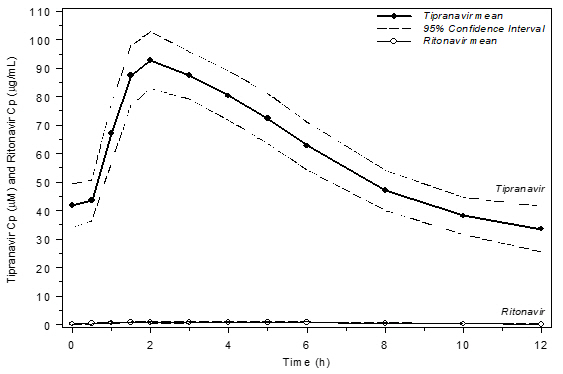
Absorption of tipranavir in humans is limited, although no absolute quantification of absorption is available. Tipranavir is a P-gp substrate, a weak P-gp inhibitor, and appears to be a potent P-gp inducer as well. In vivo data suggest that tipranavir/ritonavir, at the dose of 500/200 mg, is a P-gp inhibitor after the first dose and induction of P-gp occurs over time. Tipranavir trough concentrations at steady-state are about 70% lower than those on Day 1, presumably due to intestinal P-gp induction. Steady state is attained in most subjects after 7-10 days of dosing.
Dosing APTIVUS 500 mg with 200 mg ritonavir capsules twice daily for greater than 2 weeks and without meal restriction produced the pharmacokinetic parameters for male and female HIV-1 positive patients presented in Table 5.
| Parameter | Females (n=14) | Males (n=106) |
|---|---|---|
| aPopulation pharmacokinetic parameters reported as mean ± standard deviation | ||
| Cptrough (µM) | 41.6 ± 24.3 | 35.6 ± 16.7 |
| Cmax (µM) | 94.8 ± 22.8 | 77.6 ± 16.6 |
| Tmax (h) | 2.9 | 3.0 |
| AUC0-12h (µM∙h) | 851 ± 309 | 710 ± 207 |
| CL (L/h) | 1.15 | 1.27 |
| V (L) | 7.7 | 10.2 |
| t1/2 (h) | 5.5 | 6.0 |
Effects of Food on Oral Absorption
For APTIVUS capsules or oral solution co-administered with ritonavir capsules at steady-state, no clinically significant changes in tipranavir Cmax, Cp12h, and AUC were observed under fed conditions (500-682 Kcal, 23-25% calories from fat) compared to fasted conditions [see Dosage and Administration (2)]. The effect of food on tipranavir exposure when APTIVUS capsules or oral solution is co-administered with ritonavir tablets has not been evaluated [see Dosage and Administration (2)]. For information on the effect of food on the bioavailability of ritonavir tablets, please refer to the ritonavir tablet prescribing information.
Distribution
Tipranavir is extensively bound to plasma proteins (>99.9%). It binds to both human serum albumin and α-1-acid glycoprotein. The mean fraction of tipranavir (dosed without ritonavir) unbound in plasma was similar in clinical samples from healthy volunteers and HIV-1 positive patients. Total plasma tipranavir concentrations for these samples ranged from 9 to 82 µM. The unbound fraction of tipranavir appeared to be independent of total drug concentration over this concentration range.
No studies have been conducted to determine the distribution of tipranavir into human cerebrospinal fluid or semen.
Metabolism
In vitro metabolism studies with human liver microsomes indicated that CYP 3A4 is the predominant CYP enzyme involved in tipranavir metabolism.
The oral clearance of tipranavir decreased after the addition of ritonavir, which may represent diminished first-pass clearance of the drug at the gastrointestinal tract as well as the liver.
The metabolism of tipranavir in the presence of 200 mg ritonavir is minimal. Administration of 14C-tipranavir to subjects that received APTIVUS/ritonavir 500/200 mg dosed to steady-state demonstrated that unchanged tipranavir accounted for 98.4% or greater of the total plasma radioactivity circulating at 3, 8, or 12 hours after dosing. Only a few metabolites were found in plasma, and all were at trace levels (0.2% or less of the plasma radioactivity). In feces, unchanged tipranavir represented the majority of fecal radioactivity (79.9% of fecal radioactivity). The most abundant fecal metabolite, at 4.9% of fecal radioactivity (3.2% of dose), was a hydroxyl metabolite of tipranavir. In urine, unchanged tipranavir was found in trace amounts (0.5% of urine radioactivity). The most abundant urinary metabolite, at 11.0% of urine radioactivity (0.5% of dose) was a glucuronide conjugate of tipranavir.
Elimination
Administration of 14C-tipranavir to subjects (n=8) that received APTIVUS/ritonavir 500/200 mg dosed to steady-state demonstrated that most radioactivity (median 82.3%) was excreted in feces, while only a median of 4.4% of the radioactive dose administered was recovered in urine. In addition, most radioactivity (56%) was excreted between 24 and 96 hours after dosing. The effective mean elimination half-life of tipranavir/ritonavir in healthy volunteers (n=67) and HIV-1 infected adult patients (n=120) was approximately 4.8 and 6.0 hours, respectively, at steady state following a dose of 500/200 mg twice daily with a light meal.
Special Populations
Renal Impairment
APTIVUS pharmacokinetics has not been studied in patients with renal dysfunction. However, since the renal clearance of tipranavir is negligible, a decrease in total body clearance is not expected in patients with renal insufficiency.
Hepatic Impairment
In a study comparing 9 HIV-1 negative patients with mild (Child-Pugh Class A) hepatic impairment to 9 HIV-1 negative controls, the single and multiple dose plasma concentrations of tipranavir and ritonavir were increased in patients with hepatic impairment, but were within the range observed in clinical trials. No dosing adjustment is required in patients with mild hepatic impairment.
The influence of moderate hepatic impairment (Child-Pugh Class B) or severe hepatic impairment (Child-Pugh Class C) on the multiple-dose pharmacokinetics of tipranavir administered with ritonavir has not been evaluated [see Dosage and Administration (2), Contraindications (4), and Warnings and Precautions (5.1)].
Gender
Evaluation of steady-state plasma tipranavir trough concentrations at 10-14 h after dosing from the controlled clinical trials 1182.12 and 1182.48 demonstrated that females generally had higher tipranavir concentrations than males. After 4 weeks of APTIVUS/ritonavir 500/200 mg BID, the median plasma trough concentration of tipranavir was 43.9 µM for females and 31.1 µM for males. The difference in concentrations does not warrant a dose adjustment.
Race
Evaluation of steady-state plasma tipranavir trough concentrations at 10-14 h after dosing from the controlled clinical trials 1182.12 and 1182.48 demonstrated that white males generally had more variability in tipranavir concentrations than black males, but the median concentration and the range making up the majority of the data are comparable between the races.
Geriatric Patients
Evaluation of steady-state plasma tipranavir trough concentrations at 10-14 h after dosing from the controlled clinical trials 1182.12 and 1182.48 demonstrated that there was no change in median trough tipranavir concentrations as age increased for either gender through 65 years of age. There were an insufficient number of women greater than age 65 years in the two trials to evaluate the elderly.
Pediatric Patients
Among pediatric patients in clinical trial 1182.14, steady-state plasma tipranavir trough concentrations were obtained 10 to 14 hours following study drug administration. Pharmacokinetic parameters by age group are presented in Table 6.
| Parameter | 2 to <6 years (n=12) | 6 to <12 years (n=8) | 12 to 18 years (n=6) |
|---|---|---|---|
| aPopulation pharmacokinetic parameters reported as mean ± standard deviation | |||
| Cptrough (µM) | 59.6 ± 23.6 | 66.3 ± 12.5 | 53.3 ± 32.4 |
| Cmax (µM) | 135 ± 44 | 151 ± 32 | 138 ± 52 |
| Tmax (h) | 2.5 | 2.6 | 2.7 |
| AUC0-12h (µM∙h) | 1190 ± 332 | 1354 ± 256 | 1194 ± 517 |
| CL/F (L/h) | 0.34 | 0.45 | 0.99 |
| V (L) | 4.0 | 4.7 | 5.3 |
| t1/2 (h) | 8.1 | 7.1 | 5.2 |
Drug Interactions
Drug interaction studies were performed with APTIVUS capsules co-administered with ritonavir, and other drugs likely to be co-administered and some drugs commonly used as probes for pharmacokinetic interactions. The effects of co-administration of APTIVUS with 200 mg ritonavir on the AUC, Cmax, and Cmin of tipranavir or the co-administered drug, are summarized in Tables 7 and 8, respectively. For information regarding clinical recommendations see Drug Interactions (7.2).
| Co-administered Drug | Co-administered Drug Dose (Schedule) | tipranavir/ ritonavir Drug Dose (Schedule) | n | PK | Ratio (90% Confidence Interval) of Tipranavir Pharmacokinetic Parameters with/without Co-administered Drug; No Effect = 1.00 | ||
|---|---|---|---|---|---|---|---|
| Cmax | AUC | Cmin | |||||
| *steady state comparison to historical data (n) | |||||||
| ↑ increase, ↓ decrease, ↔ no change, ↕ unable to predict | |||||||
| Antacids (Maalox®) | 20 mL (1 dose) | 500/200 mg (1 dose) | 23 | ↓ | 0.75 (0.63, 0.88) | 0.73 (0.64, 0.84) | - |
| Atazanavir/ritonavir | 300/100 mg QD (9 doses) | 500/100 mg BID (34 doses) | 13 | ↑ | 1.08 (0.98, 1.20) | 1.20 (1.09, 1.32) | 1.75 (1.39, 2.20) |
| Atorvastatin | 10 mg (1 dose) | 500/200 mg BID (14 doses) | 22 | ↔ | 0.96 (0.86, 1.07) | 1.08 (1.00, 1.15) | 1.04 (0.89, 1.22) |
| Clarithromycin | 500 mg BID (25 doses) | 500/200 mg BID* | 24 (68) | ↑ | 1.40 (1.24, 1.47) | 1.66 (1.43, 1.73) | 2.00 (1.58, 2.47) |
| Didanosine | 400 mg (1 dose) | 500/100 mg BID (27 doses) | 5 | ↓ | 1.32 (1.09, 1.60) | 1.08 (0.82, 1.42) | 0.66 (0.31, 1.43) |
| Efavirenz | 600 mg QD (8 doses) | 500/100 mg BID* | 21 (89) | ↓ | 0.79 (0.69, 0.89) | 0.69 (0.57, 0.83) | 0.58 (0.36, 0.86) |
| 750/200 mg BID* | 25 (100) | ↔ | 0.97 (0.85, 1.09) | 1.01 (0.85, 1.18) | 0.97 (0.69, 1.28) | ||
| Ethinyl estradiol /Norethindrone | 0.035/1.0 mg (1 dose) | 500/100 mg BID (21 doses) | 21 | ↓ | 1.10 (0.98, 1.24) | 0.98 (0.88, 1.11) | 0.73 (0.59, 0.90) |
| 750/200 mg BID (21 doses) | 13 | ↔ | 1.01 (0.96, 1.06) | 0.98 (0.90, 1.07) | 0.91 (0.69, 1.20) | ||
| Fluconazole | 100 mg QD (12 doses) | 500/200 mg BID* | 20 (68) | ↑ | 1.32 (1.18, 1.47) | 1.50 (1.29, 1.73) | 1.69 (1.33, 2.09) |
| Loperamide | 16 mg (1 dose) | 750/200 mg BID (21 doses) | 24 | ↓ | 1.03 (0.92, 1.17) | 0.98 (0.86, 1.12) | 0.74 (0.62, 0.88) |
| Rifabutin | 150 mg (1 dose) | 500/200 mg BID (15 doses) | 21 | ↔ | 0.99 (0.93, 1.07) | 1.00 (0.96, 1.04) | 1.16 (1.07, 1.27) |
| Rosuvastatin | 10 mg (1 dose) | 500/200 mg BID (24 doses) | 16 | ↔ | 1.08 (1.00, 1.17) | 1.06 (0.97, 1.15) | 0.99 (0.88, 1.11) |
| Tadalafil | 10 mg (1 dose) | 500/200 mg BID (17 doses) | 17 | ↔ | 0.90 (0.80, 1.01) | 0.85 (0.74, 0.97) | 0.81 (0.70, 0.94) |
| Tenofovir | 300 mg (1 dose) | 500/100 mg BID | 22 | ↓ | 0.83 (0.74, 0.94) | 0.82 (0.75, 0.91) | 0.79 (0.70, 0.90) |
| 750/200 mg BID (23 doses) | 20 | ↔ | 0.89 (0.84, 0.96) | 0.91 (0.85, 0.97) | 0.88 (0.78, 1.00) | ||
| Valacyclovir | 500 mg (1 dose) | 500/200 mg BID (23 doses) | 26 | ↔ | 1.02 (0.95, 1.10) | 1.01 (0.96, 1.06) | 0.98 (0.93, 1.04) |
| Zidovudine | 300 mg (1 dose) | 500/100 mg BID | 29 | ↓ | 0.87 (0.80, 0.94) | 0.82 (0.76, 0.89) | 0.77 (0.68, 0.87) |
| 750/200 mg BID (23 doses) | 25 | ↔ | 1.02 (0.94, 1.10) | 1.02 (0.92, 1.13) | 1.07 (0.86, 1.34) | ||
| Co-administered Drug | Co-administered Drug Dose (Schedule) | tipranavir/ritonavir Drug Dose (Schedule) | n | PK | Ratio (90% Confidence Interval) of Co-administered Drug Pharmacokinetic Parameters with/without tipranavir/ritonavir; No Effect = 1.00 | ||
|---|---|---|---|---|---|---|---|
| Cmax | AUC | Cmin | |||||
| a HIV-1 positive patients | |||||||
| b Buprenorphine/Naloxone maintenance patients | |||||||
| c HIV-1 positive patients (tipranavir/ritonavir 250 mg/200 mg, 750 mg/200 mg and 1250 mg/100 mg) and healthy volunteers (tipranavir/ritonavir 500 mg/100 mg and 750 mg/200 mg) | |||||||
| d Normalized sum of parent drug (rifabutin) and active metabolite (25-O-desacetyl-rifabutin) | |||||||
| e Intensive PK analysis | |||||||
| f Drug levels obtained at 8-16 hrs post-dose | |||||||
| g n = 14 for Cmin | |||||||
| hAdministered as Valacyclovir | |||||||
| ↑ increase, ↓ decrease, ↔ no change, ↕ unable to predict | |||||||
| Abacavira | 300 mg BID (43 doses) | 250/200 mg BID | 28 | ↓ | 0.56 (0.48, 0.66) | 0.56 (0.49, 0.63) | - |
| 750/100 mg BID | 14 | ↓ | 0.54 (0.47, 0.63) | 0.64 (0.55, 0.74) | - | ||
| 1250/100 mg BID (42 doses) | 11 | ↓ | 0.48 (0.42, 0.53) | 0.65 (0.55, 0.76) | - | ||
| Acyclovirh | 500 mg (1 dose) | 500/200 mg BID (23 doses) | 26 | ↔ | 0.95 (0.88, 1.02) | 1.07 (1.04, 1.09) | - |
| Amprenavir/ritonavira | 600/100 mg BID (27 doses) | 500/200 mg BID (28 doses) | 16 74 | ↓ ↓ | 0.61 (0.51, 0.73)e | 0.56 (0.49, 0.64)e - | 0.45 (0.38, 0.53)e 0.44 (0.39, 0.49)f |
| Atazanavir/ritonavir | 300/100 mg QD (9 doses) | 500/100 mg BID (34 doses) | 13 | ↓ | 0.43 (0.38, 0.50) | 0.32 (0.29, 0.36) | 0.19 (0.15, 0.24) |
| Atorvastatin | 10 mg (1 dose) | 500/200 mg BID (17 doses) | 22 | ↑ | 8.61 (7.25, 10.21) | 9.36 (8.02, 10.94) | 5.19 (4.21, 6.40) |
| Orthohydroxy-atorvastatin | 21, 12, 17 | ↓ | 0.02 (0.02, 0.03) | 0.11 (0.08, 0.17) | 0.07 (0.06, 0.08) | ||
| Parahydroxy-atorvastatin | 13, 22, 1 | ↓ | 1.04 (0.87, 1.25) | 0.18 (0.14, 0.24) | 0.33 (NA) | ||
| Buprenorphine/ Naloxoneb | 16/4 mg 24/6 mg (daily) | 500/200 mg BID (16 doses) | |||||
| Buprenorphine | 10 | ↔ | 0.86 (0.68, 1.10) | 0.99 (0.80, 1.23) | 0.94 (0.74, 1.19) | ||
| Carbamazepine | 100 mg BID (29 doses) | 500/200 mg (1 dose) | 7 | ↔ | 1.04 (1.00, 1.07) | 1.05 (1.02, 1.09) | 1.17 (1.11, 1.24) |
| (43 doses) | (15 doses) | 7 | ↔ | 1.10 (0.85, 1.42) | 1.08 (0.91, 1.27) | 1.07 (0.90, 1.27) | |
| 200 mg BID (29 doses) | 500/200 mg (1 dose) | 17 | ↔ | 1.00 (0.96, 1.04) | 1.04 (1.00, 1.08) | 1.16 (1.11, 1.22) | |
| (43 doses) | (15 doses) | 17 | ↑ | 1.22 (1.11, 1.34) | 1.26 (1.15, 1.38) | 1.35 (1.22, 1.50) | |
| Clarithromycin | 500 mg BID (25 doses) | 500/200 mg BID (15 doses) | 21 | ↑ | 0.95 (0.83, 1.09) | 1.19 (1.04, 1.37) | 1.68 (1.42, 1.98) |
| 14-OH-clarithromycin | 21 | ↓ | 0.03 (0.02, 0.04) | 0.03 (0.02, 0.04) | 0.05 (0.04, 0.07) | ||
| Didanosinec | 200 mg BID, ≥60 kg | 250/200 mg BID | 10 | ↓ | 0.57 (0.42, 0.79) | 0.67 (0.51, 0.88) | - |
| 125 mg BID, <60 kg (43 doses) | 750/100 mg BID | 8 | ↔ | 0.76 (0.49, 1.17) | 0.97 (0.64, 1.47) | - | |
| 1250/100 mg BID (42 doses) | 9 | ↔ | 0.77 (0.47, 1.26) | 0.87 (0.47, 1.65) | - | ||
| 400 mg (1 dose) | 500/100 mg BID (27 doses) | 5 | ↔ | 0.80 (0.63, 1.02) | 0.90 (0.72, 1.11) | 1.17 (0.62, 2.20) | |
| Dolutegravir | 50 mg QD | 500/200 mg BID | 14 | ↓ | 0.54 (0.50-0.57) | 0.41 (0.38-0.44) | 0.24(0.21-0.27) |
| Efavirenzc | 600 mg QD (15 doses) | 500/100 mg BID | 24 | ↔ | 1.09 (0.99, 1.19) | 1.04 (0.97, 1.12) | 1.02 (0.92, 1.12) |
| 750/200 mg BID (15 doses) | 22 | ↔ | 1.12 (0.98, 1.28) | 1.00 (0.93, 1.09) | 0.94 (0.84, 1.04) | ||
| Ethinyl estradiol | 0.035 mg (1 dose) | 500/100 mg BID | 21 | ↓ | 0.52 (0.47, 0.57) | 0.52 (0.48, 0.56) | - |
| 750/200 mg BID (21 doses) | 13 | ↓ | 0.48 (0.42, 0.57) | 0.57 (0.54, 0.60) | - | ||
| Fluconazole | 200 mg (Day 1) then 100 mg QD (6 or 12 doses) | 500/200 mg BID (2 or 14 doses) | 19 | ↔ | 0.97 (0.94, 1.01) | 0.99 (0.97, 1.02) | 0.98 (0.94, 1.02) |
| 19 | ↔ | 0.94 (0.91, 0.98) | 0.92 (0.88, 0.95) | 0.89 (0.85, 0.92) | |||
| Lopinavir/ritonavira | 400/100 mg BID (27 doses) | 500/200 mg BID (28 doses) | 21 | ↓ | 0.53 (0.40, 0.69)e | 0.45 (0.32, 0.63)e | 0.30 (0.17, 0.51)e |
| 69 | ↓ | - | - | 0.48 (0.40, 0.58)f | |||
| Loperamide | 16 mg (1 dose) | 750/200 mg BID (21 doses) | 24 | ↓ | 0.39 (0.31, 0.48) | 0.49 (0.40, 0.61) | - |
| N-Demethyl-Loperamide | 24 | ↓ | 0.21 (0.17, 0.25) | 0.23 (0.19, 0.27) | - | ||
| Lamivudinea | 150 mg BID (43 doses) | 250/200 mg BID 750/100 mg BID 1250/100 mg BID (42 doses) | 64 46 35 | ↔ ↔ ↔ | 0.96 (0.89, 1.03) 0.86 (0.78, 0.94) 0.71 (0.62, 0.81) | 0.95 (0.89, 1.02) 0.96 (0.90, 1.03) 0.82 (0.66, 1.00) | - - - |
| Methadone | 5 mg (1 dose) | 500/200 mg BID (16 doses) | 14 | ↓ | 0.45 (0.41, 0.49) | 0.47 (0.44, 0.51) | 0.50 (0.46, 0.54) |
| R-methadone | 0.54 (0.50, 0.58) | 0.52 (0.49, 0.56) | - | ||||
| S-methadone | 0.38 (0.35, 0.43) | 0.37 (0.34, 0.41) | - | ||||
| Nevirapinea | 200 mg BID (43 doses) | 250/200 mg BID 750/100 mg BID 1250/100 mg BID (42 doses) | 26 22 17 | ↔ ↔ ↔ | 0.97 (0.90, 1.04) 0.86 (0.76, 0.97) 0.71 (0.62, 0.82) | 0.97 (0.91, 1.04) 0.89 (0.78, 1.01) 0.76 (0.63, 0.91) | 0.96 (0.87, 1.05) 0.93 (0.80, 1.08) 0.77 (0.64, 0.92) |
| Norethindrone | 1.0 mg (1 dose) | 500/100 mg BID 750/200 mg BID (21 doses) | 21 13 | ↔ ↔ | 1.03 (0.94, 1.13) 1.08 (0.97, 1.20) | 1.14 (1.06, 1.22) 1.27 (1.13, 1.43) | - - |
| Raltegravir | 400 mg BID | 500/200 mg BID | 15 | ↓ | 0.82 (0.46, 1.46) | 0.76 (0.49, 1.19) | 0.45 (0.31, 0.66)g |
| Rifabutin | 150 mg (1 dose) | 500/200 mg BID (15 doses) | 20 | ↑ | 1.70 (1.49, 1.94) | 2.90 (2.59, 3.26) | 2.14 (1.90, 2.41) |
| 25-O-desacetyl-rifabutin | 20 | ↑ | 3.20 (2.78, 3.68) | 20.71 (17.66, 24.28) | 7.83 (6.70, 9.14) | ||
| Rifabutin + 25-O-desacetyl-rifabutind | 20 | ↑ | 1.86 (1.63, 2.12) | 4.33 (3.86, 4.86) | 2.76 (2.44, 3.12) | ||
| Rosuvastatin | 10 mg (1 dose) | 500/200 mg BID (24 doses) | 16 | ↑ | 2.23 (1.83, 2.72) | 1.26 (1.08, 1.46) | 1.06 (0.93, 1.20) |
| Saquinavir/ritonavira | 600/100 mg BID (27 doses) | 500/200 mg BID (28 doses) | 20 68 | ↓ ↓ | 0.30 (0.23, 0.40)e - | 0.24 (0.19, 0.32)e - | 0.18 (0.13, 0.26)e 0.20 (0.16, 0.25)f |
| Stavudinea | 40 mg BID ≥60 kg | 250/200 mg BID | 26 | ↔ | 0.90 (0.81, 1.02) | 1.00 (0.91, 1.11) | - |
| 30 mg BID <60 kg (43 doses) | 750/100 mg BID | 22 | ↔ | 0.76 (0.66, 0.89) | 0.84 (0.74, 0.96) | - | |
| 1250/100 mg BID (42 doses) | 19 | ↔ | 0.74 (0.69, 0.80) | 0.93 (0.83, 1.05) | - | ||
| Tadalafil | 10 mg (1 dose) | 500/200 mg (1 dose) | 17 | ↑ | 0.78 (0.72, 0.84) | 2.33 (2.02, 2.69) | - |
| 10 mg (1 dose) | 500/200 mg BID (17 doses) | 17 | ↔ | 0.70 (0.63, 0.78) | 1.01 (0.83, 1.21) | - | |
| Tenofovir | 300 mg (1 dose) | 500/100 mg BID 750/200 mg BID (23 doses) | 22 20 | ↓ ↓ | 0.77 (0.68, 0.87) 0.62 (0.54, 0.71) | 0.98 (0.91, 1.05) 1.02 (0.94, 1.10) | 1.07 (0.98, 1.17) 1.14 (1.01, 1.27) |
| Zidovudinec | 300 mg BID | 250/200 mg BID | 48 | ↓ | 0.54 (0.47, 0.62) | 0.58 (0.51, 0.66) | - |
| 300 mg BID | 750/100 mg BID | 31 | ↓ | 0.51 (0.44, 0.60) | 0.64 (0.55, 0.75) | - | |
| 300 mg BID (43 doses) | 1250/100 mg BID (42 doses) | 23 | ↓ | 0.49 (0.40, 0.59) | 0.69 (0.49, 0.97) | - | |
| 300 mg (1 dose) | 500/100 mg BID | 29 | ↓ | 0.39 (0.33, 0.45) | 0.57 (0.52, 0.63) | 0.89 (0.81, 0.99) | |
| 750/200 mg BID (23 doses) | 25 | ↔ | 0.44 (0.36, 0.54) | 0.67 (0.62, 0.73) | 1.25 (1.08, 1.44) | ||
| Zidovudine glucuronide | 500/100 mg BID | 29 | ↑ | 0.82 (0.74, 0.90) | 1.02 (0.97, 1.06) | 1.52 (1.34, 1.71) | |
| 750/200 mg BID (23 doses) | 25 | ↑ | 0.82 (0.73, 0.92) | 1.09 (1.05, 1.14) | 1.94 (1.62, 2.31) | ||
Mechanism of Action
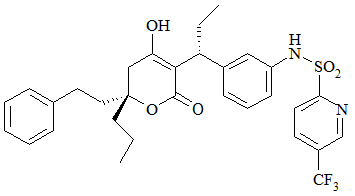
Tipranavir (TPV) is an HIV-1 protease inhibitor that inhibits the virus-specific processing of the viral Gag and Gag-Pol polyproteins in HIV-1 infected cells, thus preventing formation of mature virions.
Antiviral Activity
Tipranavir inhibits the replication of laboratory strains of HIV-1 and clinical isolates in acute models of T-cell infection, with 50% effective concentrations (EC50) ranging from 0.03 to 0.07 µM (18-42 ng/mL). Tipranavir demonstrates antiviral activity in cell culture against a broad panel of HIV-1 group M non-clade B isolates (A, C, D, F, G, H, CRF01 AE, CRF02 AG, CRF12 BF). Group O and HIV-2 isolates have reduced susceptibility in cell culture to tipranavir with EC50 values ranging from 0.164 -1 µM and 0.233-0.522 µM, respectively. The cell culture antiviral activity of tipranavir in combination with the HIV-1 protease inhibitors amprenavir, atazanavir, lopinavir and saquinavir, and with the HIV-1 NRTI lamivudine was additive to antagonistic. No antagonism was seen when combined with the HIV-1 protease inhibitors indinavir, nelfinavir, or ritonavir, with the NNRTIs delavirdine, efavirenz, and nevirapine, with the NRTIs abacavir, didanosine, emtricitabine, stavudine, tenofovir, and zidovudine, or with the gp41 fusion inhibitor enfuvirtide in cell culture. There was no antagonism of the cell culture combinations of tipranavir with either adefovir or ribavirin, used in the treatment of viral hepatitis.
Resistance
In cell culture:
HIV-1 isolates with a decreased susceptibility to tipranavir have been selected in cell culture and obtained from patients treated with APTIVUS/ritonavir (TPV/ritonavir). After 9 months of culture in TPV-containing medium, HIV-1 isolates with 87-fold reduced susceptibility to tipranavir were selected in cell culture; these contained 10 protease substitutions that developed in the following order: L33F, I84V, K45I, I13V, V32I, V82L, M36I, A71V, L10F, and I54V/T. Changes in the Gag polyprotein CA/P2 cleavage site were also observed following drug selection. Experiments with site-directed mutants of HIV-1 showed that the presence of 6 substitutions in the protease coding sequence (I13V, V32I, L33F, K45I, V82L, I84V) conferred >10-fold reduced susceptibility to tipranavir.
Clinical Studies of Treatment-Experienced Patients:
In controlled clinical trials 1182.12 and 1182.48, multiple protease inhibitor-resistant HIV-1 isolates from 59 treatment-experienced adult patients who received APTIVUS/ritonavir and experienced virologic rebound developed amino acid substitutions that were associated with resistance to tipranavir. The most common amino acid substitutions that developed on 500/200 mg APTIVUS/ritonavir in greater than 20% of APTIVUS/ritonavir virologic failure isolates were L33V/I/F, V82T, and I84V. Other substitutions that developed in 10 to 20% of APTIVUS/ritonavir virologic failure isolates included L10V/I/S, I13V, E35D/G/N, I47V, I54A/M/V, K55R, V82L, and L89V/M. Evolution at protease gag polyprotein cleavage sites was also observed. Among 28 pediatric patients in clinical trial 1182.14 who experienced virologic failure or non-response, the emergent protease amino acid codon substitutions were similar to those observed in adult virologic failure isolates.
In clinical trials 1182.12 and 1182.48 tipranavir resistance was detected at virologic rebound after an average of 38 weeks of APTIVUS/ritonavir treatment with a median 14-fold decrease in tipranavir susceptibility. Similarly, reduced tipranavir susceptibility was associated with emergent substitutions in pediatric patient isolates.
Cross-resistance
Cross-resistance among protease inhibitors has been observed. Tipranavir had <4-fold decreased susceptibility against 90% (94/105) of HIV-1 clinical isolates resistant to amprenavir, atazanavir, indinavir, lopinavir, nelfinavir, ritonavir, or saquinavir. Tipranavir-resistant viruses which emerged in cell culture from wild-type HIV-1 had decreased susceptibility to the protease inhibitors amprenavir, atazanavir, indinavir, lopinavir, nelfinavir and ritonavir but remained sensitive to saquinavir.
Baseline Genotype and Virologic Outcome Analyses
Genotypic and/or phenotypic analysis of baseline virus may aid in determining tipranavir susceptibility before initiation of APTIVUS/ritonavir therapy. Several analyses were conducted to evaluate the impact of specific substitutions and combination of substitutions on virologic outcome. Both the type and number of baseline protease inhibitor substitutions as well as use of additional active agents (e.g., enfuvirtide) affected APTIVUS/ritonavir response rates in controlled clinical trials 1182.12 and 1182.48 through Week 48 of treatment.
Regression analyses of baseline and/or on-treatment HIV-1 genotypes from 860 treatment-experienced patients in Phase 2 and 3 trials demonstrated that amino acid substitutions at 16 codons in the HIV-1 protease coding sequence were associated with reduced virologic responses and/or reduced tipranavir susceptibility: L10V, I13V, K20M/R/V, L33F, E35G, M36I, K43T, M46L, I47V, I54A/M/V, Q58E, H69K, T74P, V82L/T, N83D or I84V.
As-treated analyses were also conducted to assess virologic outcome by the number of primary protease inhibitor substitutions present at baseline. Response rates were reduced if five or more protease inhibitor-associated substitutions were present at baseline and subjects did not receive concomitant new enfuvirtide with APTIVUS/ritonavir. See Table 9.
| Number of Baseline Primary PI Substitutionsa | APTIVUS/ritonavir N=578 | Comparator PI/ritonavir N=610 | ||
|---|---|---|---|---|
| No New Enfuvirtideb | + New Enfuvirtidec | No New Enfuvirtideb | + New Enfuvirtidec | |
| aPrimary PI substitutions include any amino acid substitution at positions 30, 32, 36, 46, 47, 48, 50, 53, 54, 82, 84, 88 and 90 | ||||
| bNo new enfuvirtide is defined as recycled or continued use of enfuvirtide or no use of enfuvirtide | ||||
| cNew enfuvirtide is defined as initiation of enfuvirtide for the first time | ||||
| Overall | 38% (180/470) | 69% (75/108) | 18% (92/524) | 26% (22/86) |
| 1 – 2 | 62% (24/39) | 60% (3/5) | 33% (14/43) | 0% (0/1) |
| 3 – 4 | 48% (96/202) | 71% (27/38) | 23% (45/193) | 38% (13/34) |
| 5+ | 26% (60/229) | 69% (45/65) | 11% (33/288) | 18% (9/51) |
The median change from baseline in plasma HIV-1 RNA at weeks 2, 4, 8, 16, 24 and 48 was evaluated by the number of baseline primary protease inhibitor resistance- associated substitutions (1-4 or ≥5) in subjects who received APTIVUS/ritonavir with or without new enfuvirtide. The following observations were made:
- Approximately 1.5 log10 decrease in HIV-1 RNA at early time points (Week 2) regardless of the number of baseline primary protease inhibitor resistance- associated substitutions (1-4 or 5+).
- Subjects with 5 or more primary protease inhibitor resistance-associated substitutions in their HIV-1 at baseline who received APTIVUS/ritonavir without new enfuvirtide (n=303) began to lose their antiviral response after Week 4.
- Early HIV-1 RNA decreases (1.5-2 log10) were sustained through Week 48 in subjects with 5 or more primary protease inhibitor resistance-associated substitutions at baseline who received new enfuvirtide with APTIVUS/ritonavir (n=74).
- APTIVUS co-administered with ritonavir capsules or solution can be taken with or without meals
- APTIVUS co-administered with ritonavir tablets must only be taken with meals
Baseline Phenotype and Virologic Outcome Analyses
APTIVUS/ritonavir response rates were also assessed by baseline tipranavir phenotype. Relationships between baseline phenotypic susceptibility to tipranavir, substitutions at protease amino acid codons 33, 82, 84 and 90, tipranavir resistance-associated substitutions, and response to APTIVUS/ritonavir therapy at Week-48 are summarized in Tables 10 and 11. These baseline phenotype groups are not meant to represent clinical susceptibility breakpoints for APTIVUS/ritonavir because the data are based on the select 1182.12 and 1182.48 patient population. The data are provided to give clinicians information on the likelihood of virologic success based on pre-treatment susceptibility to APTIVUS/ritonavir in protease inhibitor-experienced patients.
| Baseline Tipranavir Phenotype (Fold Change)a | Proportion of Respondersb with No New Enfuvirtidec Use N=211 | Proportion of Respondersb with New Enfuvirtided Use N=68 | Tipranavir Susceptibility |
|---|---|---|---|
| aChange in tipranavir EC50 value from wild-type reference | |||
| bConfirmed ≥1 log10 decrease at Week 48 | |||
| cNo new enfuvirtide is defined as recycled or continued use of enfuvirtide or no use of enfuvirtide | |||
| dNew enfuvirtide is defined as initiation of enfuvirtide for the first time | |||
| 0-3 | 48% (73/153) | 70% (33/47) | Susceptible |
| >3-10 | 21% (10/48) | 53% (8/15) | Decreased Susceptibility |
| >10 | 10% (1/10) | 50% (3/6) | Resistant |
| Baseline Tipranavir Phenotype (Fold Change)a | # of Baseline Protease Substitutions at 33, 82, 84, 90 | # of Baseline Tipranavir Resistance-Associated Substitutionsb | Tipranavir Susceptibilityc |
|---|---|---|---|
| aChange in tipranavir EC50 value from wild-type reference | |||
| bNumber of amino acid substitutions in HIV-1 protease among L10V, I13V, K20M/R/V, L33F, E35G, M36I, K43T, M46L, I47V, I54A/M/V, Q58E, H69K, T74P, V82L/T, N83D or I84V | |||
| cDefined by Week 48 response | |||
| 0-3 | 0-2 | 0-4 | Susceptible |
| >3-10 | 3 | 5-7 | Decreased Susceptibility |
| >10 | 4 | 8+ | Resistant |
Analyses of pediatric clinical trial 1182.14 also demonstrated that response to therapy was influenced by the number of baseline protease inhibitor substitutions present.
APTIVUS/ritonavir 500/200 mg BID + optimized background regimen (OBR) vs. Comparator Protease Inhibitor/ritonavir BID + OBR
The two clinical trials 1182.12 and 1182.48 (RESIST 1 and RESIST 2) are ongoing, randomized, controlled, open-label, multicenter studies in HIV-1 positive, triple antiretroviral class experienced patients. All patients were required to have previously received at least two protease inhibitor-based antiretroviral regimens and were failing a protease inhibitor-based regimen at the time of study entry with baseline HIV-1 RNA at least 1000 copies/mL and any CD4+ cell count. At least one primary protease gene mutation from among 30N, 46I, 46L, 48V, 50V, 82A, 82F, 82L, 82T, 84V or 90M had to be present at baseline, with not more than two mutations at codons 33, 82, 84 or 90.
These studies evaluated treatment response at 48 weeks in a total of 1483 patients receiving either APTIVUS co-administered with 200 mg of ritonavir plus OBR versus a control group receiving a ritonavir-boosted protease inhibitor (lopinavir, amprenavir, saquinavir or indinavir) plus OBR. Prior to randomization, OBR was individually defined for each patient based on genotypic resistance testing and patient history. The investigator had to declare OBR, comparator protease inhibitor, and use of new enfuvirtide prior to randomization. Randomization was stratified by choice of comparator protease inhibitor and use of new enfuvirtide.
After Week 8, patients in the control group who met the protocol defined criteria of initial lack of virologic response or confirmed virologic failure had the option of discontinuing treatment and switching to APTIVUS/ritonavir in a separate roll-over study.
Demographics and baseline characteristics were balanced between the APTIVUS/ritonavir arm and control arm. In both studies combined, the 1483 patients had a median age of 43 years (range 17-80), and were 86.3% male, 75.6% white, 12.9% black, and 0.9% Asian. The median baseline plasma HIV-1 RNA for both treatment groups was 4.8 (range 2.0 to 6.8) log10 copies/mL and median baseline CD4+ cell count was 162 (range 1 to 1894) cells/mm3. Overall, 38.4% of patients had a baseline HIV-1 RNA of >100,000 copies/mL, 58.6% had a baseline CD4+ cell count ≤200 cells/mm3, and 57.8% had experienced an AIDS defining Class C event at baseline.
Patients had prior exposure to a median of 6 NRTIs, 1 NNRTI, and 4 PIs. A total of 10.1% of patients had previously used enfuvirtide. In baseline patient samples (n=454), 97% of the HIV-1 isolates were resistant to at least one protease inhibitor, 95% of the isolates were resistant to at least one NRTI, and >75% of the isolates were resistant to at least one NNRTI.
The individually pre-selected protease inhibitor based on genotypic testing and the patient's medical history was lopinavir in 48.7%, amprenavir in 26.4%, saquinavir in 21.8% and indinavir in 3.1% of patients. A total of 85.1% were possibly resistant or resistant to the pre-selected comparator protease inhibitors. Approximately 21% of patients used enfuvirtide during the study of which 16.6% in the APTIVUS/ritonavir arm and 13.2% in the comparator/ritonavir arm represented first time use of enfuvirtide (new enfuvirtide).
Treatment response and efficacy outcomes of randomized treatment through Week 48 of studies 1182.12 and 1182.48 are shown in Table 12.
| Outcome | APTIVUS/ritonavir (500/200 mg BID) + OBR (N=746) | Comparator Protease Inhibitor*/ritonavir + OBR (N=737) | ||
|---|---|---|---|---|
| *Comparator protease inhibitors were lopinavir, amprenavir, saquinavir or indinavir and 85.1% of patients were possibly resistant or resistant to the chosen protease inhibitors. | ||||
| aPatients achieved and maintained a confirmed ≥1 log10 HIV-1 RNA drop from baseline through Week 48 without prior evidence of treatment failure. | ||||
| bPatients did not achieve a 0.5 log10 HIV-1 RNA drop from baseline and did not have viral load <100,000 copies/mL by Week 8. | ||||
| cDeath only counted if it was the reason for treatment failure. | ||||
| dIncludes patients who were lost to-follow-up, withdrawn consent, non-adherent, protocol violations, added/changed background antiretroviral drugs for reasons other than tolerability or toxicity, or discontinued while suppressed. | ||||
| Virologic Respondersa (confirmed at least 1 log10 HIV-1 RNA below baseline) | 33.8% | 14.9% | ||
| Virologic failures | 55.1% | 77.3% | ||
| Initial lack of virologic response by Week 8b | 33.0% | 57.9% | ||
| Rebound | 18.9% | 16.4% | ||
| Never suppressed | 3.2% | 3.0% | ||
| Deathc or discontinued due to adverse events | 5.9% | 1.9% | ||
| Death | 0.5% | 0.3% | ||
| Discontinued due to adverse events | 5.4% | 1.6% | ||
| Discontinued due to other reasonsd | 5.2% | 5.8% | ||
Through 48 weeks of treatment, the proportion of patients in the APTIVUS/ritonavir arm compared to the comparator PI/ritonavir arm with HIV-1 RNA <400 copies/mL was 30.3% and 13.6% respectively, and with HIV-1 RNA <50 copies/mL was 22.7% and 10.2% respectively. Among all randomized and treated patients, the median change from baseline in HIV-1 RNA at the last measurement up to Week 48 was -0.64 log10 copies/mL in patients receiving APTIVUS/ritonavir versus -0.22 log10 copies/mL in the comparator PI/ritonavir arm.
Among all randomized and treated patients, the median change from baseline in CD4+ cell count at the last measurement up to Week 48 was +23 cells/mm3 in patients receiving APTIVUS/ritonavir (N=740) versus +4 cells/mm3 in the comparator PI/ritonavir (N=727) arm.
Patients in the APTIVUS/ritonavir arm achieved a significantly better virologic outcome when APTIVUS/ritonavir was combined with enfuvirtide. Among patients with new enfuvirtide use, the proportion of patients in the APTIVUS/ritonavir arm compared to the comparator PI/ritonavir arm with HIV-1 RNA <400 copies/mL was 52.4% and 19.6% respectively, and with HIV-1 RNA <50 copies/mL was 37.3% and 14.4% respectively [see Clinical Pharmacology (12.2) and Microbiology (12.4)]. The median change from baseline in CD4+ cell count at the last measurement up to Week 48 was +89 cells/mm3 in patients receiving APTIVUS/ritonavir in combination with newly introduced enfuvirtide (N=124) and +18 cells/mm3 in the comparator PI/ritonavir (N=96) arm.
• Hepatic Impairment and Toxicity
Inform patients that APTIVUS co-administered with 200 mg of ritonavir, has been associated with severe liver disease, including some deaths. Patients with signs or symptoms of clinical hepatitis should discontinue APTIVUS/ritonavir treatment and seek medical evaluation. Symptoms of hepatitis include fatigue, malaise, anorexia, nausea, jaundice, bilirubinuria, acholic stools, liver tenderness or hepatomegaly. Extra vigilance is needed for patients with chronic hepatitis B or C co-infection, as these patients have an increased risk of developing hepatotoxicity.
Liver function tests should be performed prior to initiating therapy with APTIVUS and 200 mg of ritonavir, and frequently throughout the duration of treatment. Patients with chronic hepatitis B or C co-infection or elevations in liver enzymes prior to treatment are at increased risk (approximately 2-fold) for developing further liver enzyme elevations or severe liver disease. Caution should be exercised when administering APTIVUS/ritonavir to patients with liver enzyme abnormalities or history of chronic liver disease. Increased liver function testing is warranted in these patients. APTIVUS should not be given to patients with moderate to severe hepatic impairment.
• Intracranial Hemorrhage
Inform patients that APTIVUS co-administered with 200 mg of ritonavir has been associated with reports of both fatal and non-fatal intracranial hemorrhage. Patients should report any unusual or unexplained bleeding to their physician.
• Drug Interactions
APTIVUS may interact with some drugs; therefore, advise patients to report to their healthcare provider the use of any other prescription or non-prescription medications or herbal products, particularly St. John's wort.
• Use of Vitamin E
Advise patients taking APTIVUS oral solution not to take supplemental vitamin E greater than a standard multivitamin as APTIVUS oral solution contains 116 IU/mL of vitamin E and when taken at the recommended maximum dose of 500 mg/200 mg tipranavir/ritonavir BID, results in a daily dose of 1160 IU. This intake is higher than the Reference Daily Intake (adults 30 IU, pediatrics approximately 10 IU).
• Rash
Rash, including flat or raised rashes or sensitivity to the sun, have been reported in approximately 10% of subjects receiving APTIVUS. Some patients who developed rash also had one or more of the following symptoms: joint pain or stiffness, throat tightness, generalized itching, muscle aches, fever, redness, blisters, or peeling of the skin. Women taking birth control pills may get a skin rash. Tell patients to discontinue use of APTIVUS and call their physician right away if any of these symptoms develop.
• Sulfa Allergy
Tell patients to report any history of sulfonamide allergy to the physician.
• Contraceptives
Instruct women receiving estrogen-based hormonal contraceptives that additional or alternative contraceptive measures should be used during therapy with APTIVUS. There may be an increased risk of rash when APTIVUS is given with hormonal contraceptives [see Use in Specific Populations (8.3)].
• Fat Redistribution
Inform patients that redistribution or accumulation of body fat may occur in patients receiving antiretroviral therapy and that the cause and long-term health effects of these conditions are not known at this time.
• Administration
Inform patients that APTIVUS must be co-administered with ritonavir to ensure its therapeutic effect. Failure to correctly co-administer APTIVUS with ritonavir will result in reduced plasma levels of tipranavir that may be insufficient to achieve the desired antiviral effect.
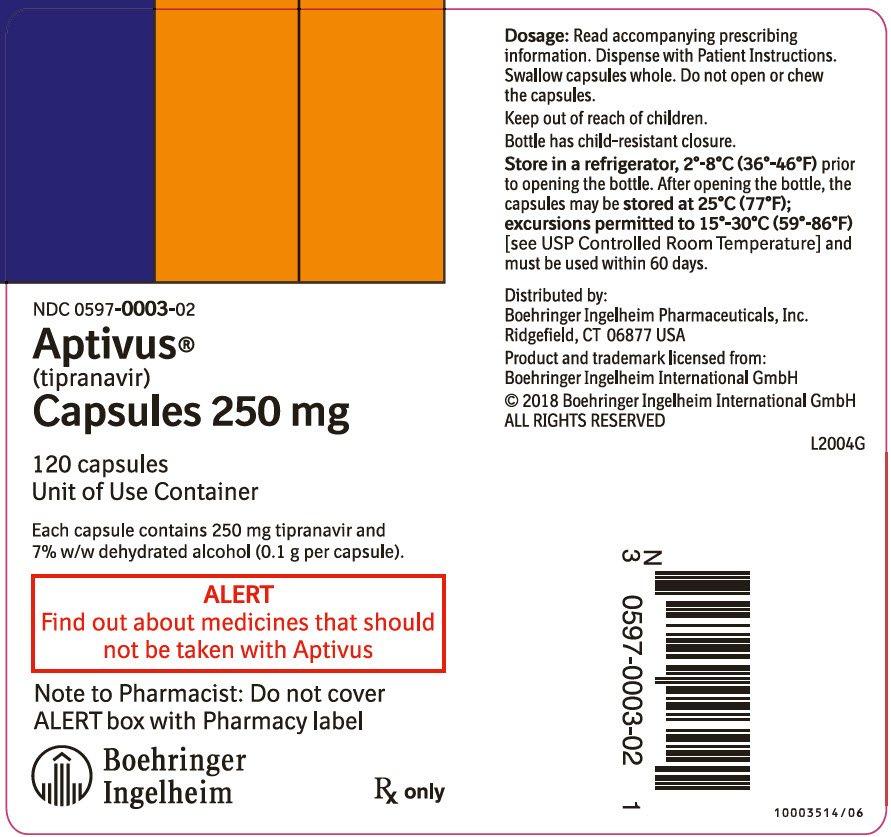
Instruct patients to swallow APTIVUS capsules whole. They must not be opened or chewed.
Tell patients that sustained decreases in plasma HIV-1 RNA have been associated with a reduced risk of progression to AIDS and death. Patients should remain under the care of a physician while using APTIVUS. Advise patients to take APTIVUS and other concomitant antiretroviral therapy every day as prescribed. APTIVUS, co-administered with ritonavir, must be given in combination with other antiretroviral drugs. Patients should not alter the dose or discontinue therapy without consulting with their healthcare professional. If a dose of APTIVUS is missed, patients should take the dose as soon as possible and then return to their normal schedule. However, if a dose is skipped the patient should not double the next dose.
• Pregnancy Registry
Advise patients that there is a pregnancy exposure registry that monitors pregnancy outcomes in women exposed to APTIVUS during pregnancy [see Use in Specific Populations (8.1)].
• Lactation
Instruct women with HIV-1 infection not to breastfeed because HIV-1 can be passed to the baby in the breast milk [see Use in Specific Populations (8.2)].
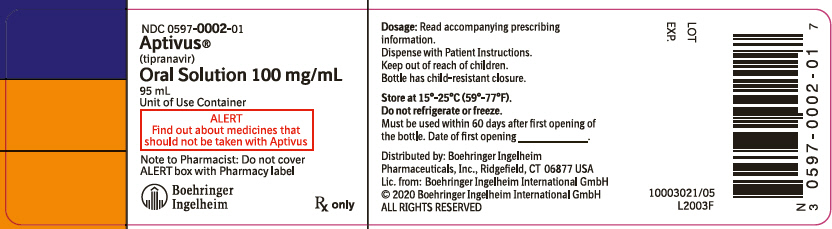
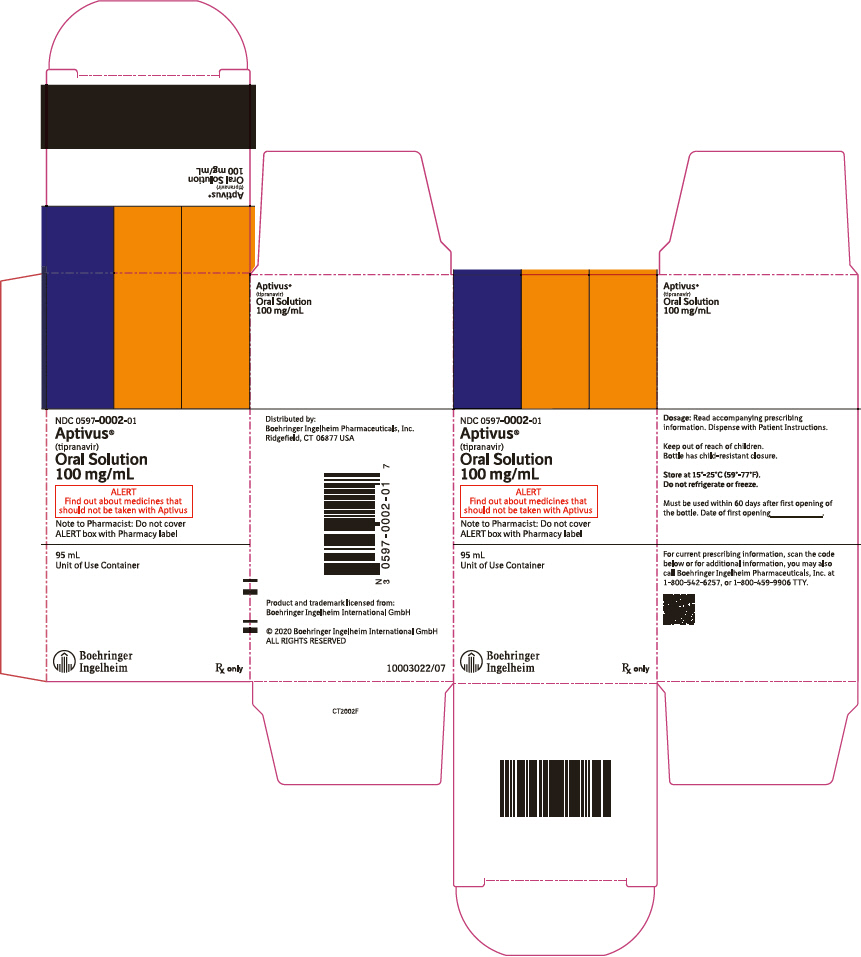
Distributed by:
Boehringer Ingelheim Pharmaceuticals, Inc.
Ridgefield, CT 06877 USA
Address medical inquiries to: (800) 542-6257 or (800) 459-9906 TTY.
APTIVUS® is a registered trademark used under license from Boehringer Ingelheim International GmbH.
The other brands listed are trademarks of their respective owners and are not trademarks of Boehringer Ingelheim Pharmaceuticals, Inc.
Copyright © 2020 Boehringer Ingelheim International GmbH
ALL RIGHTS RESERVED
OT2000VF232020