Telmisartan
Use of drugs that act on the renin-angiotensin system during the second and third trimesters of pregnancy reduces fetal renal function and increases fetal and neonatal morbidity and death. Resulting oligohydramnios can be associated with fetal lung hypoplasia and skeletal deformations. Potential neonatal adverse effects include skull hypoplasia, anuria, hypotension, renal failure, and death. When pregnancy is detected, discontinue MICARDIS HCT as soon as possible.
Hydrochlorothiazide
Thiazides cross the placental barrier and appear in cord blood. Adverse reactions include fetal or neonatal jaundice and thrombocytopenia [see Use in Specific Populations (8.1)].
Hydrochlorothiazide
Hypersensitivity reactions to hydrochlorothiazide may occur in patients with or without a history of allergy or bronchial asthma, but are more likely in patients with such a history [see Contraindications (4)].
Telmisartan
Other adverse events that have been reported with telmisartan are listed below:
Autonomic Nervous System: impotence, increased sweating, flushing
Body as a Whole: allergy, fever, leg pain, chest pain
Cardiovascular: palpitation, angina pectoris, abnormal ECG, hypertension, peripheral edema
Central Nervous System: insomnia, somnolence, migraine, paresthesia, involuntary muscle contractions, hypoesthesia
Gastrointestinal: flatulence, constipation, gastritis, dry mouth, hemorrhoids, gastroesophageal reflux, toothache
Hepato-biliary: elevations of liver enzymes or serum bilirubin
Metabolic: gout, hypercholesterolemia, diabetes mellitus
Musculoskeletal: arthritis, arthralgia, leg cramps, myalgia
Psychiatric: anxiety, depression, nervousness
Resistance Mechanism: infection, abscess, otitis media
Respiratory: asthma, rhinitis, dyspnea, epistaxis
Skin: dermatitis, eczema, pruritus
Urinary: micturition frequency, cystitis
Vascular: cerebrovascular disorder
Special Senses: abnormal vision, conjunctivitis, tinnitus, earache
Hydrochlorothiazide
Other adverse events that have been reported with hydrochlorothiazide are listed below:
Body as a Whole: weakness
Digestive: pancreatitis, jaundice (intrahepatic cholestatic jaundice), sialadenitis, cramping, gastric irritation
Hematologic: aplastic anemia, agranulocytosis, leukopenia, hemolytic anemia, thrombocytopenia
Hypersensitivity: purpura, photosensitivity, urticaria, necrotizing angiitis (vasculitis and cutaneous vasculitis), fever, respiratory distress including pneumonitis and pulmonary edema, anaphylactic reactions
Metabolic: hyperglycemia, glycosuria
Musculoskeletal: muscle spasm
Nervous System/Psychiatric: restlessness
Renal: interstitial nephritis
Skin: erythema multiforme including Stevens-Johnson syndrome, exfoliative dermatitis including toxic epidermal necrolysis
Special Senses: transient blurred vision, xanthopsia
Clinical Laboratory Findings
Creatinine, Blood Urea Nitrogen (BUN): Increases in BUN (≥11.2 mg/dL) and serum creatinine (≥0.5 mg/dL) were observed in 2.8% and 1.4%, respectively, of patients with essential hypertension treated with MICARDIS HCT tablets in controlled trials. No patient discontinued treatment with MICARDIS HCT tablets because of an increase in BUN or creatinine [see Warnings and Precautions (5.3)].
Non-melanoma Skin Cancer
Hydrochlorothiazide is associated with an increased risk of non-melanoma skin cancer. In a study conducted in the Sentinel System, increased risk was predominantly for squamous cell carcinoma (SCC) and in white patients taking large cumulative doses. The increased risk for SCC in the overall population was approximately 1 additional case per 16,000 patients per year, and for white patients taking a cumulative dose of ≥50,000 mg the risk increase was approximately 1 additional SCC case for every 6,700 patients per year.
Telmisartan
Non-Steroidal Anti-Inflammatory Agents including Selective Cyclooxygenase-2 Inhibitors (COX-2 Inhibitors): In patients who are elderly, volume-depleted (including those on diuretic therapy), or with compromised renal function, co-administration of NSAIDs, including selective COX-2 inhibitors, with ARBs, including telmisartan, may result in deterioration of renal function, including possible acute renal failure. These effects are usually reversible. The antihypertensive effect of ARBs may be attenuated by NSAIDs. Therefore, monitor renal function and blood pressure periodically in patients receiving MICARDIS HCT and NSAIDs.
Hydrochlorothiazide
Administration of a non-steroidal anti-inflammatory agent, including a selective COX-2 inhibitor, can reduce the diuretic, natriuretic, and antihypertensive effects of diuretics. Therefore, when MICARDIS HCT and non-steroidal anti-inflammatory agents including selective COX-2 inhibitors are used concomitantly, observe closely to determine if the desired effect of the diuretic is obtained.
Risk Summary
MICARDIS HCT can cause fetal harm when administered to a pregnant woman. Use of drugs that act on the renin-angiotensin system during the second and third trimesters of pregnancy reduces fetal renal function and increases fetal and neonatal morbidity and death (see Clinical Considerations). Most epidemiologic studies examining fetal abnormalities after exposure to antihypertensive use in the first trimester have not distinguished drugs affecting the renin-angiotensin system from other antihypertensive agents. Studies in rats and rabbits with telmisartan showed fetotoxicity only at maternally toxic doses (see Data). When pregnancy is detected, discontinue MICARDIS HCT as soon as possible.
The estimated background risk of major birth defects and miscarriage for the indicated population is unknown. All pregnancies have a background risk of birth defect, loss, or other adverse outcomes. In the U.S. general population, the estimated background risk of major birth defects and miscarriage in clinically recognized pregnancies is 2% to 4% and 15% to 20%, respectively.
Clinical Considerations
Disease-associated maternal and/or embryo/fetal risk
Hypertension in pregnancy increases the maternal risk for pre-eclampsia, gestational diabetes, premature delivery, and delivery complications (e.g., need for cesarean section, and post-partum hemorrhage). Hypertension increases the fetal risk for intrauterine growth restriction and intrauterine death. Pregnant women with hypertension should be carefully monitored and managed accordingly.
Fetal/Neonatal adverse reactions
Telmisartan
Use of drugs that act on the RAS in the second and third trimesters of pregnancy can result in the following: oligohydramnios, reduced fetal renal function leading to anuria and renal failure, fetal lung hypoplasia, skeletal deformations, including skull hypoplasia, hypotension, and death. In the unusual case that there is no appropriate alternative to therapy with drugs affecting the renin-angiotensin system for a particular patient, apprise the mother of the potential risk to the fetus.
In patients taking MICARDIS HCT during pregnancy, perform serial ultrasound examinations to assess the intra-amniotic environment. Fetal testing may be appropriate, based on the week of gestation. If oligohydramnios is observed, discontinue MICARDIS HCT, unless it is considered lifesaving for the mother. Patients and physicians should be aware, however, that oligohydramnios may not appear until after the fetus has sustained irreversible injury.
Closely observe infants with histories of in utero exposure to MICARDIS HCT for hypotension, oliguria, and hyperkalemia. If oliguria or hypotension occurs, support blood pressure and renal perfusion. Exchange transfusions or dialysis may be required as a means of reversing hypotension and replacing renal function [see Use in Specific Populations (8.4)].
Hydrochlorothiazide
Thiazides cross the placenta, and use of thiazides during pregnancy is associated with a risk of fetal or neonatal jaundice, thrombocytopenia, and possible other adverse reactions that have occurred in adults.
Data
Animal Data
MICARDIS HCT
A developmental toxicity study was performed in rats with telmisartan/hydrochlorothiazide doses of 3.2/1.0, 15/4.7, 50/15.6, and 0/15.6 mg/kg/day. Although the two higher dose combinations appeared to be more toxic (significant decrease in body weight gain) to the dams than either drug alone, there did not appear to be an increase in toxicity to the developing embryos.
Telmisartan
No teratogenic effects were observed when telmisartan was administered to pregnant rats at oral doses of up to 50 mg/kg/day and to pregnant rabbits at oral doses of up to 45 mg/kg/day. In rabbits, embryo lethality associated with maternal toxicity (reduced body weight gain and food consumption) was observed at 45 mg/kg/day (approximately 12 times the maximum recommended human dose [MRHD] of 80 mg on a mg/m2 basis). In rats, maternally toxic (reduced body weight gain and food consumption) telmisartan doses of 15 mg/kg/day (approximately 1.9 times the MRHD on a mg/m2 basis), administered during late gestation and lactation, were observed to produce adverse effects in neonates, including reduced viability, low birth weight, delayed maturation, and decreased weight gain. The no-observed-effect doses for developmental toxicity in rats and rabbits, 5 and 15 mg/kg/day, respectively, are approximately 0.64 and 3.7 times, respectively, on a mg/m2 basis, the MRHD of telmisartan (80 mg/day).
Hydrochlorothiazide
Studies in which hydrochlorothiazide was administered to pregnant mice and rats during their respective periods of major organogenesis at doses up to 3000 and 1000 mg/kg/day, respectively (about 600 and 400 times the MRHD), provided no evidence of harm to the fetus.
Thiazides can cross the placenta, and concentrations reached in the umbilical vein approach those in the maternal plasma. Hydrochlorothiazide, like other diuretics, can cause placental hypoperfusion. It accumulates in the amniotic fluid, with reported concentrations up to 19 times that in umbilical vein plasma. Use of thiazides during pregnancy is associated with a risk of fetal or neonatal jaundice or thrombocytopenia. Since they do not prevent or alter the course of EPH (Edema, Proteinuria, Hypertension) gestosis (pre-eclampsia), these drugs should not be used to treat hypertension in pregnant women. The use of hydrochlorothiazide for other indications (e.g., heart disease) in pregnancy should be avoided.
Risk Summary
There is no information regarding the presence of MICARDIS HCT or telmisartan in human milk, the effects on the breastfed infant or the effects on milk production. Limited published studies report that hydrochlorothiazide is present in human milk. However, there is insufficient information to determine the effects of hydrochlorothiazide on the breastfed infant or the effects of hydrochlorothiazide on milk production. Telmisartan is present in the milk of lactating rats (see Data). Because of the potential for serious adverse reactions in the breastfed infant including hypotension, hyperkalemia and renal impairment, advise a nursing woman not to breastfeed during treatment with MICARDIS HCT.
Data
Telmisartan was present in the milk of lactating rats at concentrations 1.5 to 2 times those found in plasma from 4 to 8 hours after administration.
Neonates with a history of in utero exposure to MICARDIS HCT:
If oliguria or hypotension occurs, support blood pressure and renal perfusion. Exchange transfusions or dialysis may be required as means of reversing hypotension and/or substituting for disordered renal function.
Telmisartan
As the majority of telmisartan is eliminated by biliary excretion, patients with biliary obstructive disorders or hepatic insufficiency can be expected to have reduced clearance and higher blood levels.
Hydrochlorothiazide
Minor alterations of fluid and electrolyte balance may precipitate hepatic coma in patients with impaired hepatic function or progressive liver disease.
Telmisartan
Limited data are available with regard to overdosage of telmisartan in humans. The most likely manifestations of overdosage with telmisartan are hypotension, dizziness, and tachycardia; bradycardia could occur from parasympathetic (vagal) stimulation. If symptomatic hypotension should occur, supportive treatment should be instituted. Telmisartan is not removed by hemofiltration and is not dialyzable.
Hydrochlorothiazide
The most common signs and symptoms observed in patients with a hydrochlorothiazide overdose are those caused by electrolyte depletion (hypokalemia, hypochloremia, hyponatremia) and dehydration resulting from excessive diuresis. If digitalis has also been administered, hypokalemia may accentuate cardiac arrhythmias. The degree to which hydrochlorothiazide is removed by hemodialysis has not been established. The oral LD50 of hydrochlorothiazide is greater than 10 g/kg in both mice and rats.
MICARDIS HCT
MICARDIS HCT is a combination of two drugs with antihypertensive properties: a thiazide diuretic, hydrochlorothiazide, and an angiotensin II receptor blocker (ARB), telmisartan.
Telmisartan
Angiotensin II is formed from angiotensin I in a reaction catalyzed by angiotensin-converting enzyme (ACE, kininase II). Angiotensin II is the principal pressor agent of the renin-angiotensin system, with effects that include vasoconstriction, stimulation of synthesis and release of aldosterone, cardiac stimulation, and renal reabsorption of sodium. Telmisartan blocks the vasoconstrictor and aldosterone-secreting effects of angiotensin II by selectively blocking the binding of angiotensin II to the AT1 receptor in many tissues, such as vascular smooth muscle and the adrenal gland. Its action is therefore independent of the pathways for angiotensin II synthesis.
There is also an AT2 receptor found in many tissues, but AT2 is not known to be associated with cardiovascular homeostasis. Telmisartan has much greater affinity (>3,000-fold) for the AT1 receptor than for the AT2 receptor.
Telmisartan does not inhibit ACE (kininase II) nor does it bind to or block other hormone receptors or ion channels known to be important in cardiovascular regulation.
Blockade of the angiotensin II receptor inhibits the negative regulatory feedback of angiotensin II on renin secretion, but the resulting increased plasma renin activity and angiotensin II circulating levels do not overcome the effect of telmisartan on blood pressure.
Hydrochlorothiazide
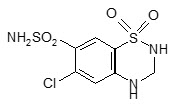
Hydrochlorothiazide is a thiazide diuretic. Thiazides affect the renal tubular mechanisms of electrolyte reabsorption, directly increasing excretion of sodium salt and chloride in approximately equivalent amounts. Indirectly, the diuretic action of hydrochlorothiazide reduces plasma volume, with consequent increases in plasma renin activity, increases in aldosterone secretion, increases in urinary potassium loss, and decreases in serum potassium. The renin-aldosterone link is mediated by angiotensin II, so co-administration of an ARB tends to reverse the potassium loss associated with these diuretics. The mechanism of the antihypertensive effect of thiazides is not fully understood.
Telmisartan
In normal volunteers, a dose of telmisartan 80 mg inhibited the pressor response to an intravenous infusion of angiotensin II by approximately 90% at peak plasma concentrations with approximately 40% inhibition persisting for 24 hours.
Plasma concentration of angiotensin II and plasma renin activity increased in a dose-dependent manner after single administration of telmisartan to healthy subjects and repeated administration to hypertensive patients. The once-daily administration of up to 80 mg telmisartan to healthy subjects did not influence plasma aldosterone concentrations. In multiple dose studies with hypertensive patients, there were no clinically significant changes in electrolytes (serum potassium or sodium) or in metabolic function (including serum levels of cholesterol, triglycerides, HDL, LDL, glucose, or uric acid).
The antihypertensive effects of telmisartan have been studied in six placebo-controlled clinical trials including a total of 1773 patients with mild to moderate hypertension (diastolic blood pressure of 95 to 114 mmHg), 1031 of whom were treated with telmisartan. Following once-daily administration of telmisartan, the magnitude of blood pressure reduction from baseline after placebo subtraction was approximately (SBP/DBP) 6-8/6 mmHg for 20 mg, 9-13/6-8 mmHg for 40 mg, and 12-13/7-8 mmHg for 80 mg. Larger doses (up to 160 mg) did not appear to cause a further decrease in blood pressure.
The onset of antihypertensive activity occurs within 3 hours, with a maximal reduction by approximately 4 weeks. At doses of 20, 40, and 80 mg, the antihypertensive effect of once-daily administration of telmisartan was maintained for the full 24-hour dose interval.
In 30 hypertensive patients with normal renal function treated for 8 weeks with telmisartan 80 mg or telmisartan 80 mg in combination with hydrochlorothiazide 12.5 mg, there were no clinically significant changes from baseline in renal blood flow, glomerular filtration rate, filtration fraction, renovascular resistance, or creatinine clearance.
Hydrochlorothiazide
After oral administration of hydrochlorothiazide, diuresis begins within 2 hours, peaks in about 4 hours, and lasts approximately 6 to 12 hours.
Drug Interactions
Hydrochlorothiazide
Alcohol, barbiturates, or narcotics: Potentiation of orthostatic hypotension may occur.
Skeletal muscle relaxants: Possible increased responsiveness to muscle relaxants such as curare derivatives.
Corticosteroids, ACTH: Intensified electrolyte depletion, particularly hypokalemia.
Pressor amines (e.g., norepinephrine): Possible decreased response to pressor amines but not sufficient to preclude their use.
Telmisartan
Absorption:
Following oral administration, peak concentrations (Cmax) of telmisartan are reached in 0.5 to 1 hour after dosing. Food slightly reduces the bioavailability of telmisartan, with a reduction in the area under the plasma concentration-time curve (AUC) of approximately 6% with 40 mg and approximately 20% after a 160 mg dose. MICARDIS HCT can be administered with or without food. The absolute bioavailability of telmisartan is dose dependent. At 40 mg and 160 mg, the bioavailability was 42% and 58%, respectively. The pharmacokinetics of telmisartan with orally administered MICARDIS are nonlinear over the dose range 20 mg to 160 mg, with greater than proportional increases of plasma concentrations (Cmax and AUC) with increasing doses. Telmisartan shows bi-exponential decay kinetics with a terminal elimination half-life of approximately 24 hours. Trough plasma concentrations of telmisartan with once-daily dosing are approximately 10% to 25% of peak plasma concentrations. Telmisartan has an accumulation index in plasma of 1.5 to 2.0 upon repeated once-daily dosing.
Distribution:
Telmisartan is highly bound to plasma proteins (>99.5%), mainly albumin and α1-acid glycoprotein. Plasma protein binding is constant over the concentration range achieved with recommended doses. The volume of distribution for telmisartan is approximately 500 liters, indicating additional tissue binding.
Metabolism:
Telmisartan is metabolized by conjugation to form a pharmacologically inactive acyl glucuronide; the glucuronide of the parent compound is the only metabolite that has been identified in human plasma and urine. After a single dose, the glucuronide represents approximately 11% of the measured radioactivity in plasma. The cytochrome P450 isoenzymes are not involved in the metabolism of telmisartan.
Elimination:
Following either intravenous or oral administration of 14C-labeled telmisartan, most of the administered dose (>97%) was eliminated unchanged in feces via biliary excretion; only minute amounts were found in the urine (0.91% and 0.49% of total radioactivity, respectively).
Total plasma clearance of telmisartan is >800 mL/min. Terminal half-life and total clearance appear to be independent of dose.
Hydrochlorothiazide
Hydrochlorothiazide is not metabolized but is eliminated rapidly by the kidney. When plasma levels have been followed for at least 24 hours, the plasma half-life has been observed to vary between 5.6 and 14.8 hours. At least 61% of the oral dose is eliminated unchanged within 24 hours. Hydrochlorothiazide crosses the placental but not the blood-brain barrier and is excreted in breast milk.
Specific Populations
Telmisartan
Renal Insufficiency: Telmisartan is not removed from blood by hemofiltration and is not dialyzable [see Warnings and Precautions (5.3) and Use in Specific Populations (8.7)].
Hepatic Insufficiency: In patients with hepatic insufficiency, plasma concentrations of telmisartan are increased, and absolute bioavailability approaches 100% [see Use in Specific Populations (8.6)].
Gender: Plasma concentrations of telmisartan are generally 2 to 3 times higher in females than in males. In clinical trials, however, no significant increases in blood pressure response or in the incidence of orthostatic hypotension were found in women. No dosage adjustment is necessary.
Geriatric Patients: The pharmacokinetics of telmisartan do not differ between the elderly and those younger than 65 years of age.
Drug Interaction Studies
Telmisartan
Ramipril: Co-administration of telmisartan 80 mg once daily and ramipril 10 mg once daily to healthy subjects increases steady-state Cmax and AUC of ramipril 2.3- and 2.1-fold, respectively, and Cmax and AUC of ramiprilat 2.4- and 1.5-fold, respectively. In contrast, Cmax and AUC of telmisartan decrease by 31% and 16%, respectively. When co-administering telmisartan and ramipril, the response may be greater because of the possibly additive pharmacodynamic effects of the combined drugs, and also because of the increased exposure to ramipril and ramiprilat in the presence of telmisartan.
Other Drugs: Co-administration of telmisartan did not result in a clinically significant interaction with acetaminophen, amlodipine, glyburide, simvastatin, hydrochlorothiazide, warfarin, or ibuprofen. Telmisartan is not metabolized by the cytochrome P450 system and had no effects in vitro on cytochrome P450 enzymes, except for some inhibition of CYP2C19. Telmisartan is not expected to interact with drugs that inhibit cytochrome P450 enzymes; it is also not expected to interact with drugs metabolized by cytochrome P450 enzymes, except for possible inhibition of the metabolism of drugs metabolized by CYP2C19.
Telmisartan and Hydrochlorothiazide
No carcinogenicity, mutagenicity, or fertility studies have been conducted with the combination of telmisartan and hydrochlorothiazide.
Telmisartan
There was no evidence of carcinogenicity when telmisartan was administered in the diet to mice and rats for up to 2 years. The highest doses administered to mice (1000 mg/kg/day) and rats (100 mg/kg/day) are, on a mg/m2 basis, about 59 and 13 times, respectively, the maximum recommended human dose (MRHD) of telmisartan. These same doses have been shown to provide average systemic exposures to telmisartan >100 times and >25 times, respectively, the systemic exposure in humans receiving the MRHD of telmisartan (80 mg/day).
Genotoxicity assays did not reveal any telmisartan-related effects at either the gene or chromosome level. These assays included bacterial mutagenicity tests with Salmonella and E. coli (Ames), a gene mutation test with Chinese hamster V79 cells, a cytogenetic test with human lymphocytes, and a mouse micronucleus test.
No drug-related effects on the reproductive performance of male and female rats were noted at 100 mg/kg/day (the highest dose administered), about 13 times, on a mg/m2 basis, the MRHD of telmisartan. This dose in the rat resulted in an average systemic exposure (telmisartan AUC as determined on day 6 of pregnancy) at least 50 times the average systemic exposure in humans at the MRHD (80 mg/day).
Hydrochlorothiazide
Two-year feeding studies in mice and rats conducted under the auspices of the National Toxicology Program (NTP) uncovered no evidence of a carcinogenic potential of hydrochlorothiazide in female mice (at doses of up to approximately 600 mg/kg/day) or in male and female rats (at doses of up to approximately 100 mg/kg/day). The NTP, however, found equivocal evidence for hepatocarcinogenicity in male mice.
Hydrochlorothiazide was not genotoxic in vitro in the Ames mutagenicity assay of Salmonella typhimurium strains TA 98, TA 100, TA 1535, TA 1537, and TA 1538 and in the Chinese Hamster Ovary (CHO) test for chromosomal aberrations, or in vivo in assays using mouse germinal cell chromosomes, Chinese hamster bone marrow chromosomes, and the Drosophila sex-linked recessive lethal trait gene. Positive test results were obtained in the in vitro CHO Sister Chromatid Exchange (clastogenicity) assay, in the Mouse Lymphoma Cell (mutagenicity) assay, and in the Aspergillus nidulans non-disjunction assay.
Hydrochlorothiazide had no adverse effects on the fertility of mice and rats of either sex in studies wherein these species were exposed, via their diet, to doses of up to 100 and 4 mg/kg, respectively, prior to mating and throughout gestation.
Telmisartan and Hydrochlorothiazide
In controlled clinical trials with more than 2500 hypertensive patients, 1017 patients were exposed to telmisartan (20 mg to 160 mg) and concomitant hydrochlorothiazide (6.25 mg to 25 mg). These trials included one factorial trial (Study 1) with combinations of telmisartan (20 mg, 40 mg, 80 mg, 160 mg, or placebo) and hydrochlorothiazide (6.25 mg, 12.5 mg, 25 mg, and placebo). The factorial trial randomized 818 patients, including 493 (60%) males; 596 (73%) Non-Black and 222 (27%) Blacks; and 143 (18%) ≥65 years of age (median age was 53 years old). The mean supine blood pressure at baseline for the total population was 154/101 mmHg.
The combination of telmisartan and hydrochlorothiazide resulted in additive placebo-adjusted decreases in systolic and diastolic blood pressures at trough of 16-21/9-11 mmHg for doses between 40 mg/12.5 mg and 80 mg/25 mg, compared with 9-13/7-8 mmHg for telmisartan 40 mg to 80 mg monotherapy and 4/4 mmHg for hydrochlorothiazide 12.5 mg monotherapy. The antihypertensive effect was independent of age or gender. There was essentially no change in heart rate in patients treated with the combination of telmisartan and hydrochlorothiazide in the placebo-controlled trial.
Four other studies of hypertensive patients of at least six months' duration allowed add-on of hydrochlorothiazide for patients who either were not adequately controlled on the randomized telmisartan monotherapy dose or had not achieved adequate blood pressure response after completing the up-titration of telmisartan. In active-controlled studies, the addition of 12.5 mg hydrochlorothiazide to titrated doses of telmisartan in patients who did not achieve or maintain adequate response with telmisartan monotherapy further reduced systolic and diastolic blood pressures.
Pregnancy
Advise female patients of childbearing age about the consequences of exposure to MICARDIS HCT during pregnancy. Discuss treatment options with women planning to become pregnant. Tell patients to report pregnancies to their physicians as soon as possible [see Warnings and Precautions (5.1) and Use in Specific Populations (8.1)].
Lactation
Advise nursing women not to breastfeed during treatment with MICARDIS HCT [see Use in Specific Populations (8.2)].
Symptomatic Hypotension and Syncope
Advise patients that lightheadedness can occur, especially during the first days of therapy, and to report it to their healthcare provider. Inform patients that inadequate fluid intake, excessive perspiration, diarrhea, or vomiting can lead to an excessive fall in blood pressure, with the same consequences of lightheadedness and possible syncope. Advise patients to contact their healthcare provider if syncope occurs [see Warnings and Precautions (5.2)].
Potassium Supplements
Advise patients not to use potassium supplements or salt substitutes that contain potassium without consulting the prescribing healthcare provider [see Warnings and Precautions (5.4) and Drug Interactions (7.1)].
Acute Myopia and Secondary Angle-Closure Glaucoma
Advise patients to discontinue MICARDIS HCT and seek immediate medical attention if they experience symptoms of Acute Myopia or Secondary Angle-Closure Glaucoma [see Warnings and Precautions (5.6)].
Non-melanoma Skin Cancer
Instruct patients taking hydrochlorothiazide to protect skin from the sun and undergo regular skin cancer screening.
Distributed by:
Boehringer Ingelheim Pharmaceuticals, Inc.
Ridgefield, CT 06877 USA
Licensed from:
Boehringer Ingelheim International GmbH
Ingelheim, Germany
Copyright © 2022 Boehringer Ingelheim International GmbH
ALL RIGHTS RESERVED
MICARDIS® is a registered trademark of and used under license from Boehringer Ingelheim International GmbH.
Boehringer Ingelheim Pharmaceuticals, Inc. either owns or uses the ONTARGET® trademark under license.
The other brands listed are trademarks of their respective owners and are not trademarks of Boehringer Ingelheim Pharmaceuticals, Inc.
COL10674AL272022
SPL10694A