Trijardy Xr Tablet, Extended Release
Product Images NDC 0597-0380

13 FDA label images from Boehringer Ingelheim Pharmaceuticals, Inc. · Packaging, Regulatory Labels, and Product Appearance

Product Visual Gallery

This gallery contains 13 technical images submitted to the FDA as part of the official labeling for Trijardy Xr (NDC 0597-0380). Unlike standard consumer photos, these assets often include clinical data figures, molecular chemical structures, and official manufacturer packaging layouts.

As provided by Boehringer Ingelheim Pharmaceuticals, Inc., these visuals offer a comprehensive scientific overview of the product's physical and chemical identity, aiding pharmacists and researchers in product verification and study.

FDA Label Image

Chemical Structure (Trijardy 01)
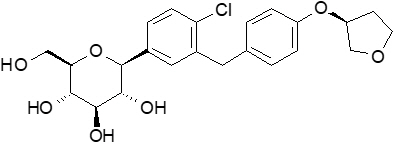
Chemical Structure (Trijardy 01)
Chemical structure diagram of empagliflozin, one of the active ingredients in Trijardy XR tablets. The diagram depicts the molecular arrangement including a chlorine atom, oxygen atoms, and multiple rings.*
FDA Label Image

Chemical Structure (Trijardy 02)

Chemical Structure (Trijardy 02)
Chemical structure of empagliflozin, linagliptin, and metformin hydrochloride combination in Trijardy XR extended-release tablet.*
FDA Label Image

Chemical Structure (Trijardy 03)

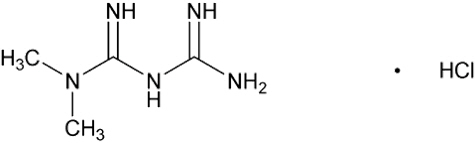
Chemical Structure (Trijardy 03)
Chemical structure of metformin hydrochloride, one of the active ingredients in Trijardy XR tablets. The diagram shows the molecular arrangement of atoms in the metformin molecule with the hydrochloride (HCl) component.*
FDA Label Image

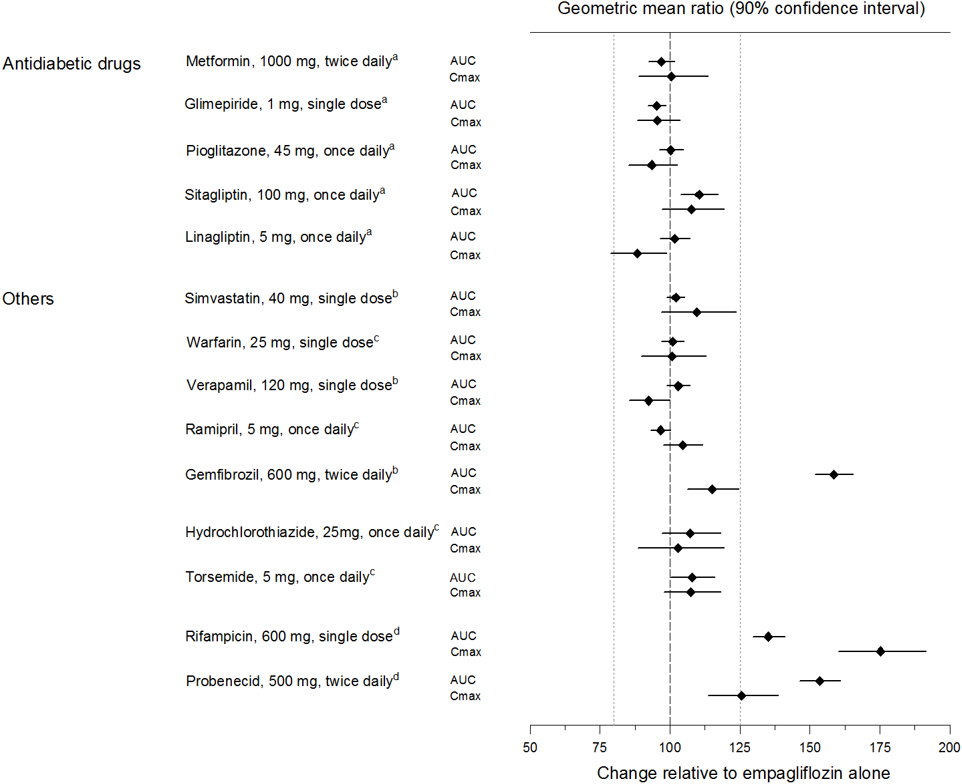
Figure 1 (Trijardy 04)

Figure 1 (Trijardy 04)
A forest plot chart showing the geometric mean ratio with 90% confidence intervals for the pharmacokinetic parameters AUC and Cmax of various antidiabetic and other drugs relative to empagliflozin alone. The chart compares drugs including metformin, glimepiride, pioglitazone, sitagliptin, linagliptin, simvastatin, warfarin, verapamil, ramipril, gemfibrozil, hydrochlorothiazide, torsemide, rifampicin, and probenecid, illustrating changes in exposure from approximately 50 to 200 percent.*
FDA Label Image

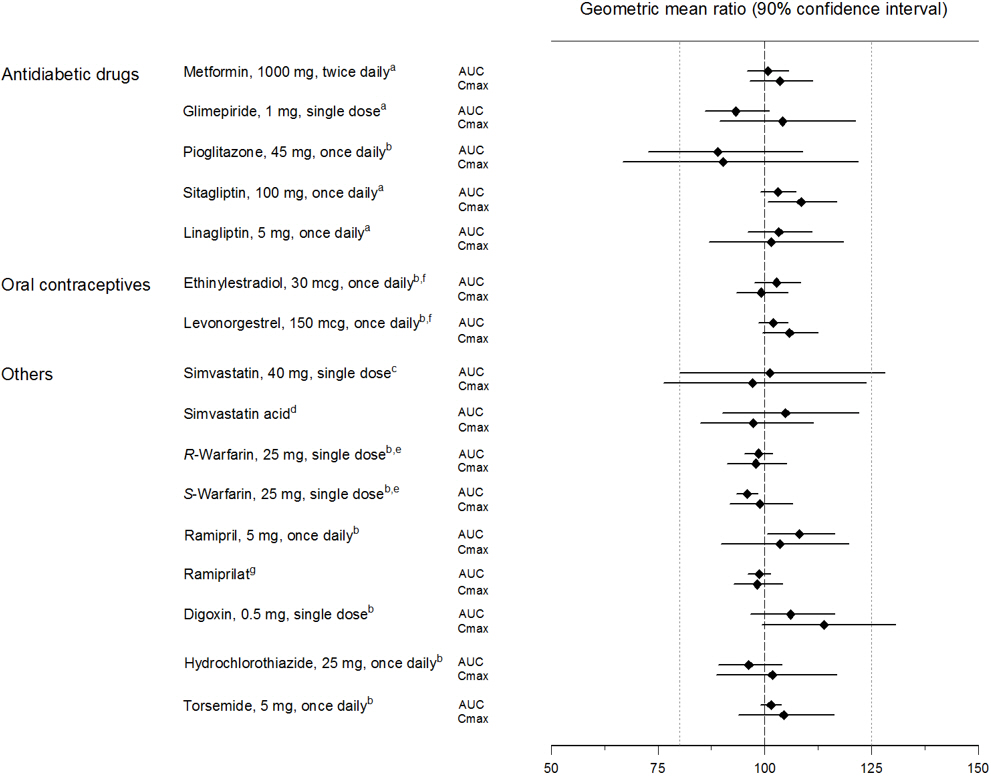
Figure 2 (Trijardy 05)

Figure 2 (Trijardy 05)
A forest plot displaying geometric mean ratios with 90% confidence intervals for various drugs including antidiabetic agents, oral contraceptives, and other medications. The plot compares AUC and Cmax values for listed drugs, showing relative pharmacokinetic measures against a reference line at 100, with values ranging from 50 to 150 on the x-axis.*
FDA Label Image

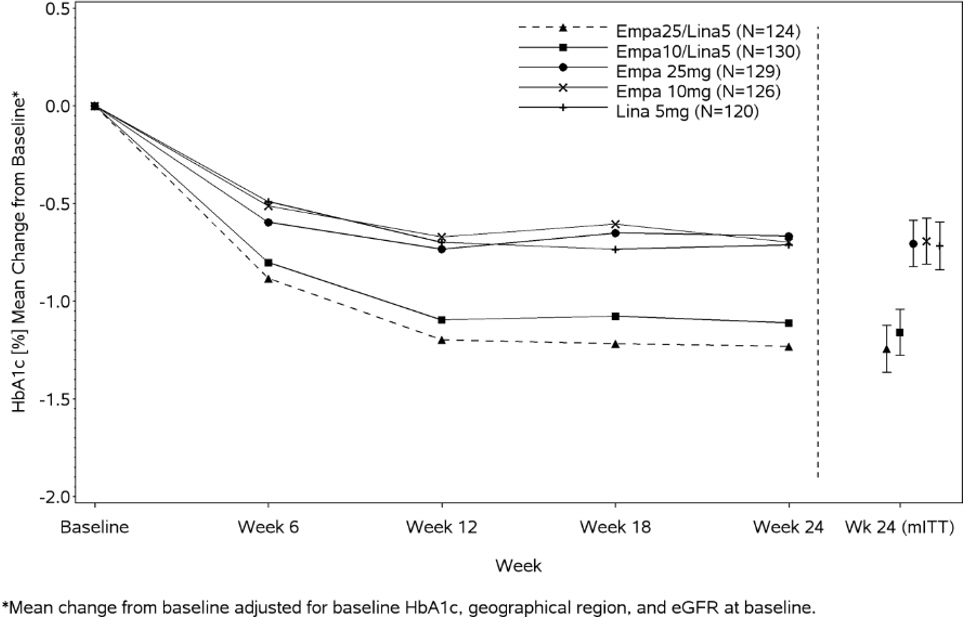
Figure 3 (Trijardy 06)

Figure 3 (Trijardy 06)
A line graph depicting the mean percentage change from baseline in HbA1c levels over 24 weeks for different treatment groups including Empagliflozin and Linagliptin combinations and individual components. The x-axis represents weeks from baseline to week 24, and the y-axis shows HbA1c percentage change. Data points with error bars indicate variances in HbA1c reductions among groups.*
FDA Label Image

Figure 4 (Trijardy 07)

Figure 4 (Trijardy 07)
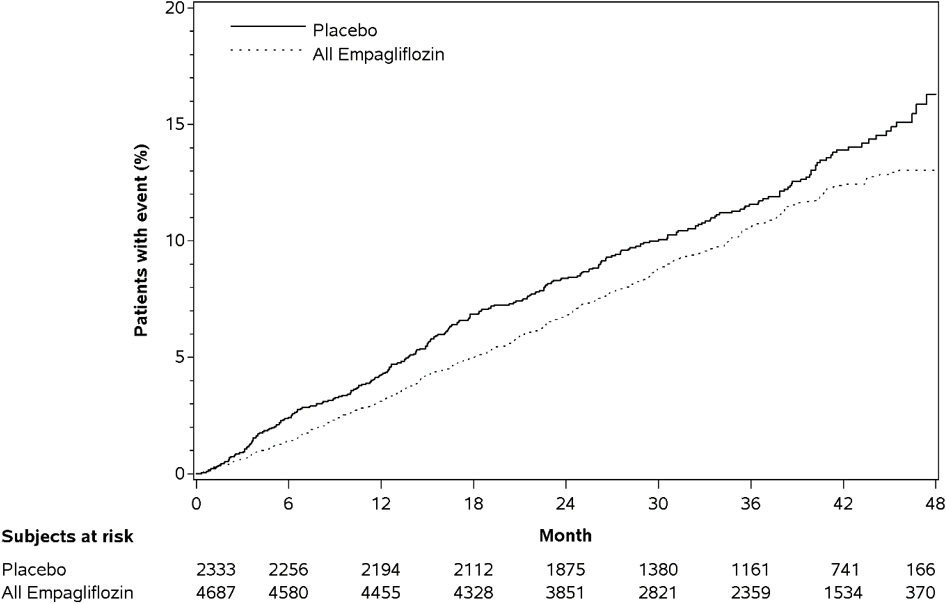
A line graph comparing the percentage of patients with events over 48 months between placebo and empagliflozin groups. The x-axis represents time in months, and the y-axis shows the percentage of patients with events. The chart also includes a table of subjects at risk for both groups at different time points.*
FDA Label Image

Figure 5 (Trijardy 08)

Figure 5 (Trijardy 08)
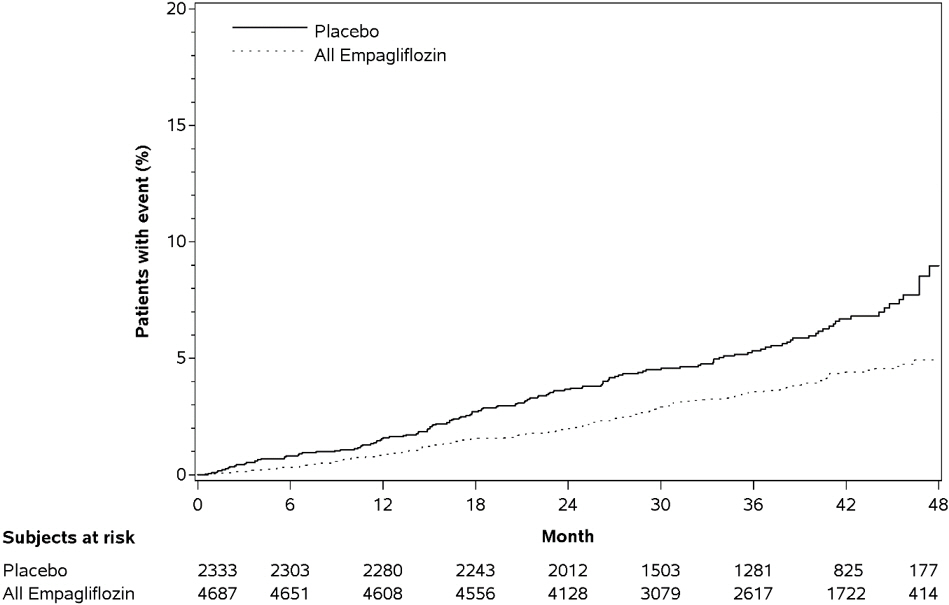
A Kaplan-Meier curve showing the percentage of patients with an event over a 48-month period, comparing Placebo and All Empagliflozin groups. The y-axis represents patients with events (%) and the x-axis represents months. The chart includes a risk table indicating the number of subjects at risk at various time points for both groups.*
FDA Label Image

Image (Trijardy 09)

FDA Label Image

Principal Display Panel (5 mg/2.5 mg/1000 mg Tablet Bottle Label)

Principal Display Panel (5 mg/2.5 mg/1000 mg Tablet Bottle Label)
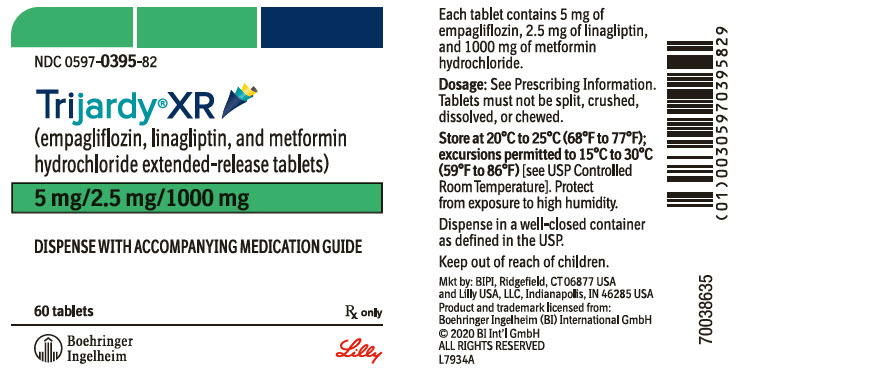
Trijardy XR 5 mg/2.5 mg/1000 mg extended-release tablets packaging label containing empagliflozin, linagliptin, and metformin hydrochloride. The label displays dosage strengths, quantity of 60 tablets, and is marked Rx only. Manufactured by Boehringer Ingelheim Pharmaceuticals with Lilly logos also present. Storage and dispensing instructions, barcode, and trademark information are included on the label.*
FDA Label Image

Principal Display Panel (10 mg/5 mg/1000 mg Tablet Bottle Label)

Principal Display Panel (10 mg/5 mg/1000 mg Tablet Bottle Label)
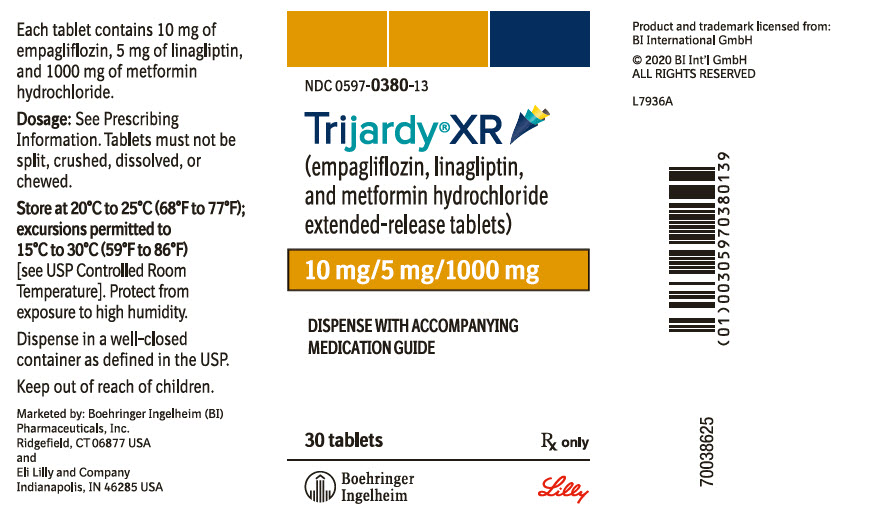
Trijardy XR extended-release tablets containing empagliflozin 10 mg, linagliptin 5 mg, and metformin hydrochloride 1000 mg. The label shows the product name, strengths, formulation as oral extended-release tablets, package size of 30 tablets, and the manufacturers Boehringer Ingelheim Pharmaceuticals, Inc. and Eli Lilly and Company. Storage instructions and dispensing details are also included.*
FDA Label Image

Principal Display Panel (12.5 mg/2.5 mg/1000 mg Tablet Bottle Label)

Principal Display Panel (12.5 mg/2.5 mg/1000 mg Tablet Bottle Label)
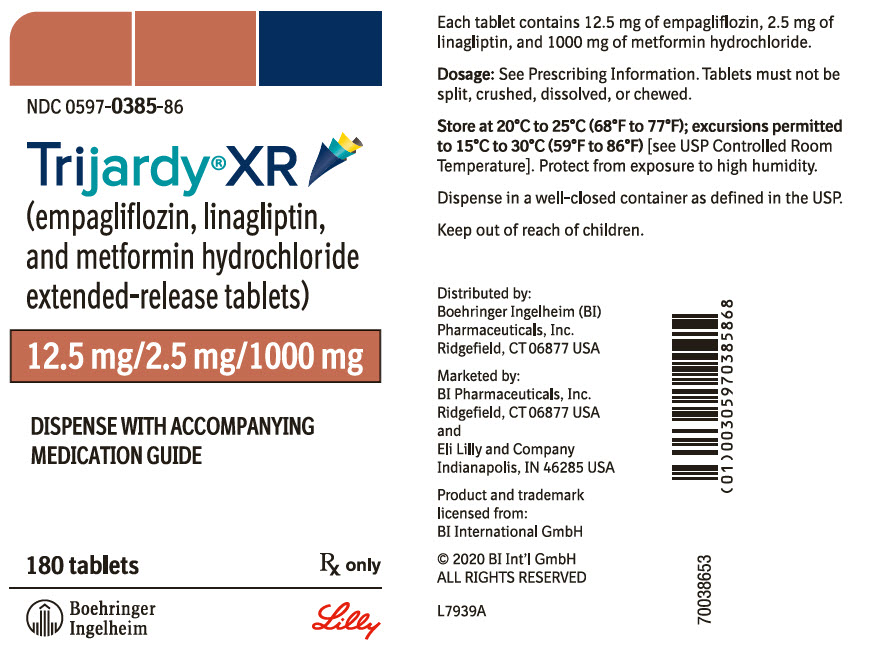
Trijardy XR 12.5 mg/2.5 mg/1000 mg extended-release tablets label showing empagliflozin, linagliptin, and metformin hydrochloride as active ingredients. The label indicates 180 tablets in the package, dispensed with accompanying medication guide. Distributed by Boehringer Ingelheim Pharmaceuticals, Inc., marketed by BI Pharmaceuticals and Eli Lilly and Company.*
FDA Label Image

Principal Display Panel (25 mg/5 mg/1000 mg Tablet Bottle Label)

Principal Display Panel (25 mg/5 mg/1000 mg Tablet Bottle Label)
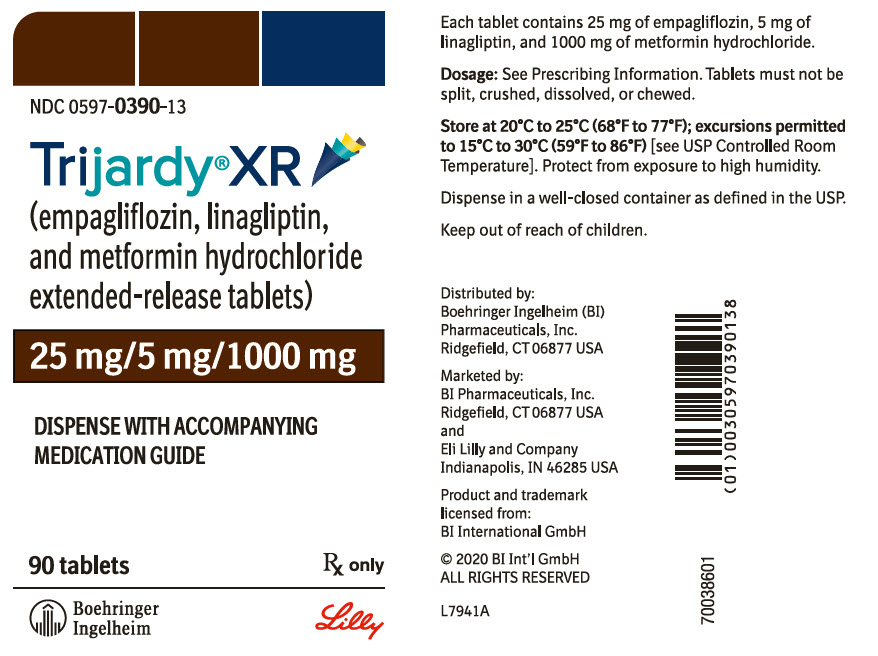
Label for Trijardy XR extended-release tablets containing 25 mg empagliflozin, 5 mg linagliptin, and 1000 mg metformin hydrochloride. The package contains 90 tablets and includes storage instructions, manufacturer and distributor details, and a barcode. The labeler is Boehringer Ingelheim Pharmaceuticals, Inc.*

* About these descriptions: Image descriptions on this page are generated by automated AI analysis of the product label images from the manufacturer's FDA label submission (SPL). They are provided for reference only and may contain errors or omissions. Always rely on the printed label itself and the official FDA labeling, and consult a pharmacist or healthcare professional with any questions about this product.