Warnings: Respiratory Depression In Pediatrics And Severe Tissue Injury Including Gangrene
Respiratory Depression – Pediatrics
- Promethazine hydrochloride injection should not be used in pediatric patients less than 2 years of age because of the potential for fatal respiratory depression.Postmarketing cases of respiratory depression, including fatalities, have been reported with use of promethazine in pediatric patients less than 2 years of age.Caution should be exercised when administering promethazine hydrochloride injection to pediatric patients 2 years of age and older (see WARNINGS – Respiratory Depression)
Severe Tissue Injury, Including Gangrene
- Severe chemical irritation and damage to tissues regardless of the route of parenteral administration has been reported in patients treated with promethazine hydrochloride injection including gangrene, tissue necrosis, and thrombophlebitis; and in some cases, surgical intervention including fasciotomy, skin graft, and/or amputation have been required (see WARNINGS – Severe Tissue Injury, Including Gangrene.).
- The use of promethazine hydrochloride injection by the following routes of administration is CONTRAINDICATED:
- Intravenous injection at concentrations greater than 1 mg/mL
- Intra-arterial injection
- Subcutaneous injection (see CONTRAINDICATIONS).
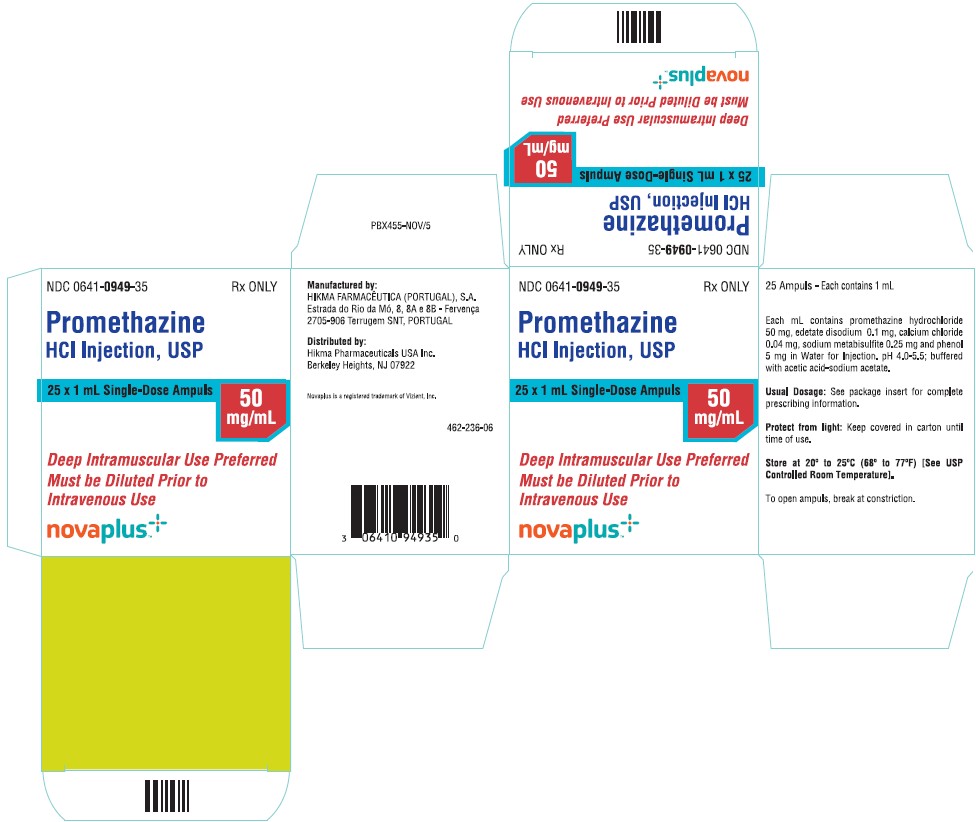
- The preferred route of administration is by deep intramuscular administration.
- Promethazine hydrochloride injection may be administered intravenously after dilution through an intravenous catheter inserted in a large vein. Preferably through a central venous catheter (see DOSAGE AND ADMINISTRATION).
- If pain occurs at the injection site during intravenous infusion, immediately discontinue the infusion and evaluate for possible arterial injection or perivascular extravasation, and initiate appropriate medical management.