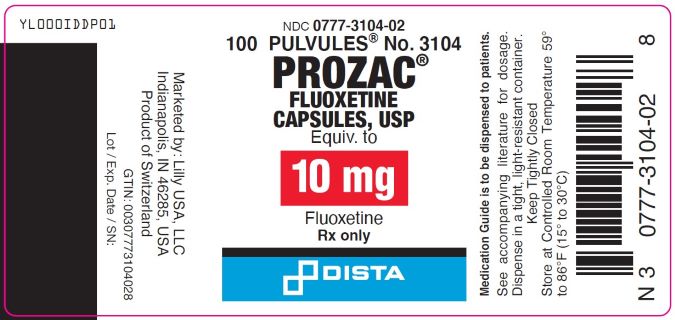
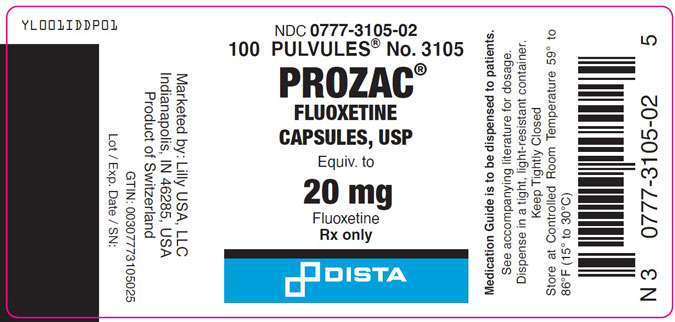
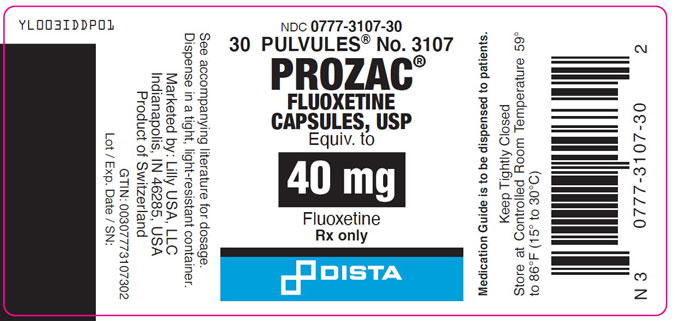
Angle-Closure Glaucoma — The pupillary dilation that occurs following use of many antidepressant drugs including Prozac may trigger an angle closure attack in a patient with anatomically narrow angles who does not have a patent iridectomy.
Associated with discontinuation in Major Depressive Disorder, OCD, bulimia, and Panic Disorder placebo-controlled clinical trials (excluding data from extensions of trials) — Table 5 lists the adverse reactions associated with discontinuation of PROZAC treatment (incidence at least twice that for placebo and at least 1% for PROZAC in clinical trials collecting only a primary reaction associated with discontinuation) in Major Depressive Disorder, OCD, bulimia, and Panic Disorder clinical trials, plus non-US Panic Disorder clinical trials.
Table 5: Most Common Adverse Reactions Associated with Discontinuation in Major Depressive Disorder, OCD, Bulimia, and Panic Disorder Placebo-Controlled Clinical Trials1 |
Major Depressive
Disorder, OCD,
Bulimia, and Panic
Disorder Combined
(N=1533)
| Major
Depressive
Disorder
(N=392)
| OCD
(N=266)
| Bulimia
(N=450)
| Panic Disorder
(N=425)
|
| Anxiety (1%)
| --
| Anxiety (2%)
| --
| Anxiety (2%)
|
| --
| --
| --
| Insomnia (2%)
| --
|
| --
| Nervousness (1%)
| --
| --
| Nervousness (1%)
|
| --
| --
| Rash (1%)
| --
| --
|
Other adverse reactions in pediatric patients (children and adolescents) — Treatment-emergent adverse reactions were collected in 322 pediatric patients (180 fluoxetine-treated, 142 placebo-treated). The overall profile of adverse reactions was generally similar to that seen in adult studies, as shown in Tables 4 and 5. However, the following adverse reactions (excluding those which appear in the body or footnotes of Tables 4 and 5 and those for which the COSTART terms were uninformative or misleading) were reported at an incidence of at least 2% for fluoxetine and greater than placebo: thirst, hyperkinesia, agitation, personality disorder, epistaxis, urinary frequency, and menorrhagia.
The most common adverse reaction (incidence at least 1% for fluoxetine and greater than placebo) associated with discontinuation in 3 pediatric placebo-controlled trials (N=418 randomized; 228 fluoxetine-treated; 190 placebo-treated) was mania/hypomania (1.8% for fluoxetine-treated, 0% for placebo-treated). In these clinical trials, only a primary reaction associated with discontinuation was collected.
Male and female sexual dysfunction with SSRIs — Although changes in sexual desire, sexual performance, and sexual satisfaction often occur as manifestations of a psychiatric disorder, they may also be a consequence of pharmacologic treatment. In particular, some evidence suggests that SSRIs can cause such untoward sexual experiences. Reliable estimates of the incidence and severity of untoward experiences involving sexual desire, performance, and satisfaction are difficult to obtain, however, in part because patients and healthcare providers may be reluctant to discuss them. Accordingly, estimates of the incidence of untoward sexual experience and performance, cited in product labeling, are likely to underestimate their actual incidence. In patients enrolled in US Major Depressive Disorder, OCD, and bulimia placebo-controlled clinical trials, decreased libido was the only sexual side effect reported by at least 2% of patients taking fluoxetine (4% fluoxetine, <1% placebo). There have been spontaneous reports in women taking fluoxetine of orgasmic dysfunction, including anorgasmia.
There are no adequate and well-controlled studies examining sexual dysfunction with fluoxetine treatment.
Symptoms of sexual dysfunction occasionally persist after discontinuation of fluoxetine treatment.
Priapism has been reported with all SSRIs.
While it is difficult to know the precise risk of sexual dysfunction associated with the use of SSRIs, healthcare providers should routinely inquire about such possible side effects.
Other Reactions
Following is a list of treatment-emergent adverse reactions reported by patients treated with fluoxetine in clinical trials. This listing is not intended to include reactions (1) already listed in previous tables or elsewhere in labeling, (2) for which a drug cause was remote, (3) which were so general as to be uninformative, (4) which were not considered to have significant clinical implications, or (5) which occurred at a rate equal to or less than placebo.
Reactions are classified by body system using the following definitions: frequent adverse reactions are those occurring in at least 1/100 patients; infrequent adverse reactions are those occurring in 1/100 to 1/1000 patients; rare reactions are those occurring in fewer than 1/1000 patients.
Body as a Whole — Frequent: chills; Infrequent: suicide attempt; Rare: acute abdominal syndrome, photosensitivity reaction.
Cardiovascular System — Frequent: palpitation; Infrequent: arrhythmia, hypotension1.
Digestive System — Infrequent: dysphagia, gastritis, gastroenteritis, melena, stomach ulcer; Rare: bloody diarrhea, duodenal ulcer, esophageal ulcer, gastrointestinal hemorrhage, hematemesis, hepatitis, peptic ulcer, stomach ulcer hemorrhage.
Hemic and Lymphatic System — Infrequent: ecchymosis; Rare: petechia, purpura.
Investigations — Frequent: QT interval prolongation (QTcF ≥450 msec)3.
Nervous System — Frequent: emotional lability; Infrequent: akathisia, ataxia, balance disorder1, bruxism1, buccoglossal syndrome, depersonalization, euphoria, hypertonia, libido increased, myoclonus, paranoid reaction; Rare: delusions.
Respiratory System — Rare: larynx edema.
Skin and Appendages — Infrequent: alopecia; Rare: purpuric rash.
Special Senses — Frequent: taste perversion; Infrequent: mydriasis.
Urogenital System — Frequent: micturition disorder; Infrequent: dysuria, gynecological bleeding2.
1 MedDRA dictionary term from integrated database of placebo controlled trials of 15870 patients, of which 9673 patients received fluoxetine.
2 Group term that includes individual MedDRA terms: cervix hemorrhage uterine, dysfunctional uterine bleeding, genital hemorrhage, menometrorrhagia, menorrhagia, metrorrhagia, polymenorrhea, postmenopausal hemorrhage, uterine hemorrhage, vaginal hemorrhage. Adjusted for gender.
3 QT prolongation data are based on routine ECG measurements in clinical trials.
Pregnancy Exposure Registry
There is a pregnancy exposure registry that monitors pregnancy outcomes in women exposed to antidepressants during pregnancy. Healthcare providers are encouraged to register patients by calling the National Pregnancy Registry for Antidepressants at 1-844-405-6185 or visiting online at https://womensmentalhealth.org/clinical-and-research-programs/pregnancyregistry/antidepressants/.
Risk Summary
Based on data from published observational studies, exposure to SSRIs, particularly in the month before delivery, has been associated with a less than 2-fold increase in the risk of postpartum hemorrhage [see Warnings and Precautions (5.7) and Clinical Considerations].
Available data from published epidemiologic studies and postmarketing reports over several decades have not established an increased risk of major birth defects or miscarriage. Some studies have reported an increased incidence of cardiovascular malformations; however, these studies results do not establish a causal relationship (see Data). There are risks associated with untreated depression in pregnancy and risks of persistent pulmonary hypertension of the newborn (PPHN) (see Data) and poor neonatal adaptation with exposure to selective serotonin reuptake inhibitors (SSRIs), including PROZAC, during pregnancy (see Clinical Considerations).
In rats and rabbits treated with fluoxetine during the period of organogenesis, there was no evidence of developmental effects at doses up to 1.6 and 3.9 times, respectively, the maximum recommended human dose (MRHD) of 60 mg/day given to adolescents on a mg/m2 basis. However, in other reproductive studies in rats, an increase in stillborn pups, a decrease in pup weight, and an increase in pup deaths early after birth occurred at doses that are 1.5 times (during gestation) and 0.97 time (during gestation and lactation) the MRHD given to adolescents on a mg/m2 basis.
The estimated background risk of major birth defects and miscarriage for the indicated population is unknown. All pregnancies have a background risk of birth defect, loss, or other adverse outcomes. In the US general population, the estimated background risk of major birth defects and miscarriage in clinically recognized pregnancies is 2 to 4% and 15 to 20%, respectively.
Clinical Considerations
Disease-associated maternal and/or embryo/fetal risk
Women who discontinue antidepressants during pregnancy are more likely to experience a relapse of major depression than women who continue antidepressants. This finding is from a prospective, longitudinal study that followed 201 pregnant women with a history of major depressive disorder who were euthymic and taking antidepressants at the beginning of pregnancy. Consider the risk of untreated depression when discontinuing or changing treatment with antidepressant medication during pregnancy and postpartum.
Maternal Adverse Reactions
Use of PROZAC in the month before delivery may be associated with an increased risk of postpartum hemorrhage [see Warnings and Precautions (5.7)].
Fetal/Neonatal adverse reactions
Neonates exposed to PROZAC and other SSRI or SNRIs late in the third trimester have developed complications requiring prolonged hospitalization, respiratory support, and tube feeding. Such complications can arise immediately upon delivery. Reported clinical findings have included respiratory distress, cyanosis, apnea, seizures, temperature instability, feeding difficulty, vomiting, hypoglycemia, hypotonia, hypertonia, hyperreflexia, tremors, jitteriness, irritability, and constant crying. These findings are consistent with either a direct toxic effect of SSRIs and SNRIs or possibly a drug discontinuation syndrome. It should be noted that, in some cases, the clinical picture is consistent with serotonin syndrome [see Warnings and Precautions (5.2)].
Data
Human Data — It has been shown that SSRIs (including fluoxetine) can cross the placenta. Published epidemiological studies of pregnant women exposed to fluoxetine have not established an increased risk of major birth defects, miscarriage, and other adverse developmental outcomes. Several publications reported an increased incidence of cardiovascular malformations in children with in utero exposure to fluoxetine. However, these studies results do not establish a causal relationship. Methodologic limitations of these observational studies include possible exposure and outcome misclassification, lack of adequate controls, adjustment for confounders and confirmatory studies. However, these studies cannot definitely establish or exclude any drug-associated risk during pregnancy.
Exposure to SSRIs, particularly later in pregnancy, may have an increased risk for PPHN. PPHN occurs in 1-2 per 1000 live births in the general population and is associated with substantial neonatal morbidity and mortality.
Animal Data — In embryofetal development studies in rats and rabbits, there was no evidence of malformations or developmental variations following administration of fluoxetine at doses up to 12.5 and 15 mg/kg/day, respectively (1.6 and 3.9 times, respectively, the MRHD of 60 mg given to adolescents on a mg/m2 basis) throughout organogenesis. However, in rat reproduction studies, an increase in stillborn pups, a decrease in pup weight, and an increase in pup deaths during the first 7 days postpartum occurred following maternal exposure to 12 mg/kg/day (1.5 times the MRHD given to adolescents on a mg/m2 basis) during gestation or 7.5 mg/kg/day (0.97 time the MRHD given to adolescents on a mg/m2 basis) during gestation and lactation. There was no evidence of developmental neurotoxicity in the surviving offspring of rats treated with 12 mg/kg/day during gestation. The no-effect dose for rat pup mortality was 5 mg/kg/day (0.65 time the MRHD given to adolescents on a mg/m2 basis).
Risk Summary
Data from published literature report the presence of fluoxetine and norfluoxetine in human milk (see Data). There are reports of agitation, irritability, poor feeding, and poor weight gain in infants exposed to fluoxetine through breast milk (see Clinical Considerations). There are no data on the effect of fluoxetine or its metabolites on milk production. The developmental and health benefits of breastfeeding should be considered along with the mother's clinical need for PROZAC and any potential adverse effects on the breastfed child from PROZAC or the underlying maternal condition.
Clinical Considerations
Infants exposed to PROZAC should be monitored for agitation, irritability, poor feeding, and poor weight gain.
Data
A study of 19 nursing mothers on fluoxetine with daily doses of 10-60 mg showed that fluoxetine was detectable in 30% of nursing infant sera (range: 1 to 84 ng/mL) whereas norfluoxetine was found in 85% (range: <1 to 265 ng/mL).
Daily Dosing
Adult — The efficacy of PROZAC was studied in 5- and 6-week placebo-controlled trials with depressed adult and geriatric outpatients (≥18 years of age) whose diagnoses corresponded most closely to the DSM-III (currently DSM-IV) category of Major Depressive Disorder. PROZAC was shown to be significantly more effective than placebo as measured by the Hamilton Depression Rating Scale (HAM-D). PROZAC was also significantly more effective than placebo on the HAM-D subscores for depressed mood, sleep disturbance, and the anxiety subfactor.
Two 6-week controlled studies (N=671, randomized) comparing PROZAC 20 mg and placebo have shown PROZAC 20 mg daily to be effective in the treatment of elderly patients (≥60 years of age) with Major Depressive Disorder. In these studies, PROZAC produced a significantly higher rate of response and remission as defined, respectively, by a 50% decrease in the HAM-D score and a total endpoint HAM-D score of ≤8. PROZAC was well tolerated and the rate of treatment discontinuations due to adverse reactions did not differ between PROZAC (12%) and placebo (9%).
Pediatric (children and adolescents) — The efficacy of PROZAC 20 mg/day in children and adolescents (N=315 randomized; 170 children ages 8 to <13, 145 adolescents ages 13 to ≤18) was studied in two 8- to 9-week placebo-controlled clinical trials in depressed outpatients whose diagnoses corresponded most closely to the DSM-III-R or DSM-IV category of Major Depressive Disorder.
In both studies independently, PROZAC produced a statistically significantly greater mean change on the Childhood Depression Rating Scale-Revised (CDRS-R) total score from baseline to endpoint than did placebo.
Subgroup analyses on the CDRS-R total score did not suggest any differential responsiveness on the basis of age or gender.
Maintenance Treatment
A study was conducted involving depressed outpatients who had responded (modified HAMD-17 score of ≤7 during each of the last 3 weeks of open-label treatment and absence of Major Depressive Disorder by DSM-III-R criteria) by the end of an initial 12-week open-treatment phase on PROZAC 20 mg/day. These patients (N=298) were randomized to continuation on double-blind PROZAC 20 mg/day or placebo. At 38 weeks (50 weeks total), a statistically significantly lower relapse rate (defined as symptoms sufficient to meet a diagnosis of Major Depressive Disorder for 2 weeks or a modified HAMD-17 score of ≥14 for 3 weeks) was observed for patients taking PROZAC compared with those on placebo.
An additional maintenance study was conducted involving adult outpatients meeting DSM-IV criteria for Major Depressive Disorder who had responded (defined as having a modified HAMD-17 score of ≤9, a CGI-Severity rating of ≤2, and no longer meeting criteria for Major Depressive Disorder) for 3 consecutive weeks at the end of 13 weeks of open-label treatment with PROZAC 20 mg once daily. These patients were randomized to double-blind, once-weekly continuation treatment with fluoxetine delayed-release capsules 90 mg once weekly, PROZAC 20 mg once daily, or placebo. PROZAC 20 mg once daily demonstrated superior efficacy (having a significantly longer time to relapse of depressive symptoms) compared with placebo for a period of 25 weeks.