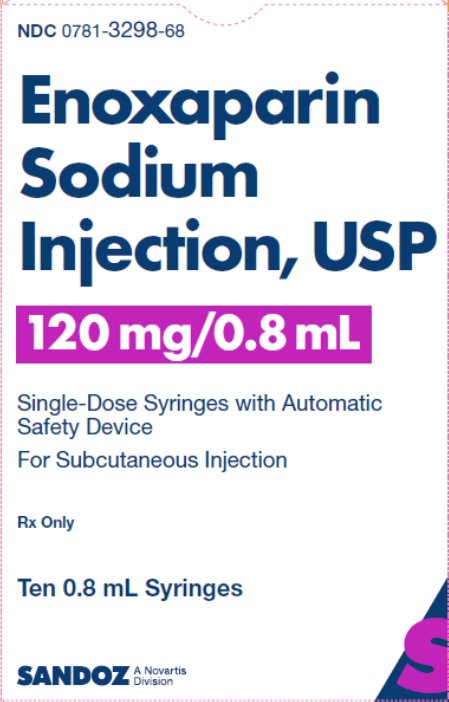
Enoxaparin Sodium Injection
Product Images NDC 0781-3268

15 FDA label images from Sandoz Inc · Packaging, Regulatory Labels, and Product Appearance

Product Visual Gallery

This gallery contains 15 technical images submitted to the FDA as part of the official labeling for Enoxaparin Sodium (NDC 0781-3268). Unlike standard consumer photos, these assets often include clinical data figures, molecular chemical structures, and official manufacturer packaging layouts.

As provided by Sandoz Inc, these visuals offer a comprehensive scientific overview of the product's physical and chemical identity, aiding pharmacists and researchers in product verification and study.

FDA Label Image

Enoxaparin Figure A (Image 01)
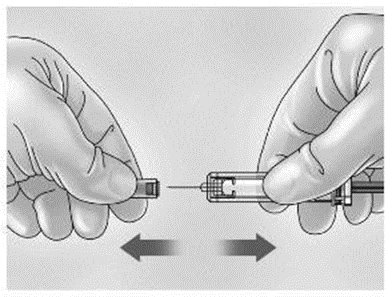
Enoxaparin Figure A (Image 01)
An instructional illustration showing two hands, one holding the cap and the other holding a prefilled syringe, demonstrating the removal of the cap from the syringe. The syringe is intended for subcutaneous injection, consistent with Enoxaparin Sodium injection use.*
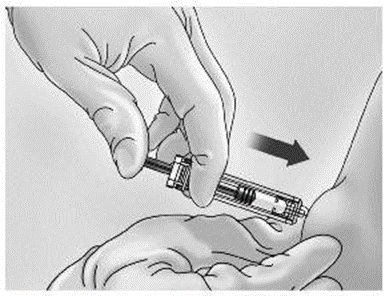
FDA Label Image

Enoxaparin Figure B (Image 02)

Enoxaparin Figure B (Image 02)
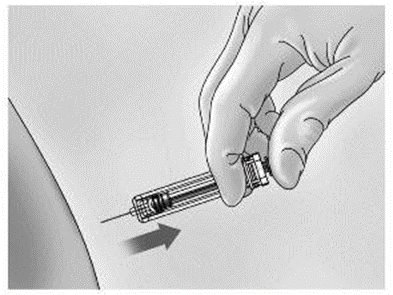
Instructional illustration showing a hand administering a subcutaneous injection with a syringe into the skin of the forearm. An arrow indicates the direction of injection beneath the skin, relevant to the use of Enoxaparin Sodium injection.*
FDA Label Image

Enoxaparin Figure C (Image 03)

Enoxaparin Figure C (Image 03)
An instructional illustration showing a hand administering a subcutaneous injection into the skin using a syringe. The image depicts the syringe angled towards the skin with an arrow indicating the direction of injection.*
FDA Label Image

Enoxaparin Figure D (Image 04)

Enoxaparin Figure D (Image 04)
An instructional illustration showing a hand holding a prefilled syringe intended for subcutaneous injection. The syringe contains a liquid medication and has a thumb positioned to push the plunger, demonstrating the injection technique.*
FDA Label Image

Enoxaparin Figure E (Image 05)

Enoxaparin Figure E (Image 05)
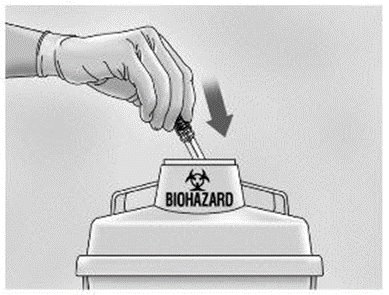
An instructional illustration showing a gloved hand disposing of a syringe into a biohazard sharps container, indicating proper disposal of injection materials.*
FDA Label Image

Enoxaparin Sodium Chemical Structure (Image 06)

Enoxaparin Sodium Chemical Structure (Image 06)
Chemical structure diagram of Enoxaparin Sodium, illustrating its polysaccharide chains with various substituents (R1 and R2) and the percentages of polysaccharide chains containing 1,6 anhydro derivative on the reducing end. The structure includes notation for variability in chain length (n) and composition (X).*
FDA Label Image

Figure-1 (Image 07)

Figure-1 (Image 07)
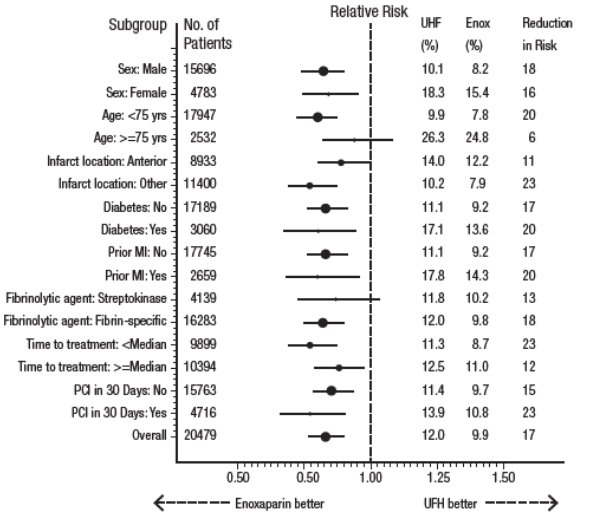
A forest plot comparing relative risk between Enoxaparin and Unfractionated Heparin (UFH) across various patient subgroups, including sex, age, infarct location, diabetes status, prior myocardial infarction, fibrinolytic agent type, time to treatment, and PCI within 30 days. The plot shows relative risk values with confidence intervals and percentage risk reductions for each subgroup.*
FDA Label Image

Figure-2 (Image 08)

Figure-2 (Image 08)
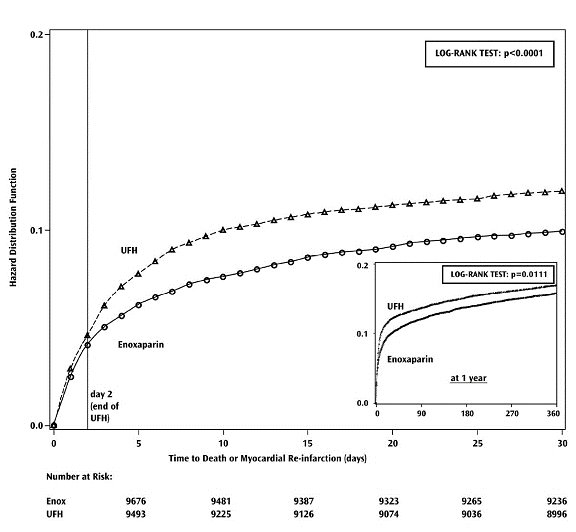
A survival analysis chart comparing the hazard distribution function over time in days for death or myocardial reinfarction between Enoxaparin and UFH treatments. Enoxaparin shows a lower hazard than UFH over a 30-day period, with a log-rank test p-value of less than 0.0001. An inset graph extends this comparison to 1 year with a p-value of 0.0111. Numbers at risk for each treatment are listed below the x-axis.*
FDA Label Image

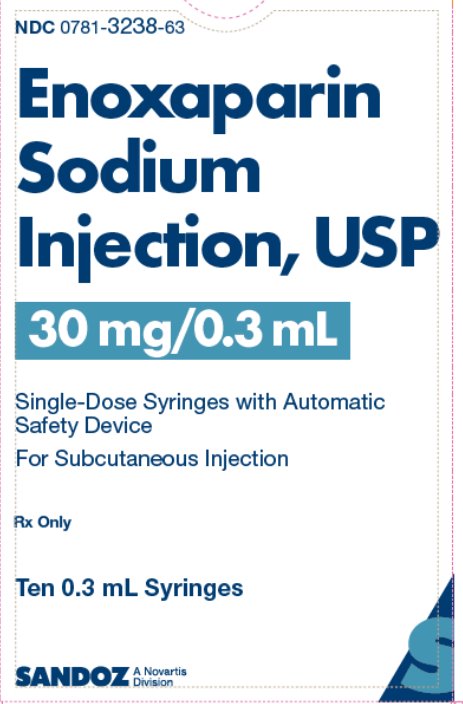
30mg-carton (Image 09)

30mg-carton (Image 09)
Enoxaparin Sodium Injection, USP 30 mg per 0.3 mL syringe. The label indicates single-dose syringes equipped with an automatic safety device for subcutaneous injection. The package contains ten 0.3 mL syringes. The product is manufactured by Sandoz, a Novartis division, and is for prescription use only.*
FDA Label Image

40mg-carton (Image 10)

40mg-carton (Image 10)
Packaging label for Enoxaparin Sodium Injection, USP, 40 mg/0.4 mL strength. The label indicates single-dose syringes with an automatic safety device for subcutaneous injection. The package contains ten 0.4 mL syringes and is labeled by Sandoz, a Novartis division.*
FDA Label Image

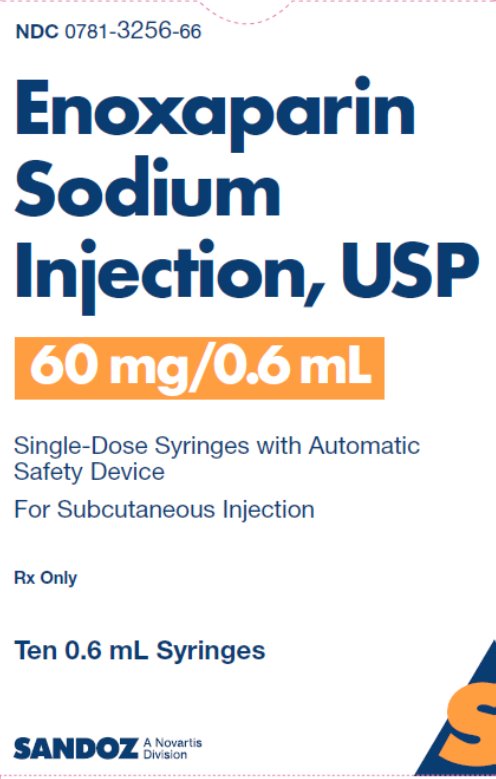
60mg-carton (Image 11)

60mg-carton (Image 11)
Packaging label for Enoxaparin Sodium Injection, USP 60 mg/0.6 mL single-dose syringes with automatic safety device for subcutaneous injection. The carton contains ten 0.6 mL syringes. Labeler is Sandoz Inc, a Novartis division.*
FDA Label Image

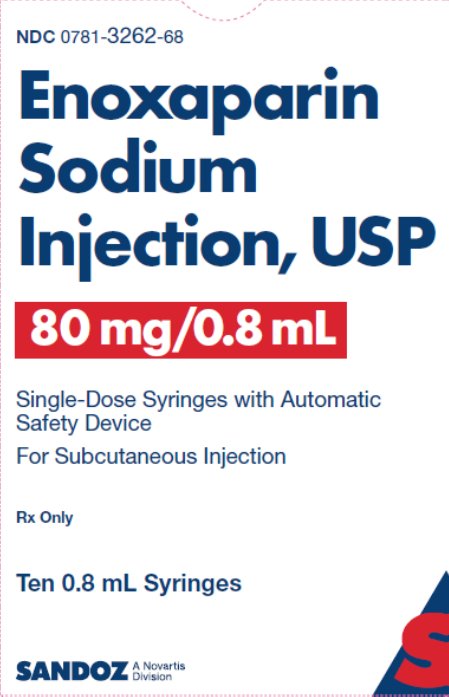
80mg-carton (Image 12)

80mg-carton (Image 12)
Enoxaparin Sodium Injection, USP 80 mg/0.8 mL in single-dose syringes with automatic safety device for subcutaneous injection. The package contains ten 0.8 mL syringes. The label displays the NDC 0781-3262-68 and is by Sandoz Inc, a Novartis Division.*
FDA Label Image

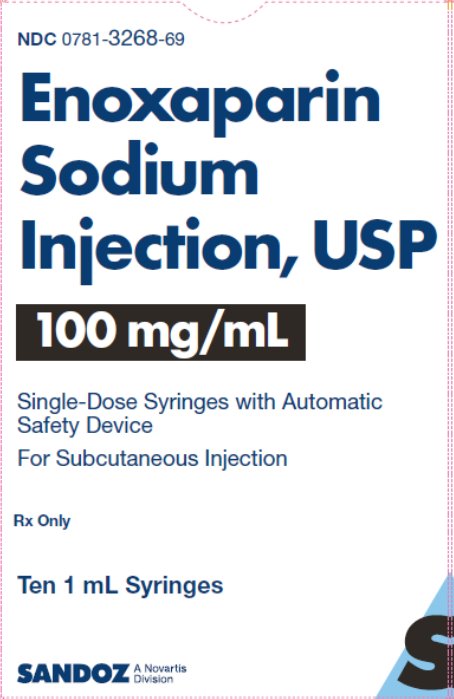
100mg-carton (Image 13)

100mg-carton (Image 13)
Label for Enoxaparin Sodium Injection, USP 100 mg/mL by Sandoz Inc. The product is supplied as single-dose 1 mL syringes with an automatic safety device for subcutaneous injection. The packaging states it is Rx only and contains ten 1 mL syringes.*
FDA Label Image

120mg-carton (Image 14)

120mg-carton (Image 14)
Packaging label for Enoxaparin Sodium Injection, USP 120 mg/0.8 mL by Sandoz Inc. The label indicates single-dose syringes with an automatic safety device for subcutaneous injection. The package contains ten 0.8 mL syringes. This is a prescription drug product.*
FDA Label Image

150mg-carton (Image 15)

150mg-carton (Image 15)
Label for Enoxaparin Sodium Injection, USP 150 mg/mL, a subcutaneous injection in single-dose syringes with an automatic safety device. The package contains ten 1 mL syringes. The product is labeled by Sandoz Inc, a division of Novartis.*

* About these descriptions: Image descriptions on this page are generated by automated AI analysis of the product label images from the manufacturer's FDA label submission (SPL). They are provided for reference only and may contain errors or omissions. Always rely on the printed label itself and the official FDA labeling, and consult a pharmacist or healthcare professional with any questions about this product.