Griseofulvin Tablet
Product Images NDC 0781-5514
View Photos of Packaging, Regulatory Labels, and Product Appearance
Product Visual Gallery
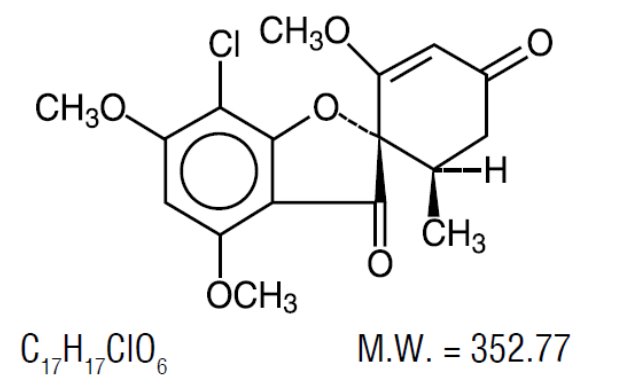
This gallery contains 3 technical images submitted to the FDA as part of the official labeling for Griseofulvin (NDC 0781-5514). Unlike standard consumer photos, these assets often include clinical data figures, molecular chemical structures, and official manufacturer packaging layouts.
As provided by Sandoz Inc, these visuals offer a comprehensive scientific overview of the product's physical and chemical identity, aiding pharmacists and researchers in product verification and study.
Product Images & Figures Index
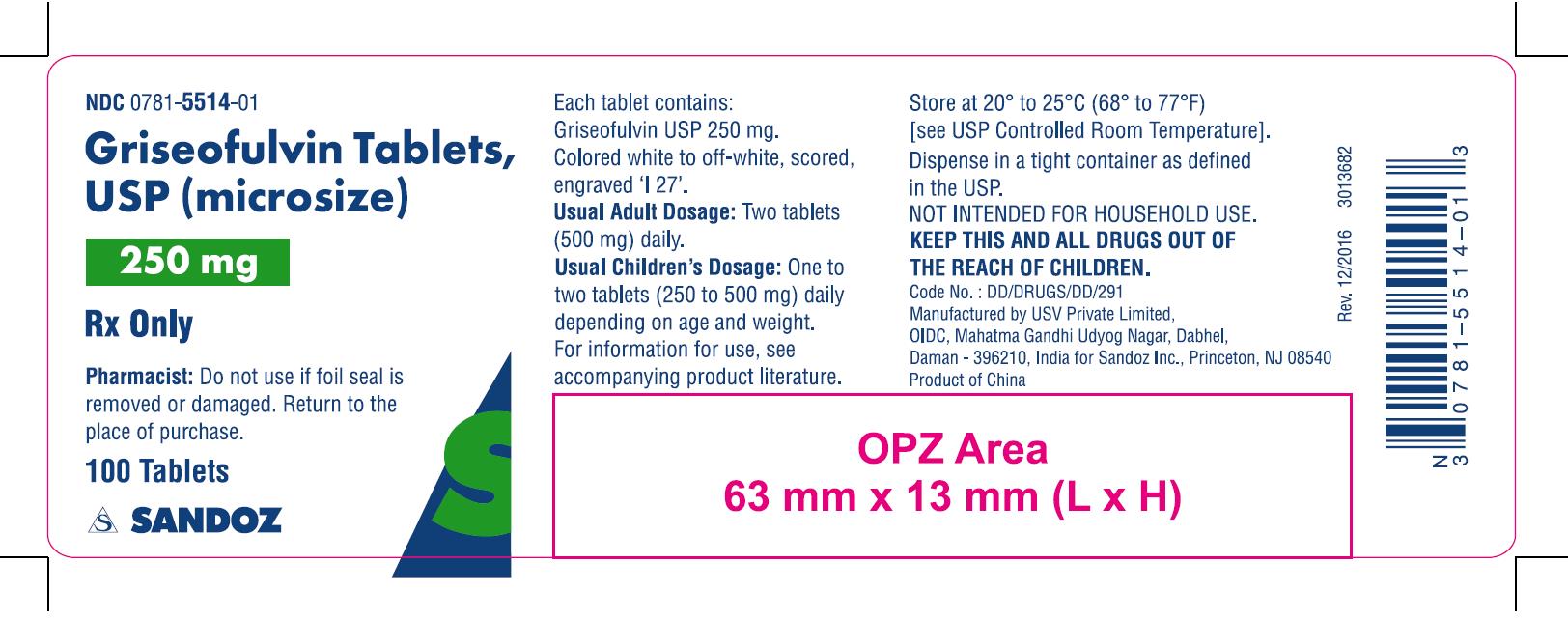
250 mg (Image 02)
Griseofulvin Tablets, USP (microsize) is a prescription drug used to treat various fungal infections. Each tablet contains Griseofulvin USP 250 mg and should not be used if the foil seal is removed or damaged. It is available in a pack of 100 tablets and should be stored at 20° to 25°C (68° to 77°F). The usual adult dosage is two tablets (500 mg) daily, while the children's dosage is one to two tablets (250 to 500 mg) daily depending on age and weight. Manufactured by USV Private Limited, Daman - 396210, India for Sandoz Inc., Princeton, NJ 08540, and is a product of China. More information for use is available in the accompanying product literature.*
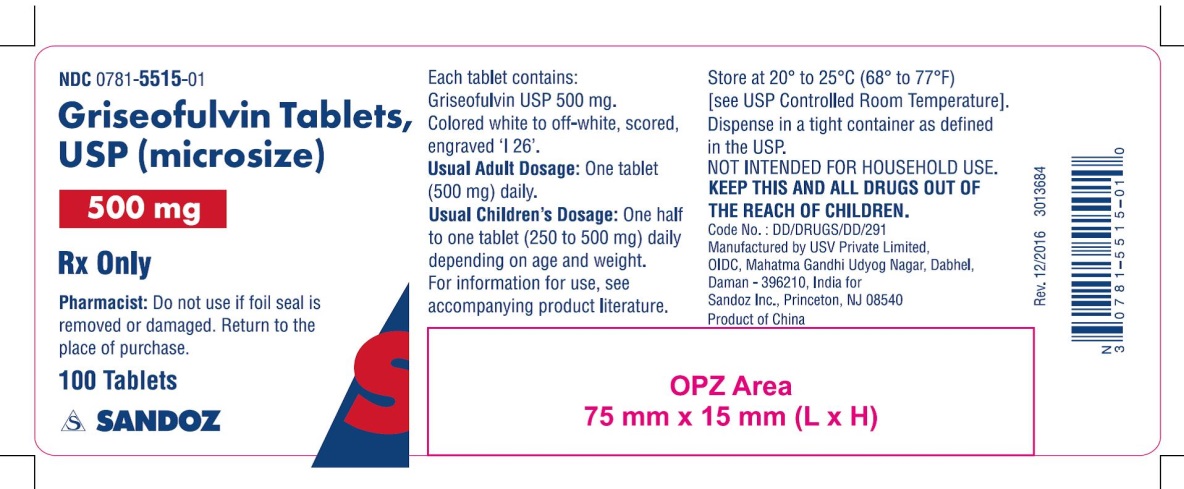
500 mg (Image 03)
Griseofulvin Tablets is a prescription medicine containing Griseofulvin USP of 500mg per tablet. The medicine comes in a pack of 100 tablets with a code number of DD/DRUGS/DD/291. The usual dosage for adults is one tablet (500mg) daily while the dosage for children depends on their age and weight. Each tablet is colored white to off-white with the inscription "| 26" on it. The medicine is manufactured by USV Private Limited, India, for Sandoz Inc., Princeton, NJ, and is not intended for household use. It should be stored in a tight container in a controlled room temperature of 20° to 25°C (68° to 77°F) and kept out of reach of children.*
* These product label images have been analyzed using experimental machine learning. Please verify findings with the primary label text.