Entacapone
The most commonly observed adverse reactions (incidence at least 3% greater than placebo incidence) in the double-blind, carbidopa-levodopa-placebo-controlled trials of entacapone (N=1,003 patients) associated with the use of carbidopa-levodopa-entacapone alone and not seen at an equivalent frequency among the placebo-treated patients were: dyskinesia, urine discoloration, diarrhea, nausea, hyperkinesia, vomiting, and dry mouth.
The treatment difference incidence for premature study discontinuation for entacapone with levodopa and dopa decarboxylase inhibitor in the double-blind, placebo-controlled trials was 5%. The treatment difference incidence for the most frequent causes of study discontinuation was 2% for diarrhea, and 1% for other specific adverse reactions including psychiatric reasons, dyskinesia/ hyperkinesia, nausea, or abdominal pain.
Adverse Reaction Incidence in Controlled Clinical Studies of Entacapone
Table 2 lists treatment emergent adverse reactions that occurred in at least 1% of patients treated with carbidopa/levodopa and 200 mg of entacapone who participated in the double-blind, placebo-controlled studies, and that were numerically more common in this group than in the carbidopa/levodopa plus placebo group. In these studies, either entacapone or placebo was added to carbidopa/levodopa (or benserazide/levodopa).
Table 2: Summary of Patients With Adverse Reactions After Start of Trial Drug Administration At Least 1% in Entacapone Group and Greater Than Placebo| SYSTEM ORGAN CLASS | Carbidopa/levodopa plus Entacapone | Carbidopa/levodopa plus Placebo |
|---|
| Preferred Term | (n=603)
% of patients | (n=400)
% of patients |
|---|
SKIN AND APPENDAGES DISORDERS | | |
Sweating Increased | 2 | 1 |
MUSCULOSKELETAL SYSTEM DISORDERS |
Back Pain | 5 | 3 |
CENTRAL AND PERIPHERAL NERVOUS SYSTEM DISORDERS |
Dyskinesia | 25 | 15 |
Hyperkinesia | 10 | 5 |
Hypokinesia | 9 | 8 |
Dizziness | 8 | 6 |
SPECIAL SENSES, OTHER DISORDERS |
Taste Perversion | 1 | 0 |
PSYCHIATRIC DISORDERS |
Anxiety | 2 | 1 |
Somnolence | 2 | 0 |
Agitation | 1 | 0 |
GASTROINTESTINAL SYSTEM DISORDERS |
Nausea | 14 | 8 |
Diarrhea | 10 | 4 |
Abdominal Pain | 8 | 4 |
Constipation | 6 | 4 |
Vomiting | 4 | 1 |
Mouth Dry | 3 | 0 |
Dyspepsia | 2 | 1 |
Flatulence | 2 | 0 |
Gastritis | 1 | 0 |
Gastrointestinal Disorders NOS | 1 | 0 |
RESPIRATORY SYSTEM DISORDERS |
Dyspnea | 3 | 1 |
PLATELET, BLEEDING AND CLOTTING DISORDERS |
Purpura | 2 | 1 |
URINARY SYSTEM DISORDERS |
Urine Discoloration | 10 | 0 |
BODY AS A WHOLE-GENERAL DISORDERS |
Fatigue | 6 | 4 |
Asthenia | 2 | 1 |
RESISTANCE MECHANISM DISORDERS |
Infection Bacterial | 1 | 0 |
Effects of Gender and Age on Adverse Reactions
No differences were noted in the rate of adverse reactions attributable to entacapone alone by age or gender.
Levodopa
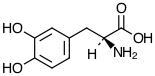
Current evidence indicates that symptoms of Parkinson's disease are related to depletion of dopamine in the corpus striatum. Administration of dopamine is ineffective in the treatment of Parkinson's disease because it does not cross the blood-brain barrier. However, levodopa the metabolic precursor of dopamine, does cross the blood-brain barrier, and is presumably converted to dopamine in the brain. This is thought to be the mechanism whereby levodopa relieves the symptoms of Parkinson's disease.
Carbidopa
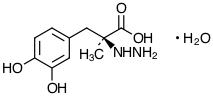
When levodopa is administered orally, it is rapidly decarboxylated to dopamine in extracerebral tissues so that only a small portion of a given dose is transported unchanged to the central nervous system. Carbidopa inhibits the decarboxylation of peripheral levodopa, making more levodopa available for delivery to the brain.
Entacapone
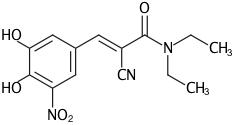
Entacapone is a selective and reversible inhibitor of catechol-O-methyltransferase (COMT).
COMT catalyzes the transfer of the methyl group of S-adenosyl-L-methionine to the phenolic group of substrates that contain a catechol structure. Physiological substrates of COMT include DOPA, catecholamines (dopamine, norepinephrine, and epinephrine) and their hydroxylated metabolites. When decarboxylation of levodopa is prevented by carbidopa, COMT becomes the major metabolizing enzyme for levodopa, catalyzing its metabolism to 3‑methoxy‑4‑hydroxy‑L‑phenylalanine (3‑OMD).
Absorption and Distribution
Both levodopa and entacapone are rapidly absorbed and eliminated, and their distribution volume is moderately small. Carbidopa is absorbed and eliminated slightly more slowly compared with levodopa and entacapone. There are substantial inter- and intra-individual variations in the absorption of levodopa, carbidopa and entacapone, particularly concerning its Cmax.
The food-effect on the carbidopa, levodopa and entacapone tablet has not been evaluated. Because levodopa competes with certain amino acids for transport across the gut wall, the absorption of levodopa may be impaired in some patients after eating a high protein meal. Meals rich in large neutral amino acids may delay and reduce the absorption of levodopa [see Patient Counseling Information (17)].
Levodopa
The pharmacokinetic properties of levodopa following the administration of single-dose carbidopa, levodopa and entacapone tablets are summarized in Table 3.
Table 3: Pharmacokinetic Characteristics of Levodopa with Different Tablet Strengths of Carbidopa, Levodopa and Entacapone Tablets (mean ± SD) | AUC0-∞ | Cmax | Tmax |
|---|
| Tablet Strength | (nanogram∙h per mL) | (nanogram per mL) | (h) |
|---|
12.5 mg per 50 mg per 200 mg | 1,040 ± 314 | 470 ± 154 | 1.1 ± 0.5 |
25 mg per 100 mg per 200 mg | 2,910 ± 715 | 975 ± 247 | 1.4 ± 0.6 |
37.5 mg per 150 mg per 200 mg | 3,770 ± 1,120 | 1,270 ± 329 | 1.5 ± 0.9 |
50 mg per 200 mg per 200 mg | 6,115 ± 1,536 | 1,859 ± 455 | 1.76 ± 0.7 |
Levodopa is bound to plasma protein only to a minor extent (about 10% to 30%).
Carbidopa
Following administration of carbidopa, levodopa and entacapone tablets as a single dose to healthy male and female subjects, the peak concentration of carbidopa was reached within 2.5 hours to 3.4 hours on average. The mean Cmax ranged from about 40 nanogram per mL to 225 nanogram per mL and the mean AUC from 170 nanogram•h per mL to 1,200 nanogram•h per mL, with different carbidopa, levodopa and entacapone tablet strengths providing 12.5 mg, 25 mg, 37.5 mg, or 50 mg of carbidopa.
Carbidopa is approximately 36% bound to plasma protein.
Entacapone
Following administration of carbidopa, levodopa and entacapone tablets as a single dose to healthy male and female subjects, the peak concentration of entacapone in plasma was reached within 0.8 hour to 1.2 hours on average. The mean Cmax of entacapone was about 1,200 nanogram per mL to 1,500 nanogram per mL and the AUC 1,250 nanogram•h per mL to 1,750 nanagram•h per mL after administration of different carbidopa, levodopa and entacapone tablet strengths all providing 200 mg of entacapone.
The plasma protein binding of entacapone is 98% over the concentration range of 0.4 mcg per mL to 50 mcg per mL. Entacapone binds mainly to serum albumin.
Metabolism and Elimination
Levodopa
The elimination half-life of levodopa, the active moiety of antiparkinsonian activity, was 1.7 hours (range 1.1 hours to 3.2 hours).
Levodopa is extensively metabolized to various metabolites. Two major pathways are decarboxylation by dopa decarboxylase (DDC) and O-methylation by COMT.
Carbidopa
The elimination half-life of carbidopa was on average 1.6 hours to 2 hours (range 0.7 hour to 4.0 hours).
Carbidopa is metabolized to two main metabolites (α-methyl-3-methoxy-4-hydroxyphenylpropionic acid and α‑methyl‑3,4‑dihydroxyphenylpropionic acid). These 2 metabolites are primarily eliminated in the urine unchanged or as glucuronide conjugates. Unchanged carbidopa accounts for 30% of the total urinary excretion.
Entacapone
The elimination half-life of entacapone was on average 0.8 hour to 1 hour (0.3 hour to 4.5 hours).
Entacapone is almost completely metabolized prior to excretion with only a very small amount (0.2% of dose) found unchanged in urine. The main metabolic pathway is isomerization to the cis-isomer, the only active metabolite. Entacapone and the cis-isomer are eliminated in the urine as glucuronide conjugates. The glucuronides account for 95% of all urinary metabolites (70% as parent and 25% as cis-isomer glucuronides). The glucuronide conjugate of the cis-isomer is inactive. After oral administration of a 14C-labeled dose of entacapone, 10% of labeled parent and metabolite is excreted in urine and 90% in feces.
Due to short elimination half-lives, no true accumulation of levodopa or entacapone occurs when they are administered repeatedly.
Renal Impairment
Entacapone
The pharmacokinetics of entacapone have been investigated after a single 200 mg entacapone dose in subjects with normal, moderate, and severely impaired renal functions, without levodopa and dopa decarboxylase inhibitor coadministration. No significant effects of renal function on the pharmacokinetics of entacapone were found.
Levodopa and carbidopa
No studies on the pharmacokinetics of levodopa and carbidopa in patients with renal impairment.
Hepatic Impairment
Entacapone
Hepatic impairment had a significant effect on the pharmacokinetics of entacapone when 200 mg entacapone was administered alone. A single 200 mg dose of entacapone, without levodopa and dopa decarboxylase inhibitor coadministration, showed approximately 2-fold higher AUC and Cmax values in patients with a history of alcoholism and hepatic impairment (n=10) compared to normal subjects (n=10). All patients had biopsy-proven liver cirrhosis caused by alcohol. According to Child-Pugh grading 7 patients with liver disease had mild hepatic impairment and 3 patients had moderate hepatic impairment. As only about 10% of the entacapone dose is excreted in urine, as parent compound and conjugated glucuronide, biliary excretion appears to be the major route of excretion of this drug. Carbidopa, levodopa and entacapone tablets should be administered with care to patients with biliary obstruction or hepatic disease.
Levodopa and carbidopa
There are no studies on the pharmacokinetics of levodopa and carbidopa in patients with hepatic impairment.
Geriatric Use
In the pharmacokinetics studies conducted in healthy volunteers following a single dose of carbidopa-, levodopa- and entacapone (as carbidopa, levodopa and entacapone tablets or as separate carbidopa/levodopa and entacapone tablets):
Levodopa
The AUC of levodopa is significantly (on average 10% to 20%) higher in elderly (60 years to 75 years) than younger subjects (45 years to 60 years). There is no significant difference in the Cmax of levodopa between younger (45 years to 60 years) and elderly subjects (60 years to 75 years).
Carbidopa
There is no significant difference in the Cmax and AUC of carbidopa, between younger (45 years to 60 years) and elderly subjects (60 years to 75 years).
Entacapone
The AUC of entacapone is significantly (on average, 15%) higher in elderly (60 years to 75 years) than younger subjects (45 years to 60 years). There is no significant difference in the Cmax of entacapone between younger (45 years to 60 years) and elderly subjects (60 years to 75 years).
Gender
Pharmacokinetics following a single dose of carbidopa, levodopa and entacapone together, either as carbidopa, levodopa and entacapone tablets or as separate carbidopa/levodopa tablets and entacapone tablets in healthy volunteers (age range 45 years to 74 years):
Levodopa
The plasma exposure (AUC and Cmax) of levodopa is significantly higher in females than males (on average, 40% for AUC and 30% for Cmax). These differences are primarily explained by body weight. Other published literature showed significant gender effect (higher concentrations in females) even after correction for body weight.
Carbidopa
There is no gender difference in the pharmacokinetics of carbidopa.
Entacapone
There is no gender difference in the pharmacokinetics of entacapone.
Drug Metabolized by COMT
When a single 400 mg dose of entacapone was given together with intravenous isoprenaline (isoproterenol) and epinephrine without coadministered levodopa and dopa decarboxylase inhibitor, the overall mean maximal changes in heart rate during infusion were about 50% and 80% higher than with placebo, for isoprenaline and epinephrine, respectively.
Drugs known to be metabolized by COMT should be administered with caution in patients receiving entacapone regardless of the route of administration [see Drug Interactions (7.2)].
Drugs Metabolized via CYP2C9
Due to its affinity to CYP2C9 in vitro, entacapone may potentially interfere with medicinal products with metabolism dependent on this isoenzyme. In an interaction study in healthy volunteers, entacapone increased the AUC of R-warfarin on average by 18%, and the INR values increased on average by 13% [see Drug Interactions (7.11)].
Carcinogenesis
In rats, oral administration of carbidopa-levodopa for 2 years resulted in no evidence of carcinogenicity at doses of approximately 2 times (carbidopa)-4 times (levodopa) the maximum recommended human dose (MRHD).
Two-year carcinogenicity studies of entacapone were conducted in mice and rats. In mice, no increase in tumors was observed at oral doses of 100, 200 and 400 mg/kg/day. At the highest dose tested, plasma exposures (AUC) were 4 times higher than that in humans at the maximum recommended daily dose (MRDD) of 1,600 mg. In rats administered oral doses of 20, 90, or 400 mg/kg/day, an increased incidence of renal tubular adenomas and carcinomas was observed in males at the highest dose tested. Plasma AUCs at the higher dose not associated with increased renal tumors (90 mg/kg/day) were approximately 5 times that in humans at the MRDD of entacapone.
The carcinogenic potential of entacapone administered in combination with carbidopa-levodopa has not been evaluated.
Mutagenesis
Carbidopa was mutagenic in the in vitro bacterial reverse mutation (Ames) assay in the presence and absence of metabolic activation, and in the in vitro mouse lymphoma thymidine kinase (tk) assay in the absence of metabolic activation. Carbidopa was negative in the in vivo mouse micronucleus assay.
Entacapone was mutagenic and clastogenic in the in vitro mouse lymphoma tk assay in the presence and absence of metabolic activation, and was clastogenic in cultured human lymphocytes in the presence of metabolic activation. Entacapone, either alone or in combination with carbidopa-levodopa, was negative in the in vivo mouse micronucleus and in the Ames assays.
Impairment of Fertility
In reproduction studies, no effects on fertility were found in rats receiving carbidopa-levodopa at doses of approximately 2 times (carbidopa)-4 times (levodopa) the MRHD.
In rats treated orally with entacapone (up to 700 mg/kg/day), no effects on fertility or general reproductive performance were observed. Plasma exposures (AUC) at the highest dose tested were approximately 30 times that in humans at the MRHD of entacapone. Delayed mating was evident in females at the highest dose tested.
Withdrawal of Entacapone:
In Study 2, abrupt withdrawal of entacapone, without alteration of the dose of carbidopa/levodopa, resulted in a significant worsening of fluctuations, compared to placebo. In some cases, symptoms were slightly worse than at baseline, but returned to approximately baseline severity within 2 weeks following levodopa dose increase on average by 80 mg. In Study 1, similarly, a significant worsening of parkinsonian symptoms was observed after entacapone withdrawal, as assessed 2 weeks after drug withdrawal. At this phase, the symptoms were approximately at baseline severity following levodopa dose increase by about 50 mg.
In the third placebo-controlled trial (Study 3), a total of 301 patients were randomized in 32 centers in Germany and Austria. In this trial, as in the other 2 studies, entacapone 200 mg was administered with each dose of levodopa and dopa decarboxylase inhibitor (up to 10 times daily) and UPDRS Parts II and III and total daily “On” time were the primary measures of effectiveness. Results for the primary measures, as well as for some secondary measures are presented in Table 6.
Table 6: Efficacy Results of Study 3Primary Measures |
| Baseline | Change from Baseline at Month 6 | p-value vs. placebo (LOCF) |
UPDRS ADL Total population; score change at endpoint. | | | |
Placebo | 12.0 | +0.5 | – |
Entacapone | 12.4 | -0.4 | less than 0.05 |
UPDRS Motor | | | |
Placebo | 24.1 | +0.1 | – |
Entacapone | 24.9 | -2.5 | less than 0.05 |
Hours of Awake Time “On” (Home Diary) Fluctuating population, with 5 doses to 10 doses; score change at endpoint. | | | |
Placebo | 10.1 | +0.5 | – |
Entacapone | 10.2 | +1.1 | N.S. Not significant. |
Secondary Measures P values for Secondary Measures are nominal P values without any adjustment for multiplicity. |
| Baseline | Change from Baseline at Month 6 | p-value vs. placebo |
UPDRS Total | | | |
Placebo | 37.7 | +0.6 | – |
Entacapone | 39.0 | -3.4 | less than 0.05 |
Percent of Awake Time “On” (Home Diary) | | | |
Placebo | 59.8 | +3.5 | – |
Entacapone | 62.0 | +6.5 | N.S. |
Hours of Awake Time “Off” (Home Diary) | | | |
Placebo | 6.8 | -0.6 | – |
Entacapone | 6.3 | -1.2 | 0.07 |
Levodopa Total Daily Dose (mg) | | | |
Placebo | 572 | +4 | – |
Entacapone | 566 | -35 | N.S. |
Frequency of Levodopa Daily Intake | | | |
Placebo | 5.6 | +0.2 | – |
Entacapone | 5.4 | 0.0 | less than 0.01 |
Global (overall) % Improved Total population; at least one category change at endpoint. | | | |
Placebo | – | 34 | – |
Entacapone | – | 38 | N.S. |
Falling Asleep During Activities of Daily Living and Somnolence
Advise patients about the potential for sedating effects associated with carbidopa, levodopa and entacapone tablets including somnolence and the possibility of falling asleep while engaged in activities of daily living. Because somnolence can be a frequent adverse reaction with potentially serious consequences, patients should not drive a motor vehicle, operate heavy machinery or engage in other potentially dangerous activities until they have gained sufficient experience with carbidopa, levodopa and entacapone tablets to determine whether or not it affects their mental and/or motor performance adversely [see Warnings and Precautions (5.1)]. Advise patients that if increased somnolence or episodes of falling asleep during activities of daily living (e.g., conversations, eating, driving a motor vehicle, etc.) are experienced at any time during treatment, they should not drive or participate in potentially dangerous activities until they have contacted their physician.
Advise patients to speak with their health care prescriber before taking alcohol, sedating medications, or other CNS depressants (e.g., benzodiazepines, antipsychotics, antidepressants, etc.) because of the possible additive effects in combination with carbidopa, levodopa and entacapone tablets.
Hypotension, Orthostatic Hypotension and Syncope
Advise patients that they may develop symptomatic (or asymptomatic) postural (orthostatic) hypotension or non-orthostatic hypotension while taking carbidopa, levodopa and entacapone tablets. Hypotension/orthostatic hypotension may occur more frequently during initial therapy. Patients should not rise rapidly after sitting or lying down, especially if they have been doing so for prolonged periods and especially at the initiation of treatment with carbidopa, levodopa and entacapone tablets.
Advise patients about the potential for syncope in patients using dopamine agonists. For this reason, inform patients about the possibility of syncope while taking carbidopa, levodopa and entacapone tablets [see Warnings and Precautions (5.2)].
Dyskinesias
Inform patients that carbidopa, levodopa and entacapone tablets may cause and/or exacerbate pre-existing dyskinesias [see Warnings and Precautions (5.3)].
Hallucinations and/or Psychotic-Like Behavior
Inform patients that hallucinations and other psychotic-like behavior can occur while taking carbidopa, levodopa and entacapone tablets [see Warnings and Precautions (5.5)].
Impulse Control and/or Compulsive Behaviors
Advise patients that they may experience impulse control and/or compulsive behaviors while taking one or more of the medications used for the treatment of Parkinson's disease, including carbidopa, levodopa and entacapone tablets. Ask patients about the development of new or increased gambling urges, sexual urges, urges for uncontrolled spending, or other intense urges while being treated with carbidopa, levodopa and entacapone tablets. Advise patients to inform their physician or health care provider if they experience new or increased gambling urges, increased sexual urges or other intense urges while taking carbidopa, levodopa and entacapone tablets. Physicians should consider dose reduction or stopping the medication if a patient develops such urges while taking carbidopa, levodopa and entacapone tablets [see Warnings and Precautions (5.6)].
Withdrawal-Emergent Hyperpyrexia and Confusion
Advise patients that they may develop fever and confusion as part of a syndrome resembling NMS and possibly with other clinical features (e.g., muscle rigidity, autonomic dysfunction, hyper- or hypotension, etc.). This fever and confusion syndrome may particularly occur with dose reductions or withdrawal of carbidopa, levodopa and entacapone tablets but may also develop after initiation of treatment. Advise patients to contact their healthcare provider if they wish to discontinue or decrease the dose of carbidopa, levodopa and entacapone tablets and to contact a health care provider if they develop fever and confusion [see Warnings and Precautions (5.7)].
Diarrhea and Colitis
Inform the patients that diarrhea may occur with carbidopa, levodopa and entacapone tablets and it may have a delayed onset. Sometimes prolonged diarrhea may be caused by colitis (inflammation of the large intestine). Patients with diarrhea should drink fluids to maintain adequate hydration and monitor for weight loss. If diarrhea associated with carbidopa, levodopa and entacapone tablets is prolonged, discontinuing the drug is expected to lead to resolution. If diarrhea continues after stopping carbidopa, levodopa and entacapone tablets, further diagnostic investigations may be needed. In some cases, diarrhea may be associated with colitis [see Warnings and Precautions (5.8)].
Rhabdomyolysis
Advise patients that they may develop rhabdomyolysis and myalgia if they experience prolonged motor activity including dyskinesia. This event may also be associated with fever and confusion [see Warnings and Precautions (5.9)].
Melanoma
Advise patients with Parkinson's disease that they have a higher risk of developing melanoma. Advise patients to have their skin examined on a regular basis by a qualified healthcare provider (e.g., dermatologist) and to monitor for melanomas frequently and on a regular basis when using carbidopa, levodopa and entacapone tablets [see Warnings and Precautions (5.10)].
Nausea and Vomiting
Inform patients that carbidopa, levodopa and entacapone tablets may cause nausea and vomiting may occur more frequently during initial therapy and may require dose adjustment.
Instructions for Use
Instruct patients to take carbidopa, levodopa and entacapone tablets only as prescribed. Instruct patients to only take a single tablet of carbidopa, levodopa and entacapone tablets at each dosing interval. Instruct patients not to take multiple tablets or additional portions of tablets to achieve a higher dose of levodopa. Advise patients not to split, crush, or chew carbidopa, levodopa and entacapone tablets.
Inform the patient that carbidopa, levodopa and entacapone tablets is a formulation of carbidopa/levodopa combined with entacapone that is designed to begin release of ingredients within 30 minutes after ingestion. It is important that carbidopa, levodopa and entacapone tablets be taken at regular intervals according to the schedule outlined by the physician. Caution the patient not to change the prescribed dosage regimen and not to add any additional antiparkinsonian medications, including other carbidopa/levodopa preparations, without first consulting the physician.
Advise patients that “off” episodes (“wearing-off” of drug effect) occur at the end of the dosing interval but unpredictable “off” episodes may occur at any time. Advise the patient to notify a health care provider for possible treatment adjustments if such response poses a problem to the patient's everyday life.
Advise patients that dark coloration (red, brown, or black) may appear in saliva, urine, or sweat after taking carbidopa, levodopa and entacapone tablets. Although the color appears to be clinically insignificant, garments may become discolored.
Advise patients that a change in diet to foods that are high in protein may delay the absorption of levodopa. Excessive acidity also delays stomach emptying, thus delaying the absorption of levodopa. Iron salts (such as in multi-vitamin tablets) may also reduce the effectiveness of carbidopa, levodopa and entacapone tablets.
Pregnancy and Breastfeeding
Carbidopa and levodopa are known to affect embryo-fetal development in the rabbit and decrease the number of live pups delivered by rats. Instruct patients to notify their physicians if they become pregnant or intend to become pregnant during therapy [see Use in Specific Populations (8.1)].
Carbidopa is known to be excreted into milk in rats. Because of the possibility that carbidopa and levodopa may be excreted into human milk, instruct patients to notify their physicians if they intend to breastfeed or are breastfeeding an infant [see Use in Specific Populations (8.3)].
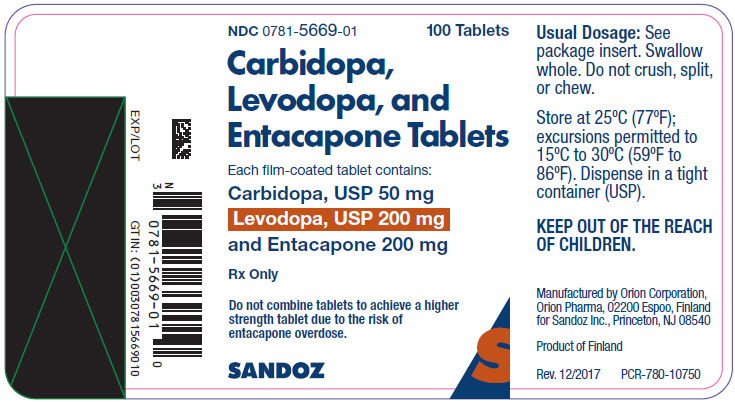
Manufactured by
Orion Corporation
Orion Pharma
02200 Espoo, Finland for
Sandoz Inc., Princeton, NJ 08540