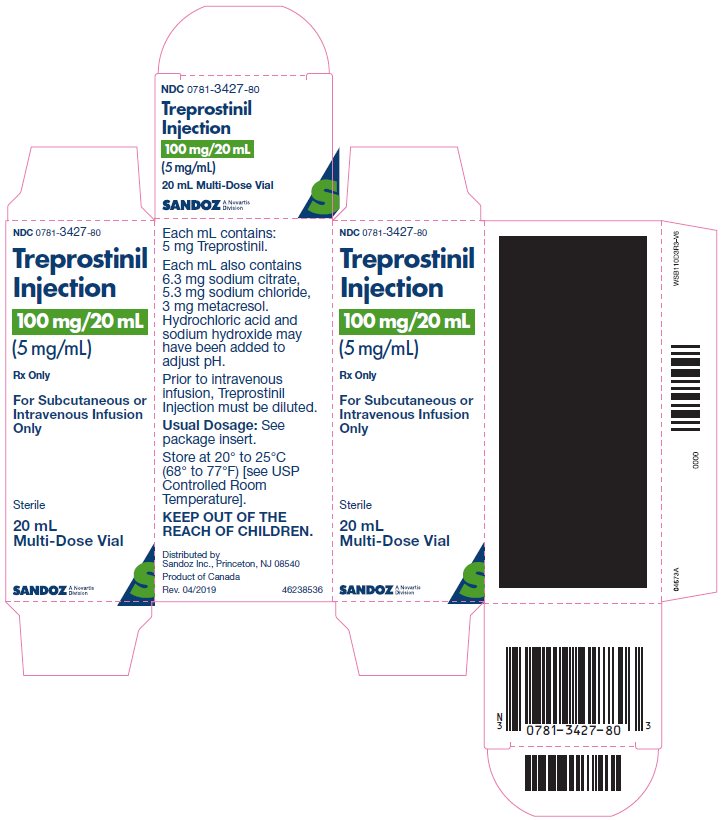
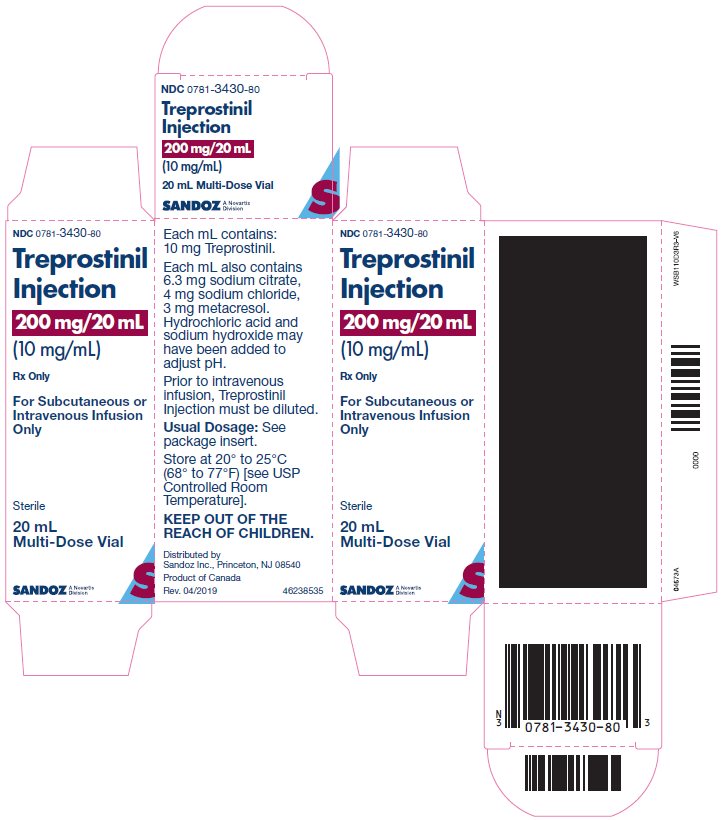
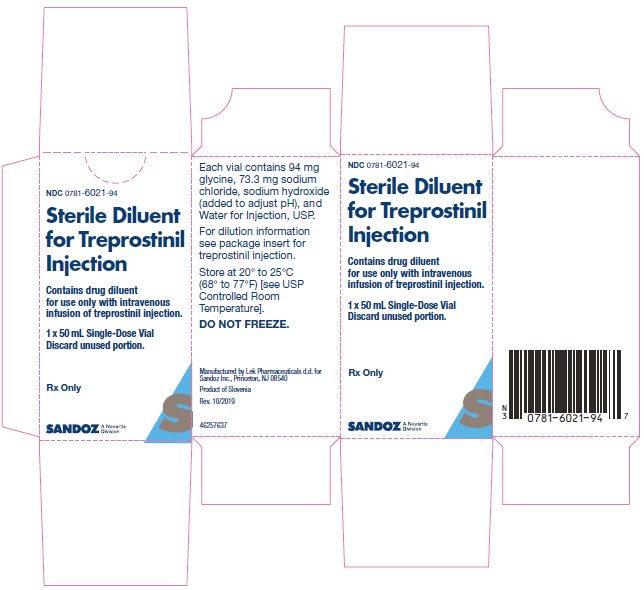
Inspect parenteral drug products for particulate matter and discoloration prior to administration whenever solution and container permit. If either particulate matter or discoloration is noted, do not use.
Preparation
Treprostinil injection is administered by subcutaneous or intravenous infusion at a calculated rate based on a patient’s dose (ng/kg/min), weight (kg) and the treprostinil concentration (mg/mL).
For administration of Undiluted Treprostinil Injection the rate is calculated using the following formula:
Undiluted Infusion Rate (mL/hr) | = | Dose (ng/kg/min) | × | Weight (kg) | × | 0.00006Conversion factor of 0.00006 = 60 min/hour x 0.000001 mg/ng |
Treprostinil Injection Vial Strength (mg/mL) |
For administration of Diluted Treprostinil Injection the rate and concentration is calculated using the following formulas:
Step 1
Diluted Treprostinil Concentration
(mg/mL) | = | Dose
(ng/kg/min) | × | Weight
(kg) | × | 0.00006 |
Infusion Rate
(mL/hour) |
The volume of treprostinil injection needed to make the required diluted treprostinil concentration for the given reservoir size can then be calculated using the following formula:
Step 2
Volume of Treprostinil Injection
(mL)
| = | Diluted Treprostinil Injection Concentration
(mg/mL) | × |
Total Volume of Diluted Treprostinil Injection Solution in Reservoir
(mL)
|
Treprostinil Injection Vial Strength
(mg/mL) |
The calculated volume of treprostinil injection is then added to the reservoir along with the sufficient volume of diluent to achieve the desired total volume in the reservoir.
Subcutaneous Infusion
Treprostinil injection is administered subcutaneously by continuous infusion, via a subcutaneous catheter, using an infusion pump designed for subcutaneous drug delivery. The infusion pump should: (1) be adjustable to approximately 0.002 mL/hour, (2) have occlusion/no delivery, low battery, programming error and motor malfunction alarms, (3) have delivery accuracy of ±6% or better, (4) be positive pressure driven, and (5) have a reservoir made of polyvinyl chloride, polypropylene or glass. Alternatively, use an infusion pump cleared for use with treprostinil injection. To avoid potential interruptions in drug delivery, the patient must have immediate access to a backup infusion pump and subcutaneous infusion sets.
Intravenous Infusion
External Intravenous Infusion Pump:
Treprostinil injection is administered intravenously by continuous infusion, via a surgically placed indwelling central venous catheter, using an external infusion pump designed for intravenous drug delivery. If clinically necessary, a temporary peripheral intravenous cannula, preferably placed in a large vein, may be used for short term administration of treprostinil injection. Use of a peripheral intravenous infusion for more than a few hours increases the risk of thrombophlebitis. The infusion pump used to administer treprostinil injection should: (1) have occlusion/no delivery, low battery, programming error and motor malfunction alarms, (2) have delivery accuracy of ±6% or better of the hourly dose, (3) be positive pressure driven, and (4) have a reservoir made of polyvinyl chloride, polypropylene or glass. Alternatively, use an infusion pump cleared for use with treprostinil injection. To avoid potential interruptions in drug delivery, the patient must have immediate access to a backup infusion pump and infusion sets.
Infusion sets with an in-line 0.22 or 0.2 micron pore size filter should be used.