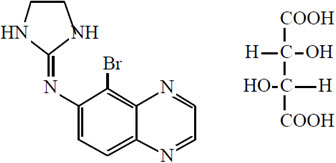
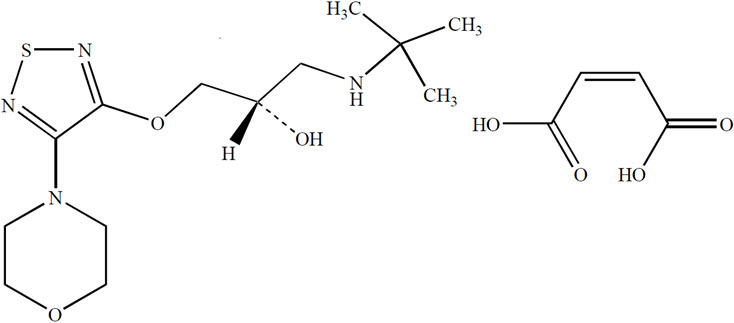
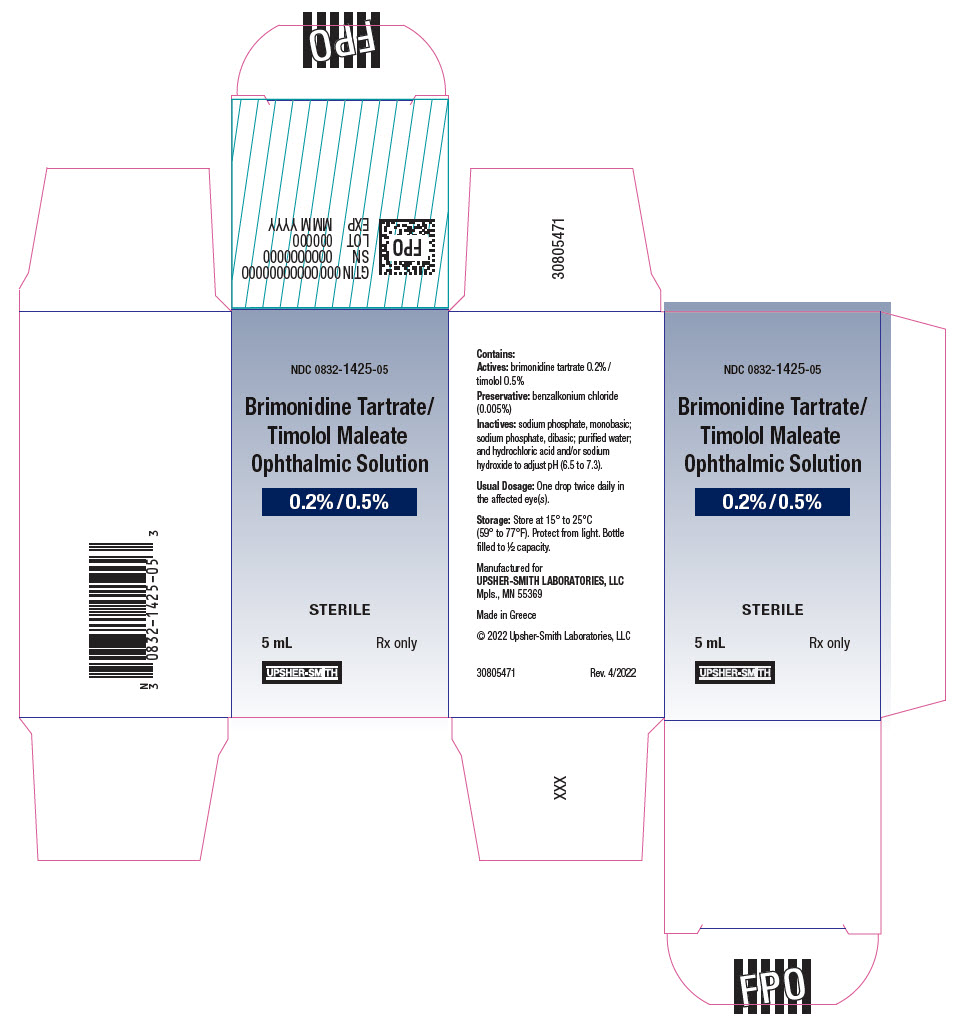
Brimonidine Tartrate/Timolol Maleate Ophthalmic Solution
In clinical trials of 12 months duration with brimonidine tartrate/timolol maleate ophthalmic solution, the most frequent reactions associated with its use occurring in approximately 5% to 15% of the patients included: allergic conjunctivitis, conjunctival folliculosis, conjunctival hyperemia, eye pruritus, ocular burning, and stinging. The following adverse reactions were reported in 1% to 5% of patients: asthenia, blepharitis, corneal erosion, depression, epiphora, eye discharge, eye dryness, eye irritation, eye pain, eyelid edema, eyelid erythema, eyelid pruritus, foreign body sensation, headache, hypertension, oral dryness, somnolence, superficial punctate keratitis, and visual disturbance.
Other adverse reactions that have been reported with the individual components are listed below.
Brimonidine Tartrate (0.1% to 0.2%)
Abnormal taste, allergic reaction, blepharoconjunctivitis, blurred vision, bronchitis, cataract, conjunctival blanching, conjunctival edema, conjunctival hemorrhage, conjunctivitis, cough, dizziness, dyspepsia, dyspnea, fatigue, flu syndrome, follicular conjunctivitis, gastrointestinal disorder, hypercholesterolemia, hypotension, infection (primarily colds and respiratory infections), hordeolum, insomnia, keratitis, lid crusting, lid disorder, muscular pain, nasal dryness, ocular allergic reaction, pharyngitis, photophobia, rash, rhinitis, sinus infection, sinusitis, superficial punctate keratopathy, tearing, upper respiratory symptoms, visual field defect, vitreous detachment, vitreous disorder, vitreous floaters, and worsened visual acuity.
Timolol (Ocular Administration)
Body as a whole: chest pain; Cardiovascular: Arrhythmia, bradycardia, cardiac arrest, cardiac failure, cerebral ischemia, cerebral vascular accident, claudication, cold hands and feet, edema, heart block, palpitation, pulmonary edema, Raynaud's phenomenon, syncope, and worsening of angina pectoris; Digestive: anorexia, diarrhea, nausea; Immunologic: Systemic lupus erythematosus; Nervous System/Psychiatric: Increase in signs and symptoms of myasthenia gravis, insomnia, nightmares, paresthesia, behavioral changes and psychic disturbances including confusion, hallucinations, anxiety, disorientation, nervousness, and memory loss; Skin: Alopecia, psoriasiform rash or exacerbation of psoriasis; Hypersensitivity: Signs and symptoms of systemic allergic reactions, including anaphylaxis, angioedema, urticaria, and generalized and localized rash; Respiratory: Bronchospasm (predominantly in patients with pre-existing bronchospastic disease) [see Contraindications (4.1)], dyspnea, nasal congestion, respiratory failure, upper respiratory infections; Endocrine: Masked symptoms of hypoglycemia in diabetes patients [see Warnings and Precautions (5.7)]; Special Senses: diplopia, choroidal detachment following filtration surgery, cystoid macular edema, decreased corneal sensitivity, pseudopemphigoid, ptosis, refractive changes, tinnitus; Urogenital: Decreased libido, impotence, Peyronie's disease, retroperitoneal fibrosis.
Oral Timolol/Oral Beta-blockers
The following additional adverse reactions have been reported in clinical experience with ORAL timolol maleate or other ORAL beta-blocking agents and may be considered potential effects of ophthalmic timolol maleate: Allergic: Erythematous rash, fever combined with aching and sore throat, laryngospasm with respiratory distress; Body as a whole: Decreased exercise tolerance, extremity pain, weight loss; Cardiovascular: Vasodilatation, worsening of arterial insufficiency; Digestive: Gastrointestinal pain, hepatomegaly, ischemic colitis, mesenteric arterial thrombosis, vomiting; Hematologic: Agranulocytosis, nonthrombocytopenic purpura, thrombocytopenic purpura; Endocrine: Hyperglycemia, hypoglycemia; Skin: Increased pigmentation, pruritus, skin irritation, sweating; Musculoskeletal: Arthralgia; Nervous System/Psychiatric: An acute reversible syndrome characterized by disorientation for time and place, decreased performance on neuropsychometrics, diminished concentration, emotional lability, local weakness, reversible mental depression progressing to catatonia, slightly clouded sensorium, vertigo; Respiratory: Bronchial obstruction, rales; Urogenital: Urination difficulties.
Absorption
Systemic absorption of brimonidine and timolol was assessed in healthy volunteers and patients following topical dosing with brimonidine tartrate/timolol maleate ophthalmic solution. Normal volunteers dosed with one drop of brimonidine tartrate/timolol maleate ophthalmic solution twice daily in both eyes for seven days showed peak plasma brimonidine and timolol concentrations of 30 pg/mL and 400 pg/mL, respectively. Plasma concentrations of brimonidine peaked at 1 to 4 hours after ocular dosing. Peak plasma concentrations of timolol occurred approximately 1 to 3 hours post-dose.
In a crossover study of brimonidine tartrate/timolol maleate ophthalmic solution, brimonidine tartrate 0.2%, and timolol 0.5% administered twice daily for 7 days in healthy volunteers, the mean brimonidine area-under-the-plasma-concentration-time curve (AUC) for brimonidine tartrate/timolol maleate ophthalmic solution was 128 ± 61 pg∙hr/mL versus 141 ± 106 pg∙hr/mL for the respective monotherapy treatments; mean Cmax values of brimonidine were comparable following brimonidine tartrate/timolol maleate ophthalmic solution treatment versus monotherapy (32.7 ± 15 pg/mL versus 34.7 ± 22.6 pg/mL, respectively). Mean timolol AUC for brimonidine tartrate/timolol maleate ophthalmic solution was similar to that of the respective monotherapy treatment (2,919 ± 1,679 pg∙hr/mL versus 2,909 ± 1,231 pg∙hr/mL, respectively); mean Cmax of timolol was approximately 20% lower following brimonidine tartrate/timolol maleate ophthalmic solution treatment versus monotherapy.
In a parallel study in patients dosed twice daily with brimonidine tartrate/timolol maleate ophthalmic solution, twice daily with timolol 0.5%, or three times daily with brimonidine tartrate 0.2%, one-hour post dose plasma concentrations of timolol and brimonidine were approximately 30% to 40% lower with brimonidine tartrate/timolol maleate ophthalmic solution than their respective monotherapy values. The lower plasma brimonidine concentrations with brimonidine tartrate/timolol maleate ophthalmic solution appears to be due to twice-daily dosing for brimonidine tartrate/timolol maleate ophthalmic solution versus three-times dosing with brimonidine tartrate 0.2%.
Distribution
The protein binding of timolol is approximately 60%. The protein binding of brimonidine has not been studied.
Metabolism
In humans, brimonidine is extensively metabolized by the liver. Timolol is partially metabolized by the liver.
Excretion
In the crossover study in healthy volunteers, the plasma concentration of brimonidine declined with a systemic half-life of approximately 3 hours. The apparent systemic half-life of timolol was about 7 hours after ocular administration.
Urinary excretion is the major route of elimination of brimonidine and its metabolites. Approximately 87% of an orally administered radioactive dose of brimonidine was eliminated within 120 hours, with 74% found in the urine. Unchanged timolol and its metabolites are excreted by the kidney.
Special Populations
Brimonidine tartrate/timolol maleate ophthalmic solution has not been studied in patients with hepatic impairment.
Brimonidine tartrate/timolol maleate ophthalmic solution has not been studied in patients with renal impairment.
A study of patients with renal failure showed that timolol was not readily removed by dialysis. The effect of dialysis on brimonidine pharmacokinetics in patients with renal failure is not known.
Following oral administration of timolol maleate, the plasma half-life of timolol is essentially unchanged in patients with moderate renal insufficiency.
Manufactured for
UPSHER-SMITH LABORATORIES, LLC
Mpls., MN 55369
Made in Greece
Revised: 4/2022