For the Treatment of Acute Otitis Media in Pediatric Patients (age 6 months and older) With Tympanostomy Tubes
The recommended dosage regimen through tympanostomy tubes is as follows:
•
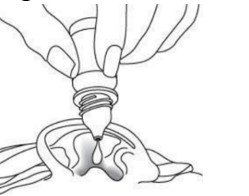
Four drops [equivalent to 0.14 mL of ciprofloxacin and dexamethasone otic suspension, (consisting of 0.42 mg of ciprofloxacin and 0.14 mg of dexamethasone)] instilled into the affected ear twice daily for seven days.
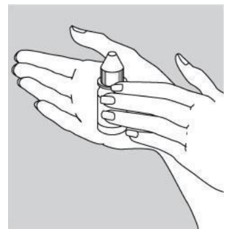
• The suspension should be warmed by holding the bottle in the hand for one or two minutes to avoid dizziness, which may result from the instillation of a cold suspension.
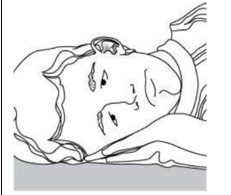
• The patient should lie with the affected ear upward, and then the drops should be instilled.
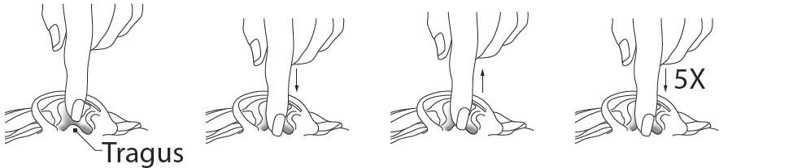
• The tragus should then be pumped 5 times by pushing inward to facilitate penetration of the drops into the middle ear.
• This position should be maintained for 60 seconds. Repeat, if necessary, for the opposite ear.
• Discard unused portion after therapy is completed.
For the Treatment of Acute Otitis Externa (age 6 months and older)
The recommended dosage regimen is as follows:
- Four drops [equivalent to 0.14 mL of ciprofloxacin and dexamethasone, otic suspension, (consisting of 0.42 mg ciprofloxacin and 0.14 mg dexamethasone)] instilled into the affected ear twice daily for seven days.
- The suspension should be warmed by holding the bottle in the hand for one or two minutes to avoid dizziness, which may result from the instillation of a cold suspension.
- The patient should lie with the affected ear upward, and then the drops should be instilled.
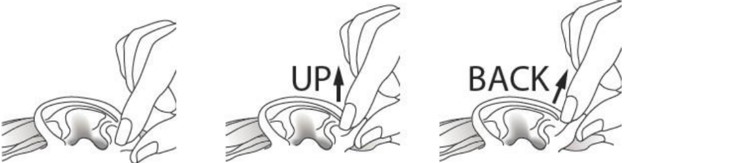
- This position should be maintained for 60 seconds to facilitate penetration of the drops into the ear canal. Repeat, if necessary, for the opposite ear.
- Discard unused portion after therapy is completed.
Acute Otitis Externa
The following adverse reactions occurred in 0.4% or more of the patients with intact tympanic membranes.
| Adverse Reactions | Incidence (N = 537) |
|---|
| Ear pruritus | 1.5% |
| Ear debris | 0.6% |
| Superimposed ear infection | 0.6% |
| Ear congestion | 0.4% |
| Ear pain | 0.4% |
| Erythema | 0.4% |
The following adverse reactions were each reported in a single patient: ear discomfort; decreased hearing; and ear disorder (tingling).
Risk Summary
There are no available data on ciprofloxacin and dexamethasone, otic suspension use in pregnant women to evaluate for a drug-associated risk of major birth defects, miscarriage or adverse maternal or fetal outcomes. Because of the minimal systemic absorption of ciprofloxacin and dexamethasone following topical otic administration of ciprofloxacin and dexamethasone, otic suspension, this product is expected to be of minimal risk for maternal and fetal toxicity when administered to pregnant women
[see
Clinical Pharmacology (12.3)]
.
Animal reproduction studies have not been conducted with ciprofloxacin and dexamethasone, otic suspension. Oral administration of ciprofloxacin during organogenesis at doses up to 100 mg/kg to pregnant mice and rats, and up to 30 mg/kg to pregnant rabbits did not cause fetal malformations (see
Data). These doses were at least 200 times the recommended otic human dose (ROHD in mice, rats, and rabbits, respectively, based on body surface area (BSA). With dexamethasone, malformations have been observed in animal studies after ocular and systemic administration.
The estimated background risk of major birth defects and miscarriage for the indicated population is unknown. All pregnancies have a background risk of birth defect, loss, or other adverse outcomes. In the U.S. general population, the estimated background risk of major birth defects and miscarriage in clinically recognized pregnancies is 2% to 4% and of miscarriage is 15% to 20% respectively.
Data
Animal Data
Ciprofloxacin
Developmental toxicology studies have been performed with ciprofloxacin in rats, mice, and rabbits. The doses used in these studies are, at a minimum, approximately 200 times greater than the recommended otic human dose based on body surface area. In rats and mice, oral doses up to 100 mg/kg administered during organogenesis (Gestation Days (GD), 6 to 17) were not associated with adverse developmental outcomes, including embryofetal toxicity or malformations. A 30 mg/kg oral dose was associated with suppression of maternal and fetal body weight gain, but fetal malformations were not observed. Intravenous administration of doses up to 20 mg/kg to pregnant rabbits was not maternally toxic and neither embryofetal toxicity nor fetal malformations were observed. To mitigate maternal toxicity in these studies, groups of rabbits received ciprofloxacin for a different 5-day dosing period covering organogenesis (GD 6 to 18).
Dexamethasone
Dexamethasone has been shown to be teratogenic in mice and rabbits following topical ophthalmic application. In a rat oral developmental toxicity study, no adverse effects were observed at 0.01 mg/kg/day (0.1 times the ROHD based on BSA), although embryotoxicity was observed at higher doses.
Risk Summary
It is not known whether ciprofloxacin and dexamethasone are present in human milk following topical otic administration.
Published literature reports the presence of ciprofloxacin in human milk after oral administration to lactating women. However, because of the minimal systemic absorption of ciprofloxacin following topical otic administration of ciprofloxacin and dexamethasone, otic suspension, breastfeeding is not expected to result in the exposure of the infant to ciprofloxacin
[see
Clinical Pharmacology (12.3)]
.
Systemically administered corticosteroids appear in human milk. Dexamethasone in breast milk could suppress growth, interfere with endogenous corticosteroid production, or cause other untoward effects. However, it is not known whether topical otic administration of ciprofloxacin and dexamethasone, otic suspension could result in systemic absorption that is sufficient to produce detectable quantities of dexamethasone in human milk.
There are no data on the effects of ciprofloxacin or dexamethasone on milk production.
The developmental and health benefits of breastfeeding should be considered along with the mother's clinical need for ciprofloxacin and dexamethasone, otic suspension and any potential adverse effects on the breast-fed child from ciprofloxacin and dexamethasone, otic suspension.
Mechanism of Action
The bactericidal action of ciprofloxacin results from interference with the enzyme, DNA gyrase, which is needed for the synthesis of bacterial DNA.
Resistance
Cross-resistance has been observed between ciprofloxacin and other fluoroquinolones. There is generally no cross-resistance between ciprofloxacin and other classes of anti-bacterial agents, such as beta-lactams or aminoglycosides.
Antimicrobial Activity
Ciprofloxacin has been shown to be active against most isolates of the following microorganisms, both
in vitroand clinically in otic infections
[see
Indications and Usage (1)]
.
Aerobic Bacteria
Gram-positive Bacteria
- Staphylococcus aureus
- Streptococcus pneumoniae
Gram-negative Bacteria
- Haemophilus influenzae
- Moraxella catarrhalis
- Pseudomonas aeruginosa
Carcinogenesis
Long-term carcinogenicity studies in mice and rats have been completed for ciprofloxacin. After daily oral doses of 750 mg/kg (mice) and 250 mg/kg (rats) were administered for up to 2 years, there was no evidence that ciprofloxacin had any carcinogenic or tumorigenic effects in these species. No long-term studies of ciprofloxacin and dexamethasone, otic suspension have been performed to evaluate carcinogenic potential.
Long-term studies have not been performed to evaluate the carcinogenic potential of topical otic dexamethasone.
Mutagenesis
Eight
in vitromutagenicity tests have been conducted with ciprofloxacin, and the test results are listed below:
- Salmonella/Microsome Test (Negative)
- E. coliDNA Repair Assay (Negative)
- Mouse Lymphoma Cell Forward Mutation Assay (Positive)
- Chinese Hamster V79 Cell HGPRT Test (Negative)
- Syrian Hamster Embryo Cell Transformation Assay (Negative)
- Saccharomyces cerevisiaePoint Mutation Assay (Negative)
- Saccharomyces cerevisiaeMitotic Crossover and Gene Conversion Assay (Negative)
- Rat Hepatocyte DNA Repair Assay (Positive)
Thus, 2 of the 8 tests were positive, but results of the following 3
in vivotest systems gave negative results:
- Rat Hepatocyte DNA Repair Assay
- Micronucleus Test (Mice)
- Dominant Lethal Test (Mice)
Dexamethasone has been tested for
in vitroand
in vivogenotoxic potential and shown to be positive in the following assays: chromosomal aberrations, sister-chromatid exchange in human lymphocytes, and micronuclei and sister-chromatid exchanges in mouse bone marrow. However, the Ames/Salmonella assay, both with and without S9 mix, did not show any increase in His+ revertants.
Impairment of Fertility
Fertility studies performed in male and female rats at oral doses of ciprofloxacin up to 100 mg/kg (approximately 482 times the ROHD of ciprofloxacin based on BSA) revealed no evidence of impairment. Male rats received oral ciprofloxacin for 10 weeks prior to mating and females were dosed for 3 weeks prior to mating through GD 7.
The effect of dexamethasone on fertility has not been investigated following topical otic application. However, the lowest toxic dose of dexamethasone identified following topical dermal application was 1.802 mg/kg in a 26-week study in male rats and resulted in changes to the testes, epididymis, sperm duct, prostate, seminal vesicle, Cowper's gland, and accessory glands. The relevance of this study for short-term topical otic use is unknown.
How Supplied
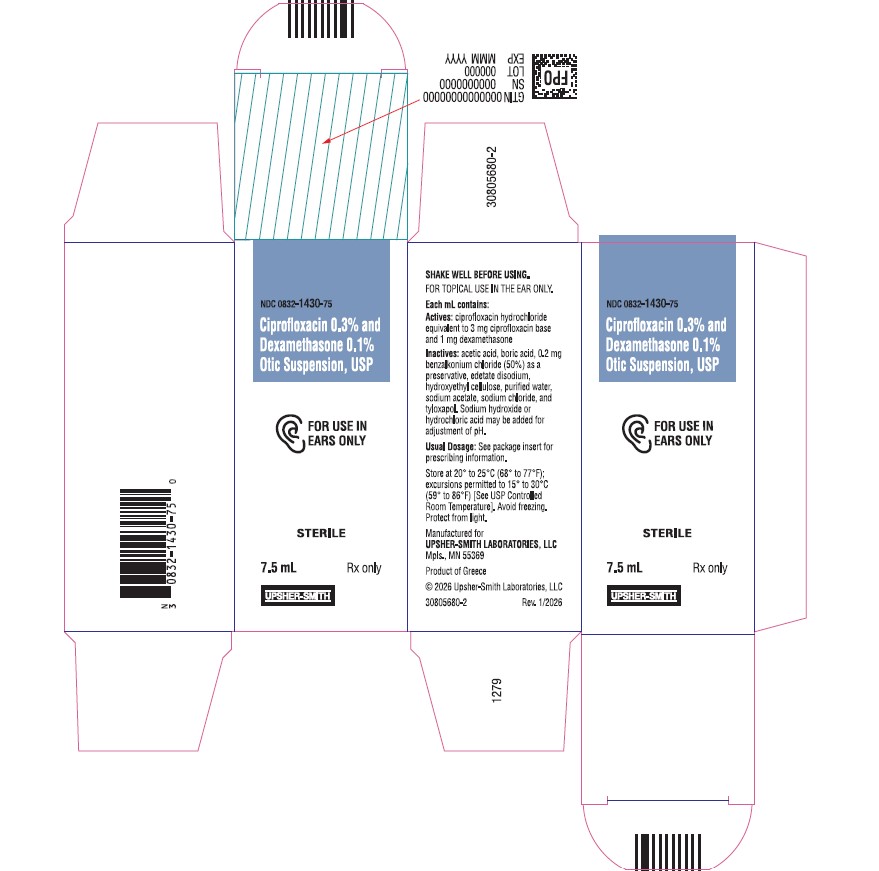
Ciprofloxacin 0.3% and dexamethasone 0.1%, otic suspension, USP is a white to off-white suspension supplied in a natural LDPE bottle, with a natural LDPE dropper and capped with a white HDPE cap.
| 7.5 mL in a 10 mL bottle | NDC 0832-1430-75 |
For Otic Use Only
Advise patients that ciprofloxacin and dexamethasone, otic suspension is for
otic use (ears) only. This product must not be used in the eye[see
Dosage and Administration (2.2)]
.
Administration Instructions
Instruct patients to warm the bottle in their hand for one to two minutes prior to use and shake well immediately before using
[see
Dosage and Administration (2.1,
2.2)]
.
Allergic Reactions
Advise patients to discontinue use immediately and contact their physician, if rash or allergic reaction occurs
[see
Warnings and Precautions (5.1)]
.
Avoid Contamination of the Product
Advise patients to avoid contaminating the tip with material from the ear, fingers, or other sources
[see
Instructions for Use]
.
Duration of Use
Advise patients that it is very important to use the eardrops for as long as their doctor has instructed, even if the symptoms improve
[see
Patient Information]
.
Protect from Light
Advise patients to protect the product from light
[see
How Supplied/Storage and Handling (16)]
.
Unused Product
Advise patients to discard unused portion after therapy is completed
[see
Dosage and Administration (2.2)]
.
Manufactured for
UPSHER-SMITH LABORATORIES, LLC
Mpls., MN 55369
Revised: 12/2025