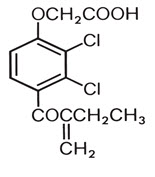
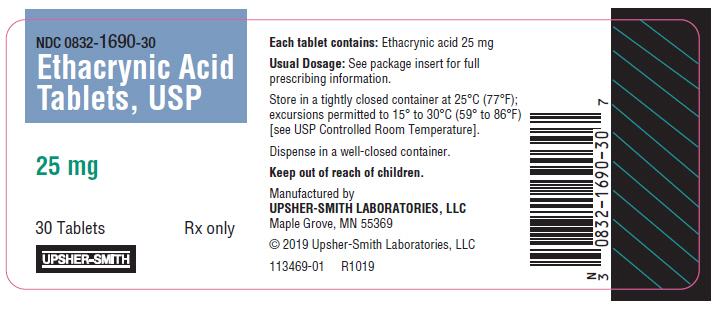
Weakness, muscle cramps, paresthesias, thirst, anorexia, and signs of hyponatremia, hypokalemia, and/or hypochloremic alkalosis may occur following vigorous or excessive diuresis and these may be accentuated by rigid salt restriction. Rarely, tetany has been reported following vigorous diuresis. During therapy with ethacrynic acid, liberalization of salt intake and supplementary potassium chloride are often necessary.
When a metabolic alkalosis may be anticipated, e.g., in cirrhosis with ascites, the use of potassium chloride or a potassium-sparing agent before and during therapy with ethacrynic acid may mitigate or prevent the hypokalemia.
Loop diuretics have been shown to increase the urinary excretion of magnesium; this may result in hypomagnesemia.
The safety and efficacy of ethacrynic acid in hypertension have not been established. However, the dosage of coadministered antihypertensive agents may require adjustment.
Orthostatic hypotension may occur in patients receiving other antihypertensive agents when given ethacrynic acid.
Ethacrynic acid has little or no effect on glomerular filtration or on renal blood flow, except following pronounced reductions in plasma volume when associated with rapid diuresis. A transient increase in serum urea nitrogen may occur. Usually, this is readily reversible when the drug is discontinued.
As with other diuretics used in the treatment of renal edema, hypoproteinemia may reduce responsiveness to ethacrynic acid and the use of salt-poor albumin should be considered.
A number of drugs, including ethacrynic acid, have been shown to displace warfarin from plasma protein; a reduction in the usual anticoagulant dosage may be required in patients receiving both drugs.
Ethacrynic acid may increase the risk of gastric hemorrhage associated with corticosteroid treatment.