Divalproex Sodium Tablet, Delayed Release
Product Images NDC 0832-7123

View Photos of Packaging, Regulatory Labels, and Product Appearance

Product Visual Gallery

This gallery contains 8 technical images submitted to the FDA as part of the official labeling for Divalproex Sodium (NDC 0832-7123). Unlike standard consumer photos, these assets often include clinical data figures, molecular chemical structures, and official manufacturer packaging layouts.

As provided by Upsher-smith Laboratories, Llc, these visuals offer a comprehensive scientific overview of the product's physical and chemical identity, aiding pharmacists and researchers in product verification and study.

FDA Label Image

Chemical Structure (Divalproex 01)

Chemical Structure (Divalproex 01)
Chemical structure of Divalproex Sodium depicted as a polymeric repeating unit with sodium salt and carboxylate groups shown.*
FDA Label Image

Figure 1 (Divalproex 02)

Figure 1 (Divalproex 02)
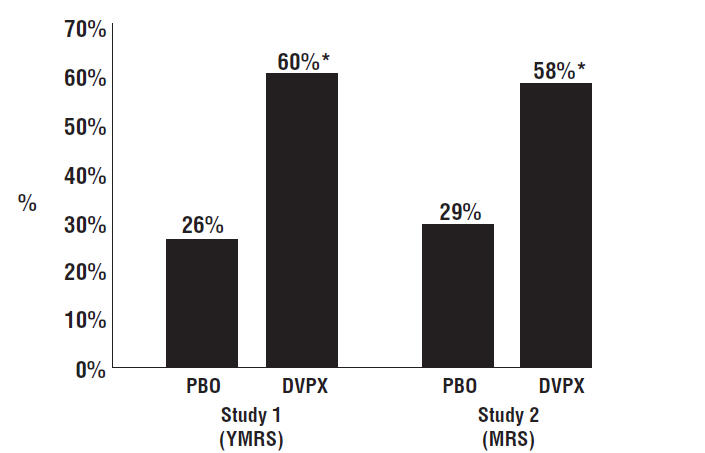
A bar chart comparing percentage values for two studies labeled Study 1 (YMRS) and Study 2 (MRS). Each study shows two bars representing PBO and DVPX, with percentages indicated above each bar: 26% (PBO) and 60% (DVPX) for Study 1, and 29% (PBO) and 58% (DVPX) for Study 2. The y-axis is labeled with percentages ranging from 0% to 70%.*
FDA Label Image

Figure 2 (Divalproex 03)

Figure 2 (Divalproex 03)
A line graph comparing the percentage reduction in CPS rate against the percentage of patients for Divalproex sodium and placebo. The graph indicates patient improvement or worsening, showing Divalproex sodium as a solid line and placebo as a dashed line.*
FDA Label Image

Figure 3 (Divalproex 04)

Figure 3 (Divalproex 04)
A cumulative percent responder plot showing the percentage reduction in CPS (complex partial seizure) rate for patients on high dose versus low dose. The vertical axis represents percentage reduction in CPS rate with improvement upwards and worsening downwards, while the horizontal axis shows the percentage of patients. The graph compares seizure response outcomes between high dose and low dose groups.*
FDA Label Image

Figure 4 (Divalproex 05)

Figure 4 (Divalproex 05)
A bar chart comparing the effects of Placebo versus Divalproex Sodium in two separate studies labeled Study 1 and Study 2. The vertical axis is numeric, showing values approximately from 0 to 6 with Placebo bars higher than Divalproex Sodium bars in both studies.*
FDA Label Image

Principal Display Panel (125 mg Tablet Bottle Label)

Principal Display Panel (125 mg Tablet Bottle Label)
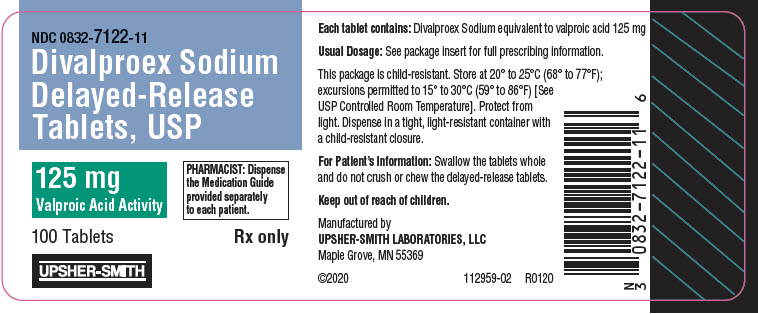
Label for Divalproex Sodium Delayed-Release Tablets, USP, 125 mg strength, oral dosage form. The package contains 100 tablets manufactured by Upsher-Smith Laboratories, LLC. The label includes storage instructions, dosage information, a barcode, and a notice to pharmacists to dispense the Medication Guide separately. It states the active ingredient equivalency to valproic acid and includes cautionary statements for patient use.*
FDA Label Image

Principal Display Panel (250 mg Tablet Bottle Label)

Principal Display Panel (250 mg Tablet Bottle Label)
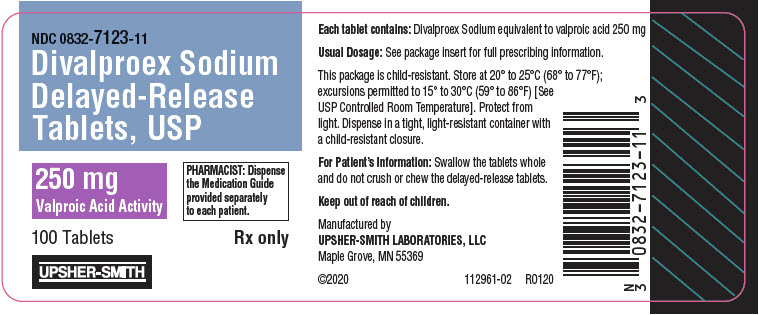
Label for Divalproex Sodium Delayed-Release Tablets, USP, 250 mg by Upsher-Smith Laboratories, LLC. The label states the active ingredient as Divalproex Sodium equivalent to valproic acid 250 mg. The package contains 100 tablets and is marked Rx only. Storage and usage instructions, as well as a barcode, are visible on the right side.*
FDA Label Image

Principal Display Panel (500 mg Tablet Bottle Label)

Principal Display Panel (500 mg Tablet Bottle Label)
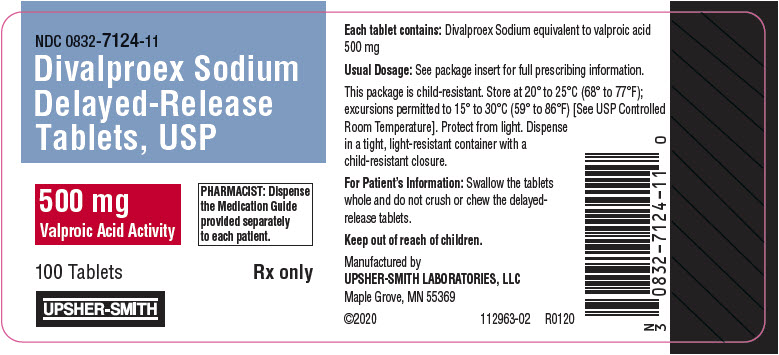
Label for Divalproex Sodium Delayed-Release Tablets, USP, 500 mg valproic acid activity, containing 100 tablets. The label shows it is a prescription drug by Upsher-Smith Laboratories, LLC. It includes storage instructions, a barcode, and a directive to dispense the Medication Guide separately.*

* About these descriptions: Image descriptions on this page are generated by automated AI analysis of the product label images from the manufacturer's FDA label submission (SPL). They are provided for reference only and may contain errors or omissions. Always rely on the printed label itself and the official FDA labeling, and consult a pharmacist or healthcare professional with any questions about this product.