Clopidogrel Tablet, Film Coated
Product Images NDC 0904-6467

View Photos of Packaging, Regulatory Labels, and Product Appearance

Product Visual Gallery

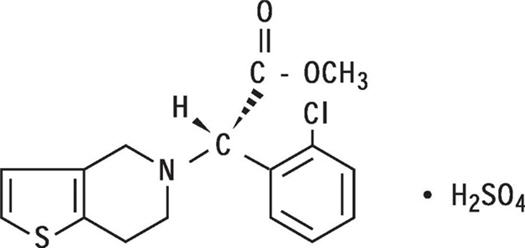
This gallery contains 11 technical images submitted to the FDA as part of the official labeling for Clopidogrel (NDC 0904-6467). Unlike standard consumer photos, these assets often include clinical data figures, molecular chemical structures, and official manufacturer packaging layouts.

As provided by Major Pharmaceuticals, these visuals offer a comprehensive scientific overview of the product's physical and chemical identity, aiding pharmacists and researchers in product verification and study.

FDA Label Image

4f439153 055d 4c05 B7f9 De8d4263d739 00
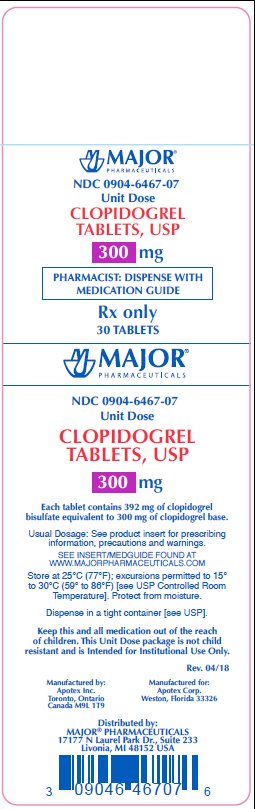
4f439153 055d 4c05 B7f9 De8d4263d739 00
This is a description of a medication named Clopidogrel in the form of tablets. The package contains unit doses and it is intended for prescription use only. Each tablet contains 292 mg of Copidorrst. It is suggested to store the tablets at a temperature not exceeding 25°C (77°F). The medication should be dispensed in a tightly enclosed container and kept away from children. The brand name of the medication is GHMAJOR and the NDC code is 0901646707.*
FDA Label Image

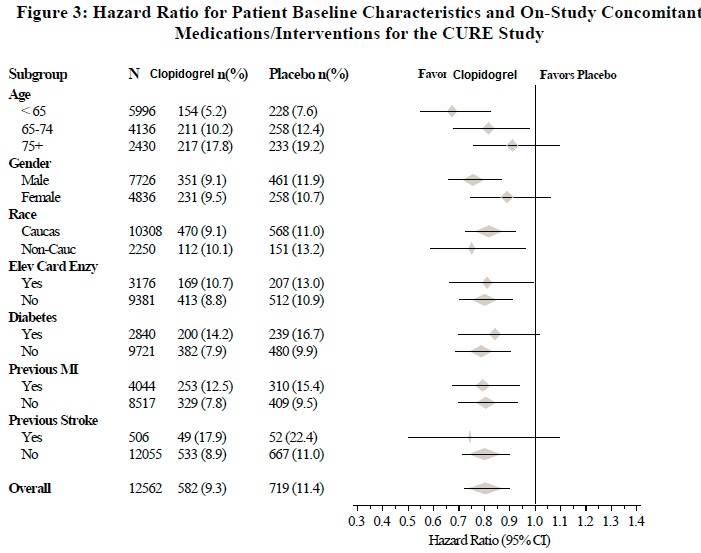
Figure3

FDA Label Image

Figure3b

Figure3b
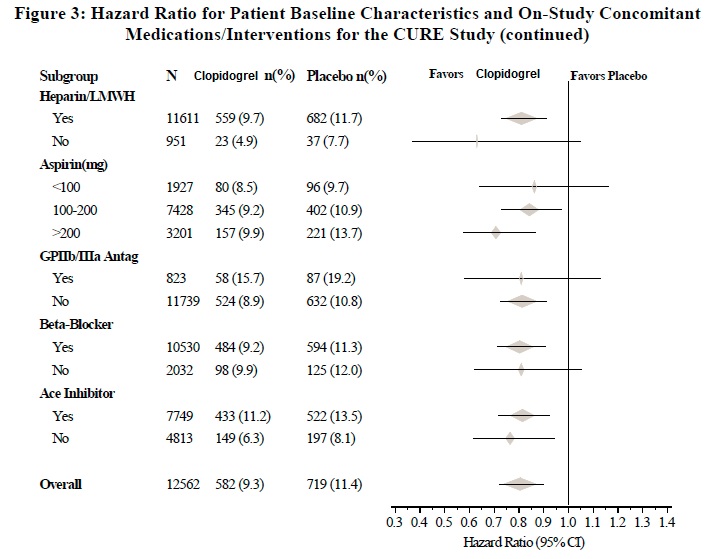
This is a table titled "Figure 3" showing the Hazard Ratio for Patient Baseline Characteristics and On-Study Concomitant Medications/Interventions for the CURE Study. The table presents the subgroups with respective N values, as well as the number and percentage of patients who took either Clopidogrel or Placebo. It also shows the Hazard Ratio (95%CT) with respective confidence intervals for each subgroup analyzed.*
FDA Label Image

Figure6

Figure6
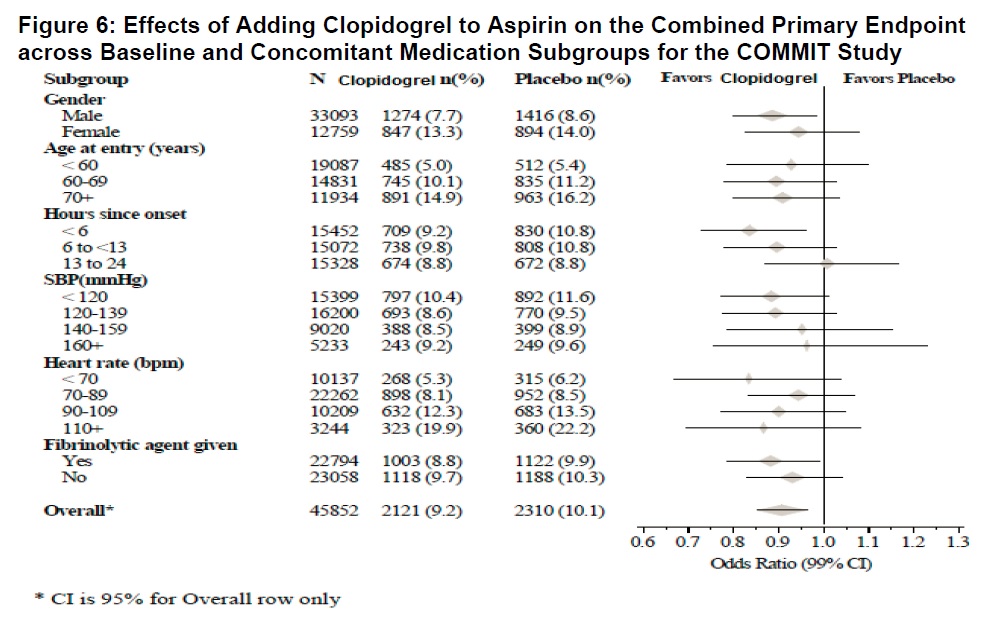
This appears to be a table/graph from a study evaluating the effects of adding clopidogrel to aspirin on the combined primary endpoint for the COMMIT Study. The table shows the effects of the treatment across different baseline and concomitant medication subgroups, including gender, heart rate, and whether fibrinolytic agents were given. The numbers appear to represent the percentage of participants in each subgroup who experienced the combined primary endpoint with and without the treatment, as well as the odds ratio for the treatment effect.*
FDA Label Image

Figure7

Figure7
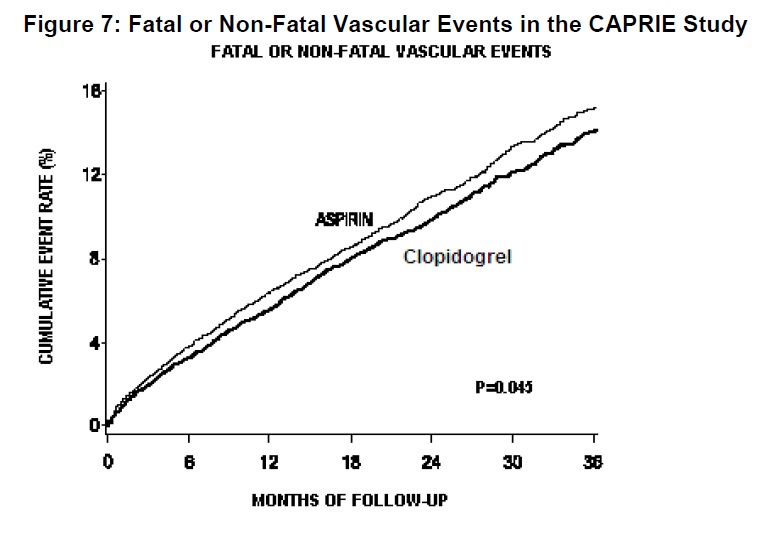
The text describes data on fatal or non-fatal vascular events in the CAPRIE study, presented in Figure 7. The figure shows a cumulative event rate of 184 and compares the effects of clopidogrel versus an unspecified alternative with a p-value of 0.043. The data is presented over a follow-up period of 24 months.*
FDA Label Image

Figure8

FDA Label Image

Clopiodgrel 01

FDA Label Image

Figure 01

Figure 01
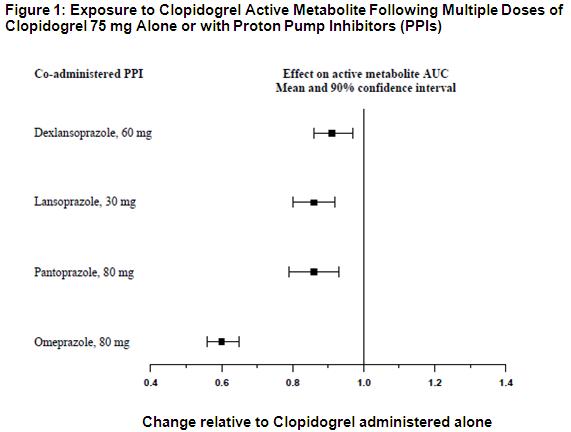
Figure 1 shows the exposure to Clopidogrel Active Metabolite after taking multiple doses of Clopidogrel 75 mg alone or with Proton Pump Inhibitors (PPIs). The co-administration of PPIs has an effect on the active metabolite AUC, as indicated by the mean and 90% confidence intervals. The PPIs included in the study were Dextansoprazole (60mg), Lansoprazole (30mg), Pastoprazole (40mg), and Omeprazole (80mg). The graph also shows the change relative to Clopidogrel administered alone.*
FDA Label Image

Figure2

Figure2
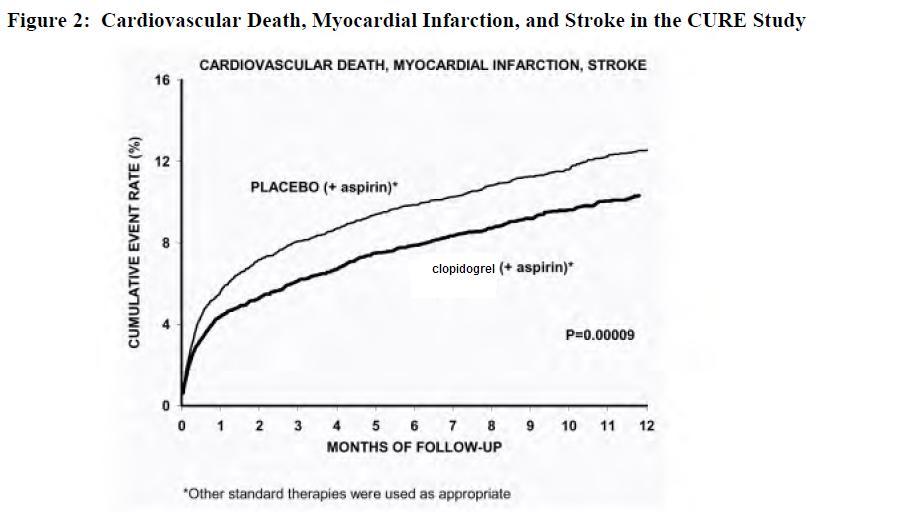
The figure shows the cumulative event rate of cardiovascular death, myocardial infarction, and stroke in the CURE study. The study compared the use of placebo (with aspirin) versus clopidogrel (with aspirin) over a period of months of follow-up. The graphic indicated a significantly lower rate of events in the clopidogrel group compared to the placebo group. Other standard therapies were also used in the study as appropriate.*
FDA Label Image

Figure4

FDA Label Image

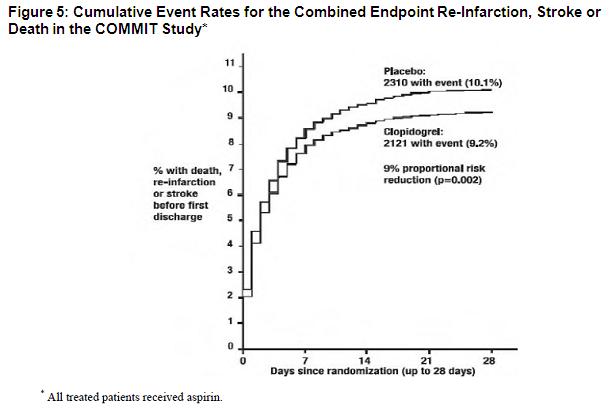
Figure5

Figure5
This is a figure from the COMMIT study showing the cumulative event rates for the combined endpoint of re-infarction, stroke, or death. The placebo group had 10.1% of patients with events, while the clopidogrel group had 8.2% with events. The proportionate risk reduction was 9%, with a confidence interval of 5-0.002. The events were measured for up to 28 days after randomization, and all patients received aspirin.*

* These product label images have been analyzed using experimental machine learning. Please verify findings with the primary label text.