Table 1 includes clinically significant drug interactions with Oxycodone hydrochloride oral solution.
Table 1: Clinically Significant Drug Interactions with Oxycodone hydrochloride oral solution
Inhibitors of CYP3A4 and CYP2D6
|
Clinical Impact:
| The concomitant use of Oxycodone hydrochloride oral solution and CYP3A4 inhibitors can increase the plasma concentration of oxycodone, resulting in increased or prolonged opioid effects. These effects could be more pronounced with concomitant use of Oxycodone hydrochloride oral solution and CYP2D6 and CYP3A4 inhibitors, particularly when an inhibitor is added after a stable dose of Oxycodone hydrochloride oral solution is achieved [see Warnings and Precautions (5.7)].
After stopping a CYP3A4 inhibitor, as the effects of the inhibitor decline, the oxycodone plasma concentration will decrease [see Clinical Pharmacology (12.3)], resulting in decreased opioid efficacy or a withdrawal syndrome in patients who had developed physical dependence to oxycodone. |
Intervention:
| If concomitant use is necessary, consider dosage reduction of Oxycodone hydrochloride oral solution until stable drug effects are achieved.
Evaluate patients at frequent intervals for respiratory depression and sedation.
If a CYP3A4 inhibitor is discontinued, consider increasing the Oxycodone hydrochloride oral solution dosage until stable drug effects are achieved [see Dosage and Administration (2.3)]. Evaluate for signs of opioid withdrawal. |
Examples
| Macrolide antibiotics (e.g., erythromycin), azole-antifungal agents (e.g., ketoconazole), protease inhibitors (e.g., ritonavir) |
CYP3A4 Inducers
|
Clinical Impact:
| The concomitant use of Oxycodone hydrochloride oral solution and CYP3A4 inducers can decrease the plasma concentration of oxycodone [see Clinical Pharmacology (12.3)], resulting in decreased efficacy or onset of a withdrawal syndrome in patients who have developed physical dependence to oxycodone [see Warnings and Precautions (5.15)].
After stopping a CYP3A4 inducer, as the effects of the inducer decline, the oxycodone plasma concentration will increase [see Clinical Pharmacology (12.3)], which could increase or prolong both the therapeutic effects and adverse reactions and may cause serious respiratory depression. |
Intervention:
| If concomitant use is necessary, consider increasing the Oxycodone hydrochloride oral solution dosage until stable drug effects are achieved.
Evaluate patients for signs of opioid withdrawal. If a CYP3A4 inducer is discontinued, consider Oxycodone hydrochloride oral solution dosage reduction and evaluate patients at frequent intervals for signs of respiratory depression and sedation. |
Examples
| Rifampin, carbamazepine, phenytoin |
Benzodiazepines and other Central Nervous System (CNS) Depressants
|
Clinical Impact:
| Due to additive pharmacologic effect, the concomitant use of benzodiazepines or other CNS depressants, including alcohol, can increase the risk of hypotension, respiratory depression, profound sedation, coma, and death. |
Intervention:
| Reserve concomitant prescribing of these drugs for use in patients for whom alternative treatment options are inadequate. Limit dosages and durations to the minimum required. Inform patients and caregivers of this potential interaction and educate them on the signs and symptoms of respiratory depression (including sedation). If concomitant use is warranted, consider recommending or prescribing an opioid overdose reversal agent [see Dosage and Administration (2.3), Warnings and Precautions (5.2, 5.3, 5.4)].
|
Examples:
| Benzodiazepines and other sedatives/hypnotics, anxiolytics, tranquilizers, muscle relaxants, general anesthetics, antipsychotics, gabapentinoids (gabapentin or pregabalin), other opioids, alcohol.
|
Serotonergic Drugs
|
Clinical Impact:
| The concomitant use of opioids with other drugs that affect the serotonergic neurotransmitter system has resulted in serotonin syndrome [see Warnings and Precautions (5.10)].
|
Intervention:
| If concomitant use is warranted, frequently evaluate the patient, particularly during treatment initiation and dose adjustment. Discontinue Oxycodone hydrochloride oral solution if serotonin syndrome is suspected. |
Examples:
| Selective serotonin reuptake inhibitors (SSRIs), serotonin and norepinephrine reuptake inhibitors (SNRIs), tricyclic antidepressants (TCAs), triptans, 5-HT3 receptor antagonists, drugs that affect the serotonin neurotransmitter system (e.g., mirtazapine, trazodone, tramadol), certain muscle relaxants (i.e., cyclobenzaprine, metaxalone), monoamine oxidase (MAO)inhibitors (those intended to treat psychiatric disorders and also others, such as linezolid and intravenous methylene blue). |
Monoamine Oxidase Inhibitors (MAOIs)
|
Clinical Impact:
| MAOI interactions with opioids may manifest as serotonin syndrome or opioid toxicity (e.g., respiratory depression, coma) [see Warnings and Precautions (5.3)]. |
Intervention:
| The use of Oxycodone hydrochloride oral solution is not recommended for patients taking MAOIs or within 14 days of stopping such treatment.
If urgent use of an opioid is necessary, use test doses and frequent titration of small doses to treat pain while closely monitoring blood pressure and signs and symptoms of CNS and respiratory depression. |
Examples:
| phenelzine, tranylcypromine, linezolid |
Mixed Agonist/Antagonist and Partial Agonist Opioid Analgesics
|
Clinical Impact:
| May reduce the analgesic effect of Oxycodone hydrochloride oral solution and/or precipitate withdrawal symptoms.
|
Intervention:
| Avoid concomitant use.
|
Examples:
| butorphanol, nalbuphine, pentazocine, buprenorphine
|
Muscle Relaxants
|
Clinical Impact:
| oxycodone may enhance the neuromuscular blocking action of skeletal muscle relaxants and produce an increased degree of respiratory depression.
|
Intervention:
| Monitor patients for signs of respiratory depression that may be greater than otherwise expected and decrease the dosage of Oxycodone hydrochloride oral solution and/or the muscle relaxant as necessary. Due to the risk of respiratory depression with concomitant use of skeletal muscle relaxants and opioids, consider recommending or prescribing an opioid overdose reversal agent [see Dosage and Administration (2.3), Warnings and Precautions (5.3, 5.4)] |
| Examples: | Cyclobenzaprine, metaxalone |
Diuretics
|
Clinical Impact:
| Opioids can reduce the efficacy of diuretics by inducing the release of antidiuretic hormone. |
Intervention:
| Monitor patients for signs of diminished diuresis and/or effects on blood pressure and increase the dosage of the diuretic as needed. |
Anticholinergic Drugs
|
Clinical Impact:
| The concomitant use of anticholinergic drugs may increase risk of urinary retention and/or severe constipation, which may lead to paralytic ileus. |
Intervention:
| Evaluate patients for signs of urinary retention or reduced gastric motility when Oxycodone hydrochloride oral solution is used concomitantly with anticholinergic drugs.
|
Clinical Presentation
Acute overdose with oxycodone hydrochloride can be manifested by respiratory depression, somnolence progressing to stupor or coma, skeletal muscle flaccidity, cold and clammy skin, constricted pupils, and in some cases, pulmonary edema, bradycardia, hypotension, hypoglycemia, partial or complete airway obstruction, atypical snoring, and death. Marked mydriasis rather than miosis may be seen with hypoxia in overdose situations [see Clinical Pharmacology (12.2)]. Toxic leukoencephalopathy has been reported after opioid overdose and can present hours, days, or weeks after apparent recovery from the initial intoxication.
Treatment of Overdose
In case of overdose, priorities are the reestablishment of a patent and protected airway and institution of assisted or controlled ventilation, if needed. Employ other supportive measures (including oxygen and vasopressors) in the management of circulatory shock and pulmonary edema as indicated. Cardiac arrest or arrhythmias will require advanced life-support measures.
For clinically significant respiratory or circulatory depression secondary to morphine overdose, administer an opioid overdose reversal agent such as naloxone or nalmefene.
Because the duration of opioid reversal is expected to be less than the duration of action of oxycodone hydrochloride in Oxycodone hydrochloride oral solution, carefully monitor the patient until spontaneous respiration is reliably re-established. If the response to an opioid overdose reversal agent is suboptimal or only brief in nature, administer additional reversal agent as directed by the product’s prescribing information.
In an individual physically dependent on opioids, administration of the recommended dosage of the opioid overdose reversal agent will precipitate an acute withdrawal syndrome. The severity of the withdrawal symptoms experienced will depend on the degree of physical dependence and the dose of the reversal agent administered. If a decision is made to treat serious respiratory depression in the physically-dependent patient, administration of the reversal agent should begin with care and by titration with smaller than usual doses of the reversal agent.
Effects on Central Nervous System (CNS)
oxycodone produces respiratory depression by direct action on brain stem respiratory centers. The respiratory depression involves a reduction in the responsiveness of the brain stem respiratory centers to both increases in carbon dioxide tension and to electrical stimulation.
oxycodone causes miosis, even in total darkness. Pinpoint pupils are a sign of opioid overdose but are not pathognomonic (e.g., pontine lesions of hemorrhagic or ischemic origins may produce similar findings). Marked mydriasis rather than miosis may be seen due to hypoxia in overdose situations.
Effects on the Gastrointestinal Tract and Other Smooth Muscle
oxycodone causes a reduction in motility associated with an increase in smooth muscle tone in the antrum of the stomach and duodenum. Digestion of food in the small intestine is delayed and propulsive contractions are decreased. Propulsive peristaltic waves in the colon are decreased, while tone may be increased to the point of spasm resulting in constipation. Other opioid-induced effects may include a reduction in biliary and pancreatic secretions, spasm of sphincter of Oddi, transient elevations in serum amylase, and opioid-induced esophageal dysfunction (OIED).
Effects on the Cardiovascular System
oxycodone produces peripheral vasodilation which may result in orthostatic hypotension or syncope. Manifestations of histamine release and/or peripheral vasodilation may include pruritus, flushing, red eyes and sweating and/or orthostatic hypotension.
Effects on the Endocrine System
Opioids inhibit the secretion of adrenocorticotropic hormone (ACTH), cortisol, and luteinizing hormone (LH) in humans [see Adverse Reactions (6)]. They also stimulate prolactin, growth hormone (GH) secretion, and pancreatic secretion of insulin and glucagon.
Use of opioids for an extended period of time may influence the hypothalamic-pituitary-gonadal axis, leading to androgen deficiency that may manifest as low libido, impotence, erectile dysfunction, amenorrhea, or infertility. The causal role of opioids in the clinical syndrome of hypogonadism is unknown because the various medical, physical, lifestyle, and psychological stressors that may influence gonadal hormone levels have not been adequately controlled for in studies conducted to date [see Adverse Reactions (6)].
Effects on the Immune System
Opioids have been shown to have a variety of effects on components of the immune system in invitro and animal models. The clinical significance of these findings is unknown. Overall, the effects of opioids appear to be modestly immunosuppressive.
Concentration-Efficacy Relationships
The minimum effective analgesic concentration will vary widely among patients, especially among patients who have been previously treated with opioid agonists. The minimum effective analgesic concentration of oxycodone for any individual patient may increase over time due to an increase in pain, the development of a new pain syndrome and/or the development of analgesic tolerance [see Dosage and Administration (2.1, 2.3,2.4)].
Absorption
The oral bioavailability of oxycodone is 60% to 87%. This high oral bioavailability (compared to other oral opioids) is due to lower pre-systemic and/or first-pass metabolism of oxycodone.
Food Effect:
Presence of food may slightly delay the rate (Cmax and Tmax) and enhance the extent of absorption (AUC) of oxycodone from Oxycodone hydrochloride oral solution. Overall, food is not expected to have a clinically significant impact on the absorption of Oxycodone hydrochloride oral solution.
Distribution
Following intravenous administration, the volume of distribution (Vss) for oxycodone was 2.6 L/kg. Plasma protein binding of oxycodone at 37°C and a pH of 7.4 was about 45%. oxycodone has been found in breast milk [see Use in Specific Populations (8.2)].
Elimination
Metabolism:
oxycodone hydrochloride is extensively metabolized to noroxycodone, oxymorphone, noroxymorphone, which are subsequently glucuronidated. CYP3A4 mediated N-demethylation to noroxycodone is the primary metabolic pathway of oxycodone with a less contribution from CYP2D6 mediated O-demethylation to oxymorphone. Therefore, the formation of these and related metabolites can, in theory, be affected by other drugs. The major circulating metabolite is noroxycodone with an AUC ratio of 0.6 relative to that of oxycodone. Noroxycodone is reported to be a considerably weaker analgesic than oxycodone. Oxymorphone, although possessing analgesic activity, is present in the plasma only in low concentrations. The correlation between oxymorphone concentrations and opioid effects was much less than that seen with oxycodone plasma concentrations. The analgesic activity profile of other metabolites is not known.
Excretion:
oxycodone and its metabolites are excreted primarily via the kidney. The amounts measured in the urine have been reported as follows: free oxycodone up to 19%; conjugated oxycodone up to 50%; free oxymorphone 0%; conjugated oxymorphone ≤ 14%; both free and conjugated noroxycodone have been found in the urine but notquantified. The total plasma clearance was 0.8 L/min for adults. Apparent elimination half-life of oxycodone following the administration of Oxycodone hydrochloride oral solution was approximately 3.5 hours.
Special Populations
Age: Geriatric Population
Information obtained from oxycodone tablets indicate that the plasma concentrations of oxycodone did not appear to be increased in patients over of the age of 65.
Hepatic Impairment
Because oxycodone is extensively metabolized in the liver, its clearance may decrease in hepatic-impaired patients. A dose adjustment is recommended in these patients [see Use in Special Populations (8.6)].
Renal Impairment
Because this drug is known to be substantially excreted by the kidney, and the risk of adverse reactions to this drug may be greater in patients with impaired renal function, a dose reduction is recommended for renal impaired patients [see Use in Special Populations (8.7)].
Drug Interactions Studies
CYP3A4 Inhibitors
CYP3A4 is the major enzyme involved in noroxycodone formation. A published study showed that the co-administration of voriconazole, a CYP3A4 inhibitor, increased oxycodone AUC and Cmax by 3.6 and 1.7 fold, respectively.
CYP3A4 Inducers
A published study showed that the co-administration of rifampin, a drug metabolizing enzyme inducer, decreased oxycodone AUC and Cmax values by 86% and 63%, respectively.
CYP2D6 Inhibitors
oxycodone is metabolized in part to oxymorphone via the cytochrome p450 isoenzyme CYP2D6. While this pathway may be blocked by a variety of drugs (e.g., certain cardiovascular drugs and antidepressants), such blockade has not yet been shown to be of clinical significance with this agent.
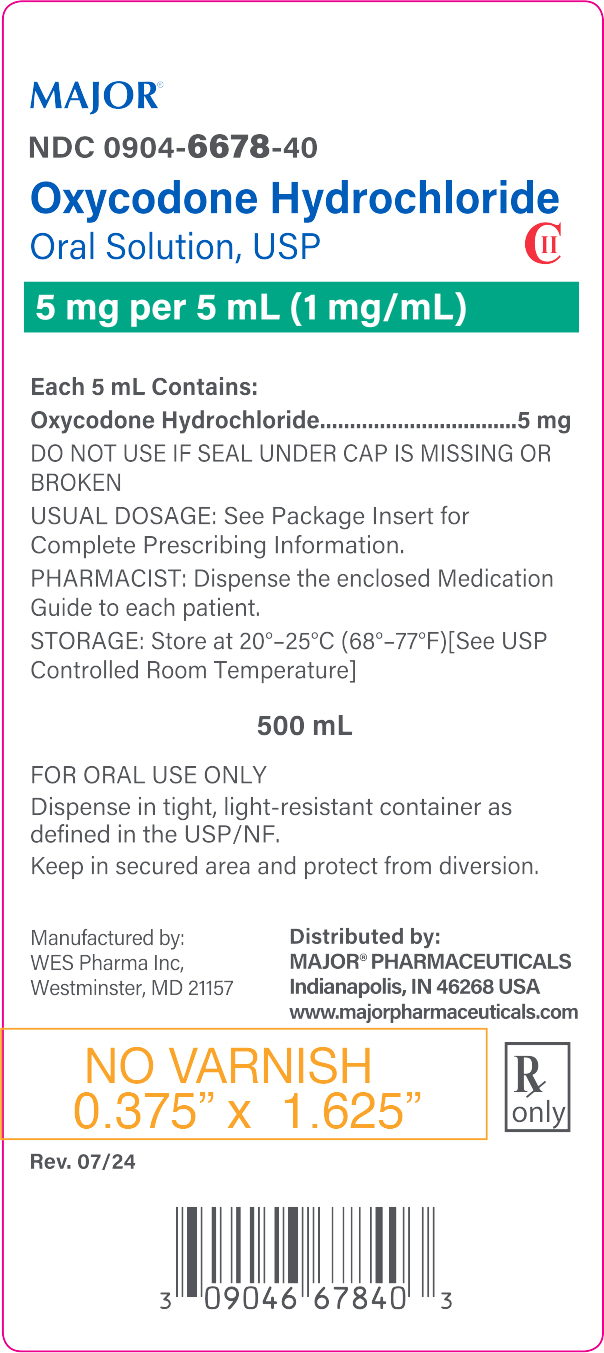
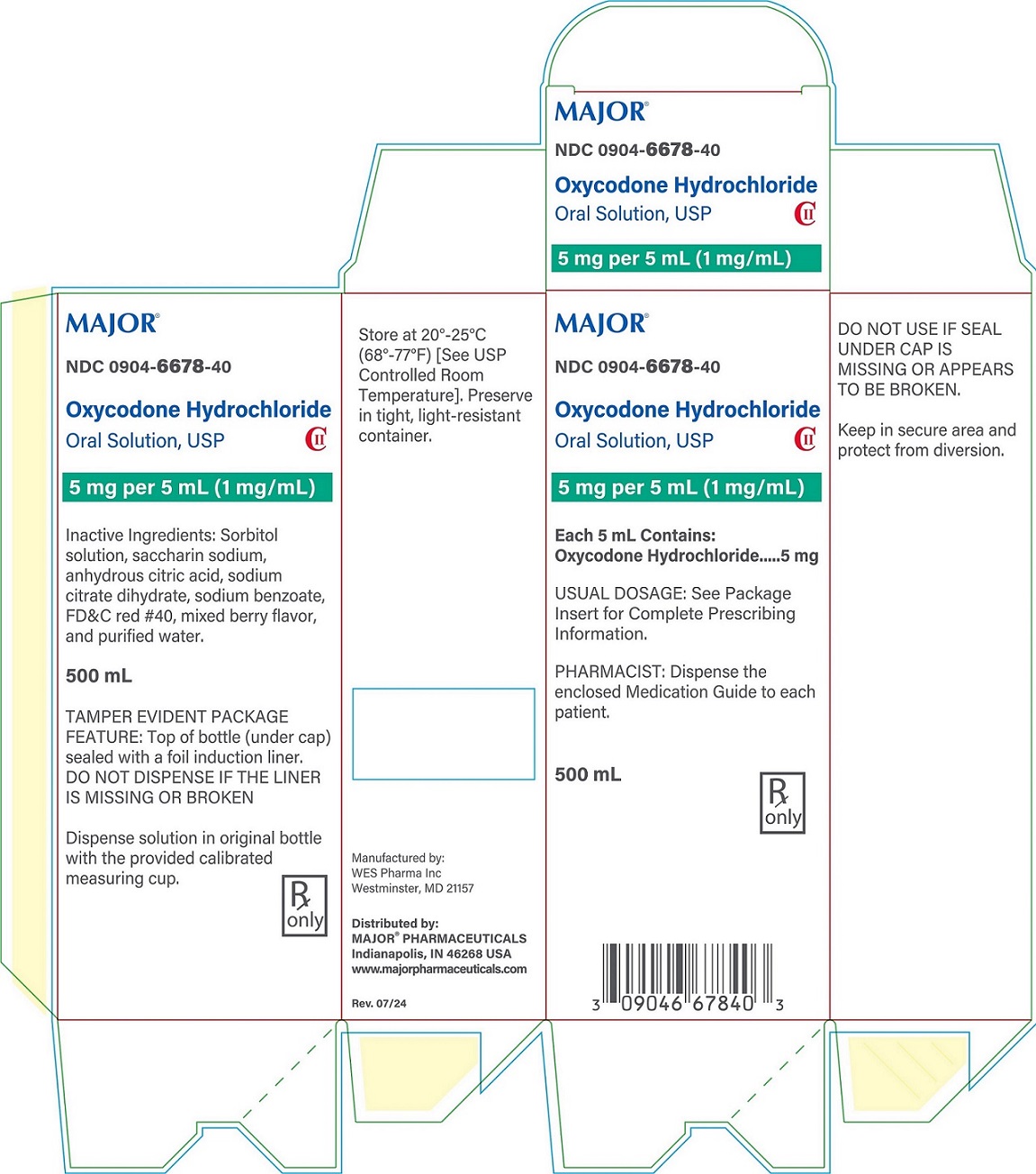
Oxycodone hydrochloride oral solution, USP, 5 mg per 5 mL (1 mg/mL) is available as follows:
NDC# 0904-6678-40: 500 mL bottle packaged with calibrated measuring cup
NDC# 0904-6828-94: Case contains 40 unit dose cups of 5 mL, packaged in 4 trays of 10 unit dose cups each
NDC# 0904-6828-92: Case contains 50 unit dose cups of 5 mL, packaged in 5 trays of 10 unit dose cups each
Dispense in a tight, light-resistant container as defined in the USP/NF.
Store at controlled room temperature 20°-25°C (68°- 77°F); excursions are permitted to 15° - 30°C (59° - 86°F). [See USP Controlled Room Temperature]
Store Oxycodone hydrochloride oral solution securely and dispose of properly.
MEDICATION GUIDE
Oxycodone (ox-ee-CO-dohn) hydrochloride oral solution, CII |
Oxycodone hydrochloride oral Solution is:
- A strong prescription pain medicine that contains an opioid (narcotic) that is used to manage pain severe enough to require an opioid pain medicine, when other pain treatments such as non-opioid pain medicines do not treat your pain well enough or you cannot tolerate them.
- An opioid pain medicine that can put you at risk for overdose and death. Even if you take your dose correctly as prescribed you are at risk for opioid addiction, abuse, and misuse that can lead to death.
|
Important information about Oxycodone hydrochloride oral solution:
- Get emergency help or call 911 right away if you take too much Oxycodone hydrochloride oral solution (overdose). When you first start taking Oxycodone hydrochloride oral solution, when your dose is changed, or if you take too much (overdose), serious or life-threatening breathing problems that can lead to death may occur. Ask your healthcare provider about medicines like naloxone or nalmefene that can be used in an emergency to reverse an opioid overdose.
- Taking Oxycodone hydrochloride oral solution with other opioid medicines, benzodiazepines, gabapentinoids (gabapentin or pregabalin), alcohol, or other central nervous system depressants (including street drugs) can cause severe drowsiness, decreased awareness, breathing problems, coma, and death.
- Never give anyone else your Oxycodone hydrochloride oral solution. They could die from taking it. Selling or giving away Oxycodone hydrochloride oral solution is against the law.
- Store Oxycodone hydrochloride oral solution securely, out of sight and reach of children, and in a location not accessible by others, including visitors to the home.
|
Do not take Oxycodone hydrochloride oral solution if you have:
- severe asthma, trouble breathing, or other lung problems.
- a bowel blockage or have narrowing of the stomach or intestines.
- an allergy to oxycodone or any of the ingredients in Oxycodone hydrochloride oral solution.
|
Before taking Oxycodone hydrochloride oral solution, tell your healthcare provider if you have a history of:
- head injury, seizures · liver, kidney, thyroid problems
- problems urinating . pancreas or gallbladder problems
- abuse of street or prescription drugs, alcohol addiction, opioid overdose, or mental health problems.
|
Tell your healthcare provider if you are:
- noticing your pain getting worse. If your pain gets worse after you take Oxycodone hydrochloride oral solution, do not take more of Oxycodone hydrochloride oral solution without first talking to your healthcare
provider. Talk to your healthcare provider if the pain that you have increases, if you feel more sensitive to pain, or if you have new pain after taking Oxycodone hydrochloride oral solution. - pregnant or planning to become pregnant. Use of Oxycodone hydrochloride oral solution for an extended period of time during pregnancy can cause withdrawal symptoms in your newborn baby that could be life-threatening if not recognized and treated.
- breastfeeding. Oxycodone hydrochloride oral solution passes into breast milk and may harm your baby. Carefully observe infants for increased sleepiness (more than usual), breathing difficulties, or limpness. Seek immediate medical care if you notice these signs.
- living in a household where there are small children or someone who has abused street or prescription drugs.
- taking prescription or over-the-counter medicines, vitamins, or herbal supplements. Taking Oxycodone hydrochloride oral solution with certain other medicines can cause serious side effects that could lead to death.
|
When taking Oxycodone hydrochloride oral solution:
- Do not change your dose. Take Oxycodone hydrochloride oral solution exactly as prescribed by your healthcare provider. Use the lowest dose possible for the shortest time needed.
- For acute (short-term) pain, you may only need to take Oxycodone hydrochloride oral solution for a few days. You may have some Oxycodone hydrochloride oral solution left over that you did not use. See disposal information at the bottom of this section for directions on how to safely throw away (dispose of) your unused Oxycodone hydrochloride oral solution.
- Always use the dosing cup that comes with Oxycodone hydrochloride oral solution to correctly measure your dose. Never use a household teaspoon or tablespoon to measure Oxycodone hydrochloride oral solution.
- Take your prescribed dose every 4 to 6 hours as needed for pain. Do not take more than your prescribed dose. If you miss a dose, take your next dose at your usual time.
- Call your healthcare provider if the dose you are taking does not control your pain.
- If you have been taking Oxycodone hydrochloride oral solution regularly, do not stop taking Oxycodone hydrochloride oral solution without talking to your healthcare provider.
- Dispose of expired, unwanted, or unused Oxycodone hydrochloride oral solution by promptly flushing down the toilet, if a drug take-back option is not readily available. Visit www.fda.gov/drugdisposal for additional information on disposal of unused medicines.
|
While taking Oxycodone hydrochloride oral solution DO NOT:
- Drive or operate heavy machinery, until you know how Oxycodone hydrochloride oral solution affects you. Oxycodone hydrochloride oral solution can make you sleepy, dizzy, or lightheaded.
- Drink alcohol or use prescription or over-the-counter medicines that contain alcohol. Using products containing alcohol during treatment with Oxycodone hydrochloride oral solution may cause you to overdose and die.
|
The possible side effects of Oxycodone hydrochloride oral solution:
- constipation, nausea, sleepiness, vomiting, tiredness, headache, dizziness, abdominal pain. Call your healthcare provider if you have any of these symptoms and they are severe.
Get emergency medical help or call 911 right away if you have:
- trouble breathing, shortness of breath, fast heartbeat, chest pain, swelling of your face, tongue, or throat, extreme drowsiness, light-headedness when changing positions, feeling faint, agitation, high body temperature, trouble walking, stiff muscles, or mental changes such as confusion.
These are not all the possible side effects of Oxycodone hydrochloride oral solution. Call your doctor for medical advice about side effects. You may report side effects to FDA at 1-800-FDA-1088. For more information, go to dailymed.nlm.nih.gov.
This medication Guide has been approved by the U.S. Food and Drug Administration
Distributed by:
MAJOR ® PHARMACEUTICALS
Indianapolis, IN 46268
Issued: 01/2026
This outsert for both 500mL and Dose cups
Rx Only
|