Rivastigmine Tartrate Capsule
Product Images NDC 0904-7107
View Photos of Packaging, Regulatory Labels, and Product Appearance
Product Visual Gallery
This gallery contains 10 technical images submitted to the FDA as part of the official labeling for Rivastigmine Tartrate (NDC 0904-7107). Unlike standard consumer photos, these assets often include clinical data figures, molecular chemical structures, and official manufacturer packaging layouts.
As provided by Major Pharmaceuticals, these visuals offer a comprehensive scientific overview of the product's physical and chemical identity, aiding pharmacists and researchers in product verification and study.
Product Images & Figures Index
Figure 1 (Rivastigmine Fig1)
Figure 2 (Rivastigmine Fig2)
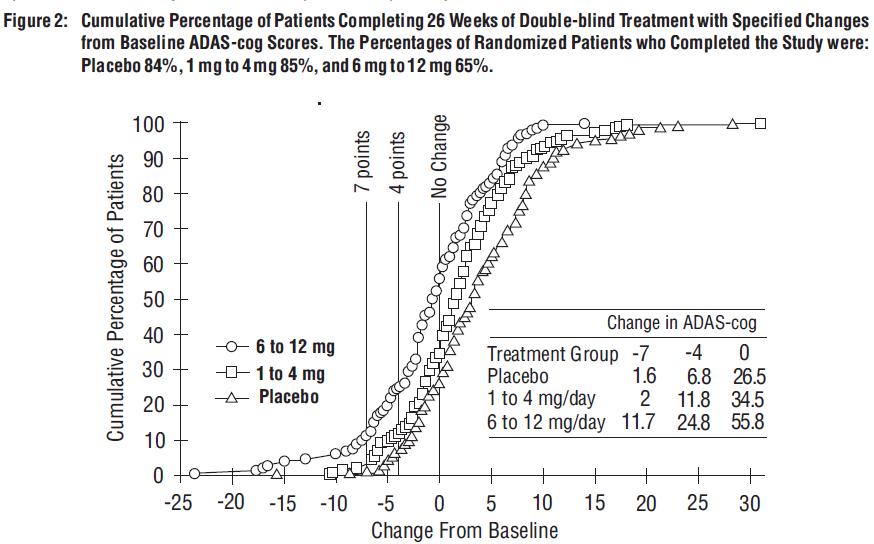
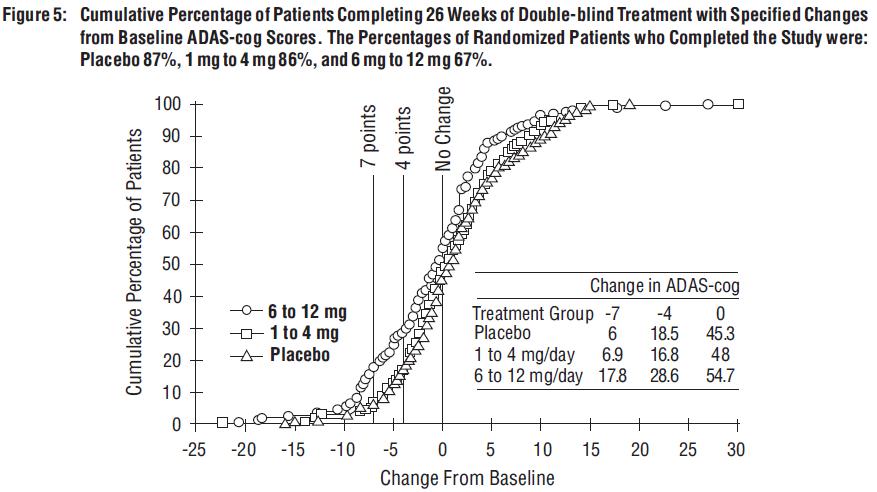
This is a figure showing the percentage of patients completing 26 weeks of double-blind treatment with specified changes from the baseline ADAS-cog scores. It also shows the percentages of randomized patients who completed the study under three different treatments- Placebo, 1mg to 4mg, and 6mg to 12mg. The horizontal axis shows the change from baseline ADAS-cog scores, and the vertical axis shows the cumulative percentage of patients. The plot shows that the placebo and 1mg to 4mg treatments had a similar completion rate, which was higher than the completion rate for the 6mg to 12mg treatment.*
Figure 3 (Rivastigmine Fig3)
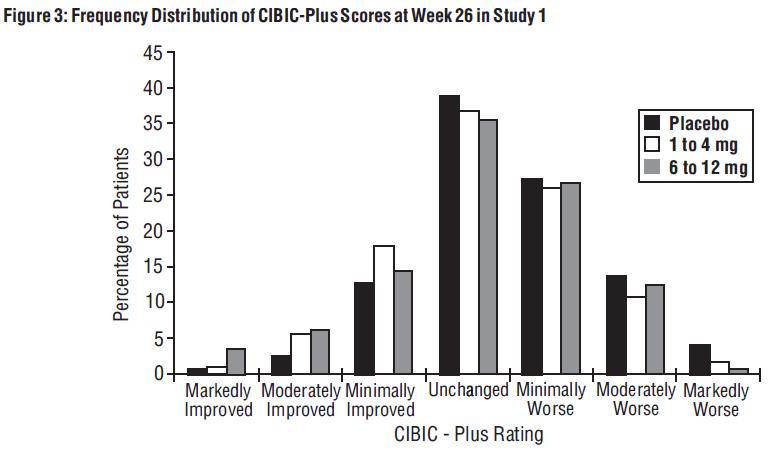
The figure shows the frequency distribution of CIBIC-Plus Scores after 26 weeks in Study 1. The results are presented as a percentage of patients. The graph also includes categories for the four different treatment groups, namely Placebo, 1-4mg, and 6-12mg. The CIBIC-Plus Rating is displayed on the x-axis and ranges from Markedly Improved to Markedly Worse.*
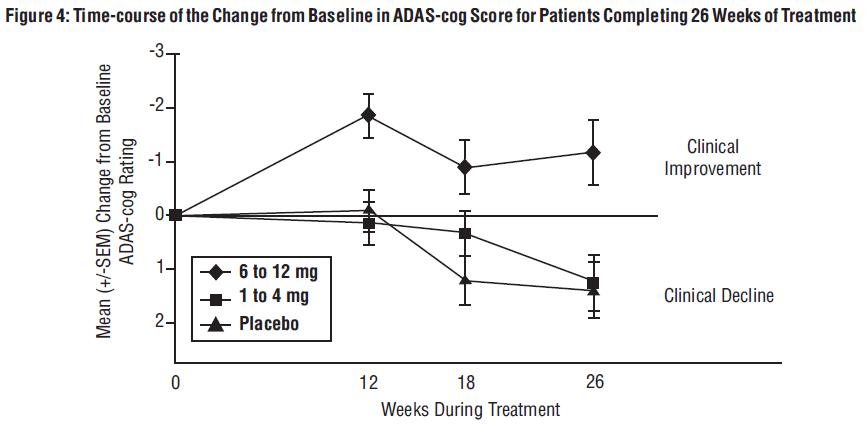
Fig-4 (Rivastigmine Fig4)
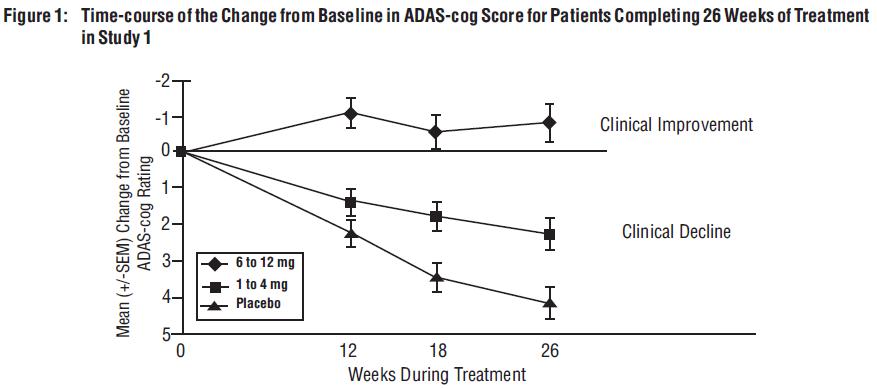
The figure 4 represents the time course of the change in ADAS-cog score for patients who have completed 26 weeks of treatment, where the vertical axis is alteration in ADAS-cog score and horizontal axis represents treatment duration. The image also includes information about clinical improvements and declines, as well as a placebo comparison.*
Fig-5 (Rivastigmine Fig5)
This is a graph that shows the cumulative percentage of patients completing 26 weeks of double-blind treatment with specified changes from the baseline ADAS-cog scores. The study involved placebo and different doses of medication ranging from 1mg to 12mg. The percentage of randomized patients who completed the study was also provided.*
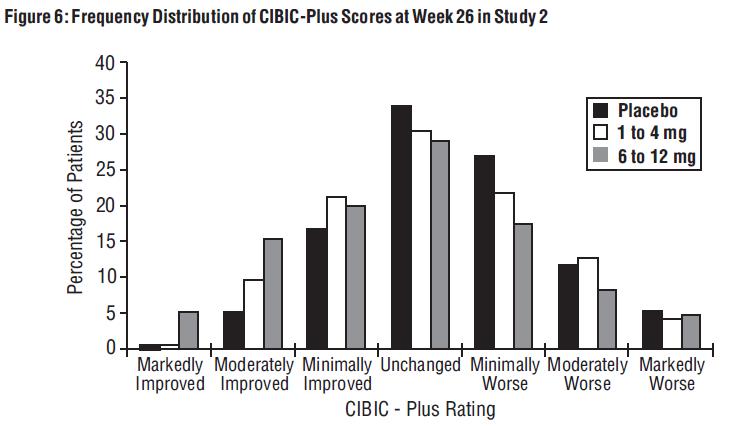
Figure 6 (Rivastigmine Fig6)
The image shows a frequency distribution of CIBIC-Plus scores at week 26 in Study 2. It includes three groups: Placebo, 1 to 3 mg, and 6 to 12 mg, and the percentage of patients falling into the categories of Markedly Improved, Moderately Improved, Minimally Improved, Unchanged, Minimally Worse, Moderately Worse, and Markedly Worse.*
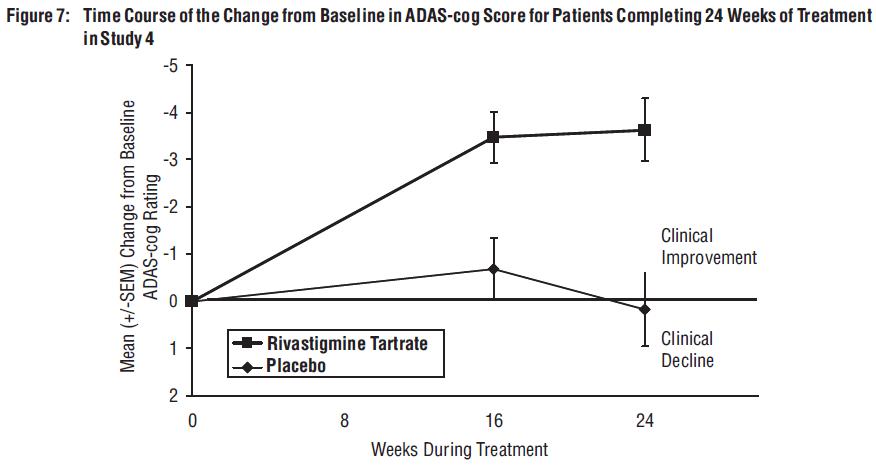
Figure 7 (Rivastigmine Fig7)
This is a graph showing the time course of the change from baseline in ADAS-cog score for patients who completed 24 weeks of treatment. The mean change from baseline is represented by error bars. Clinical improvement with Rivastigmine Tartrate is represented by an upward trend while decline is represented by a downward trend. The x-axis shows the duration of treatment in weeks.*
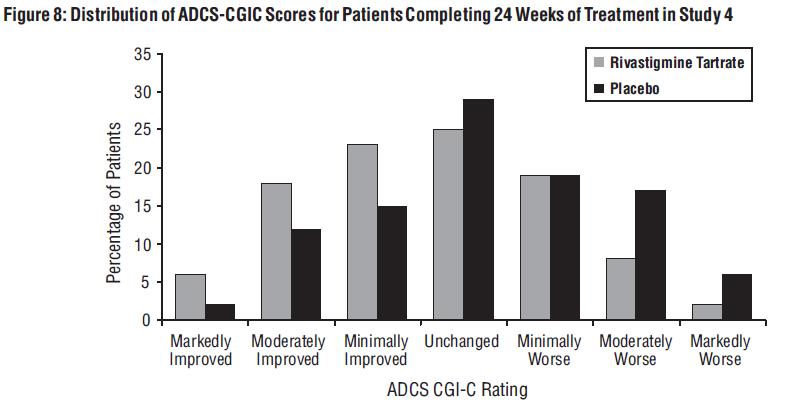
Figure 8 (Rivastigmine Fig8)
The text describes a figure titled "Distribution of ADCS-CGIC Scores for Patients Completing 24 Weeks of Treatment in Study 4" which shows the distribution of scores for patients who received either Rivastigmine Tartrate or a Placebo. The figure includes a bar graph with percentages of patients on the y-axis and the ratings on the x-axis (Markedly Improved, Moderately Improved, Minimally Improved, Unchanged, Minimally Worse, Moderately Worse, and Markedly Worse).*
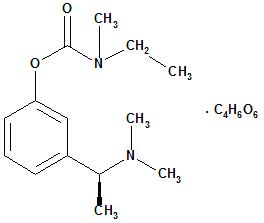
Chemical Structure (Rivastigmine Str)
* These product label images have been analyzed using experimental machine learning. Please verify findings with the primary label text.