Dianeal Low Calcium With Dextrose Injection, Solution
Product Images NDC 0941-0705

View Photos of Packaging, Regulatory Labels, and Product Appearance

Product Visual Gallery

This gallery contains 8 technical images submitted to the FDA as part of the official labeling for Dianeal Low Calcium With Dextrose (NDC 0941-0705). Unlike standard consumer photos, these assets often include clinical data figures, molecular chemical structures, and official manufacturer packaging layouts.

As provided by Vantive Us Healthcare Llc, these visuals offer a comprehensive scientific overview of the product's physical and chemical identity, aiding pharmacists and researchers in product verification and study.

FDA Label Image

Representative Dianeal Carton Label (FNB5203GN)
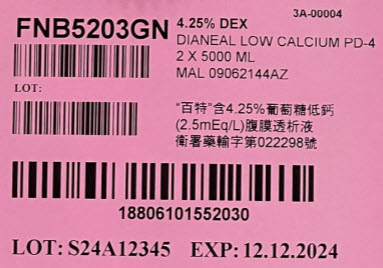
Representative Dianeal Carton Label (FNB5203GN)
This text includes a series of alphanumeric characters along with a 4.25% DEX (possibly referring to a financial instrument) and a reference number FNB5203GN. There is also mention of a lot number S24A12345 with an expiration date of 12.12.2024. Additionally, the text contains what seems to be a reference to a specific date "090621" and possibly some additional encrypted information.*
FDA Label Image

Representative Dianeal Container Label (FNB5203GN)

Representative Dianeal Container Label (FNB5203GN)
This text provides detailed information on a medical product called DIANEAL Low Calcium Peritoneal Dialysis Solution with Dextrose. It includes the composition of the solution, instructions for use, cautions, and contact information for Baxter Healthcare. The solution is intended for intraperitoneal administration only, with a warning about potential dehydration if extensively used during one dialysis procedure. It also mentions the addition of potassium chloride under medical supervision and emphasizes the importance of product sterility. Additionally, the text includes details about Baxter Healthcare's branches in various countries and trademarks associated with the product.*
FDA Label Image

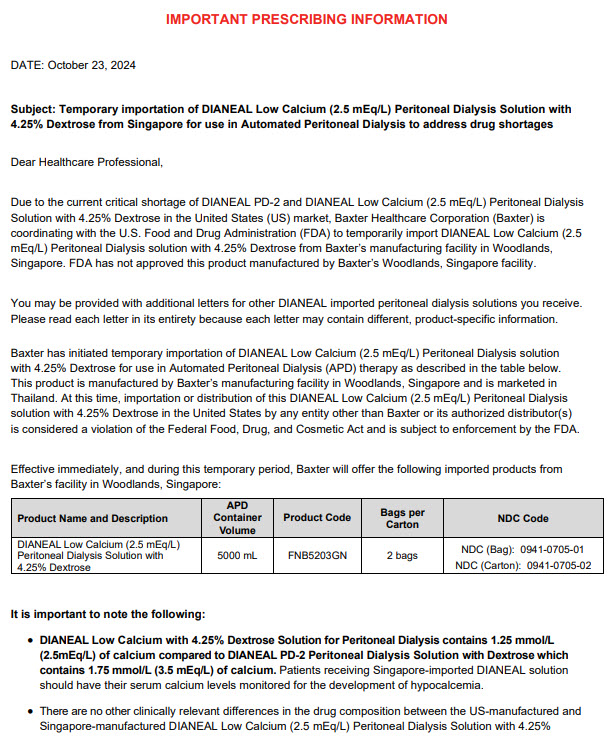
Dianeal Dhcp Letter 1 (Image 01)

Dianeal Dhcp Letter 1 (Image 01)
This is a notice regarding the temporary importation of DIANEAL Low Calcium Peritoneal Dialysis Solution with 4.25% Dextrose from Singapore to address drug shortages in the United States. Baxter Healthcare Corporation is coordinating with the FDA for this importation. Healthcare professionals are reminded to monitor patients' calcium levels when using this imported solution. The drug composition between the US-manufactured and Singapore-manufactured solutions is reportedly similar. This information is important for those facing shortages of DIANEAL PD-2 in the US market.*
FDA Label Image

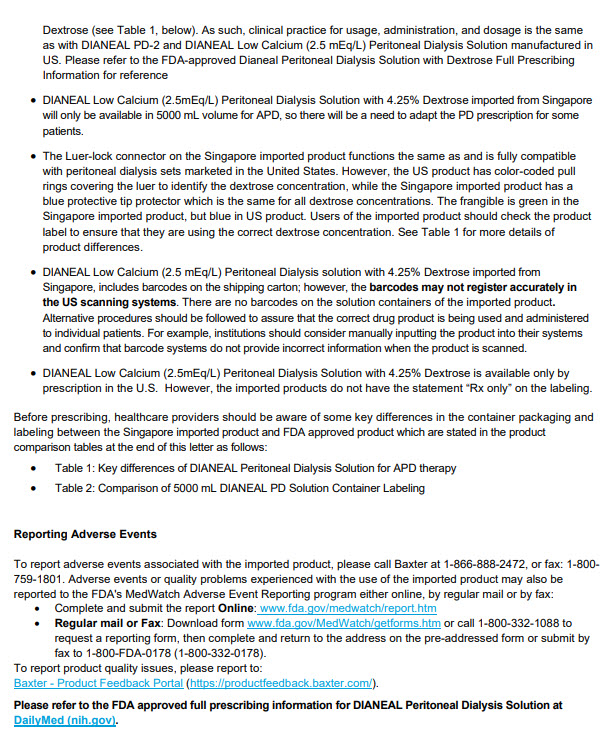
Dianeal Dhcp Letter 2 (Image 02)

Dianeal Dhcp Letter 2 (Image 02)
This text provides important information about DIANEAL Peritoneal Dialysis Solution with Dextrose, particularly regarding the differences between the Singapore-imported product and the FDA-approved product in the United States. It discusses differences in labeling, barcode registration, dosages, and the need to ensure correct administration and usage. Healthcare providers and users are advised to follow alternative procedures, such as manual inputting of product information, to guarantee the correct drug product is being used. It also includes instructions on reporting adverse events or quality problems associated with the imported product to Baxter or the FDA's MedWatch Adverse Event Reporting program. Users are encouraged to refer to the FDA-approved full prescribing information for DIANEAL Peritoneal Dialysis Solution for comprehensive details.*
FDA Label Image

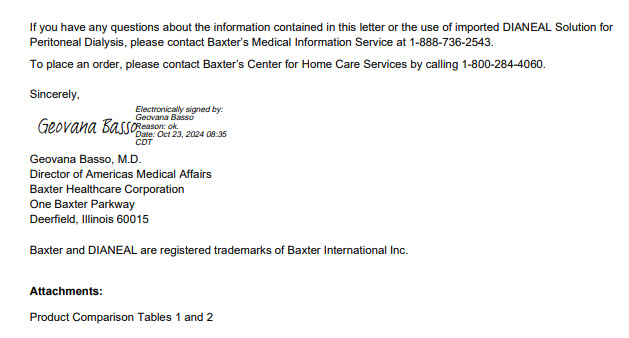
Dianeal Dhcp Letter 3 (Image 03)

Dianeal Dhcp Letter 3 (Image 03)
This text is a contact information letter regarding the use of imported DIANEAL Solution for Peritoneal Dialysis from Baxter Healthcare Corporation. It includes contact details for Baxter's Medical Information Service and Baxter's Center of Home Care Services, as well as the name and title of the sender, Geovana Basso, M.D., Director of Americas Medical Affairs. It also mentions that Baxter and DIANEAL are registered trademarks of Baxter International Inc. The letter also references two attachments: Product Comparison Tables 1 and 2.*
FDA Label Image

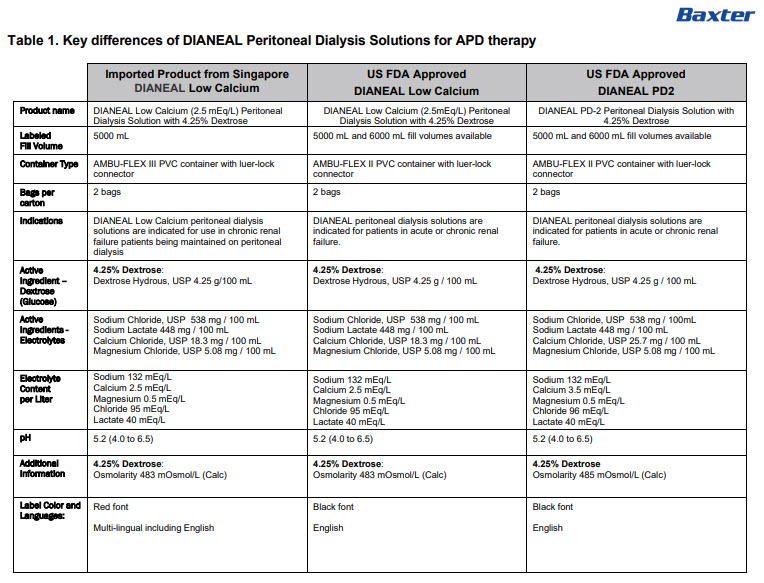
Dianeal Dhcp Letter 4 (Image 04)

Dianeal Dhcp Letter 4 (Image 04)
This text appears to be a comparison table for different types of DIANEAL Peritoneal Dialysis Solutions used in APD therapy. The table lists key differences in specifications such as calcium content, container type, indications for use, ingredient proportions, and electrolyte levels. It also states that the product is FDA approved and imported from Singapore. Additionally, it includes information about volume availability, ingredients like Dextrose, Sodium Chloride, Sodium Lactate, Calcium Chloride, and Magnesium Chloride, as well as details on osmolarity and labeling. The solutions mentioned in the table are identified as DIANEAL Low Calcium, DIANEAL PD2, and DIANEAL PD-2 Peritoneal Dialysis Solution.*
FDA Label Image

Dianeal Dhcp Letter 6 (Image 05)

Dianeal Dhcp Letter 6 (Image 05)
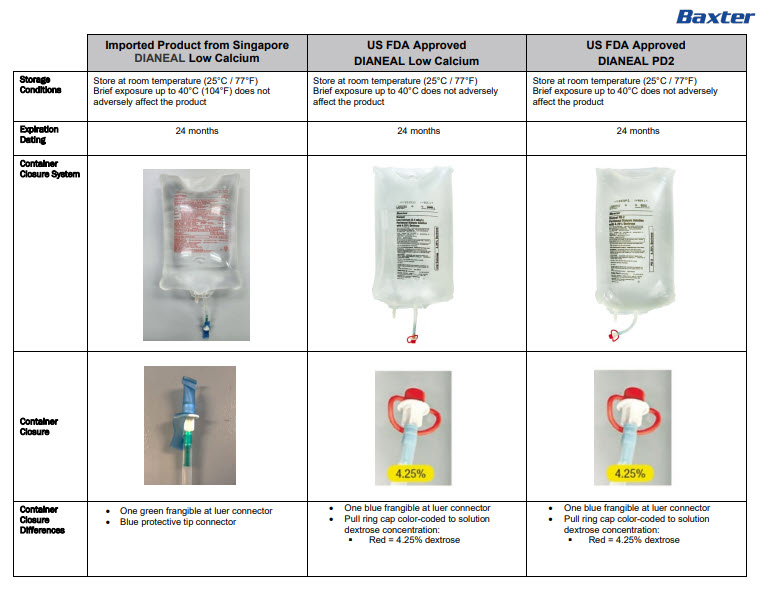
The text contains information about a product called DIANEAL Low Calcium PD2, which appears to be an imported product from Singapore. It is mentioned that it is approved by the US FDA and US FOA. The text also includes some technical details like specific calculations or concentrations (such as 25 genose).*
FDA Label Image

Dianeal Dhcp Letter 6 (Image 06)

Dianeal Dhcp Letter 6 (Image 06)
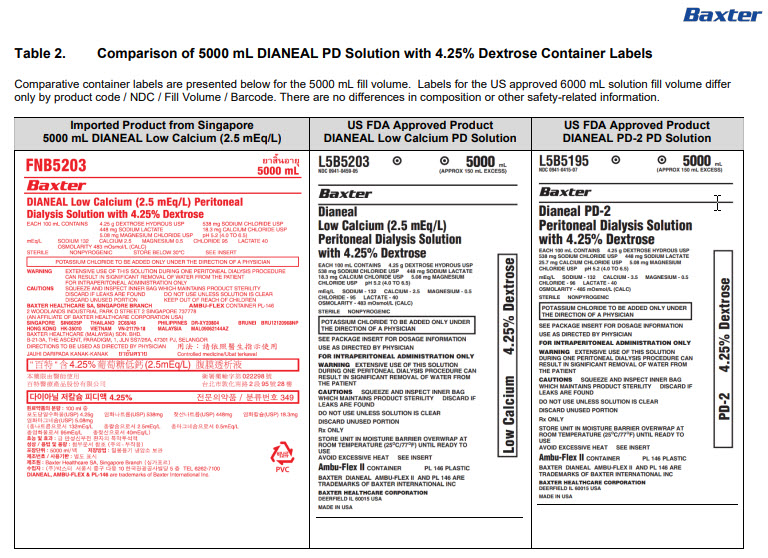
The text describes a comparison of two different labels for the 5000 mL DIANEAL PD Solution with 4.25% Dextrose container. It mentions that despite the difference in product codes, there are no variations in composition or safety-related information between the products. One product is an imported version from Singapore, while the other is a US FDA approved product. The labels include information on different concentrations of calcium and dextrose in the solution, as well as details about their intended use for peritoneal dialysis.*

* These product label images have been analyzed using experimental machine learning. Please verify findings with the primary label text.