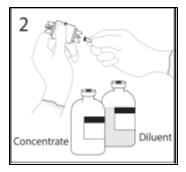
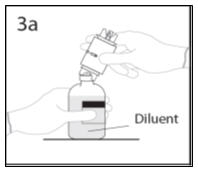
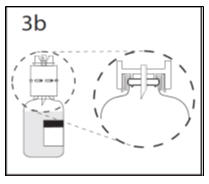
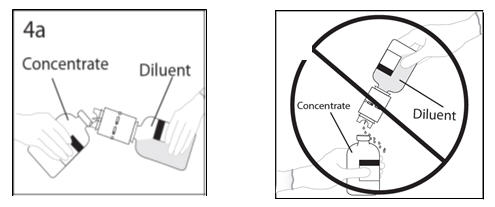
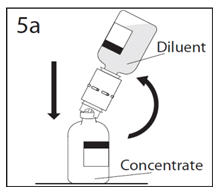
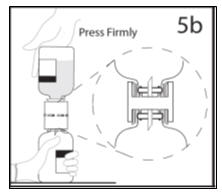
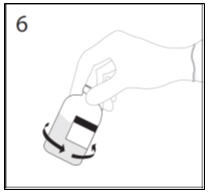
- Visually inspect parenteral drug product for particulate matter and discoloration prior to administration. Reconstituted GAMMAGARD S/D is a clear to slightly opalescent and colorless to pale yellow solution. Do not use if particulate matter and/or discoloration is observed.
- Follow directions for use which accompany the administration set provided. If another administration set is used, ensure that the set contains a similar filter.
- Begin administration as soon as possible within 2 hours if reconstitution is performed aseptically outside of a sterile laminar air flow hood.
- Administer within 24 hours if reconstitution is performed aseptically inside of a sterile laminar flow hood and stored in the original glass container or pooled into ViaFlex bags under constant refrigeration (2°C to 8°C). Record the date and time of reconstitution/pooling. Discard partially used vials.
Primary Immunodeficiency (PI)
The recommended dose of GAMMAGARD S/D for patients with PI is 300-600 mg/kg infused at 3 to 4 week intervals.1,2,6 Adjust dose according to the clinical response; the frequency and dose of immunoglobulin may vary from patient to patient. No randomized controlled clinical trials are available to determine an optimum target trough serum IgG level.
B-cell Chronic Lymphocytic Leukemia (CLL)
The recommended dose of GAMMAGARD S/D for patients with hypogammaglobulinemia and/or recurrent bacterial infections due to B-cell CLL is 400 mg/kg body weight infused at every 3 to 4 week intervals.4
Idiopathic Thrombocytopenic Purpura (ITP)
The recommended dose of GAMMAGARD S/D for patients with chronic ITP is 1 g/kg. The need for additional doses can be determined by clinical response and platelet count. Up to three separate doses may be given on alternate days if required.
Kawasaki Syndrome
The recommended dose of GAMMAGARD S/D for patients with Kawasaki syndrome is either a single 1 g/kg dose or a dose of 400 mg/kg for four consecutive days beginning within seven days of the onset of fever, administered concomitantly with appropriate aspirin therapy (80-100 mg/kg/day in four divided doses).5,7,8
Primary Immunodeficiency (PI)
In 17 patients receiving GAMMAGARD (5% solution) for 56 to 77 months, 12 (71%) were adults, and 5 (29%) were children (16 years or younger).3 Adverse reactions are those adverse events (AEs) that were deemed by the investigators as causally related to the infusion of GAMMAGARD. Twenty-one adverse reactions occurred in 6 of the 17 subjects with a total of 341 infusions (6%). There was one death in a woman from a cerebral vascular hemorrhage secondary to thrombocytopenia that was considered unrelated to study product. Of the 5 subjects who received an infusion with 600 mg/kg at a rate of 0.3 g/kg/hour, two subjects experienced adverse reactions, with an adverse reaction rate of 40%.
The adverse reactions that occurred in ≥ 5% of subjects during or within 48 hours of infusion are listed in Table 2.
Table 2 Adverse Reactions that Occurred in ≥ 5% of Subjects During or Within 48 Hours of Infusion| Adverse Reaction | By Subjects (%)
Total number of subjects: 17 | By Infusions (%)
Total number of infusions: 341 |
|---|
| Headache | 3 (17.6) | 3 (0.9) |
| Chills | 2 (11.8) | 6 (1.8) |
| Backache | 2 (11.8) | 2 (0.6) |
| Emesis | 1 (5.9) | 1 (0.3) |
| Flushing | 1 (5.9) | 1 (0.3) |
| Fatigue | 1 (5.9) | 4 (1.2) |
| Dizziness | 1 (5.9) | 1 (0.3) |
In a double-blind, crossover study, 36 subjects with PI were treated for 6 months with GAMMAGARD S/D and 6 months with Gamimune N. One hundred AEs were considered to be possibly or probably related to treatment with GAMMAGARD S/D. Of these, 72 were mild, 24 were moderate, and 4 were severe. The numbers and percentages of AEs were similar for GAMMAGARD S/D and Gamimune N. There were no deaths during the study. The adverse reactions that occurred during GAMMAGARD S/D treatment in ≥ 5% of subjects in the study are shown in Table 3.
Table 3 Adverse Reactions that Occurred in ≥ 5% of Subjects Treated with GAMMAGARD S/D | Adverse Reactions | By Subject (%)
Total number of subjects: 36 | By Infusion (%)
Total number of infusions: 211 |
|---|
| Headache | 11 (30.6) | 23 (10.9) |
| Nausea | 8 (22.2) | 14 (6.6) |
| Chills | 7 (19.4) | 14 (6.6) |
| Fatigue | 4 (11.1) | 11 (5.2) |
| Pyrexia | 4 (11.1) | 6 (2.8) |
| Upper Abdominal Pain | 3 (8.3) | 3 (1.4) |
| Diarrhea | 3 (8.3) | 3 (1.4) |
| Back Pain | 3 (8.3) | 4 (1.9) |
| Infusion Site Pain | 2 (5.6) | 3 (1.4) |
| Hyperhidrosis | 2 (5.6) | 4 (1.9) |
| Flushing | 2 (5.6) | 2 (1.0) |
In 10 subjects who participated in a PK crossover study of GAMMAGARD and GAMMAGARD S/D, 5 adverse reactions were reported to be associated with the total 28 infusions (17.5%). Three of the adverse reactions were associated with 10 GAMMAGARD infusions and 2 were associated with 18 GAMMAGARD S/D infusions. Two subjects withdrew from the study. One subject developed a recurrence of chronic cellulitis and was hospitalized, but the event was not considered to be related to study drug. The other subject withdrew because of moderate severe adverse reactions including chills, anxiety, and increased temperature after infusion of GAMMAGARD.
Adverse reactions that occurred in the PK study and in the safety study are shown in Table 4.
Table 4 Adverse Reactions that Occurred During or Within 48 Hours of an Infusion of GAMMAGARD S/D| Event | By Infusion (%)
Total number: 394 |
|---|
| Headache | 20 (5.1) |
| Chills | 11 (2.7) |
| Elevated Temperature | 7 (1.8) |
| Nausea | 6 (1.5) |
| Emesis | 5 (1.3) |
| Hypertension | 4 (1.0) |
| Fatigue | 4 (1.0) |
| Flushing | 4 (1.0) |
| Leg Cramps | 3 (0.8) |
| Flu-Like Symptoms | 2 (0.5) |
| Exanthema | 2 (0.5) |
| Loss of Appetite | 2 (0.5) |
| Anxiety | 1 (0.3) |
| Backache | 1 (0.3) |
| Urticaria | 1 (0.3) |
The tolerability and viral safety of GAMMAGARD S/D were evaluated in a study of 38 subjects treated with GAMMAGARD S/D for an average of 7.7 months. Adverse reactions were reported from 20 of the 38 subjects (52.6%) in 50 of the total 394 infusions (12.7%) during or within 48 hours of an infusion. Twenty-four (48%) of the adverse reactions occurred in 3 subjects and 26 occurred in the other 35 subjects in 350 infusions. No subject withdrew during the study. Five subjects had a transient borderline elevation in liver enzyme (AST). No subject developed a positive serologic response to hepatitis C or HIV. There were no other significant laboratory abnormalities.
The adverse experiences of GAMMAGARD S/D reconstituted as a 10% solution and the maximal tolerated infusion rate were examined in a post-marketing study of 27 subjects. Local pain and/or irritation occurred in 42 of the total 276 infusions (15.2%). Ninety percent of the reactions occurred when the patients received the 10% solution compared to the 5% control. These local reactions tended to be more common following hand vein infusions and their incidence may be reduced by infusions via the antecubital vein. Application of a warm compress to the infusion site alleviated local symptoms. Twenty-six subjects achieved the maximal infusion rate of 8 mL/kg/hour with the GAMMAGARD S/D reconstituted to a 10% solution.
B-cell Chronic Lymphocytic Leukemia (CLL)
In the study of 81 patients with B-cell CLL, the incidence of adverse reactions following GAMMAGARD infusions was approximately 1.3% compared to the rate of the placebo (normal saline) group which was 0.6%.3 There were 23 adverse reactions associated with the 1235 infusions in the study. Sixteen of the adverse reactions occurred in the GAMMAGARD group (1.6%) and 7 in the control group (0.6%). The most common reactions were fever and chills. Sleepiness was noted during 4 infusions. One subject had a myocardial infarction which was considered to be unrelated to the GAMMAGARD. Twenty-four of the subjects did not complete all 17 infusions. Three subjects in each group died during the study, five of whom were due to infection. The other 18 subjects withdrew for reasons unrelated to the treatment.
Idiopathic Thrombocytopenic Purpura (ITP)
During the clinical study of GAMMAGARD for the treatment of ITP, headache occurred in 12 of 16 subjects (75%) and was the only adverse reaction reported. Of these 12 subjects, 11 had chronic ITP (9 adults, 2 children), and one child had acute ITP. Oral antihistamines and analgesics alleviated the symptoms and were used as pretreatment for those subjects requiring additional IGIV therapy.
Kawasaki Syndrome
In a study of 51 subjects with Kawasaki syndrome, no hypersensitivity reactions (urticaria, bronchospasm or generalized anaphylaxis) were reported in subjects receiving either a single 1g/kg dose or 400 mg/kg of GAMMAGARD for four consecutive days. Adverse reactions, including chills, flushing, cramping, headache, hypotension, nausea, rash, and wheezing, were reported with both dose regimens. These adverse reactions occurred in 7 of the 51 (13.7%) subjects associated with 7 of the total 129 (5.4%) infusions. Of the 25 subjects who received a single 1 g/kg dose, 4 subjects (16%) experienced adverse reactions. Of the 26 subjects who received 400 mg/kg/day over 4 days, 3 (11.5%) experienced adverse reactions.
Risk Summary
Animal reproduction studies have not been conducted with GAMMAGARD S/D. It is not known whether GAMMAGARD S/D can cause fetal harm when administered to a pregnant woman or can affect reproduction capacity. Immunoglobulins cross the placenta from maternal circulation increasingly after 30 weeks of gestation. GAMMAGARD S/D should be given to a pregnant woman only if clearly needed.
The background risk of major birth defects and miscarriage for the indicated population is unknown. In the U.S. general population, the estimated background risk of major birth defects and miscarriage in clinically recognized pregnancies is 2-4% and 15-20%, respectively.
Primary Immunodeficiency (PI)
Intravenous use of GAMMAGARD was initially evaluated in a study of 17 subjects with PI. Twelve (71%) were adults and 5 (29%) were children 16 years or younger. Six subjects received a series of 5 infusions at 4-week intervals, with the starting infusion dose of 100 mg/kg and then increased to 200, 300, and 400 mg/kg at rates of 0.1 to 0.2 mg/kg/hour. Five of the 6 subjects completed the 5 infusions and received another 6 monthly infusions with the following doses each administered twice: 200-400 mg/kg at 0.1 to 0.2 g/kg/hour, 400 mg/kg at 0.1 to 0.4 g/kg/hour and 400-800 mg/kg at 0.1 to 0.4 g/ kg/hour. Then all of the 17 subjects received GAMMAGARD at 400 mg/kg every 4 weeks at a rate of 0.1 to 0.4 g/kg/hour. Fifteen of the subjects were treated for 56 to 77 weeks in this study. There were no instances of pneumonia or other infections that would qualify as an acute bacterial infection. The overall rate of non-serious bacterial infections was 4.4 per subject per year.
In a study of 15 subjects with PI to compare the pharmacokinetics of GAMMAGARD S/D with GAMMAGARD, the subjects received a total of 28 infusions, half with GAMMAGARD S/D and half with GAMMAGARD. Five systemic AEs were reported during the study and 2 occurred with GAMMAGARD S/D treatment. The study then enrolled an additional 38 patients with the diagnosis of PI (8), ITP (13), CVID (5), CLL (2) and other miscellaneous diseases (3) to evaluate acute tolerability and the viral safety of GAMMAGARD S/D.
The mean age of the subjects was 12 years old (range 0.7 to 57.2 years); 17 were males and 21 were females. The subjects received an average of 10 (range 1-22) infusions over an average of 7.7 months (range 0.3-11 months). A total of 394 infusions were administered and all were completed. The average dose was 460 mg/kg (range: 188-1110 mg/kg). Incidence of infections was not recorded, although one subject had a recurrence of chronic cellulitis. Adverse events and viral safety data were analyzed. [See Adverse Reactions(6)]
GAMMAGARD S/D was compared to Gamimune N in a double-blind, crossover study of 36 PI subjects. The mean age of subjects was 17.8 years (range 1.7 to 55.3 years); 22 subjects were male and 14 were female. Eighteen were naïve to IGIV therapy. Each subject received 6 infusions of both products. There were a total of 211 GAMMAGARD S/D infusions and 210 Gamimune N infusions. The dose of GAMMAGARD S/D administered was 300-600 mg/kg every 14 to 28 days for previously untreated subjects and the same as their pre-study dose and frequency for previously treated subjects. The infusions were started at 1.0 mL/kg/hour and increased every 30 minutes to a maximum of 4.8 mL/kg/hour as tolerated. The mean dose administered for both products was 440 mg/kg. The mean infusion rate was 2.35 ± 0.54 mL/kg/hour for GAMMAGARD S/D and 2.33 ± 0.71 for Gamimune N. Two subjects withdrew from the study. One subject was pregnant, and the other subject was withdrawn by his parents after the eighth infusion for reasons other than adverse events.
The use of GAMMAGARD S/D as a 10% solution and the maximal rate of infusion were evaluated in a postmarketing study of 27 subjects with PI. Subjects were treated with GAMMAGARD S/D at 400 mg/kg every 4 weeks for up to 12 months. Each subject received an initial infusion of GAMMAGARD S/D 5% solution at 4 mL/kg/hour. Subsequently, the concentration was increased to 7.5% and then to 10% as tolerated. Thereafter, the infusion rate was gradually increased to a maximal 8 mL/kg/hour as tolerated. There were 276 infusions administered and 26 of the 27 subjects were able to reach the maximum infusion rate and concentration.
B-cell Chronic Lymphocytic Leukemia (CLL)
The efficacy of GAMMAGARD in reducing bacterial infections of B-cell CLL patients has been demonstrated in a double-blind, placebo-controlled trial of 81 subjects.4 Subjects were treated with 400 mg/kg/dose of GAMMAGARD or saline solution every 3 weeks for a total of 17 infusions. Forty-one subjects received GAMMAGARD and 40 subjects received saline. The infection outcomes, including the frequency of bacterial/viral/fungal infections, mean time to first bacterial infections, were compared between the two groups and are shown in Table 7.
Table 7 Infection Outcomes of 81 B-Cell CLL Subjects with GAMMAGARD or Placebo| Outcome | GAMMAGARD S/D | Placebo | Significance
P value |
|---|
| Number of subjects | 41 | 40 | - |
| Frequency of bacterial infections | 56.1% | 105% | 0.01 |
| Mean time to first bacterial infection | > 365 | 192 | 0.026 |
| Total Bacterial Infections | 23 | 42 | 0.01 |
| Total Viral Infections | 40 | 37 | 0.65 |
| Fungal or Candida infection | 3 | 2 | - |
| Patients free of any infection | 13 | 11 | 0.68 |
Patients receiving GAMMAGARD had fewer infections with Streptococcus pneumoniae and Haemophilus influenza, but the incidence of other gram negative infections was similar.
Idiopathic Thrombocytopenic Purpura (ITP)
The efficacy of GAMMAGARD has been demonstrated in a clinical study involving 16 patients: thirteen had chronic ITP (11 adults, 2 children), and 3 had acute ITP (one adult, 2 children). All 16 patients (100%) demonstrated a rise in platelet count to a level greater than 40,000/mm3 following the administration of GAMMAGARD. Ten of the 16 patients (62.5%) exhibited a platelets rise to greater than 80,000 /mm3. Of these 10 patients, 7 had chronic ITP (5 adults, 2 children), and 3 had acute ITP (one adult, 2 children).
Increase in platelet count to greater than 40,000/mm3 occurred after a single 1 g/kg infusion of GAMMAGARD in 8 patients with chronic ITP (6 adults, 2 children), and in 2 patients with acute ITP (one adult, one child). A similar response was observed after two 1 g/kg infusions in 3 adult patients with chronic ITP, and one child with acute ITP. The remaining 2 adult patients with chronic ITP received more than two 1 g/kg infusions before achieving a platelet count greater than 40,000/mm3. The rise in platelet count occurred within 5 days. However, this rise was transient and not considered curative. Platelet count rises lasted 2 to 3 weeks, with a range of 12 days to 6 months. It should be noted that childhood ITP may resolve spontaneously without treatment.
Kawasaki Syndrome
The efficacy of GAMMAGARD S/D for reducing the incidence of coronary artery aneurysm in patients with Kawasaki syndrome has been demonstrated in a clinical study of 44 patients.7 The incidence of coronary artery aneurysm in patients with Kawasaki syndrome receiving GAMMAGARD either at a single dose of 1 g/kg (n=22) or at a dose of 400 mg/kg for four consecutive days (n=22), beginning within seven days of onset of fever, was 3/44 (6.8%). This was significantly different (p=0.008) from a comparable group of patients that received aspirin only in previous trials and of whom 42/185 (22.7%) developed coronary artery aneurysms. All patients in the GAMMAGARD trial received concomitant aspirin therapy and none experienced hypersensitivity reactions (urticaria, bronchospasm or generalized anaphylaxis).
Baxalta and Gammagard are trademarks of Baxalta Incorporated.
Viaflex is a trademark of Baxter International Inc.
Baxalta US Inc.
Westlake Village, CA 91362 USA
U.S. License No. 2020