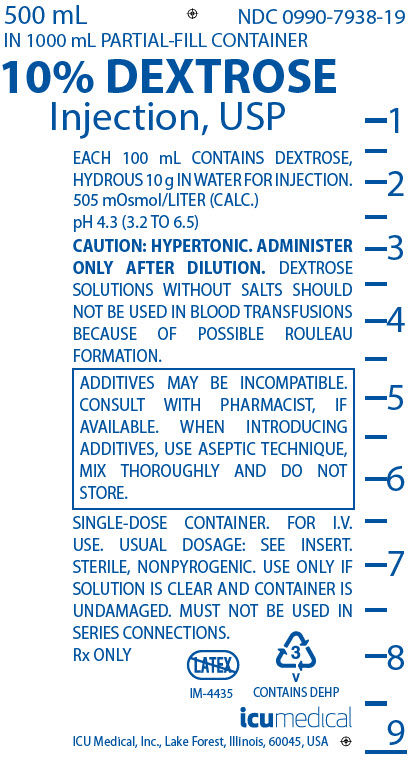
Concentrated dextrose in water should be administered only after suitable dilution. Hypertonic dextrose solutions should be given slowly. Significant hyperglycemia and possible hyperosmolar syndrome may result from too rapid administration. The physician should be aware of the symptoms of hyperosmolar syndrome, such as mental confusion and loss of consciousness, especially in patients with chronic uremia and those with known carbohydrate intolerance.
The intravenous administration of this solution can cause fluid and/or solute overloading resulting in dilution of serum electrolyte concentrations, overhydration, congested states or pulmonary edema.
WARNING: This product contains aluminum that may be toxic. Aluminum may reach toxic levels with prolonged parenteral administration if kidney function is impaired. Premature neonates are particularly at risk because their kidneys are immature, and they require large amounts of calcium and phosphate solutions, which contain aluminum.
Research indicates that patients with impaired kidney function, including premature neonates, who receive parenteral levels of aluminum at greater than 4 to 5 mcg/kg/day accumulate aluminum at levels associated with central nervous system and bone toxicity. Tissue loading may occur at even lower rates of administration.
FOR PERIPHERAL VEIN ADMINISTRATION
Hypertonic dextrose solutions (above 5% concentration) should be given slowly, preferably through a small bore needle into a large vein, to minimize venous irritation.
FOR CENTRAL VENOUS ADMINISTRATION
Concentrated dextrose should be administered via central vein after appropriate admixture or dilution when required.