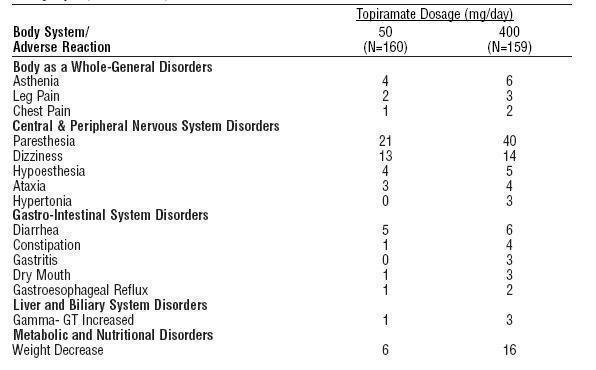
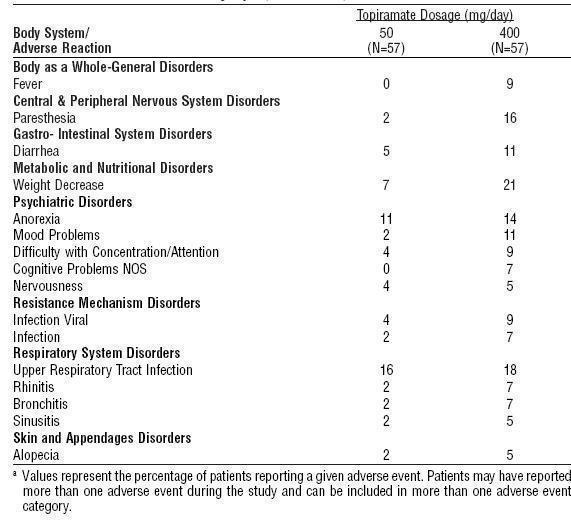
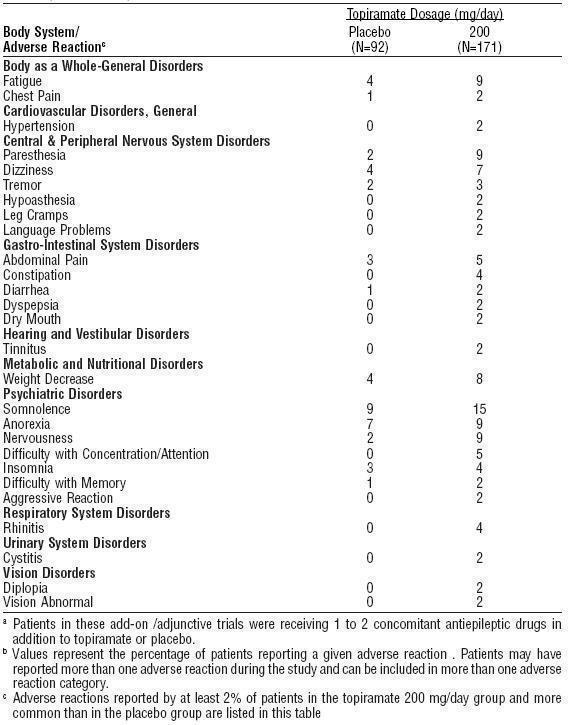
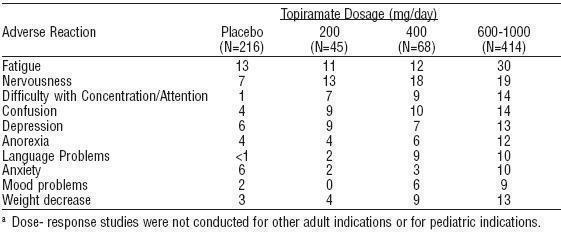
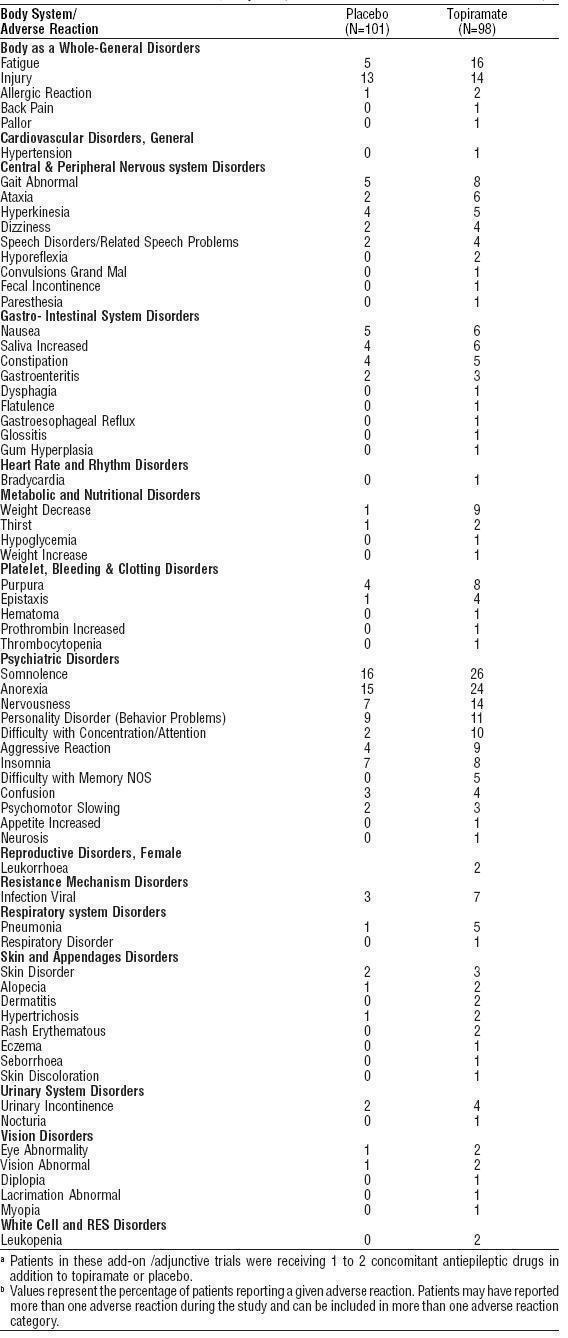
Topiramate has been administered to 2246 adults and 427 pediatric patients with epilepsy during all clinical studies, only some of which were placebo-controlled. During these studies, all adverse reactions were recorded by the clinical investigators using terminology of their own choosing. To provide a meaningful estimate of the proportion of individuals having adverse reactions, similar types of reactions were grouped into a smaller number of standardized categories using modified WHOART dictionary terminology. The frequencies presented represent the proportion of patients who experienced a reaction of the type cited on at least one occasion while receiving topiramate. Reported reactions are included except those already listed in the previous tables or text, those too general to be informative, and those not reasonably associated with the use of the drug.
Reactions are classified within body system categories and enumerated in order of decreasing frequency using the following definitions: frequent :occurring in at least 1/100 patients; infrequent :occurring in 1/100 to 1/1000 patients; rare:t occurring in fewer than 1/1000 patients.
Autonomic Nervous System Disorders:Infrequent: vasodilation
Body as a Whole: Frequent: syncope. Infrequent: abdomen enlarged. Rare: alcohol intolerance
Cardiovascular Disorders, General: Infrequent:hypotension, postural hypotension, angina pectoris.
Central & Peripheral Nervous System Disorders: Infrequent: neuropathy, apraxia, hyperesthesia, dyskinesia, dysphonia, scotoma, ptosis, dystonia, visual field defect, encephalopathy, EEG abnormal. Rare:upper motor neuron lesion, cerebellar syndrome, tongue paralysis
Gastrointestinal System Disorders: Infrequent:hemorrhoids, stomatitis, melena, gastritis, esophagitis. Rare: tongue edema
Heart Rate and Rhythm Disorders: Infrequent:AV block
Liver and Biliary System Disorders: Infrequent: SGPT increased, SGOT increased
Metabolic and Nutritional Disorders: Infrequent: dehydration, hypocalcemia, hyperlipemia, hyperglycemia, xerophthalmia, diabetes mellitus. Rare: hypernatremia, hyponatremia,hypocholesterolemia, creatinine increased
Musculoskeletal System Disorders: Frequent:tarthralgia. Infrequent: arthrosis
Neoplasms: Infrequent: thrombocythemia. Rare: polycythemia
Platelet, Bleeding, and Clotting Disorders: Infrequent: gingival bleeding, pulmonary embolism.
Psychiatric Disorders: Frequent: impotence, hallucination, psychosis, suicide attempt
Infrequent: euphoria, paranoid reaction, delusion, paranoia, delirium, abnormal dreaming. Rare: libido increased, manic reaction
Red Blood Cell Disorders: Frequent: anemia. Rare: marrow depression, pancytopenia
Reproductive Disorders, Male: Infrequent: ejaculation disorder, breast discharge
Skin and Appendages Disorders: Infrequent: urticaria, photosensitivity reaction, abnormal hair texture. Rare: chloasma
Special Senses Other, Disorders: Infrequent: taste loss, parosmia
Urinary System Disorders: Infrequent: urinary retention, face edema, renal pain, albuminuria, polyuria, oliguria
Vascular (Extracardiac) Disorders: Infrequent: flushing, deep vein thrombosis, phlebitis. Rare: vasospasm
Vision Disorders: Frequent: conjunctivitis. Infrequent: abnormal accommodation, photophobia, strabismus. Rare: mydriasis, iritis
White Cell and Reticuloendothelial System Disorders: Infrequent: lymphadenopathy, eosinophilia, lymphopenia, granulocytopenia. Rare: lymphocytosis.