Diclofenac Sodium Gel
Product Images NDC 11673-028

16 FDA label images from Target Corporation · Packaging, Regulatory Labels, and Product Appearance

Product Visual Gallery

This gallery contains 16 technical images submitted to the FDA as part of the official labeling for Diclofenac Sodium (NDC 11673-028). Unlike standard consumer photos, these assets often include clinical data figures, molecular chemical structures, and official manufacturer packaging layouts.

As provided by Target Corporation, these visuals offer a comprehensive scientific overview of the product's physical and chemical identity, aiding pharmacists and researchers in product verification and study.

FDA Label Image

Figure 1 (Diclofenac Fig1)
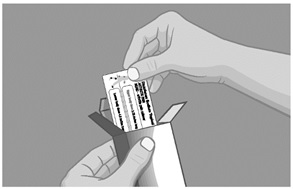
Figure 1 (Diclofenac Fig1)
An instructional illustration showing a person removing a rectangular tube of Diclofenac Sodium 10 mg/g topical gel from its carton. The hands indicate proper handling of the product packaging.*
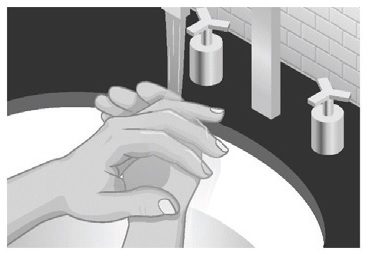
FDA Label Image

Figure (Diclofenac Fig10)

Figure (Diclofenac Fig10)
An illustration depicting a person washing their hands under a faucet with running water. One hand is rubbing the other, demonstrating handwashing technique.*
FDA Label Image

Figure (Diclofenac Fig11)

Figure (Diclofenac Fig11)
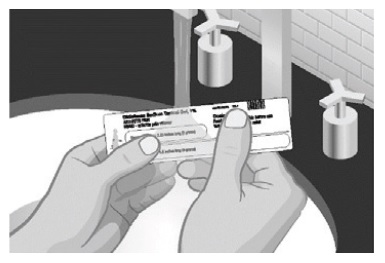
An instructional illustration depicting a person holding and reading the label of a small tube, likely a topical gel. The setting shows a sink with two liquid soap dispensers, emphasizing hand hygiene before or after applying the gel.*
FDA Label Image

Figure (Diclofenac Fig12)

Figure (Diclofenac Fig12)
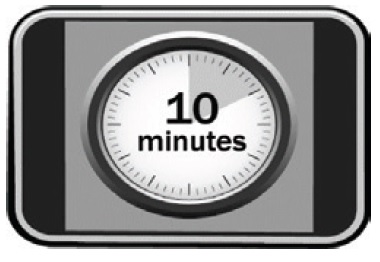
An illustration of a clock face showing 10 minutes, with the text '10 minutes' centered inside the clock. The clock is depicted within a rounded rectangle with a two-tone background, suggesting the importance or instruction related to a 10-minute duration.*
FDA Label Image

Figure (Diclofenac Fig13)

Figure (Diclofenac Fig13)
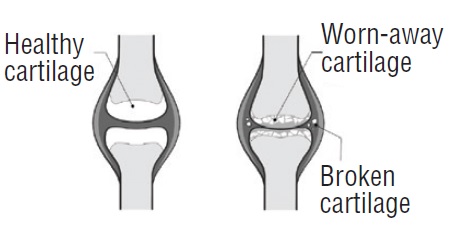
An anatomical diagram comparing a normal joint with healthy cartilage on the left to a damaged joint with worn-away and broken cartilage on the right, illustrating cartilage degradation.*
FDA Label Image

Figure (Diclofenac Fig14)

Figure (Diclofenac Fig14)
Instructional illustrations showing application sites for a topical gel: upper body (hand and elbow), lower body (knee and ankle), upper/lower body (wrist and ankle), and lower body with left and right knee indicated separately.*
FDA Label Image

Package Label-principal Display Panel (1% w/w tube Label (100 g Tube))

Package Label-principal Display Panel (1% w/w tube Label (100 g Tube))
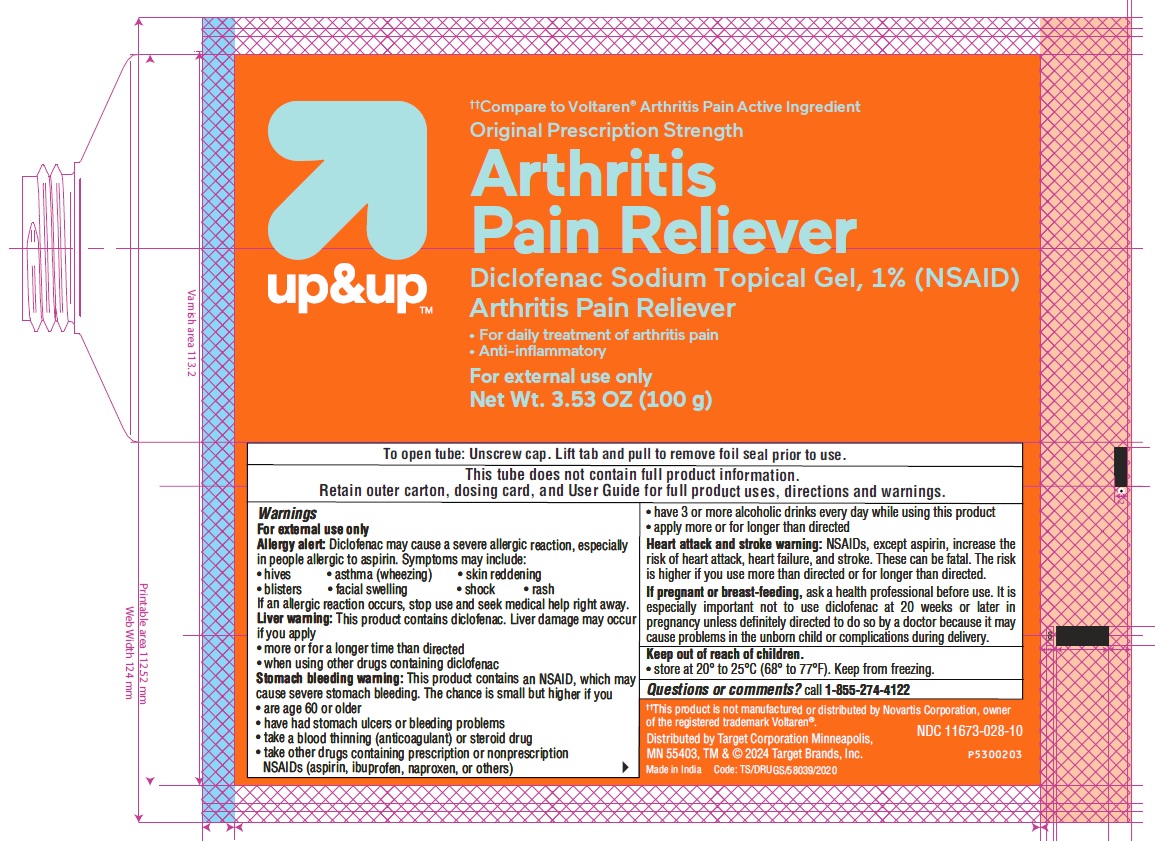
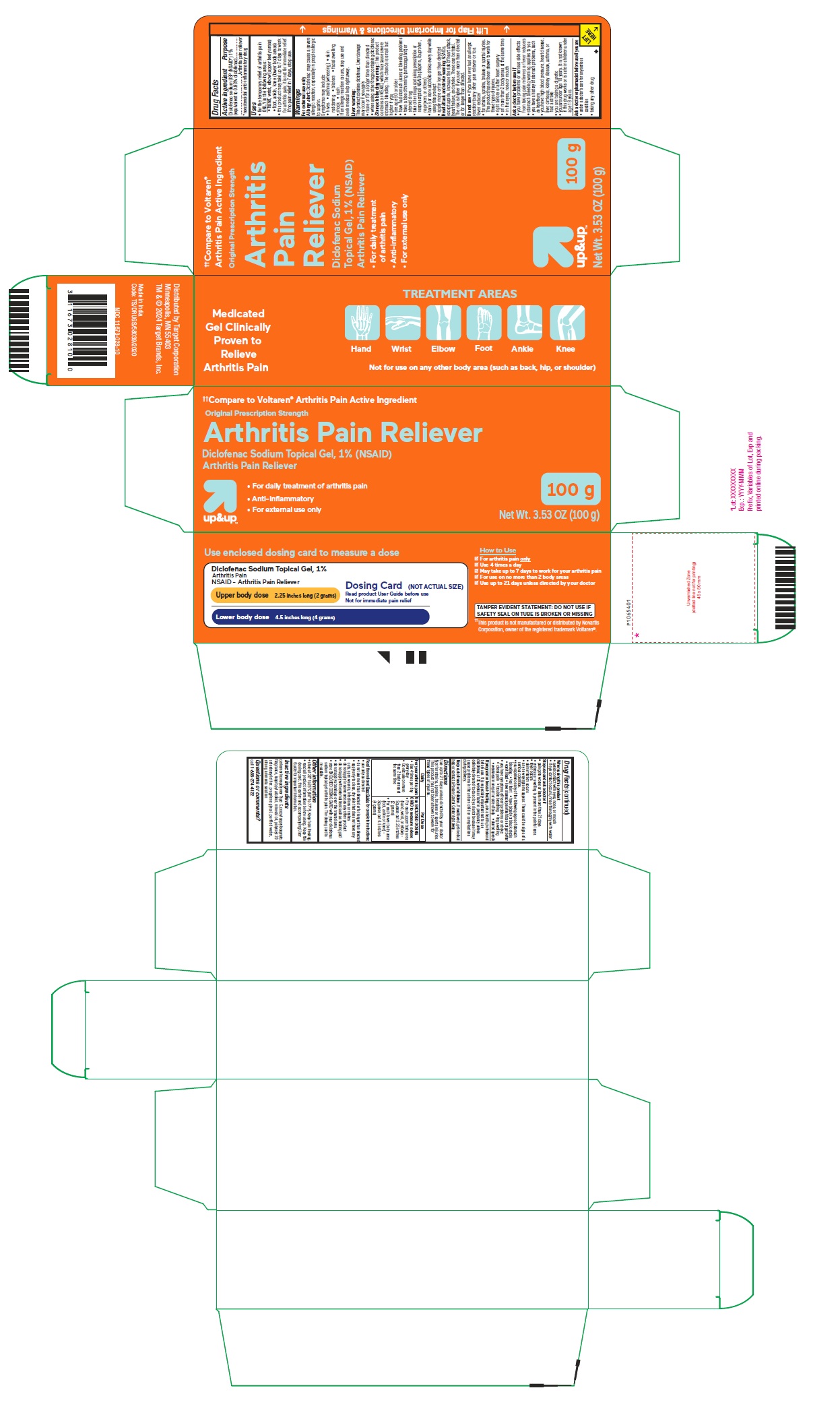
Label for up&up Arthritis Pain Reliever Gel containing Diclofenac Sodium 1% topical gel, 100 g tube. The label highlights it as an arthritis pain reliever and NSAID for external use. It includes usage warnings, storage instructions, and manufacturer information for Target Corporation with NDC 11673-028-10.*
FDA Label Image

Package Label-principal Display Panel (1% w/w Container Carton Label (100 g Bottle))

Package Label-principal Display Panel (1% w/w Container Carton Label (100 g Bottle))
Packaging label for Diclofenac Sodium Arthritis Pain Reliever topical gel 1% NSAID by Target Corporation. The orange box indicates this 100 g (3.53 oz) medicated gel is for external use to relieve arthritis pain on specific areas including hand, wrist, elbow, foot, ankle, and knee. The label features dosing instructions, a tamper-evident statement, barcode, and comparison to Voltaren Arthritis Pain active ingredient.*
FDA Label Image

Figure (Diclofenac Fig2)

Figure (Diclofenac Fig2)
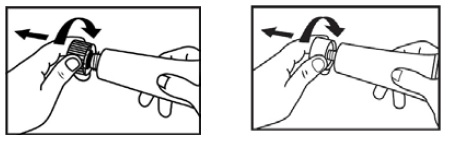
An instructional illustration showing how to open a tube by twisting and pulling off the cap, presumably for topical gel application. It depicts two hands: one holding the tube and the other turning the cap counterclockwise to remove it.*
FDA Label Image

Figure (Diclofenac Fig3)

Figure (Diclofenac Fig3)
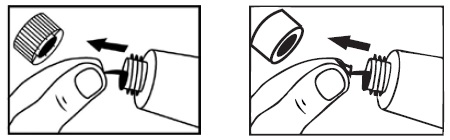
Instructional diagram showing removal of the cap from a tube, indicating how to open a tube typically used for topical gels or creams.*
FDA Label Image

Figure (Diclofenac Fig4)

Figure (Diclofenac Fig4)
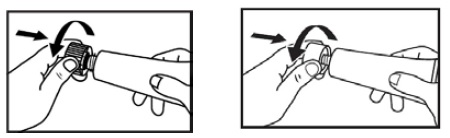
An instructional illustration showing the steps to open or close the cap of a topical gel tube. It depicts a hand turning the cap clockwise and counterclockwise, with arrows indicating the direction of rotation.*
FDA Label Image

Figure (Diclofenac Fig5)

Figure (Diclofenac Fig5)
An illustration depicting the progression of the day in four panels: start of the day with a rising sun, middle of the day with the sun overhead, late afternoon with the sun low on the horizon, and end of the day featuring a crescent moon in a cloudy night sky.*
FDA Label Image

Figure (Diclofenac Fig6)

Figure (Diclofenac Fig6)
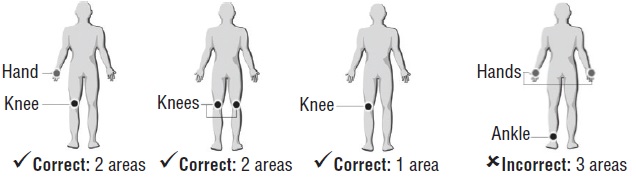
Illustration showing correct and incorrect topical application areas for Diclofenac Sodium gel. Correct use includes applying the gel to one or two specific areas such as the hand, knee, or knees. Incorrect use is applying the gel to three areas including both hands and an ankle.*
FDA Label Image

Figure (Diclofenac Fig7)

Figure (Diclofenac Fig7)
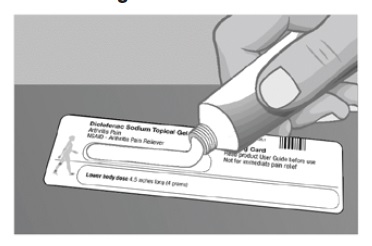
An instructional illustration showing a hand applying Diclofenac Sodium topical gel from a tube onto a specific area of the skin. The image highlights the lower body, indicating the gel should be applied to a 4-5 inches long area.*
FDA Label Image

Figure (Diclofenac Fig8)

Figure (Diclofenac Fig8)
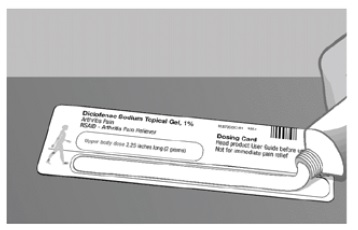
Diclofenac Sodium Topical Gel 1% tube with a dosing card is shown. The tube is open, dispensing a small amount of gel onto the dosing card shaped with measurement guides. The label mentions dosing instructions and intended use for arthritis pain. The labeler is Target Corporation.*
FDA Label Image

Figure (Diclofenac Fig9)

Figure (Diclofenac Fig9)
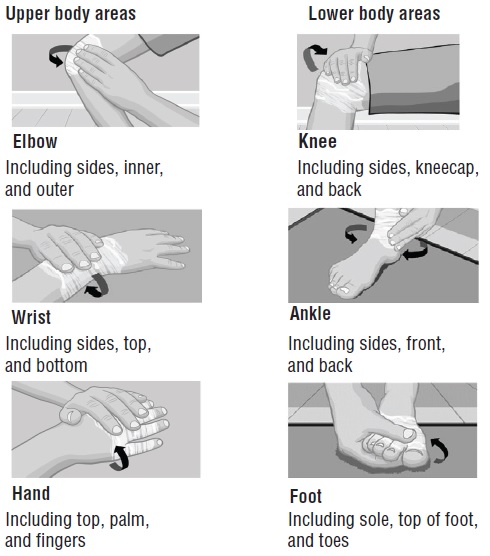
Instructions with illustrations showing the upper and lower body areas for application: elbow, wrist, hand, knee, ankle, and foot. Each area includes guidance on which parts to cover, such as sides, inner and outer areas for elbow; top, palm, and fingers for hand; kneecap and back for knee; and sole, top, and toes for foot.*

* About these descriptions: Image descriptions on this page are generated by automated AI analysis of the product label images from the manufacturer's FDA label submission (SPL). They are provided for reference only and may contain errors or omissions. Always rely on the printed label itself and the official FDA labeling, and consult a pharmacist or healthcare professional with any questions about this product.