Fesilty Kit
FDA Label NDC 13533-502

Full FDA labeling including Indications, Dosage, Usage, and Precautions

Structured Product Label

The following Structured Product Label (SPL) was submitted to the FDA by Grifols Usa Llc for the product Fesilty (NDC 13533-502). This document serves as the official prescribing information, containing essential scientific data and clinical materials required for healthcare providers and patients.

This specific version of the label includes detailed information regarding 1 indications and usage, 2.1 dose, 2.2 preparation and reconstitution, 2.3 administration, 3 dosage forms and strengths, 4 contraindications, 5.1 hypersensitivity, 5.2 thrombosis, and other regulatory disclosures. Use the navigation below to review specific sections of the FDA submission.

1 Indications And Usage

FESILTY is indicated for the treatment of acute bleeding episodes in pediatric and adult patients with congenital fibrinogen deficiency, including hypo- or afibrinogenemia.

Limitations of Use:

FESILTY is not indicated for dysfibrinogenemia.

2.1 Dose

For intravenous use after reconstitution only

The target plasma fibrinogen level is 100 mg/dL for minor bleeding and 150 mg/dL for major bleeding.

The actual amount of fibrinogen in milligrams per vial of FESILTY is printed on the vial label and carton.

FESILTY dose when baseline fibrinogen level is known

The dose for each patient must be individually calculated taking into consideration age, the location and extent of bleeding, the plasma level of fibrinogen (mg/dL), and the clinical condition of the patient.

Calculate the recommended dose in milligrams fibrinogen per kilogram BW according to the age of the patient:

  • Adults and pediatric patients ≥ 6 years of age
  • Dose (mg/kg BW) =Target fibrinogen level (mg/dL) – Measured fibrinogen level (mg/dL)
    1.8 (mg/dL per mg/kg BW)
    • Pediatric patients < 6 years of age
    • Dose (mg/kg BW) =Target fibrinogen level (mg/dL) – Measured fibrinogen level (mg/dL)
      1.6 (mg/dL per mg/kg BW)

      Monitor plasma fibrinogen level and repeat the dose if the plasma fibrinogen level drops below the target level until hemostasis is achieved.

      Individualize the frequency and duration of dosing based on the extent of bleeding, plasma fibrinogen level, and the clinical condition of the patient.

      FESILTY dose when baseline fibrinogen level is not known

      The recommended dose when the baseline fibrinogen is not known is 70 mg/kg BW for patients of all ages.

      Monitor plasma fibrinogen level and repeat the dose as needed to maintain the target fibrinogen level.

      Individualize the frequency and duration of dosing based on the extent of bleeding, plasma fibrinogen level, and the clinical condition of the patient.

2.2 Preparation And Reconstitution

FESILTY is a white powder. Upon reconstitution with sterile water, the solution is almost colorless and clear to slightly opalescent.

The following procedures are provided as a guide for the preparation and reconstitution of FESILTY.

Preparation

Inspect the carton kit before opening. Discard the kit if the package is damaged or if the seal on the carton shows signs of tampering.

Do not use FESILTY after the expiration date printed on the vial label and carton.

If stored refrigerated, allow the unopened vials of Sterile Water for Injection, USP (vial number 1) and product (FESILTY, vial number 2) to come to room temperature.

Use aseptic technique (clean and sanitized) and a flat surface during reconstitution of FESILTY.

Reconstitution with nextaro® v, 20/20 5 µm transfer system

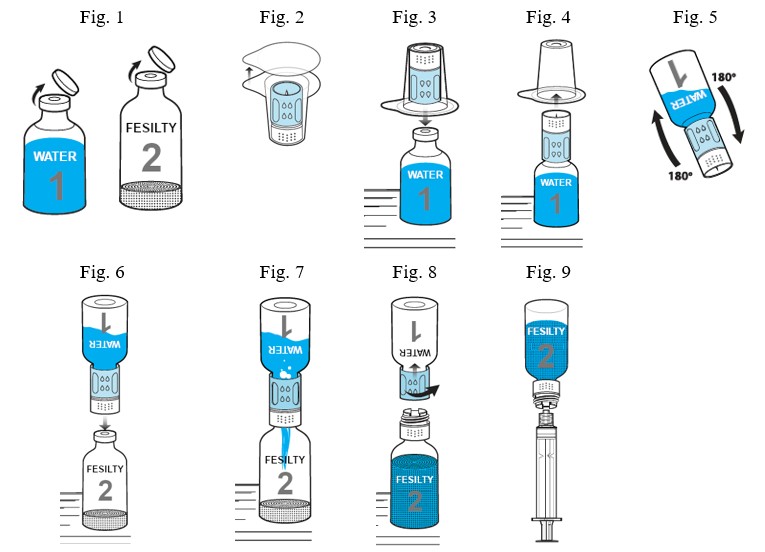
  • Remove the caps from the water vial and the product vial in order to expose the central portions of the stoppers (Fig. 1). Cleanse each vial stopper with an alcohol swab and allow surface to dry.
  • Completely remove the paper seal of the transfer system blister package (Fig. 2). To maintain sterility, keep the transfer device in the clear blister package. Do not touch the spike.
  • Place the water vial on an even surface. Place the blue part of the transfer system within the blister straight onto the upright water vial (Fig. 3) until it snaps into place. Do not twist the transfer system.
  • Remove the clear part of the blister package from the transfer system. Now the white part of the transfer system is visible (Fig. 4).
  • Place the product vial on an even surface.
  • Turn the combination of transfer system and water vial upside down (Fig. 5). Push the spike of the white end of the transfer system straight down through the product vial stopper (Fig. 6) until it snaps into place. The vacuum present in the product vial causes the water to flow into the product vial (Fig. 7). Wait until water transfer is complete.
  • Gently sway the unit consisting of the transfer system, product and water vial, to dissolve the powder. Do not shake the unit, to avoid foaming. The powder should be dissolved completely within approximately 3 minutes. Discard the product if the powder is not fully dissolved within 30 minutes. After reconstitution the solution should be clear or slightly opalescent.
  • Afterwards unscrew the blue part of the transfer system together with the empty water vial counterclockwise (Fig. 8). Discard the water vial with the blue part of the transfer system attached. The luer-lock connector is now visible. To maintain sterility do not touch the luer-lock connector.
  • The solution is ready for use. Keep the solution at room temperature and use within 4 hours after dissolving. Do not use solutions that are cloudy or contain visible particles.
    Figures 1-9 (Figures1 9)

    Figures 1-9 (Figures1 9)


  • Screw a sterile syringe (not supplied) onto the luer-lock connector of the product vial with the white part of the transfer system and invert (Fig. 9) to allow you to easily draw the dissolved drug into the syringe. Use constant force during drawing to avoid foaming. A separate filter is not necessary because the transfer system has its own integrated filter.
  • Carefully disconnect the vial with the white part of the transfer system from the syringe. A standard infusion set is recommended for intravenous injection of the solution.
  • If the dose requires more than one vial of FESILTY, reconstitute each vial using a new nextaro® v, 20/20 transfer system provided in the carton. The nextaro® v, 20/20 transfer system is for single use only.
  • Do not shake.

    Do not mix FESILTY with other intravenous medications. Administer by a separate injection/infusion line.

    FESILTY is for single use only. It contains no preservatives.

    Discard unused portion.

2.3 Administration

Inspect visually for particulate matter and discoloration prior to administration. Do not use if the liquid is cloudy or turbid, discolored, or if it contains visible particulate matter.

Infusion Rates

Infuse FESILTY intravenously using an infusion pump at an infusion rate not to exceed 5 mL/min. The initial infusion rates are provided in Table 1. Selection of the infusion rate remains principally at the discretion of the treating physician considering the exact clinical situation of the patient.

Table 1: Infusion Rates for FESILTY
Patient AgeInitial Infusion Rate

Infusion rate not to exceed 5 mL/min

Adults and pediatric patients ≥ 6 years of age5 mL/min
Pediatric patients 4 to < 6 years of age1.0 mL/min
Pediatric patients 2 to < 4 years of age0.75 mL/min
Pediatric patients 28 days to < 2 years of age0.30 mL/min
Newborns (0 to 27 days)0.10 mL/min

3 Dosage Forms And Strengths

FESILTY is a sterile, lyophilized, white in color powder for solution for intravenous injection. FESILTY is provided as one single-dose glass vial containing nominally 1 gram of human fibrinogen and one 50 mL glass vial of Sterile Water for Injection, USP. The actual amount of fibrinogen in milligrams of fibrinogen per vial is printed on the vial label and carton.

4 Contraindications

FESILTY is contraindicated in patients who have severe hypersensitivity reactions, including anaphylaxis, to FESILTY or its components (arginine hydrochloride, polysorbate 80, sodium citrate dihydrate, trehalose dihydrate). [see Warnings and Precautions (5.1)]

5.1 Hypersensitivity

Hypersensitivity reactions have occurred to FESILTY or its components (arginine hydrochloride, polysorbate 80, sodium citrate dihydrate, trehalose dihydrate). Monitor patients for signs and symptoms of hypersensitivity reactions including hives, generalized urticaria, tightness of the chest, wheezing, hypotension, and anaphylaxis. If symptoms occur, discontinue FESILTY infusion immediately. Manage patients based on clinical practice accordingly.

5.2 Thrombosis

Thrombotic events have occurred in patients receiving FESILTY [see Adverse Reactions (6)]. Thrombosis may occur spontaneously in patients with congenital fibrinogen deficiency with or without the use of fibrinogen replacement therapy. Weigh the benefits of FESILTY administration versus the risks of thrombosis. Monitor patients receiving FESILTY for signs and symptoms of thrombosis.

5.3 Transmissible Infectious Agents

Because FESILTY is made from pooled human plasma, it may carry a risk of transmitting infectious agents, e.g., viruses, the variant Creutzfeldt-Jakob disease (vCJD) agent and, theoretically, the Creutzfeldt-Jakob disease (CJD) agent. This also applies to unknown or emerging viruses and other pathogens. The risk of infectious agent transmission has been reduced by screening plasma donors and by including virus inactivation as well as virus and prion removal steps in the manufacturing process of FESILTY[see Description (11)].

All infections suspected to have been transmitted by FESILTY should be reported by the physician or other healthcare provider to Grifols at 1-800-520-2807.

6.1 Clinical Trials Experience

Because clinical trials are conducted under widely varying conditions, adverse reaction rates observed in the clinical trials of one drug cannot be directly compared to rates in the clinical trials of another drug and may not reflect the rates observed in clinical practice.

The safety data described in this section reflects exposure to FESILTY in one clinical study (Study 984). A total of 45 patients with congenital fibrinogen deficiency received at least one dose of FESILTY. A total of 175 bleeding episodes were treated with a mean dose of 3.9 g [see Clinical Studies (14)].

Serious adverse reactions occurred in 4 patients (9%) including portal vein thrombosis (n=1), deep vein thrombosis (n=1), and pain in extremity with clinically suspected thrombosis (n=1). One patient had episode of epilepsy and died due to extradural hematoma four weeks after FESILTY administration.

Table 2 lists the most common adverse reactions that occurred in > 2% patients in Study 984.

Table 2: Adverse Reactions Occurring in > 2% Patients in Study 984
Adverse ReactionN=45
n (%)
Pain in extremity3 (7)
Back pain3 (7)
Hypersensitivity reactions

Hypersensitivity reactions = all patients had adverse reactions of facial swelling.

3 (7)
Pyrexia2 (4)
Thrombosis

Thrombosis includes portal vein thrombosis and deep vein thrombosis.

2 (4)
Fibrin D dimer increased2 (4)
Headache2 (4)
Vomiting2 (4)

8.1 Pregnancy

Risk Summary

No human data are available to indicate the presence or absence of a drug-associated risk. Animal reproduction studies have not been conducted with FESILTY. One patient in clinical trial 984 reported pregnancy 11 months after receiving FESILTY. The patient withdrew from the study and there were no reports of complications during the pregnancy. It is not known whether FESILTY can cause fetal harm when administered to a pregnant woman or can affect fertility.

In the U.S. general population, the estimated background risk of major birth defects and miscarriage in clinically recognized pregnancies is 2-4% and 15-20% respectively.

8.2 Lactation

Risk Summary

There is no information regarding the presence of FESILTY in breast milk, the effect on the breast-fed infant, or the effects on milk production. The developmental and health benefits of breast feeding should be considered along with the mother’s clinical need for FESILTY and any potential adverse effects on the breast-fed infant from FESILTY or from the underlying maternal condition.

8.4 Pediatric Use

The safety and effectiveness of FESILTY have been established in pediatric patients with congenital fibrinogen deficiency. Use of FESILTY in pediatric patients was supported by evidence from one clinical study (Study 984) that enrolled 24 pediatric patients 0 to 16 years of age (6 patients aged 0 to < 6 years, 18 patients aged ≥6 years) with congenital fibrinogen deficiency [see Adverse Reactions (6) and Clinical Studies (14)].

8.5 Geriatric Use

Clinical study of FESILTY in patients with congenital fibrinogen deficiency did not include patients aged 65 years and over to provide evidence as to whether or not they respond differently than younger patients.

11 Description

FESILTY (fibrinogen, human – chmt), is a purified, sterile, non-pyrogenic, lyophilized powder of human fibrinogen for reconstitution for intravenous administration. Human fibrinogen is purified from Source Plasma from the cryoprecipitate fraction and processed using a combination of aluminum hydroxide purification, solvent/detergent (S/D) treatment, anion and cation exchange chromatography, glycine precipitation, and Ultraviolet (UV)-C irradiation. FESILTY is supplied in a single-dose vial containing nominally 1 gram of fibrinogen. The actual amount of fibrinogen is printed on the vial label and carton in milligrams fibrinogen per vial. When reconstituted with 50 mL sterile water for injection, FESILTY contains approximately 20 mg/mL protein, of which not less than 80% is fibrinogen monomer. Each vial of FESILTY also contains 421.3 mg arginine hydrochloride, 292.2 mg sodium chloride, 73.5 mg sodium citrate dihydrate, 25.5 mg polysorbate 80, and 567.5 mg trehalose dihydrate. FESILTY has a pH of 6.5 to 7.5 and an osmolality of ≥ 240 mOsmol/kg. FESILTY does not contain preservatives and is not made with natural rubber latex.

FESILTY is prepared from pooled Source Plasma obtained from healthy volunteer donors. Each plasma donation used for the manufacture of FESILTY is collected from FDA-licensed facilities. Plasma donations must test negative for hepatitis B virus (HBV) surface antigen (HBsAg), antibodies to human immunodeficiency virus (HIV) strains 1 and 2 (anti-HIV-1/2), and antibodies to the hepatitis C virus (anti-HCV) as determined by enzyme immunoassay (EIA). In addition, samples from manufacturing pools must test non-reactive for HIV RNA, HCV RNA, HBV DNA, and Hepatitis A Virus (HAV) RNA, by Nucleic Acid Amplification Testing (NAT). Parvovirus B19 (B19V) DNA is also tested by NAT and must not exceed 104 IU/mL in the manufacturing pool.

The manufacturing process for FESILTY employs several steps to remove/inactivate adventitious viruses to further increase the margins of safety. These steps include S/D treatment, UV-C irradiation, and heat treatment of lyophilized fibrinogen. Virus clearance studies with a scaled-down process have been performed for these steps to determine their capacity to inactivate or remove both enveloped and non-enveloped viruses. The results are shown in Table 3.

Table 3: Virus Reduction Factors (log10) during FESILTY Manufacturing Process for Enveloped (E) and Non-enveloped (NE) Viruses
StepHIV

HIV: Human immunodeficiency virus

(E)
PRV

PRV: Porcine pseudorabies virus (varicellovirus suidalpha 1), a generic model for hepatitis B virus

(E)
BVDV

BVDV: Bovine viral diarrhea virus 1 (pestivirus bovis), a model for hepatitis C virus (hepacivirus hominis)

(E)
HAV

HAV: Hepatitis A virus (hepatovirus A)

(NE)
PPV

PPV: Porcine parvovirus (protoparvovirus ungulate 1), a model for human parvovirus B19 (erythroparvovirus primate1)

(NE)
S/D

S/D: Solvent/detergent

 Treatment
≥ 4.51 ≥ 5.39 ≥ 5.21 n.d.

n.d.: Not determined

n.d.
UV-C

UVC: Ultraviolet-C

 Irradiation
n.d.1.63 1.87 2.47 4.19
Lyophilization & Dry Heat Treatment ≥ 4.86 ≥ 5.36 ≥ 4.29 ≥ 4.34 1.09
Total Clearance≥ 9.37≥ 12.38≥ 11.37≥ 6.815.28

The manufacturing process was also investigated for its capacity to reduce the infectivity of an experimental agent of transmissible spongiform encephalopathy (TSE), considered a model for CJD and its variant, vCJD. One chromatographic purification step has been shown to reduce TSE infectivity of an experimental model agent. These studies provide reasonable assurance that low levels (at least 3.27 log10) of vCJD/CJD agent infectivity, if present in the starting material, would be removed.

12.1 Mechanism Of Action

Fibrinogen (Factor I) is a soluble plasma protein that, during the coagulation process, is converted to fibrin, one of the key components of the blood clot. Fibrinogen is a heterohexamer with a molecular weight of 340 kDa and composed of two sets of alpha, beta, and gamma polypeptide chains.

Fibrinogen plays a fundamental role in achieving and maintaining overall hemostasis. Following coagulation activation and thrombin generation, fibrinogen is cleaved by thrombin at specific sites on the alpha and beta chains to remove fibrinopeptide A (FPA) and fibrinopeptide B (FPB). The removal of FPA and FPB exposes binding sites on the fibrinogen molecule and leads to the formation of fibrin monomers that subsequently undergo polymerization. The resulting fibrin is stabilized by activated factor XIII which forms cross links between fibrin polymers and renders the fibrin clot more resistant to fibrinolysis. Additionally, soluble fibrinogen mediates platelet aggregation by binding to the glycoprotein IIb/IIIa (GPIIb/IIIa) receptor on the platelet surface activated following blood vessel injury. This interaction acts as a bridge between platelets, facilitating their aggregation, i.e., formation of primary platelet plug. The end product of the coagulation cascade, cross-linked fibrin, stabilizes and reinforces the primary platelet plug to achieve secondary hemostasis and stop bleeding.

12.2 Pharmacodynamics

In a prospective, open-label, multicenter phase I clinical trial the pharmacodynamic properties for FESILTY were evaluated in 27 patients of all age groups with congenital afibrinogenemia or severe hypofibrinogenemia. The assessment was based on fibrinogen activity (FiAc) levels in plasma after a single intravenous administration of 70 mg/kg BW. Maximum clot firmness (MCF) was measured by thromboelastometry and showed a positive correlation with FiAc levels of FESILTY in patients across the age groups.

12.3 Pharmacokinetics

PK properties of FESILTY were investigated based on FiAc levels in plasma after a single intravenous administration of 70 mg/kg BW in patients with congenital afibrinogenemia or severe hypofibrinogenemia of all age groups.

Table 4: Summary of Pharmacokinetic Parameters for FESILTY Fibrinogen Activity (FiAc) by Age Groups
Abbreviations: AUC0-∞ = area under the curve (AUC) from time 0 to infinity; Cmax = maximum concentration; CL = clearance; IR = incremental recovery  based on observations; MRT0-∞ = mean residence time extrapolated toinfinity; N = number of patients; t1/2 = half-life; Vdss = volume of distribution at steady state.
Data reflects subjects in Study 984 with a minimum of five observations.
Parameters

Pharmacokinetic parameters are summarized as Mean (Standard Deviation).

Overall
N=17
6 to < 12 years
N = 1
12 to < 18 years
N = 2
18 to 75 years
N = 14
t1/2 [h] 54.8 (13.4)63.157.4 (25.7)53.8 (12.7)
Cmax [g/L] 1.47 (0.4)1.741.16 (0.5)1.49 (0.4)
AUC0-∞ [g*h/L)] 97.8 (39.1)92.879.4 (52.1)101 (40.1)
MRT0-∞ [h] 80.3 (19.3)88.684.8 (39.3)79.1 (18.1)
Vdss per kg [mL/kg] 62.2 (16.3)66.880.8 (18.5)59.2 (15.4)
CL per kg (mL/[h*kg]) 0.836 (0.4)0.7541.13 (0.7)0.801 (0.3)
IR (mg/dL per mg/kg dose) 2.10 (0.6)2.491.66 (0.7)2.13 (0.6)

A population pharmacokinetic model was developed that pooled the data collected in 27 patients aged 1 to 40 years who received 70 mg/kg of FESILTY. A two-compartment model was used for integrated assessments of FiAg and FiAc levels, with body weight included as a covariate to describe the pharmacokinetic data. The analysis demonstrated that the median AUC0-239h of FiAc was lower by 27.6% in patients aged < 6 years, by 13.6% in patients aged 6 to < 12 years, and by 3.4% in patients aged 12 to < 18 years compared to adult patients. The median Cmax was comparable between pediatric and adult patients.

14 Clinical Studies

The efficacy of FESILTY was evaluated in an open-label, single arm, multicenter, study (Study 984; NCT 02065882) in patients with congenital hypo- or afibrinogenemia. Patients with dysfibrogenemia were excluded. The study assessed FESILTY for on-demand treatment (ODT) and for on-demand prophylaxis (ODP) of bleeding events.

A total of 36 patients received FESILTY for 175 bleeding events. The median number of FESILTY infusions per bleeding event was 1 (range: 1 to 6). The mean total perioperative dose of FESILTY for 54 surgical bleeding events was 70.3 mg/kg BW for adults and 125.9 mg/kg BW for pediatric patients. The mean dose for 175 bleeding events was 70.1 mg/kg for adults and 75.8 mg/kg for pediatric patients.

The demographic characteristics of the study population were as follows: The median age was 18 years (range: 1 to 46 years) including 3 patients aged 0 to < 6 years, 9 patients aged 6 to < 12 years, and 4 patients aged 12 to < 18 years. Twenty-two patients (61%) were male and 36 patients (100%) were White. Thirty-four patients (94%) had congenital afibrinogenemia and two patients (6%) had severe hypofibrinogenemia. Out of 175 bleeding events, 45 were traumatic, 65 were spontaneous, 54 were surgical and 11 bleeds were classified as “other”. There were 60 bleeds treated with ODP and 115 bleeds with ODT.

The main efficacy endpoint was the overall hemostatic response (OHR) based on a 4-point scale assessed by the investigator as excellent, good, moderate or none. The other efficacy endpoint was the mean change in maximum clot formation (MCF) at 1 hour after infusion.

The OHR for 175 bleeding events in 36 patients was reported as excellent in 150 bleeding events (86%), good in 23 bleeding events (13%), and moderate in 2 bleeding events (1%). The mean change in MCF was 10.76 mm at 1 hour after FESILTY infusion.

16 How Supplied/Storage And Handling

FESILTY is supplied in a kit containing one single-dose glass vial of human fibrinogen, one glass vial of 50 mL Sterile Water for Injection, USP, and one nextaro® v, 20/20 sterile transfer system.

Carton NDCContainer NDCFibrinogen Content
13533-502-0113533-503-02approximately 1 gram

The actual amount of human fibrinogen in milligrams per vial is printed on the vial label and carton.

  • FESILTY is not made with natural rubber latex.
  • Keep FESILTY in its original carton to protect it from light.
  • Store between 2oC and 30oC (36oF and 86oF). Do not freeze.
  • Do not use after expiration date printed on the vial label and carton.
  • Use within 4 hours after reconstitution.
  • Discard unused portion.

17 Patient Counseling Information

Discuss following with the patient and/or caregiver:

  • Hypersensitivity reactions: Inform patients and/or caregiver of the early signs of hypersensitivity reactions to FESILTY (including hives, generalized urticaria, tightness of the chest, wheezing, hypotension, and anaphylaxis), and advise them to notify their physician immediately if they experience any of these symptoms [see Warnings and Precautions (5.1)].
  • Thrombosis: Inform patients and/or caregiver that blood clots with or without consequent obstruction of blood flow may occur with FESILTY. Any symptoms of blood clots such as unexplained chest and/or leg pain or swelling of the legs or arms, coughing up blood, shortness of breath, increased rate of breathing or unexplained symptoms related to the nervous system such as stroke or weakness following administration of FESILTY should be reported to their physician immediately [see Warnings and Precautions (5.2)].
  • Transmission of infectious agents: Inform patients and/or caregiver that because FESILTY is made from pooled human plasma, it may carry a risk of transmitting infectious agents that can cause disease (e.g., viruses, vCJD agent, and theoretically, the CJD agent). Explain that the risk that FESILTY may transmit an infection has been reduced by screening plasma donors for prior exposure, testing donated plasma, and inactivating or removing certain viruses during manufacturing, patients should report any symptoms that concern them [see Description (11), Warnings and Precautions (5.3)].
  • Manufactured by:

    Biotest AG

    63303 Dreieich, Germany

    Manufactured for:

    Grifols Therapeutics LLC

    Research Triangle Park, NC 27709 USA

    US License No. 1871

Package Label.Principal Display Panel

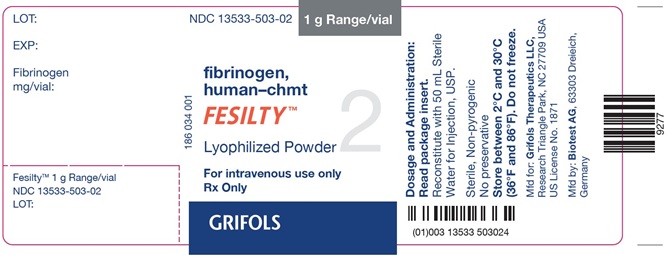
NDC 13533-503-02    1 g Range/vial

fibrinogen,
human-chmt
FESILTY

Lyophilized Powder   2

For intravenous use only
Rx Only


GRIFOLS

Dosage and Administration:
Read package insert.

Reconstitute with 50 mL Sterile
Water for Injection, USP.

Sterile, Non-pyrogenic
No preservative
Store between 2°C and 30°C
(36°F and 86°F). Do not freeze.

Mfd for: Grifols Therapeutics LLC,
Research Triangle Park, NC 27709 USA
US License No. 1871

Mfd by: Biotest AG, 63303 Dreieich,
Germany

(01)003 13533 503024

LOT:

EXP:

Fibrinogen
mg/vial:

Fesilty™ 1 g Range/vial
NDC 13533-503-02
LOT:

186 034 001

Label (Product Label 9)

Label (Product Label 9)

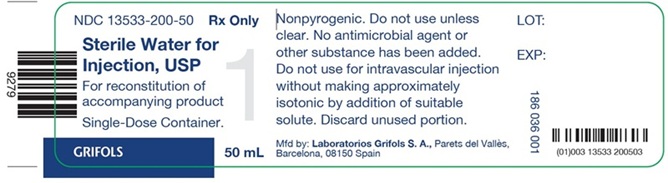
NDC 13533-200-50         Rx Only

Sterile Water for
Injection, USP

For reconstitution of
accompanying product
Single-Dose Container.     1

GRIFOLS                     50 mL

Nonpyrogenic. Do not use unless
clear. No antimicrobial agent or
other substance has been added.
Do not use for intravascular injection
without making approximately
isotonic by addition of suitable
solute. Discard unused portion.

Mfd by: Laboratorios Grifols S. A., Parets del Vallès,
Barcelona, 08150 Spain

LOT:

EXP:

186 036 001

(01)003 13533 200503

Water (Wfi Label 3)

Water (Wfi Label 3)

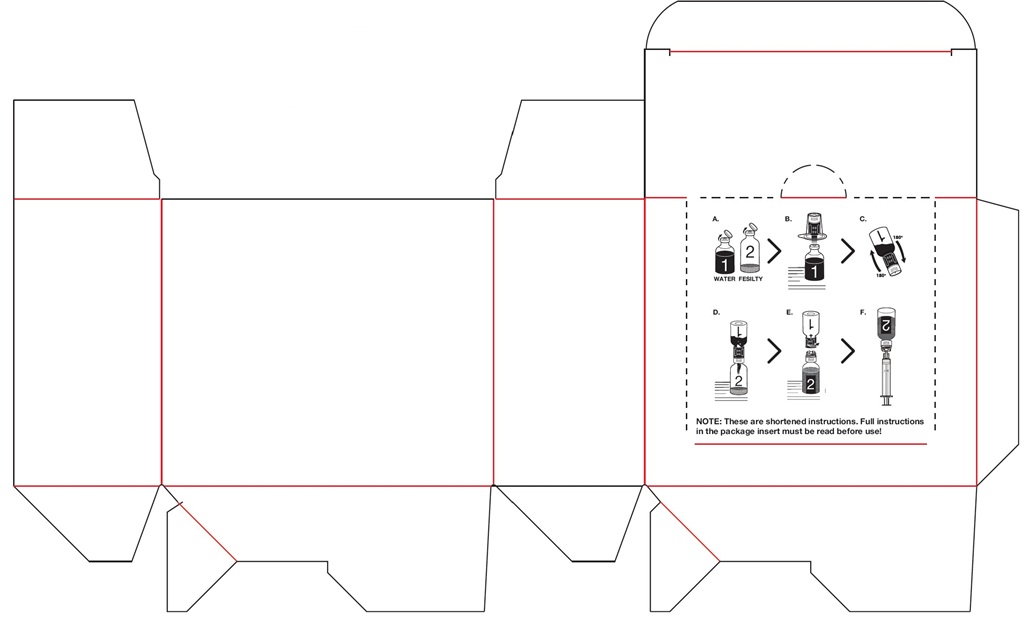
NOTE: These are shortened instructions. Full instructions
in the package insert must be read before use!
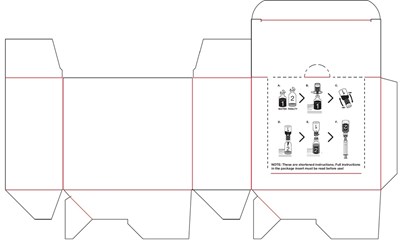
Inner Carton (Inner Carton 7)

Inner Carton (Inner Carton 7)

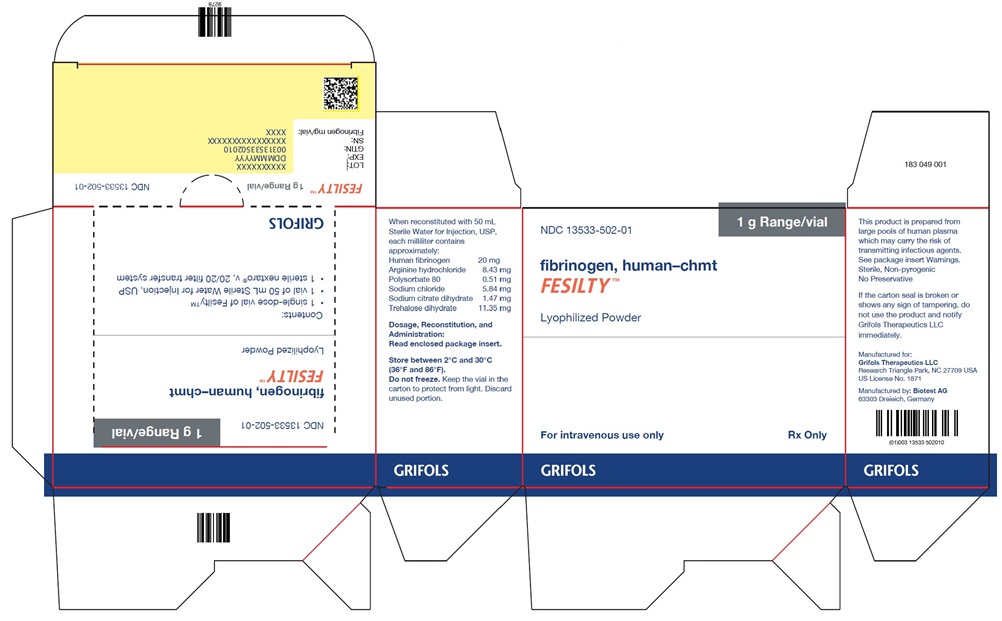
NDC 13533-502-01              1 g Range/vial

fibrinogen human-chmt
FESILTY


Lyophilized Powder

For intravenous use only                   Rx Only

GRIFOLS

This product is prepared from
large pools of human plasma
which may carry the risk of
transmitting infectious agents.
See package insert Warnings.
Sterile, Non-pyrogenic
No Preservative

If the carton seal is broken or
shows any sign of tampering, do
not use the product and notify
Grifols Therapeutics LLC
immediately.

Manufactured for:
Grifols Therapeutics LLC
Research Triangle Park, NC 27709 USA
US License No. 1871

Manufactured by: Biotest AG
63303 Dreieich, Germany

(01)003 13533 502010

GRIFOLS

183 049 001

When reconstituted with 50 mL
Sterile Water for Injection, USP,
each vial contains
approximately:
Human fibrinogen 20 mg
Arginine hydrochloride 8.43 mg
Polysorbate 80 0.51 mg
Sodium chloride 5.84 mg
Sodium citrate dihydrate 1.47 mg
Trehalose dihydrate 11.35 mg

Dosage, Reconstitution, and
Administration:
Read enclosed package insert.


Store between 2°C and 30°C
(36°F and 86°F).

Do not freeze. Keep the vial in the
carton to protect from light. Discard
unused portion.

GRIFOLS

NDC 13533-502-01
1 g Range/vial
fibrinogen, human-chmt
FESILTY™
Lyophilized Powder

Contents:

  • 1 single-dose vial of Fesilty™
  • 1 vial of 50 mL Sterile Water for Injection, USP
  • 1 sterile nextaro® v, 20/20 filter transfer system
  • GRIFOLS

    FESILTY™ 1 g Range/vial                NDC 13553-502-01

    LOT:                                                          XXXXXXXXXX
    EXP:                                                          DDMMMYYYY
    GTIN:                                                        00313533502010
    SN:                                                            XXXXXXXXXXXXXXXX
    Fibrinogen mg/vial:                                  XXXX
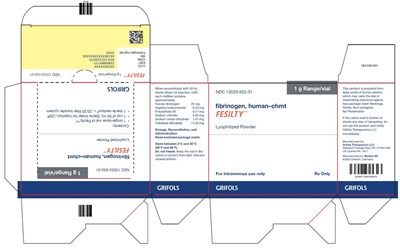
    Outer Carton (Outer Carton 10)
    Outer Carton (Outer Carton 10)

* Please review the disclaimer below.