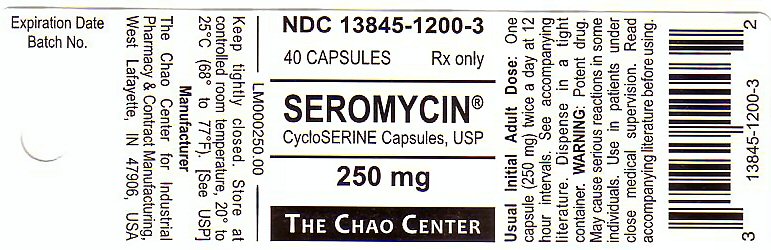
Acute toxicity from cycloserine can occur if more than 1 g is
ingested by an adult. Chronic toxicity from cycloserine is dose related and can
occur if more than 500 mg is administered daily. Patients with renal impairment
will accumulate cycloserine and may develop toxicity if the dosing regimen is
not modified. Patients with severe renal impairment should not receive the drug.
The central nervous system is the most common organ system involved with
toxicity. Toxic effects may include headache, vertigo, confusion, drowsiness,
hyperirritability, paresthesias, dysarthria, and psychosis. Following larger
ingestions, paresis, convulsions, and coma often occur. Ethyl alcohol may
increase the risk of seizures in patients receiving cycloserine.
The oral median lethal dose in mice is 5290 mg/kg.
Treatment
To obtain up–to–date information about the treatment of overdose, a good
resource is your certified Regional Poison Control Center. Telephone numbers of
certified poison control centers are listed in the Physicians’ Desk Reference (PDR). In managing overdosage,
consider the possibility of multiple drug overdoses, interaction among drugs,
and unusual drug kinetics in your patient.
Overdoses of cycloserine have been reported rarely. The following is provided
to serve as a guide should such an overdose be encountered.
Protect the patient’s airway and support ventilation and perfusion.
Meticulously monitor and maintain, within acceptable limits, the patient’s vital
signs, blood gases, serum electrolytes, etc. Absorption of drugs from the
gastrointestinal tract may be decreased by giving activated charcoal, which, in
many cases, is more effective than emesis or lavage; consider charcoal instead
of or in addition to gastric emptying. Repeated doses of charcoal over time may
hasten elimination of some drugs that have been absorbed. Safeguard the
patient’s airway when employing gastric emptying or charcoal.
In adults, many of the neurotoxic effects of cycloserine can be both treated
and prevented with the administration of 200 to 300 mg of pyridoxine daily.
The use of hemodialysis has been shown to remove cycloserine from the
bloodstream. This procedure should be reserved for patients with
life-threatening toxicity that is unresponsive to less invasive therapy.