Artificial Tears
Product Images NDC 13985-600

View Photos of Packaging, Regulatory Labels, and Product Appearance

Product Visual Gallery

This gallery contains 2 technical images submitted to the FDA as part of the official labeling for Artificial Tears (NDC 13985-600). Unlike standard consumer photos, these assets often include clinical data figures, molecular chemical structures, and official manufacturer packaging layouts.

As provided by Mwi, these visuals offer a comprehensive scientific overview of the product's physical and chemical identity, aiding pharmacists and researchers in product verification and study.

Product Images & Figures Index

FDA Label Image

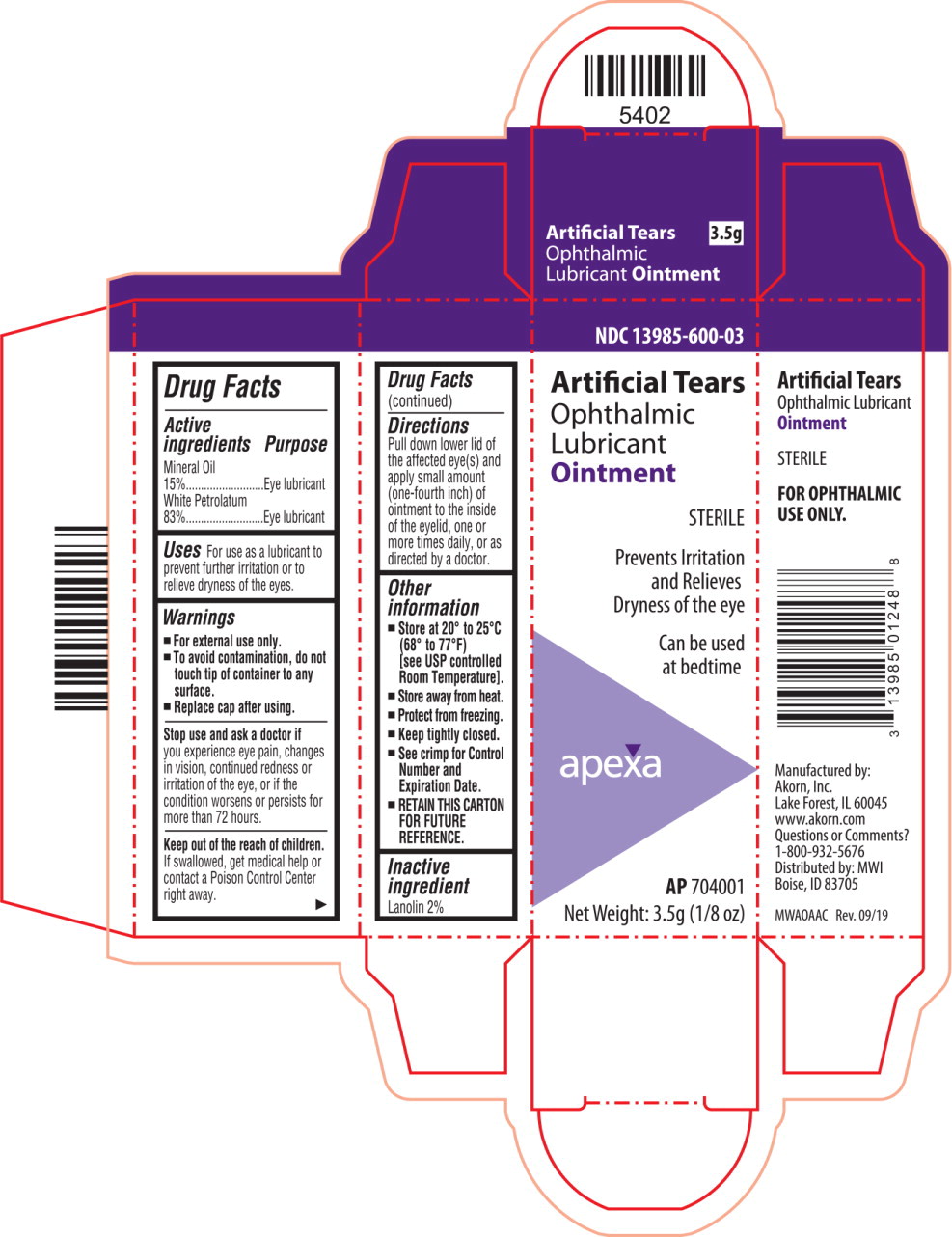
Art04 0003 01

Art04 0003 01
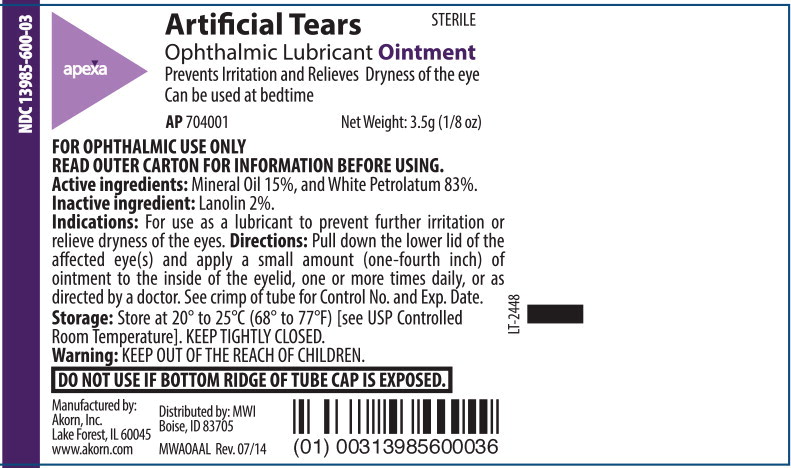
NDC 13985-600-03 is a Sterile Ophthalmic Lubricant Ointment that prevents irritation and relieves dryness of the eye. It contains active ingredients like Mineral Oil 15% and White Petrolatum 83%, and an inactive ingredient Lanolin 2%. It can be applied one or more times daily to prevent irritation and dryness of the eyes. The ointment packed in a crimp cgltube has control no. and Exp. date mentioned. The ointment tube should be stored at 20° to 25°C (68° to 77°F) and it is recommended to read the outer carton for information before using. KEEP OUT OF REACH FROM CHILDREN.*
FDA Label Image

Art04 0003 02

Art04 0003 02
Artificial Tears Ophthalmic Lubricant Ointment is a drug used for ophthalmic purposes. It comes in a packaging of net weight 3.59 (1/8 oz) and is manufactured by Akorn, Inc. The core active ingredients include mineral oil and white petrolatum. The product is for external use only and should not be touched to any surface to avoid contamination. It should be stored away from heat and must be protected from freezing. If the condition worsens or persists for more than 72 hours, or if any eye pain, changes in vision, or continued redness or irritation is experienced, users are recommended to stop usage and consult a doctor. If swallowed, contact the poison control center immediately.*

* These product label images have been analyzed using experimental machine learning. Please verify findings with the primary label text.