Anua Zero-cast Moisturizing Finish Sunscreen Spf 50 Lotion
Product Images NDC 14268-169

View Photos of Packaging, Regulatory Labels, and Product Appearance

Product Visual Gallery

This gallery contains 2 technical images submitted to the FDA as part of the official labeling for Anua Zero-cast Moisturizing Finish Sunscreen Spf 50 (NDC 14268-169). Unlike standard consumer photos, these assets often include clinical data figures, molecular chemical structures, and official manufacturer packaging layouts.

As provided by Englewood Lab, Inc., these visuals offer a comprehensive scientific overview of the product's physical and chemical identity, aiding pharmacists and researchers in product verification and study.

Product Images & Figures Index

FDA Label Image

Label (Label)

Label (Label)
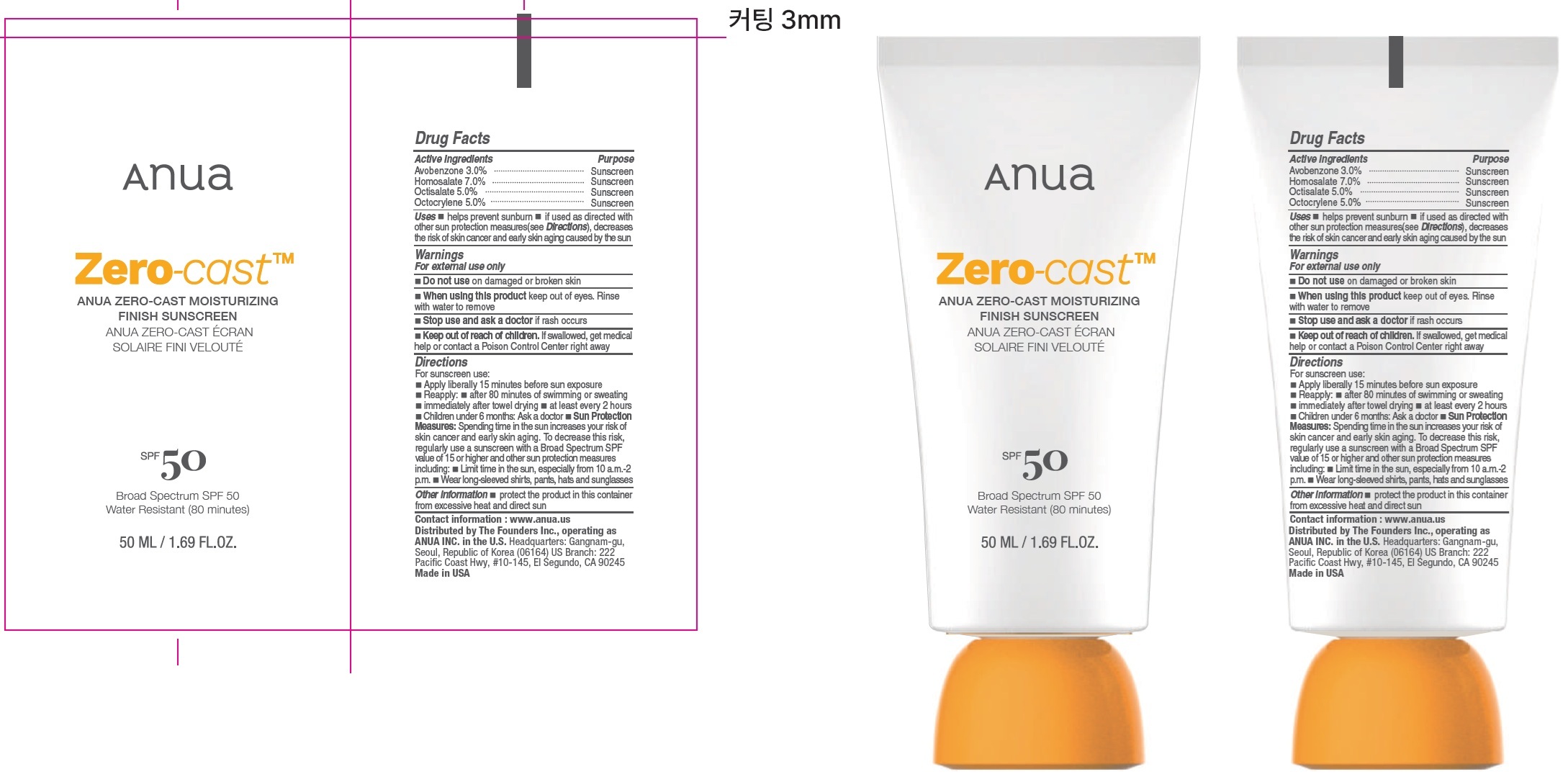
This is a description of ANUA ZERO-CAST MOISTURIZING FINISH SUNSCREEN with SPF 50. It is a broad-spectrum sunscreen that is water-resistant for up to 80 minutes. The drug facts provided include information on how to prevent sunburn, skin cancer, and early aging. The product should be applied liberally 15 minutes before sun exposure and reapplied after swimming, sweating, or towel drying. It is important to protect the product from excessive heat and direct sun. For any inquiries, contact +1-888-699-0083. The sunscreen is manufactured by Englewood Lab, Inc. and distributed by The Founders Inc. under the name ANUA INC. in the US.*
FDA Label Image

Label2 (Label2)

Label2 (Label2)
The ANUA ZERO-CAST Moisturizing Finish Sunscreen with SPF 50 is a water-resistant broad-spectrum sunscreen that helps in preventing sunburn and reducing the risk of skin cancer and premature skin aging. This sunscreen contains active ingredients like Avobenzone, Homosalate, Octisalate, and Octocrylene. It is recommended to apply liberally 15 minutes before sun exposure and reapply every 2 hours for optimal protection. The product is made in the USA and distributed by ANUA INC. For more information, visit www.anua.us.*

* These product label images have been analyzed using experimental machine learning. Please verify findings with the primary label text.