Pregabalin Capsule
Product Images NDC 14445-124

View Photos of Packaging, Regulatory Labels, and Product Appearance

Product Visual Gallery

This gallery contains 22 technical images submitted to the FDA as part of the official labeling for Pregabalin (NDC 14445-124). Unlike standard consumer photos, these assets often include clinical data figures, molecular chemical structures, and official manufacturer packaging layouts.

As provided by Indoco Remedies Limited, these visuals offer a comprehensive scientific overview of the product's physical and chemical identity, aiding pharmacists and researchers in product verification and study.

FDA Label Image

100mg-label (100mg Label)
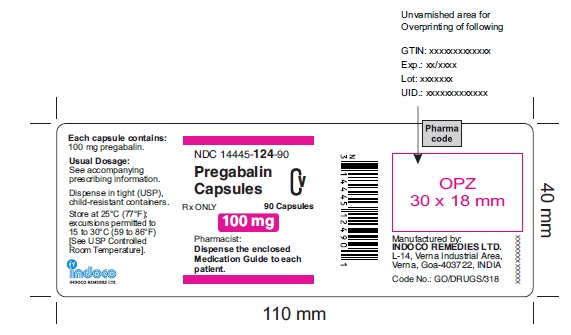
FDA Label Image

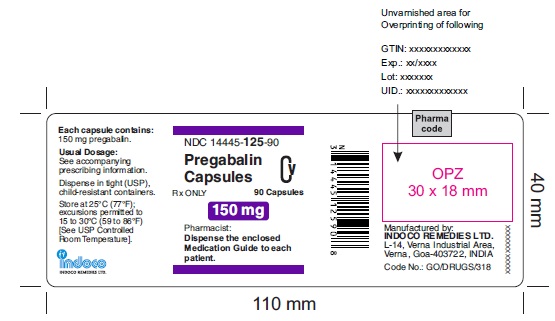
150mg-label (150mg Label)

FDA Label Image

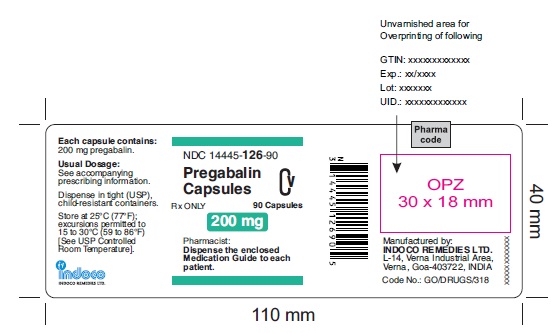
200mg-label (200mg Label)

200mg-label (200mg Label)
Not available.*
FDA Label Image

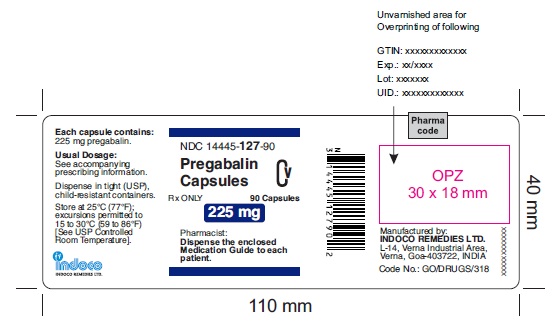
225mg-label (225mg Label)

FDA Label Image

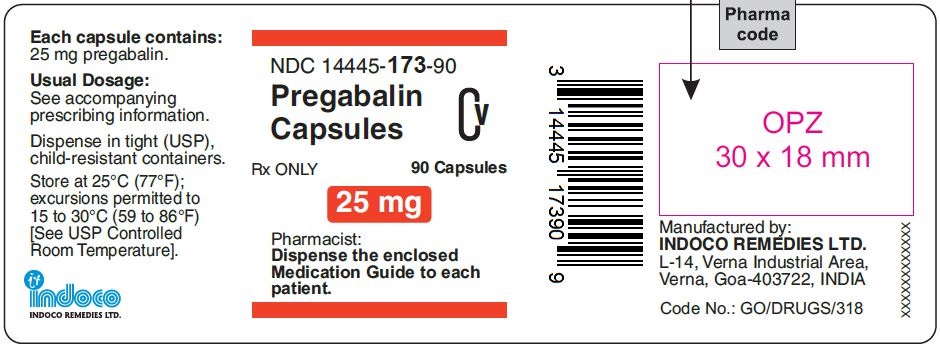
Container-label (25 mg 173)

Container-label (25 mg 173)
Each capsule contains 25 mg pregabalin. Usual Dosage: See accompanying prescribing information. Dispense in tight (USP), child-resistant containers. Store at 25°C (77°F); excursions permitted to 15 to 30°C (59 to 86°F) See USP Controlled Room Temperature. Pharmacist: Dispense the enclosed Medication Guide to each patient. NDC 14445-173-90 Pregabalin Capsules - Rx ONLY 90 Capsules. Manufactured by: INDOCO REMEDIES LTD. Visit the website for more details.*
FDA Label Image

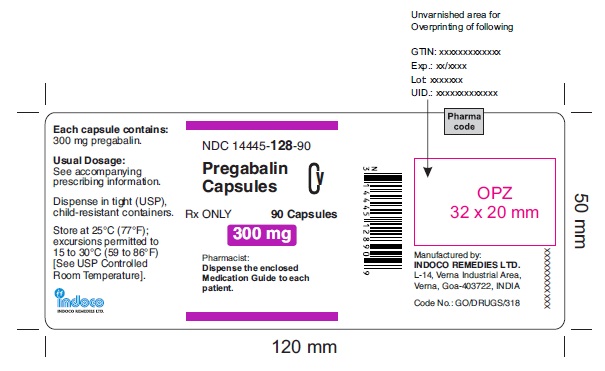
300mg-label (300mg Label)

FDA Label Image

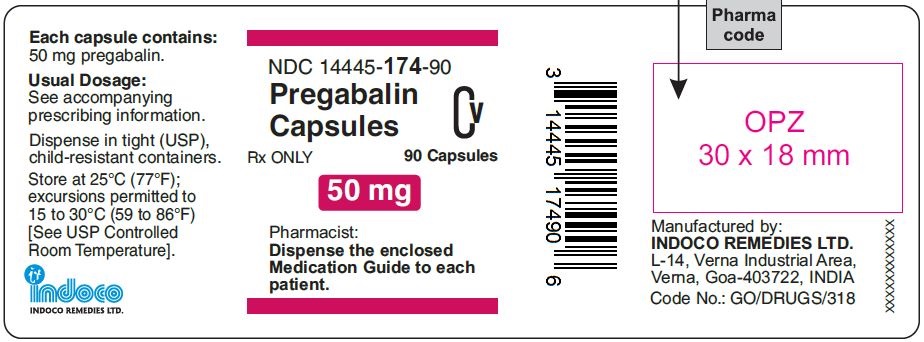
Container-label-50 (50 mg 174)

Container-label-50 (50 mg 174)
Each capsule contains 50 mg of pregabalin. The usual dosage information can be found in the accompanying prescribing information. These capsules should be dispensed in tight, child-resistant containers and stored at 25°C (77°F), with excursions permitted to 15-30°C (59-86°F). The medication guide should be dispensed to each patient. Manufactured by Indoco Remedies Ltd. in Goa, India.*
FDA Label Image

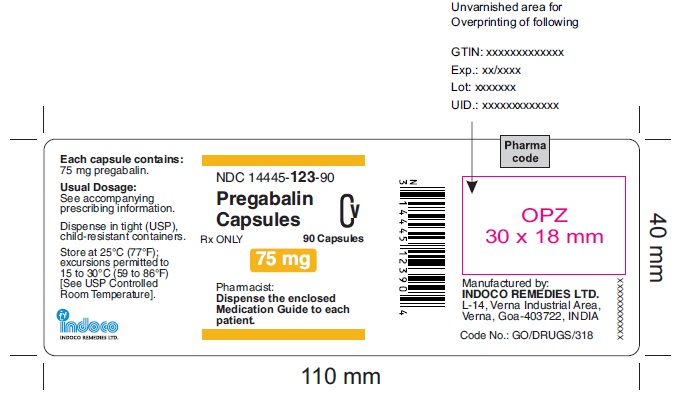
75mg-label (75mg Label)

75mg-label (75mg Label)
This text appears to be a label or package insert for a medication. It includes information such as the GTIN, expiration date, lot number, and a unique identifier code. The medication seems to be in capsule form with a recommended dosage. It emphasizes that the capsules should be stored in child-resistant containers. The text also mentions a medication guide for each patient. The address provided on the label is from Verna Industrial Area in Goa, India. Additionally, there is a code number indicated as GO/DRUGS/318.*
FDA Label Image

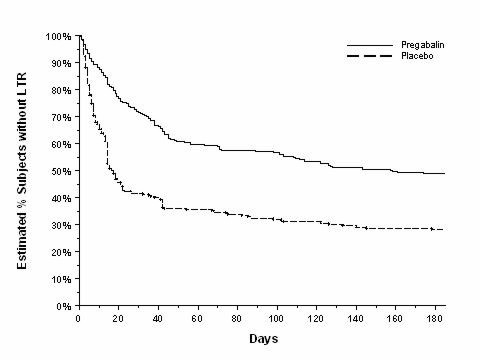
Fig 10 (Fig 10 Pregabalin)

Fig 10 (Fig 10 Pregabalin)
Not available.*
FDA Label Image

Fig-8 (Fig 8)

Fig-8 (Fig 8)
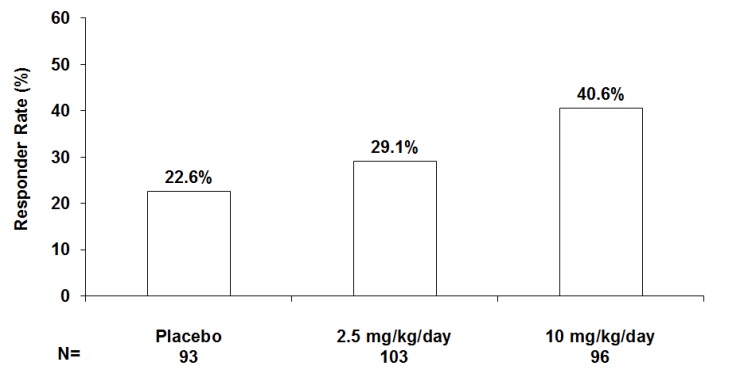
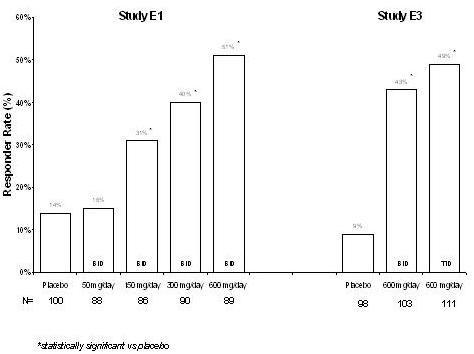
This document seems to include data related to responder rates for different doses or treatments. The rates are in percentages, with values of 40.6%, 29.1%, and 22.6% being mentioned. There is also a reference to a placebo treatment at doses of 2.5 mg/kg/day and 10 mg/kg/day. However, the meaning or context of the data is not entirely clear.*
FDA Label Image

Figure 2 (Figure2)

Figure 2 (Figure2)
Not available.*
FDA Label Image

Str (Pegabalin Str)

FDA Label Image

Fig 1 (Preagabalin Fig1)

Fig 1 (Preagabalin Fig1)
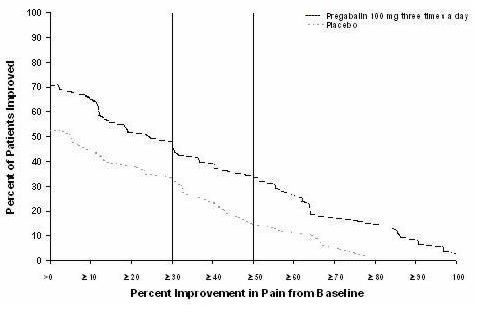
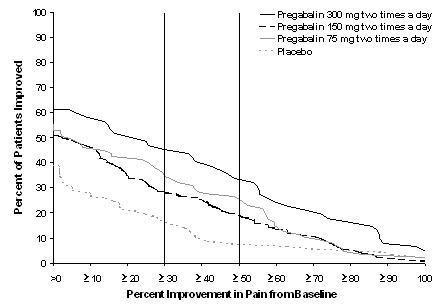
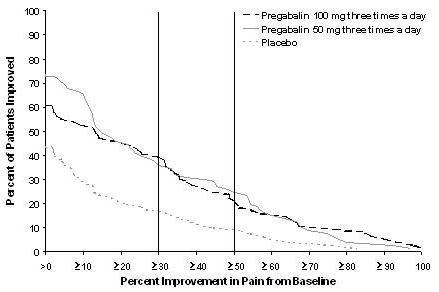
This text provides data on the percentage of patients who experienced improvement in pain levels compared to baseline. The chart displays a percentage improvement in pain levels with a specific mention of 10%. The information seems to be part of a wider analysis or study.*
FDA Label Image

Fig 11 (Preagabalin Fig10)

Fig 11 (Preagabalin Fig10)
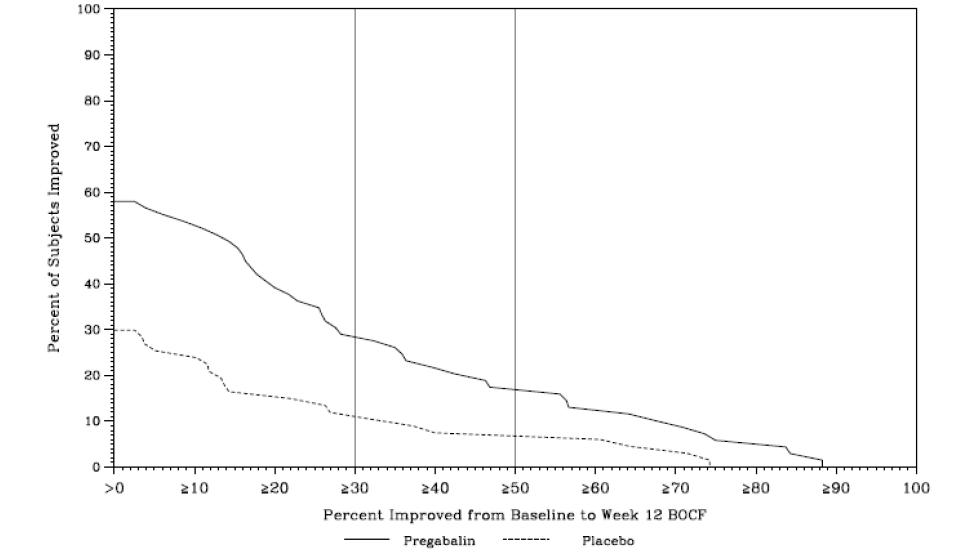
This text provides information on the percentage of subjects who improved on pregabalin and placebo from baseline to week 12 in a study. It shows the percentage improvement at different time points for each group.*
FDA Label Image

Fig 12 (Preagabalin Fig11)

Fig 12 (Preagabalin Fig11)
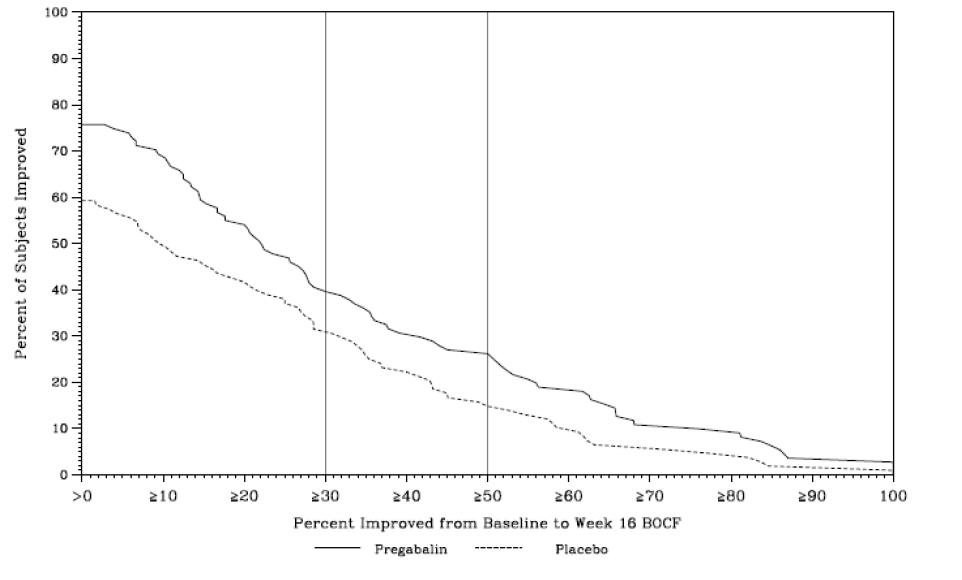
This data presents the percentage of subjects who showed improvement over a given period (from baseline to week 16 BOCF) when treated with Pregabalin and Placebo. The graph shows that 100% of subjects with Pregabalin improved, whereas Placebo shows a lower improvement percentage.*
FDA Label Image

Fig3 (Preagabalin Fig3)

FDA Label Image

Fig4 (Preagabalin Fig4)

Fig4 (Preagabalin Fig4)
Not available.*
FDA Label Image

Fig 5 (Preagabalin Fig5)

Fig 5 (Preagabalin Fig5)
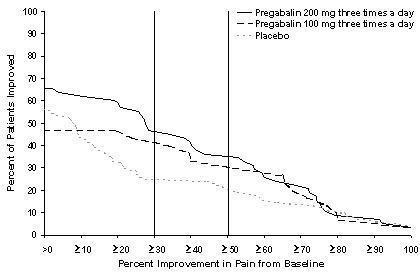
Percent of Patients Improved: This text provides information on the improvement in pain levels for patients taking Pregabalin at different dosages and frequencies. The data appears to compare the effectiveness of Pregabalin 100mg taken multiple times a day versus 0mg taken three times a day, with a reference to "Placata." Additional details may be included in the text, such as the percentage of improvement in pain from baseline, although the information is not fully clear due to the output.*
FDA Label Image

Figure6 (Preagabalin Fig6)

FDA Label Image

Fig 7 (Preagabalin Fig7)

FDA Label Image

Fig 9 (Preagabalin Fig8)

Fig 9 (Preagabalin Fig8)
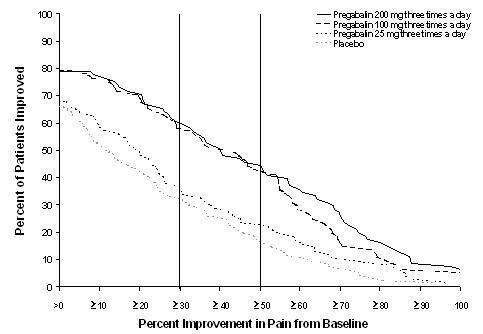
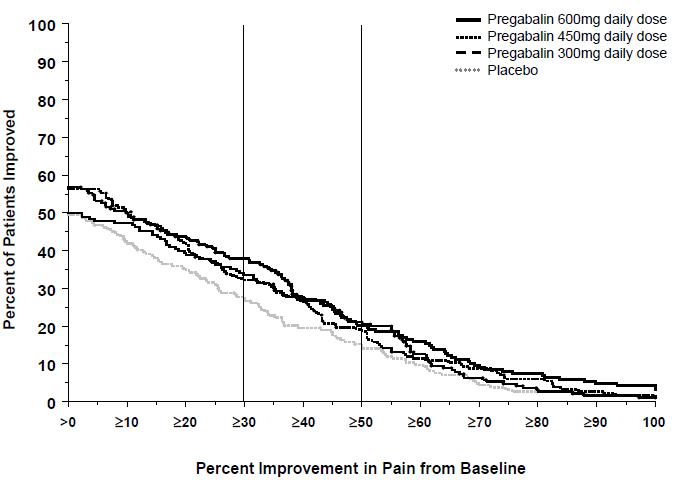
This text provides data on the percent of patients improved with different daily doses of Pregabalin as well as a placebo. The chart shows a comparison of the percentage improvement in pain from baseline for each dosage level. The highest improvement appears to be at a dose of 600mg daily.*
FDA Label Image

Eq (Pregabalin Eq)

Eq (Pregabalin Eq)
This text provides medical information related to a patient, including the weight, serum creatinine level, and reference range for female patients. It seems to be part of a clinical report or medical record.*

* These product label images have been analyzed using experimental machine learning. Please verify findings with the primary label text.