Apixaban Tablet, Film Coated
Product Images NDC 14445-149

View Photos of Packaging, Regulatory Labels, and Product Appearance

Product Visual Gallery

This gallery contains 14 technical images submitted to the FDA as part of the official labeling for Apixaban (NDC 14445-149). Unlike standard consumer photos, these assets often include clinical data figures, molecular chemical structures, and official manufacturer packaging layouts.

As provided by Indoco Remedies Limited, these visuals offer a comprehensive scientific overview of the product's physical and chemical identity, aiding pharmacists and researchers in product verification and study.

FDA Label Image

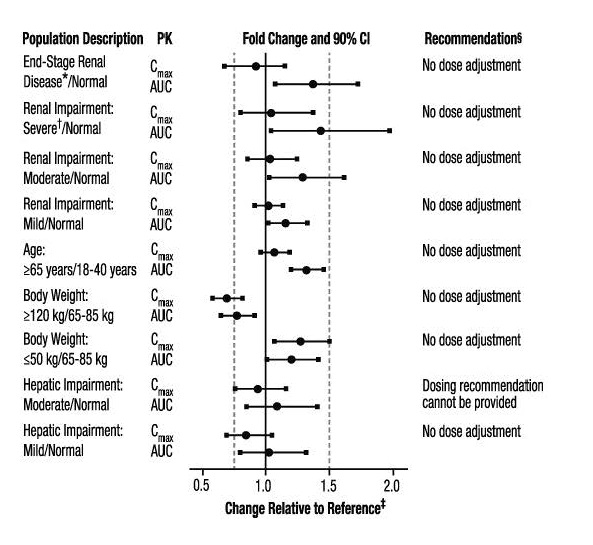
Fig3 (Fig3)

Fig3 (Fig3)
This is a table providing recommendations for dose adjustments of a medication based on various patient characteristics such as age, weight, renal and hepatic impairment, and disease status. The recommendations either suggest no dose adjustment is necessary or provide dosing recommendations based on the patient's characteristics.*
FDA Label Image

Str (Structure)

FDA Label Image

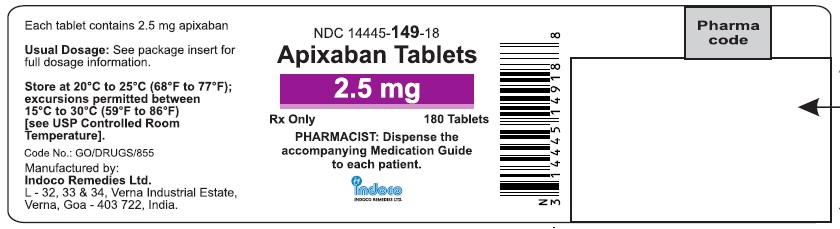
Apixaban-2.5-180 (Apixaban 2.5 180s)

Apixaban-2.5-180 (Apixaban 2.5 180s)
This text describes a medication called Apixaban Tablets. Each tablet contains 2.5 mg of the medication. The usual dosage information can be found in the package insert. The medication should be stored at a temperature between 20°C to 25°C (68°F to 77°F), with excursions permitted between 15°C to 30°C (59°F to 86°F). The product was manufactured by Indoco Remedies Ltd in Goa, India. The NDC number is 14445-149-18. The medication requires a prescription, and pharmacists should dispense a Medication Guide to each patient. There is also a Gode No. provided as GOIDRUGS/BS5.*
FDA Label Image

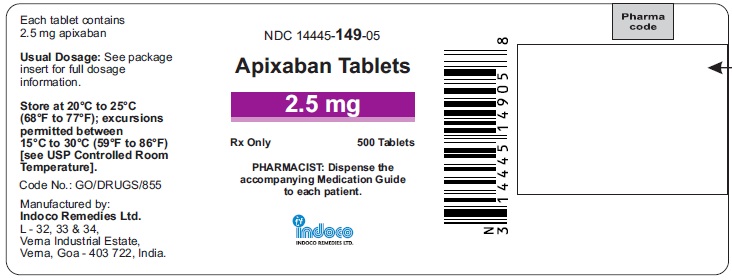
Apixaban-2.5-500 (Apixaban 2.5 500s)

Apixaban-2.5-500 (Apixaban 2.5 500s)
Apixaban Tablets contain 2.5mg of apixaban. The usual dosage information can be found in the package insert. Store the tablets at a temperature between 15°C to 30°C. The tablets are manufactured by Indoco Remedios Ltd. with the NDC 14445-149-05 and the code number GOIDRUGS/BE5. The medication guide should be dispensed to each patient by the pharmacist.*
FDA Label Image

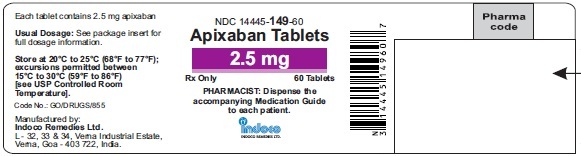
Apixaban-2.5-60 (Apixaban 2.5 60s)

Apixaban-2.5-60 (Apixaban 2.5 60s)
This appears to be a label for a prescription drug called Apixaban Tablets with a dosage of 2.5 g per package. The label also includes a product code and NDC number. However, some of the text is unclear or nonsensical, so the exact details are difficult to determine without additional context.*
FDA Label Image

Apixaban-2.5-carton (Apixaban 2.5 Carton)

FDA Label Image

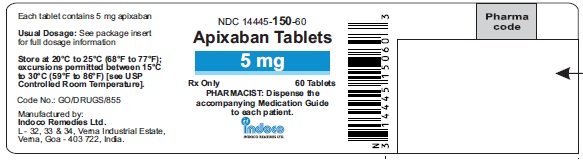
Apixaban-5mg-180 (Apixaban 5 180s)

FDA Label Image

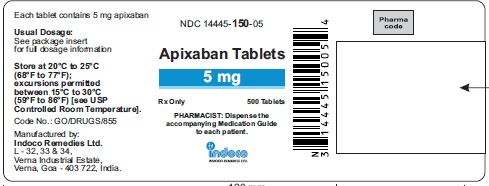
Apixaban-5mg-500 (Apixaban 5 500s)

FDA Label Image

Apixaban-5mg-60 (Apixaban 5 60s)

FDA Label Image

Apixaban-5mg-carton (Apixaban 5 Carton)

FDA Label Image

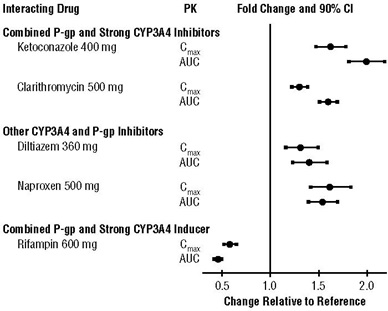
Fig2 (Fig2)

Fig2 (Fig2)
This appears to be a table or chart displaying the interaction between drug PK (pharmacokinetics) fold change and 90% confidence interval. The table shows the effects of different inhibitors and inducers on drug metabolism through P-gp and CYP3A4 enzymes. The drugs mentioned include Keloconazeie, Cliitiomycin, Diiazem, Haproxen, and Ritampin. The table also shows the change relative to reference at different time intervals.*
FDA Label Image

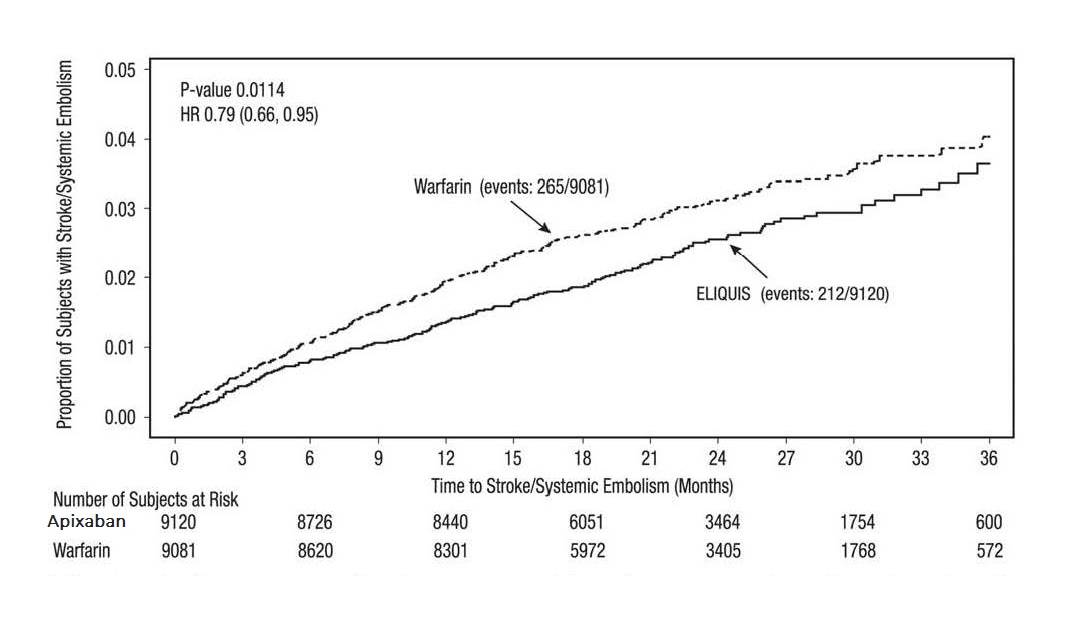
Fig4 (Fig4)

FDA Label Image

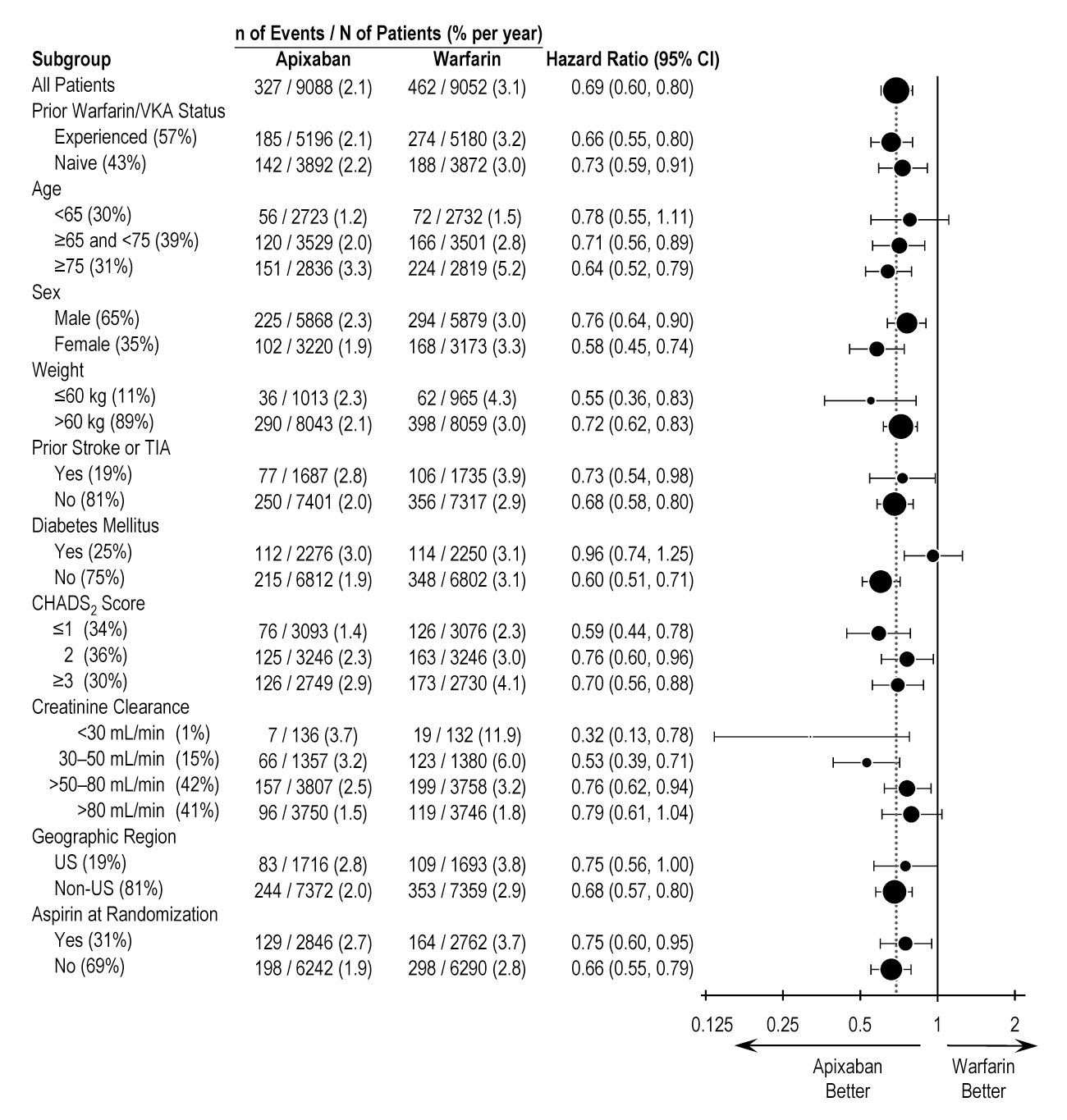
Fig5 (Fig5)

Fig5 (Fig5)
This text presents data from a study of patients grouped by prior warfarin/VKA status, age, sex, weight, prior stroke or TIA, diabetes mellitus, CHADS score, creatinine clearance, geographic region, and aspirin use. The study reports the number of events and patients for each group, expressed as events per year, and the hazard ratio with 95% confidence intervals. According to the hazard ratios, apixaban was found to be better for preventing events than warfarin for most of the studied groups.*
FDA Label Image

Figure1 (Figuere1)

Figure1 (Figuere1)
This data appears to be part of a clinical study or trial comparing the effectiveness of apixaban and warfarin for preventing stroke or TIA in patients with different demographic and health-related characteristics. The table includes information on the subgroup of patients studied, including prior warfarin/VKA status, age, sex, weight, prior stroke or TIA, diabetes mellitus, CHADS2 score, creatinine clearance, geographic region, and aspirin use at randomization. The table also provides the number of events (stroke or TIA) and the number of patients in each subgroup, as well as the hazard ratio and 95% confidence interval comparing the effectiveness of apixaban vs. warfarin. The last line suggests that overall, apixaban was found to be better than warfarin in preventing stroke or TIA.*

* These product label images have been analyzed using experimental machine learning. Please verify findings with the primary label text.