Where dose modification is necessary for the treatment of cervical dystonia, uncontrolled open-label studies suggest that dose adjustment can be made in 250 Unit steps according to the individual patient's response, with re-treatment every 12 weeks or longer, as necessary, based on return of clinical symptoms. Uncontrolled, open-label studies also suggest that the total dose administered in a single treatment should be between 250 Units and 1000 Units. Re-treatment, if needed, should not occur in intervals of less than 12 weeks. Doses above 1000 Units have not been systematically evaluated.
Glabellar facial lines arise from the activity of the lateral corrugator and vertical procerus muscles. These can be readily identified by palpating the tensed muscle mass while having the patient frown. The corrugator depresses the skin creating a "furrowed" vertical line surrounded by tensed muscle (i.e., frown lines). The location, size, and use of the muscles vary markedly among individuals. Physicians administering DYSPORT must understand the relevant neuromuscular and/or orbital anatomy of the area involved and any alterations to the anatomy due to prior surgical procedures.
Risk of ptosis can be mitigated by careful examination of the upper lid for separation or weakness of the levator palpebrae muscle (true ptosis), identification of lash ptosis, and evaluation of the range of lid excursion while manually depressing the frontalis to assess compensation.
In order to reduce the complication of ptosis, the following steps should be taken:
- Avoid injection near the levator palpebrae superioris, particularly in patients with larger brow depressor complexes.
- Medial corrugator injections should be placed at least 1 centimeter above the bony supraorbital ridge.
- Ensure the injected volume/dose is accurate and where feasible kept to a minimum.
- Do not inject toxin closer than 1 centimeter above the central eyebrow.
To inject DYSPORT, advance the needle through the skin into the underlying muscle while applying finger pressure on the superior medial orbital rim. Inject patients with a total of 50 Units in five equally divided aliquots. Using an appropriately sized needle, inject 10 Units of DYSPORT into each of five sites, two in each corrugator muscle, and one in the procerus muscle (see Figure 1).
Figure 1
Upper Limb Spasticity
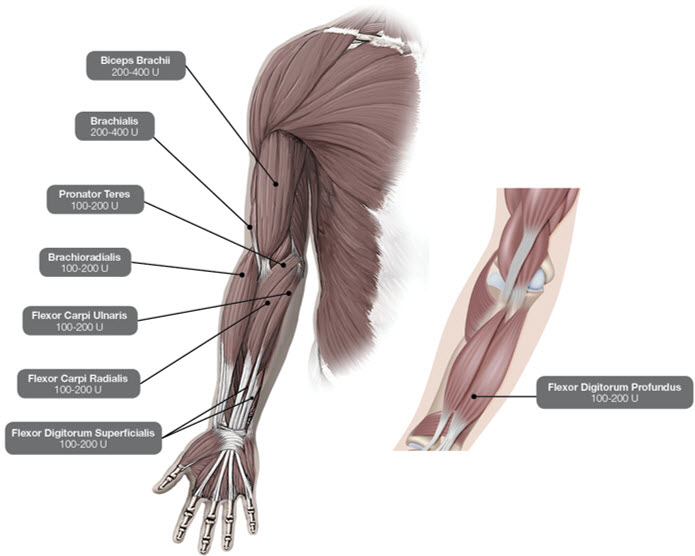
In the clinical trial that assessed the efficacy and safety of DYSPORT for treatment of upper limb spasticity in adults [see Clinical Studies (14.3)], doses of 500 Units and 1000 Units were divided among selected muscles at a given treatment session (see Table 3 and Figure 2).
Table 3: DYSPORT Dosing by Muscle for Upper Limb Spasticity in Adults| Muscles Injected | Recommended Dose DYSPORT | Recommended Number of Injection(s) per Muscle |
|---|
| Flexor carpi radialis (FCR) | 100 Units to 200 Units | 1 to 2 |
| Flexor carpi ulnaris (FCU) | 100 Units to 200 Units | 1 to 2 |
| Flexor digitorum profundus (FDP) | 100 Units to 200 Units | 1 to 2 |
| Flexor digitorum superficialis (FDS) | 100 Units to 200 Units | 1 to 2 |
| Brachialis | 200 Units to 400 Units | 1 to 2 |
| Brachioradialis | 100 Units to 200 Units | 1 to 2 |
| Biceps Brachii (BB) | 200 Units to 400 Units | 1 to 2 |
| Pronator Teres | 100 Units to 200 Units | 1 |
Figure 2: Muscles for Injection for Upper Limb Spasticity in Adults
Repeat DYSPORT treatment should be administered when the effect of a previous injection has diminished, but no sooner than 12 weeks after the previous injection. A majority of patients in clinical studies were retreated between 12-16 weeks; however some patients had a longer duration of response (i.e., 20 weeks). The degree and pattern of muscle spasticity at the time of re-injection may necessitate alterations in the dose of DYSPORT and muscles to be injected. Clinical improvement may be expected one week after administration of DYSPORT.
Lower Limb Spasticity
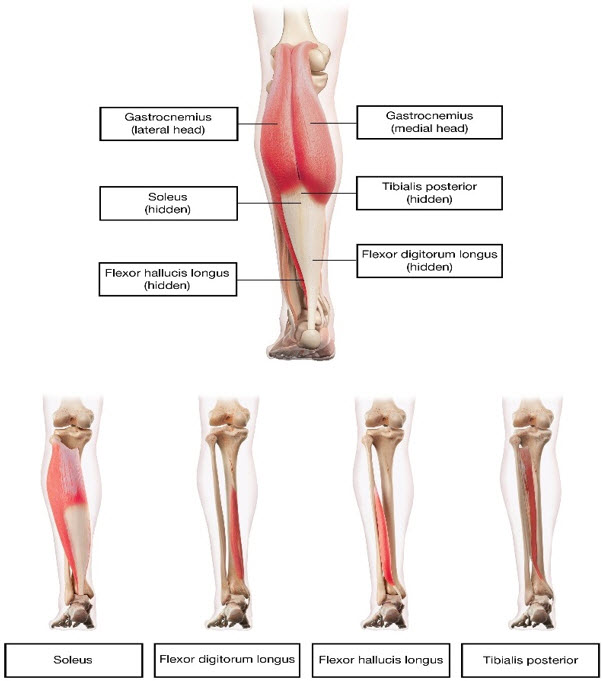
In the clinical trial that assessed the efficacy and safety of DYSPORT for treatment of lower limb spasticity in adults [see Clinical Studies (14.3)], doses of 1000 Units and 1500 Units were divided among selected muscles at a given treatment session (see Table 4 and Figure 3).
Table 4: DYSPORT Dosing by Muscle for Lower Limb Spasticity in Adults| Muscles Injected | Recommended DYSPORT Dose | Recommended Number of Injection Sites per Muscle |
|---|
| Distal Muscles | |
| Gastrocnemius | | |
| Medial head | 100 Units to 150 Units | 1 |
| Lateral head | 100 Units to 150 Units | 1 |
| Soleus | 330 Units to 500 Units | 3 |
| Tibialis posterior | 200 Units to 300 Units | 2 |
| Flexor digitorum longus | 130 Units to 200 Units | 1 to 2 |
| Flexor hallucis longus | 70 Units to 200 Units | 1 |
Figure 3: Muscles for Injection for Lower Limb Spasticity in Adults
Repeat DYSPORT treatment should be administered when the effect of a previous injection has diminished, but no sooner than 12 weeks after the previous injection. A majority of patients in clinical studies were retreated between 12-16 weeks. The degree and pattern of muscle spasticity at the time of re-injection may necessitate alterations in the dose of DYSPORT and muscles to be injected.
Upper Limb Spasticity in Pediatric Patients 2 Years of Age and Older
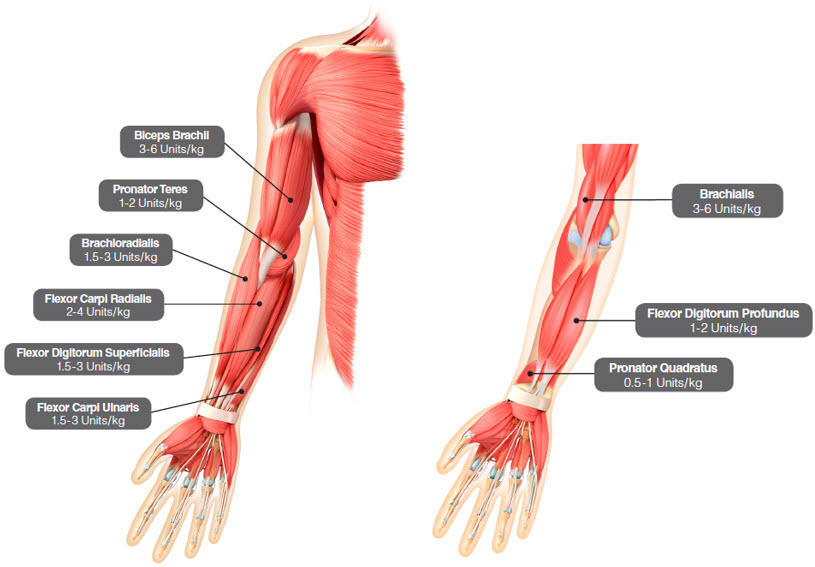
In the clinical trial that assessed the efficacy and safety of DYSPORT for treatment of upper limb spasticity in pediatric patients 2 years of age or older with a weight of at least 10 kg [see Clinical Studies (14.4)], doses of 8 Units/kg or 16 Units/kg were divided among selected muscles of the target upper limb at a given treatment session (see Table 5 and Figure 4).
Table 5 describes the recommended Units/kg dose of DYSPORT per muscle. The maximum recommended total dose of DYSPORT administered for treatment of upper limb spasticity must not exceed 16 Units/kg or 640 Units, whichever is lower.
Table 5: DYSPORT Dosing by Muscle for Upper Limb Spasticity in Pediatric Patients| Muscle | Recommended Dose Range
per muscle per upper limb
(Units/kg Body Weight) | Number of injection sites
per muscle |
|---|
| Brachialis | 3 Units/kg to 6 Units/kg | Up to 2 |
| Brachioradialis | 1.5 Units/kg to 3 Units/kg | 1 |
| Biceps brachii | 3 Units/kg to 6 Units/kg | Up to 2 |
| Pronator teres | 1 Units/kg to 2 Units/kg | 1 |
| Pronator quadratus | 0.5 Units/kg to 1 Units/kg | 1 |
| Flexor carpi radialis (FCR) | 2 Units/kg to 4 Units/kg | Up to 2 |
| Flexor carpi ulnaris (FCU) | 1.5 Units/kg to 3 Units/kg | 1 |
| Flexor digitorum profundus (FDP) | 1 Units/kg to 2 Units/kg | 1 |
| Flexor digitorum superficialis (FDS) | 1.5 Units/kg to 3 Units/kg | Up to 4 |
| Total dose | 8 Units/kg to 16 Units/kg in upper limbs (and not exceeding 640 Units) |
Figure 4: Muscles for Injection for Upper Limb Spasticity in Pediatric Patients
Repeat DYSPORT treatment should be administered when the effect of a previous injection has diminished but no sooner than 16 weeks after the previous injection. A majority of patients in the clinical study were retreated between 16-28 weeks; however, some patients had a longer duration of response (i.e., 34 weeks or more). The degree and pattern of muscle spasticity at the time of re-injection may necessitate alterations in the dose of DYSPORT and muscles to be injected.
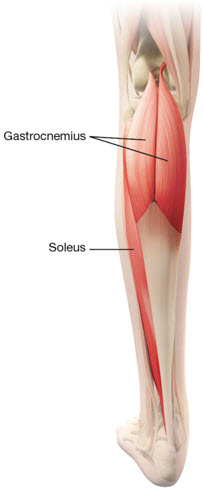
Lower Limb Spasticity in Pediatric Patients 2 Years of Age and Older In the clinical trial that assessed the efficacy and safety of DYSPORT for treatment of lower limb spasticity in pediatric patients 2 years of age or older [see Clinical Studies (14.4)], doses of 10 Units/kg to 15 Units/kg were divided among selected muscles of the target lower limb at a given treatment session (see Table 6 and Figure 5).
Table 6 describes the recommended Units/kg dose of DYSPORT per muscle of the Gastrocnemius-Soleus Complex (GSC). The recommended total DYSPORT dose per treatment session is 10 Units/kg to 15 Units/kg for unilateral lower limb injections or 20 Units/kg to 30 Units/kg for bilateral lower limb injections. However, the total dose of DYSPORT administered in a 3-month interval must not exceed 15 Units/kg for unilateral lower limb injections, 30 Units/kg for bilateral lower limb injections, or 1000 units, whichever is lower. The total dose administered should be divided between the affected spastic muscles of the lower limb(s). When possible, the dose should be distributed across more than 1 injection site in any single muscle (see Table 6).
Table 6: DYSPORT Dosing by Muscle for Lower Limb Spasticity in Pediatric Patients| Muscle Injected | Recommended DYSPORT Dose Range per muscle per leg (Units/kg Body Weight) | Recommended number of injections per muscle |
|---|
| Gastrocnemius | 6 Units/kg to 9 Units/kg the listed individual doses to be injected in the muscles can be used within the range mentioned without exceeding 15 Units/kg total dose for unilateral injection or 30 Units/kg for bilateral injections or 1000 Units whichever is lower. | Up to 4 |
| Soleus | 4 Units/kg to 6 Units/kg | Up to 2 |
| Total | 10 Units/kg to 15 Units/kg divided across both muscles | Up to 6 |
Figure 5: Muscles for Injection for Lower Limb Spasticity in Pediatric Patients
Although actual location of the injection sites can be determined by palpation, the use of injection guiding technique (e.g., electromyography or electrical stimulation, or ultrasound) is recommended to target the injection sites.
Repeat DYSPORT treatment should be administered when the effect of a previous injection has diminished but no sooner than 12 weeks after the previous injection. A majority of patients in the clinical studies were retreated between 16-22 weeks, however; some had a longer duration of response. The degree and pattern of muscle spasticity and overall clinical benefit at the time of re-injection may necessitate alterations in the dose of DYSPORT and muscles to be injected.
The safety and effectiveness of DYSPORT injected into proximal muscles of the lower limb for the treatment of spasticity in pediatric patients has not been established.
Cervical Dystonia
The data described below reflect exposure to DYSPORT in 446 cervical dystonia patients in 7 studies. Of these, two studies were randomized, double-blind, single treatment, placebo-controlled studies with subsequent optional open-label treatment in which dose optimization (250 to 1000 Units per treatment) over the course of 5 treatment cycles was allowed [see Clinical Studies (14.1)].
The population was almost entirely Caucasian (99%) with a median age of 51 years (range 18–82 years). Most patients (87%) were less than 65 years of age; 58.4% were women.
Common Adverse Reactions
The most commonly reported adverse reactions (occurring in 5% or more of patients who received 500 Units of DYSPORT in the placebo-controlled clinical trials) in cervical dystonia patients were: muscular weakness, dysphagia, dry mouth, injection site discomfort, fatigue, headache, musculoskeletal pain, dysphonia, injection site pain and eye disorders (consisting of blurred vision, diplopia, and reduced visual acuity and accommodation). Other than injection site reactions, most adverse reactions became noticeable about one week after treatment and lasted several weeks.
The rates of adverse reactions were higher in the combined controlled and open-label experience than in the placebo-controlled trials.
During the clinical studies, two patients (<1%) experienced adverse reactions leading to withdrawal. One patient experienced disturbance in attention, eyelid disorder, feeling abnormal and headache, and one patient experienced dysphagia.
Table 7 compares the incidence of the most frequent adverse reactions from a single treatment cycle of 500 Units of DYSPORT compared to placebo [see Clinical Studies (14.1)].
Table 7: Most Common Adverse Reactions (≥5%) and Greater than Placebo in the Pooled, Double-Blind, Placebo-Controlled Phase of Clinical Trials in Patients with Cervical Dystonia| Adverse Reactions | DYSPORT 500 Units
(N=173)
% | Placebo
(N=182)
% |
|---|
| Any Adverse Reaction | 61 | 51 |
|---|
| General disorders and administration site conditions | | |
| Injection site discomfort | 13 | 8 |
| Fatigue | 12 | 10 |
| Injection site pain | 5 | 4 |
| Musculoskeletal and connective tissue disorders | | |
| Muscular weakness | 16 | 4 |
| Musculoskeletal pain | 7 | 3 |
| Gastrointestinal disorders | | |
| Dysphagia | 15 | 4 |
| Dry mouth | 13 | 7 |
| Nervous system disorders | | |
| Headache | 11 | 9 |
| Respiratory, thoracic and mediastinal disorders | | |
| Dysphonia | 6 | 2 |
| Eye Disorders The following preferred terms were reported: vision blurred, diplopia, visual acuity reduced, eye pain, eyelid disorder, accommodation disorder, dry eye, eye pruritus. | 7 | 2 |
Dose-response relationships for common adverse reactions in a randomized multiple fixed-dose study in which the total dose was divided between two muscles (the sternocleidomastoid and splenius capitis) are shown in Table 8.
Table 8: Common Adverse Reactions by Dose in Fixed-Dose Study in Patients with Cervical Dystonia
Adverse Reactions | DYSPORT Dose |
|---|
250 Units
% | 500 Units
% | 1000 Units
% | Placebo
% |
|---|
| Any Adverse Reaction | 37 | 65 | 83 | 30 |
| Dysphagia | 21 | 29 | 39 | 5 |
| Dry Mouth | 21 | 18 | 39 | 10 |
| Muscular Weakness | 11 | 12 | 56 | 0 |
| Injection Site Discomfort | 5 | 18 | 22 | 10 |
| Dysphonia | 0 | 18 | 28 | 0 |
| Facial Paresis | 5 | 0 | 11 | 0 |
| Eye Disorders The following preferred terms were reported: vision blurred, diplopia, visual acuity reduced, eye pain, eyelid disorder, accommodation disorder, dry eye, eye pruritus. | 0 | 6 | 17 | 0 |
Injection Site Reactions
Injection site discomfort and injection site pain were common adverse reactions following DYSPORT administration.
Less Common Adverse Reactions
The following adverse reactions were reported less frequently (<5%).
Breathing Difficulty
Breathing difficulties were reported by approximately 3% of patients following DYSPORT administration and in 1% of placebo patients in clinical trials during the double-blind phase. These consisted mainly of dyspnea. The median time to onset from last dose of DYSPORT was approximately one week, and the median duration was approximately three weeks.
Other adverse reactions with incidences of less than 5% in the DYSPORT 500 Units group in the double-blind phase of clinical trials included dizziness in 3.5% of DYSPORT-treated patients and 1% of placebo-treated patients, and muscle atrophy in 1% of DYSPORT-treated patients and in none of the placebo-treated patients.
Laboratory Findings
Patients treated with DYSPORT exhibited a small increase from baseline (0.23 mol/L) in mean blood glucose relative to placebo-treated patients. This was not clinically significant among patients in the development program but could be a factor in patients whose diabetes is difficult to control.
Electrocardiographic Findings
ECG measurements were only recorded in a limited number of patients in an open-label study without a placebo or active control. This study showed a statistically significant reduction in heart rate compared to baseline, averaging about three beats per minute, observed thirty minutes after injection.
Glabellar Lines
In placebo-controlled clinical trials of DYSPORT, the most common adverse reactions (≥2%) following injection of DYSPORT were nasopharyngitis, headache, injection site pain, injection site reaction, upper respiratory tract infection, eyelid edema, eyelid ptosis, sinusitis, nausea, and blood present in urine.
Table 9 reflects exposure to DYSPORT in 398 patients 19 to 75 years of age who were evaluated in the randomized, placebo-controlled clinical studies that assessed the use of DYSPORT for the temporary improvement in the appearance of glabellar lines [see Clinical Studies (14.2)]. Adverse reactions of any cause occurred in 48% of the DYSPORT-treated patients and 33% of the placebo-treated patients.
Table 9: Most Common Adverse Reactions with > 1% Incidence in Pooled, Placebo-Controlled Trials for Glabellar Lines| Adverse Reactions by Body System | DYSPORT
(N=398)
%Patients who received treatment with placebo and DYSPORT are counted in both treatment columns. | Placebo
(N=496)
% |
|---|
| Any Adverse Reaction | 48 | 33 |
| Eye Disorders | | |
| Eyelid Edema | 2 | 0 |
| Eyelid Ptosis | 2 | <1 |
| Gastrointestinal Disorders | | |
| Nausea | 2 | 1 |
| General Disorders and Administration Site Conditions | | |
| Injection Site Pain | 3 | 2 |
| Injection Site Reaction | 3 | <1 |
| Infections and Infestations | | |
| Nasopharyngitis | 10 | 4 |
| Upper Respiratory Tract Infection | 3 | 2 |
| Sinusitis | 2 | 1 |
| Investigations | | |
| Blood Present in Urine | 2 | <1 |
| Nervous System Disorders | | |
| Headache | 9 | 5 |
In the clinical trials safety database, where some patients received up to twelve treatments with DYSPORT, adverse reactions were reported for 57% (1425/2491) of patients. The most frequently reported of these adverse reactions were headache, nasopharyngitis, injection site pain, sinusitis, URI, injection site bruising, and injection site reaction (numbness, discomfort, erythema, tenderness, tingling, itching, stinging, warmth, irritation, tightness, swelling).
Adverse reactions that occurred after repeated injections in 2–3% of the population included bronchitis, influenza, pharyngolaryngeal pain, cough, contact dermatitis, injection site swelling, and injection site discomfort.
The incidence of eyelid ptosis did not increase in the long-term safety studies with multiple re-treatments at intervals ≥ three months. The majority of the reports of eyelid ptosis were mild to moderate in severity and resolved over several weeks [see Dosage and Administration (2.4)].
Spasticity in Adults
Injection Site Reactions
Injection site reactions (e.g., pain, bruising, hemorrhage, erythema/hematoma, etc.) have occurred following administration of DYSPORT in adults treated for spasticity.
Upper Limb Spasticity in Adults
Table 10 lists the adverse reactions that occurred in ≥2% of patients in any DYSPORT dose group and more frequent than placebo in double-blind studies evaluating the treatment of upper limb spasticity in adults. The most common adverse reactions (≥4%) in any DYSPORT dose group was muscular weakness.
Table 10: Most Common Adverse Reactions Observed in at Least 2% of Patients Treated in Pooled, Double-Blind Trials of Adults with Upper Limb Spasticity Reported More Frequently than with Placebo | DYSPORT | Placebo |
|---|
| Adverse Reactions | 500 Units
(N=197)
% | 1000 Units
(N=194)
% |
(N=279)
% |
|---|
| Infections and infestations | | | |
| Influenza | 1 | 2 | 1 |
| Infection | 1 | 2 | 1 |
| Musculoskeletal and connective tissue disorders | | | |
| Muscular weakness | 2 | 4 | 1 |
| Pain in extremity | 0 | 2 | 1 |
| Back pain | 1 | 2 | 1 |
| Nervous system disorders | | | |
| Headache | 1 | 2 | 1 |
| Convulsion | 2 | 2 | 1 |
| Syncope | 1 | 2 | 0 |
| Hypoesthesia | 0 | 2 | <1 |
| Partial seizures | 0 | 2 | 0 |
| General disorders and administration site conditions | | | |
| Fatigue | 2 | 2 | 0 |
| Asthenia | 2 | 1 | <1 |
| Injury, poisoning and procedural complications | | | |
| Fall | 2 | 3 | 2 |
| Injury | 2 | 2 | 1 |
| Contusion | 1 | 2 | <1 |
| Gastrointestinal disorders | | | |
| Diarrhea | 1 | 2 | <1 |
| Constipation | 0 | 2 | 1 |
| Investigation | | | |
| Blood triglycerides increased | 2 | 1 | 0 |
| Respiratory, thoracic and mediastinal disorders | | | |
| Cough | 1 | 2 | 1 |
| Vascular disorders | | | |
| Hypertension | 1 | 2 | <1 |
| Psychiatric disorders | | | |
| Depression | 2 | 3 | 1 |
Less Common Adverse Reactions
In a pooled analysis of clinical studies, adverse reactions with an incidence of less than 2% reported in DYSPORT treatment groups included dysphagia 0.5%, gait disturbance 0.5%, hypertonia 0.5%, and sensation of heaviness 0.3%.
Lower Limb Spasticity in Adults
The data described below reflect exposure to DYSPORT in 255 adults with lower limb spasticity. Of this population, 89% were Caucasian, 66% male, and the median age was 55 years (range 23–77 years). Table 11 lists the adverse reactions that occurred in ≥2% of patients in any DYSPORT dose group and more frequent than placebo in the double-blind study evaluating the treatment of lower limb spasticity in adults. The most common of these adverse reactions (≥5%) in any DYSPORT dose group were falls, muscular weakness, and pain in extremity.
Table 11: Adverse Reactions Observed in at Least 2% of Patients Treated in the Double-Blind Trial of Adults with Lower Limb Spasticity and Reported More Frequently than with Placebo| Adverse Reactions | DYSPORT 1000 U
(N=127)
% | DYSPORT 1500 U (N=128)
% | Placebo
(N=130)
% |
|---|
| Musculoskeletal and connective tissue disorders | | | |
| Muscular weakness | 2 | 7 | 3 |
| Pain in extremity | 6 | 6 | 2 |
| Arthralgia | 4 | 2 | 1 |
| Injury, poisoning and procedural complications | | | |
| Fall | 9 | 6 | 3 |
| Nervous system disorders | | | |
| Headache | 0 | 3 | 1 |
| General disorders and administration site conditions | | | |
| Fatigue | 1 | 4 | 0 |
| Influenza-like illness | 2 | 0 | 0 |
| Edema peripheral | 2 | 0 | 0 |
| Investigations | | | |
| Alanine aminotransferase increased | 2 | 0 | 1 |
| Gastrointestinal disorders | | | |
| Constipation | 0 | 2 | 1 |
| Psychiatric disorders | | | |
| Depression | 2 | 3 | 0 |
| Insomnia | 0 | 2 | 0 |
In the efficacy and safety studies of DYSPORT for the treatment of lower limb spasticity in adults, muscular weakness was reported more frequently in women (10%) treated with 1500 units of DYSPORT compared to men (5%). Falls were reported more frequently in patients 65 years of age and over [see Use in Specific Populations (8.5)].
Upper Limb Spasticity in Pediatric Patients
Table 12 reflects exposure to DYSPORT in 210 patients, 2 to 17 years of age, who were evaluated in a double blind, active-controlled, multicenter study in patients treated for upper limb spasticity [see Clinical Studies (14.4)]. The most commonly observed adverse reactions (≥10% of patients) were: upper respiratory tract infection and pharyngitis.
Table 12: Adverse Reactions Observed in ≥ 3% of Patients Treated in Double-Blind Study of Pediatric Patients with Upper Limb Spasticity and Reported More Frequently than Control Group| Adverse Reactions | DYSPORT 2 Units/kg Low dose active comparator arm
(N=70)
% | DYSPORT 8 Units/kg
(N=70)
% | DYSPORT 16 Units/kg
(N=70)
% |
|---|
| Infections and infestations | | | |
| Upper respiratory tract infection | 7 | 9 | 11 |
| Influenza | 1 | 1 | 3 |
| Pharyngitis includes pharyngitis, pharyngitis streptococcal, pharyngotonsillitis | 9 | 6 | 10 |
| Gastrointestinal disorders | | | |
| Nausea | 0 | 3 | 1 |
| Musculoskeletal and connective tissue disorders | | | |
| Muscular weakness | 1 | 4 | 6 |
| Nervous system disorders | | | |
| Headache | 0 | 6 | 3 |
| Epilepsy | 1 | 0 | 4 |
Additional adverse reactions occurring below 3% and considered to be drug related include: myalgia, pain in extremity, fatigue, influenza-like illness, injection site eczema, injection site bruising, injection site rash, injection site pain, and injection site swelling.
Lower Limb Spasticity in Pediatric Patients
Table 13 reflects exposure to DYSPORT in 160 patients, 2 to 17 years of age, who were evaluated in the randomized, placebo-controlled clinical study that assessed the use of DYSPORT for the treatment of unilateral or bilateral lower limb spasticity in pediatric cerebral palsy patients [see Clinical Studies (14.4)]. The most commonly observed adverse reactions (≥10% of patients) were: upper respiratory tract infection, nasopharyngitis, influenza, pharyngitis, cough and pyrexia.
Table 13: Adverse Reactions Observed in ≥ 4% of Patients Treated in the Double-Blind Trial of Pediatric Patients with Lower Limb Spasticity and Reported More Frequently than with Placebo| Adverse Reactions | Unilateral | Bilateral | |
|---|
DYSPORT
10 Units/kg
(N=43)
% | DYSPORT
15 Units/kg
(N=50)
% | DYSPORT
20 Units/kg
(N=37)
% | DYSPORT
30 Units/kg
(N=30)
% | Placebo
(N=79)
% |
|---|
| Infections and infestations |
| Nasopharyngitis | 9 | 12 | 16 | 10 | 5 |
| Bronchitis | 0 | 0 | 8 | 7 | 3 |
| Respiratory, thoracic and mediastinal disorders |
| Cough | 7 | 6 | 14 | 10 | 6 |
| General disorders and administration site conditions |
| Pyrexia | 7 | 12 | 8 | 7 | 5 |
| Musculoskeletal and connective tissue disorders |
| Pain in extremity | 0 | 2 | 5 | 7 | 5 |
| Nervous system disorders |
| Convulsion/Epilepsy | 7 | 4 | 0 | 7 | 0 |
Cervical Dystonia
About 3% of subjects developed antibodies (binding or neutralizing) over time with DYSPORT treatment.
Glabellar Lines
Testing for antibodies to DYSPORT was performed for 1554 subjects who had up to nine cycles of treatment. Two subjects (0.13%) tested positive for binding antibodies at baseline. Three additional subjects tested positive for binding antibodies after receiving DYSPORT treatment. None of the subjects tested positive for neutralizing antibodies.
Spasticity in Adults
Upper Limb Spasticity
From 230 subjects treated with DYSPORT and tested for the presence of binding antibodies, 5 subjects were positive at baseline and 17 developed antibodies after treatment. Among those 17 subjects, 10 subjects developed neutralizing antibodies. An additional 51 subjects from a separate repeat-dose study were tested for the presence of neutralizing antibodies only. None of the subjects tested positive.
In total, from the 281 subjects treated in the long-term studies and tested for the presence of neutralizing antibodies, 3.6% developed neutralizing antibodies after treatment. In the presence of binding and neutralizing antibodies to DYSPORT some patients continued to experience clinical benefit.
Lower Limb Spasticity
From 367 subjects treated with DYSPORT and tested for the presence of binding antibodies, 4 subjects were positive at baseline and 2 developed binding antibodies after treatment. No subjects developed neutralizing antibodies. An additional 85 subjects from two separate studies were tested for the presence of neutralizing antibodies only. One subject tested positive for the presence of neutralizing antibodies.
In total, from the 452 subjects treated with DYSPORT and tested for the presence of neutralizing antibodies, 0.2% developed neutralizing antibodies after treatment.
Spasticity in Pediatric Patients 2 Years of Age and Older
Upper Limb Spasticity
From 178 subjects treated with DYSPORT for up to 4 treatment cycles and tested for the presence of binding antibodies at baseline and end of study, 7 subjects previously receiving botulinum toxin injections had binding antibodies after treatment. Among those 7 subjects, 4 subjects (2.3%) developed neutralizing antibodies when tested in the mice bioassay. In the presence of binding and/or neutralizing antibodies to DYSPORT some patients continue to experience clinical benefit.
Lower Limb Spasticity
From 226 subjects treated with DYSPORT and tested for the presence of binding antibodies, 5 subjects previously receiving botulinum toxins were positive at baseline and 9 patients developed binding antibodies after injections. Among those 9 subjects, 3 subjects developed neutralizing antibodies, while one subject developed neutralizing antibodies from the 5 subjects testing positive for binding antibodies at baseline who previously received botulinum toxin injections.
From a separate repeat-dose study, 203 subjects were tested for the presence of neutralizing antibodies. Two subjects were positive for neutralizing antibodies at baseline and 5 subjects developed neutralizing antibodies after treatments. In total, from the 429 patients tested for the presence of neutralizing antibodies, 2.1% developed neutralizing antibodies after treatment. In the presence of binding and neutralizing antibodies to DYSPORT, some patients continued to experience clinical benefit.
Risk Summary
There are no adequate and well-controlled clinical studies with DYSPORT in pregnant women.
DYSPORT should only be used during pregnancy if the potential benefit justifies the potential risk to the fetus.
DYSPORT produced embryo-fetal toxicity in relation to maternal toxicity when given to pregnant rats and rabbits at doses lower than or similar to the maximum recommended human dose (MRHD) of 1000 Units on a body weight (Units/kg) basis (see Data).
In the U.S. general population, the estimated background risk of major birth defects and miscarriage in clinically recognized pregnancies is 2-4% and 15-20%, respectively. The background risk of major birth defects and miscarriage for the indicated populations is unknown.
Data
Animal Data
In a study in which pregnant rats received daily intramuscular injections of DYSPORT (2.2, 6.6, or 22 Units/kg on gestation days 6 through 17 or intermittently 44 Units/kg on gestation days 6 and 12 only) during organogenesis, increased early embryonic death was observed with both schedules at the highest tested doses (22 and 44 Units/kg), which were associated with maternal toxicity. The no-effect dose for embryo-fetal developmental toxicity was 2.2 Units/kg (less than the maximum recommended human dose [MRHD] on a body weight basis).
In a study in which pregnant rabbits received daily intramuscular injections of DYSPORT (0.3, 3.3, or 6.7 Units/kg) on gestation days 6 through 19 or intermittently (13.3 Units/kg on gestation days 6 and 13 only) during organogenesis, no embryofetal data were available at the highest dose administered daily (6.7 Units/kg) because of premature death in all doses at that dose. At the lower daily doses or with intermittent dosing, no adverse developmental effects were observed. All doses for which data were available are less than the MRHD on a body weight basis.
In a study in which pregnant rats received 6 weekly intramuscular injections of DYSPORT (4.4, 11.1, 22.2, or 44 Units/kg) beginning on day 6 of gestation and continuing through parturition to weaning, an increase in stillbirths was observed at the highest dose tested, which was maternally toxic. The no-effect dose for pre- and post-natal developmental toxicity was 22.2 Units/kg (similar to the MRHD).
Risk Summary
There are no data on the presence of DYSPORT in human or animal milk, the effects on the breastfed infant, or the effects on milk production.
The developmental and health benefits of breastfeeding should be considered along with the mother's clinical need for DYSPORT and any potential adverse effects on the breastfed infant from DYSPORT or from the underlying maternal condition.
Infertility
In rats, DYSPORT produced adverse effects on mating behavior and fertility [see Nonclinical Toxicology (13.1)].
Cervical Dystonia
Safety and effectiveness in pediatric patients have not been established [see Boxed Warning and Warnings and Precautions (5.2)].
Glabellar Lines
DYSPORT is not recommended for use in pediatric patients less than 18 years of age.
Spasticity
Safety and effectiveness have been established in pediatric patients 2 years of age and older [see Warnings and Precautions (5.1), Adverse Reactions (6.1), and Clinical Studies (14.4)]. The safety and effectiveness of DYSPORT have been established by evidence from adequate and well-controlled studies of DYSPORT in patients 2 years of age and older with upper and lower limb spasticity. The safety and effectiveness of DYSPORT injected into proximal muscles of the lower limb for the treatment of spasticity in pediatric patients has not been established [see Boxed Warning, Warnings and Precautions (5.2) and Adverse Reactions (6.1)].
Safety and effectiveness in pediatric patients below the age of 2 years have not been established [see Boxed Warning and Warnings and Precautions (5.2)].
Juvenile Animal Data
In a study in which juvenile rats received a single intramuscular injection of DYSPORT (1, 3, or 10 Units/animal) on postnatal day 21, decreased growth and bone length (injected and contralateral limbs), delayed sexual maturation, and decreased fertility were observed at the highest dose tested, which was associated with excessive toxicity during the first week after dosing.
In a study in which juvenile rats received weekly intramuscular injections of DYSPORT (0.1, 0.3, or 1.0 Units/animal) from postnatal day 21 to 13 weeks of age, decreases in bone mineral content in the injected limb, associated with atrophy of injected and adjacent muscles, were observed at the highest dose tested. No adverse effects were observed on neurobehavioral development. However, dose levels were not adjusted for growth of the pups. On a body weight basis, the doses at the end of the dosing period were approximately 15% of those at initiation of dosing. Therefore, the effects of DYSPORT throughout postnatal development were not adequately evaluated.
Cervical Dystonia
There were insufficient numbers of patients aged 65 years and over in the clinical studies to determine whether they respond differently than younger patients. In general, elderly patients should be observed to evaluate their tolerability of DYSPORT, due to the greater frequency of concomitant disease and other drug therapy [see Dosage and Administration (2.3)].
Glabellar Lines
Of the total number of subjects in the placebo-controlled clinical studies of DYSPORT, 8 (1%) were 65 years and over. Efficacy was not observed in subjects aged 65 years and over [see Clinical Studies (14.2)]. For the entire safety database of geriatric subjects, although there was no increase in the incidence of eyelid ptosis, geriatric subjects did have an increase in the number of ocular adverse reactions compared to younger subjects (11% vs. 5%) [see Dosage and Administration (2.4)].
Adult Spasticity
Upper Limb Spasticity
Of the total number of subjects in placebo-controlled clinical studies of DYSPORT, 30 percent were aged 65 years and over, while 8 percent were aged 75 years and over. No overall differences in safety or effectiveness were observed between these subjects and younger subjects. Other reported clinical experience has not identified differences in responses between the elderly and younger patients, but greater sensitivity of some older individuals cannot be ruled out.
Lower Limb Spasticity
Of the total number of subjects in placebo controlled clinical studies of DYSPORT, 18% (n = 115) were 65 and over, while 3% (n = 20) were 75 and over. Subjects aged 65 years and over who were treated with DYSPORT reported a greater percentage of adverse reactions as compared to younger subjects (46% versus 39%). Fall and asthenia were observed with greater frequency in older subjects, as compared to those younger (10% versus 6% and 4% versus 2%, respectively).
Carcinogenesis
Studies to evaluate the carcinogenic potential of DYSPORT have not been conducted.
Mutagenesis
Genotoxicity studies have not been conducted for DYSPORT.
Impairment of Fertility
In a fertility and early embryonic development study in rats in which either males (2.9, 7.2, 14.5 or 29 Units/kg) or females (7.4, 19.7, 39.4 or 78.8 Units/kg) received weekly intramuscular injections prior to and after mating, dose-related increases in pre-implantation loss and reduced numbers of corpora lutea were noted in treated females. Failure to mate was observed in males that received the high dose. The no-effect dose for effects on fertility was 7.4 Units/kg in females and 14.5 Units/kg in males (approximately one-half and equal to, respectively, the maximum recommended human dose of 1000 Units on a body weight basis).
Study GL-1
Study GL-1 was a single-dose, double-blind, multicenter, randomized, placebo-controlled study in which 158 previously untreated subjects received either placebo or 50 Units of DYSPORT, administered in five aliquots of 10 Units (see Figure 1). Subjects were followed for 180 days. The mean age was 43 years; most of the subjects were women (85%), and predominantly Caucasian (49%) or Hispanic (47%). At Day 30, 55% of DYSPORT-treated subjects achieved treatment success: a composite 2 grade improvement of glabellar line severity at maximum frown (see Table 16).
In study GL-1, the reduction of glabellar line severity at maximum frown was greater at Day 30 in the DYSPORT group compared to the placebo group as assessed by both Investigators and subjects (see Table 17).
Table 17: GL-1: Investigators' and Subjects' Assessment of Glabellar Line Severity at Maximum Frown Using a 4-point Scale (% and Number of Subjects with Severity of None or Mild) | Investigators' Assessment | Subjects' Assessment |
|---|
| Day | DYSPORT
N=105 | Placebo
N=53 | DYSPORT
N=105 | Placebo
N=53 |
|---|
| 14 | 90%
95 | 17%
9 | 77%
81 | 9%
5 |
| 30 | 88%
92 | 4%
2 | 74%
78 | 9%
5 |
| 60 | 64%
67 | 2%
1 | 60%
63 | 6%
3 |
| 90 | 43%
45 | 6%
3 | 36%
38 | 6%
3 |
| 120 | 23%
24 | 4%
2 | 19%
20 | 6%
3 |
| 150 | 9%
9 | 2%
1 | 8%
8 | 4%
2 |
| 180 | 6%
6 | 0%
0 | 7%
7 | 8%
4 |
Study GL-2
Study GL-2 was a repeat-dose, double-blind, multicenter, placebo-controlled, randomized study. The study was initiated with two or three open-label treatment cycles of 50 Units of DYSPORT administered in five aliquots of 10 Units DYSPORT (see Figure 1). After the open-label treatments, subjects were randomized to receive either placebo or 50 Units of DYSPORT. Subjects could have received up to four treatments through the course of the study. Efficacy was assessed in the final randomized treatment cycle. The study enrolled 311 subjects into the first treatment cycle and 142 subjects were randomized into the final treatment cycle. Overall, the mean age was 47 years; most of the subjects were women (86%) and predominantly Caucasian (80%).
At Day 30, 52% of DYSPORT-treated subjects achieved treatment success: a composite 2 grade improvement of glabellar line severity at maximum frown (see Table 16).
The proportion of responders in the final treatment cycle was comparable to the proportion of responders in all prior treatment cycles.
After the final repeat treatment with DYSPORT, the reduction of glabellar line severity at maximum frown was greater at Day 30 in the DYSPORT group compared to the placebo group as assessed by both Investigators and subjects (see Table 18).
Table 18: GL-2: Investigators' and Subjects' Assessments of Glabellar Line Severity at Maximum Frown Using a 4-point Scale (% and Number of Subjects with Severity of None or Mild) | Investigators' Assessment | Subjects' Assessment |
|---|
| Day | DYSPORT
N=71 | Placebo
N=71 | DYSPORT
N=71 | Placebo
N=71 |
|---|
| 30 | 85%
60 | 4%
3 | 79%
56 | 1%
1 |
Study GL-3
Study GL-3 was a single-dose, double-blind, multicenter, randomized, placebo-controlled study in which 300 previously untreated subjects received either placebo or 50 Units of DYSPORT, administered in five aliquots of 10 Units (see Figure 1). Subjects were followed for 150 days. The mean age was 44 years; most of the subjects were women (87%), and predominantly Caucasian (75%) or Hispanic (18%).
At Day 30, 60% of DYSPORT-treated subjects achieved treatment success: a composite 2 grade improvement of glabellar line severity at maximum frown (see Table 16).
In study GL-3, the reduction of glabellar line severity at maximum frown was greater at Day 30 in the DYSPORT group compared to the placebo group as assessed by both Investigators and subjects (see Table 19).
Table 19. GL-3: Investigators' and Subjects' Assessment of Glabellar Line Severity at Maximum Frown Using a 4-point Scale (% and Number of Subjects with Severity of None or Mild) | Investigators' Assessment | Subjects' Assessment |
|---|
| Day | DYSPORT
N=200 | Placebo
N=100 | DYSPORT
N=200 | Placebo
N=100 |
|---|
| 14 | 83%
166 | 5%
5 | 83%
165 | 2%
2 |
| 30 | 86%
171 | 0%
0 | 82%
163 | 2%
2 |
| 60 | 75%
150 | 1%
1 | 65%
130 | 4%
4 |
| 90 | 51%
102 | 1%
1 | 46%
91 | 2%
2 |
| 120 | 29%
58 | 1%
1 | 31%
61 | 3%
3 |
| 150 | 16%
32 | 1%
1 | 16%
31 | 3%
3 |
Geriatric Subjects
In GL1, GL2, and GL3, there were 8 subjects aged 65 and older who were randomized to DYSPORT 50 Units in 5 equal aliquots of 10 Units (4) or placebo (4). None of the geriatric DYSPORT subjects were a treatment success at maximum frown at Day 30.
Upper Limb Spasticity
The efficacy and safety of DYSPORT for the treatment of upper limb spasticity in adults was evaluated in a randomized, multicenter, double-blind, placebo-controlled study that included 238 patients (159 DYSPORT and 79 placebo) with upper limb spasticity (Modified Ashworth Scale (MAS) score ≥2 in the primary targeted muscle group for toxin-naive patients or MAS score ≥3 in the primary targeted muscle group for toxin non-naive patients at least 4 months after the last botulinum toxin injection, of any serotype) who were at least 6 months post-stroke or post-traumatic brain injury. The median age of the patients in this study was 55 years (range 18 to 78 years), 64% were male, and 86% were Caucasian.
DYSPORT 500 Units (N=80), DYSPORT 1000 Units (N=79), or placebo (N=79) was injected intramuscularly into the affected upper limb muscles. After injection of the primary targeted muscle groups (PTMG), the remainder of the dose was injected into at least two additional upper limb muscles determined by the patient's individual presentation. Table 20 provides the mean and range of DYSPORT doses injected and the number of injections into specific muscles of the upper limb.
Table 20: DYSPORT Dose Injected and Number of Injections per Muscle in Adults with Upper Limb Spasticity| Muscle | DYSPORT Treatment Group | Number of Patients | Mean
DYSPORT Units Injected
(Min, Max) | Number of Injection Sites
Median, [Q1 ; Q3] |
|---|
| Flexor digitorum profundus (FDP) Primary Targeted Muscle Group | 500 U | 54 | 93.5 Units (50 to 100) | 1, [1 ; 2] |
| 1000 U | 65 | 195.5 Units (100 to 300) | 2, [1 ; 2] |
| Flexor digitorum superficialis (FDS) | 500 U | 63 | 95.4 Units (50 to 100) | 2, [1 ; 2] |
| 1000 U | 73 | 196.8 Units (100 to 300) | 2, [1 ; 2] |
| Flexor carpi radialis (FCR) | 500 U | 57 | 92.2 Units (25 to 100) | 1, [1 ; 2] |
| 1000 U | 57 | 178.1 Units (80 to 300) | 1, [1 ; 2] |
| Flexor carpi ulnaris (FCU) | 500 U | 47 | 89.9 Units (25 to 180) | 1, [1 ; 2] |
| 1000 U | 49 | 171.2 Units (80 to 200) | 1, [1 ; 2] |
| Brachialis | 500 U | 60 | 148.5 Units (50 to 200) | 2, [1 ; 2] |
| 1000 U | 43 | 321.4 Units (100 to 400) | 2, [2 ; 2] |
| Brachioradialis | 500 U | 42 | 88.3 Units (50 to 200) | 1, [1 ; 2] |
| 1000 U | 28 | 172.1 Units (50 to 200) | 1, [1 ; 2] |
| Biceps Brachii (BB) | 500 U | 28 | 106.4 Units (50 to 200) | 2, [1 ; 2] |
| 1000 U | 19 | 207.4 Units (100 to 400) | 2, [1 ; 2] |
| Pronator Teres | 500 U | 14 | 81.8 Units (45 to 200) | 1, [1 ; 1] |
| 1000 U | 30 | 157.3 Units (80 to 200) | 1, [1 ; 1] |
The co-primary efficacy variables were muscle tone assessed by the MAS at the primary targeted muscle group at Week 4 and the Physician Global Assessment (PGA; ranges from –4 = markedly worse to +4= markedly improved) at Week 4 (see Table 21).
Table 21: Primary Endpoints (PTMG MAS and PGA) and MAS by Muscle Group at Week 4 in Adults with Upper Limb Spasticity | Placebo
(N=79) | DYSPORT |
|---|
(500 Units)
(N=80) | (1000 Units)
(N=79) |
|---|
| LS= Least Square; |
| LS Mean Change from Baseline in PTMG Muscle Tone on the MAS | -0.3 | -1.2 p≤0.05 | -1.4 |
| LS Mean PGA of Response to Treatment | 0.7 | 1.4 | 1.8 |
| LS Mean Change from Baseline in Wrist Flexor Muscle Tone on the MAS | -0.3
(n=54) | -1.4
(n=57) | -1.6
(n=58) |
| LS Mean Change from Baseline in Finger Flexor Muscle Tone on the MAS | -0.3
(n=70) | -0.9
(n=66) | -1.2
(n=73) |
| LS Mean Change from Baseline in Elbow Flexor Muscle Tone on the MAS | -0.3
(n=56) | -1.0
(n=61) | -1.2
(n=48) |
Lower Limb Spasticity
The efficacy of DYSPORT for the treatment of lower limb spasticity was evaluated in a randomized, multicenter, double-blind, placebo-controlled study that included 381 patients (253 DYSPORT and 128 placebo). Patients had lower limb spasticity (Modified Ashworth Scale (MAS) score ≥2 in the affected ankle joint for toxin-naive patients, or MAS score ≥3 in the affected ankle joint for toxin non-naive patients) and were at least 6 months post-stroke or post-traumatic brain injury.
Table 22 provides the median DYSPORT doses injected and the number of injections into specific muscles of the lower limb as reported in the double-blind study. In the study, the gastrocnemius and soleus muscles, and at least one additional lower limb muscle were injected, according to the clinical presentation.
Table 22: DYSPORT Dose Injected and Number of Injections per Muscle in the Lower Limb - Median for the 1000 Unit and 1500 Unit Dose Groups| Injected Muscle | DYSPORT Units Injected | Number of Injection Sites |
|---|
Gastrocnemius
Lateral | 100 Units to 150 Units | 1 |
| Medial | 100 Units to 150 Units | 1 |
| Soleus | 333 Units to 500 Units | 3 |
| Tibialis posterior | 200 Units to 300 Units | 2 |
| Flexor digitorum longus | 133 Units to 200 Units | 1 to 2 |
| Flexor hallucis longus | 67 Units to 200 Units | 1 |
The primary efficacy variable was muscle tone assessed by the MAS at the ankle joint at Week 4. The first secondary endpoint was the Physician Global Assessment at Week 4 (see Table 23).
Table 23: Primary Endpoint Change in MAS and the First Secondary Endpoint PGA at Week 4 in Adults with Lower Limb Spasticity| LS Mean Change from Baseline on the Modified Ashworth Scale | DYSPORT
1000 Units
(N=125) | DYSPORT
1500 Units
(N=128) | Placebo
(N=128) |
|---|
| Week 4 | -0.6 | -0.8 p<0.05 | -0.5 |
| LS Mean Physician Global Assessment Score Investigator | | | |
| Week 4 | 0.9 | 0.9 | 0.7 |
Upper Limb Spasticity in Pediatric Patients
The efficacy of DYSPORT for the treatment of upper limb spasticity in pediatric patients 2 to 17 years of age was evaluated in a double-blind, low-dose controlled, multicenter study (NCT02106351). A total of 208 patients with spasticity because of cerebral palsy who were toxin naive or non-naive (66% had prior treatment with a botulinum toxin), weighed at least 10 kgs, and had a baseline Modified Ashworth Score (MAS) of grade 2 or greater (99% patients) at the primary targeted muscle groups (PTMG) were enrolled in the modified Intention to Treat population (mITT). Patients received DYSPORT 16 Units/kg (n=70), DYSPORT 8 Units/kg (n=69), or DYSPORT 2 Units/kg (n=69) injected into the upper limb. The elbow flexors and wrist flexors respectively were the PTMG in 57% and in 43% of patients. The median age of the patients in this study was 9 years (range 2 to 17 years; 57% were between 2 and 9 years of age); 60% of patients were male, and 75% were White.
The primary efficacy endpoint was the mean change from baseline in MAS in the PTMG at Week 6 (see Table 24). The secondary efficacy endpoint was the mean Physician Global Assessment (PGA) score assessed at Week 6 (Table 25). Although PGA scores numerically favored DYSPORT treatment over the low-dose control, the difference was not statistically significant.
Table 24: Modified Ashworth Scale Score in the PTMG Change from Baseline at Week 6 in Pediatric Patients with Upper Limb Spasticity (mITT Population) | Control Group | Treatment Groups |
|---|
| DYSPORT
2 U/kg
(N=69) | DYSPORT
8 U/kg
(N=69) | DYSPORT
16 U/kg
(N=70) |
|---|
| Baseline | |
| Mean (SD) | 3.1 (0.3) | 3.1 (0.3) | 3.1 (0.5) |
| Week 6 | |
| LS LS=Least Square mean change from baseline in PTMGPTMG=Primary Targeted Muscle Group on MAS | -1.6 | -2.0 | -2.3 |
| Difference from control in LS means | | -0.4 | -0.7 |
| p-value p-value is derived from ANCOVA on ranked MAS score change from baseline with treatment, baseline score, age range at baseline, prior botulinum toxin treatment status at baseline, and center as explanatory variables | | 0.0118 Nominal p-value <0.05 | <0.0001 |
| Week 16 | | | |
| LS mean change from baseline in PTMG on MAS | -0.9 | -1.2 | -1.5 |
| Difference from control in LS means | | -0.3 | -0.6 |
Table 25: Physician Global Assessment of Treatment Response at Week 6 in Pediatric Patients with Upper Limb Spasticity (mITT Population) | Control Group | Treatment Groups |
|---|
| Dysport
2 U/kg
(N=68) | Dysport
8 U/kg
(N=69) | Dysport
16 U/kg
(N=70) |
|---|
| Week 6 | |
| Mean score (SD) | 1.7 (0.9) | 2.0 (0.9) | 2.0 (0.9) |
| LS LS=Least Square mean in PGA | 1.8 | 2.0 | 2.0 |
| Difference from control in LS means | | 0.2 | 0.2 |
| p-value p-value is derived from ANOVA on ranked PGA score with treatment, age range at baseline, prior botulinum toxin treatment status at baseline, and center as explanatory variables | | 0.2043 | 0.1880 |
| Week 16 | | | |
| Mean score (SD) | 1.7 (1.0) | 1.6 (1.1) | 1.9 (1.2) |
| LS mean in PGA | 1.8 | 1.7 | 1.9 |
| Difference from control in LS means | | -0.1 | 0.1 |
| p-value | | 0.7001 | 0.4041 |
Lower Limb Spasticity in Pediatric Patients
The efficacy of DYSPORT for the treatment of lower limb spasticity in patients 2 to 17 years of age was evaluated in a double-blind, placebo-controlled, multicenter study . A total of 235 patients with cerebral palsy causing dynamic equinus foot deformity who were toxin-naive or non-naive and had a Modified Ashworth Score (MAS) of grade 2 or greater at the ankle plantar flexors were enrolled. Patients received DYSPORT 10 Units/kg/leg (n=79), DYSPORT 15 Units/kg/leg (n=79) or placebo (n=77) injected into the gastrocnemius and soleus muscles (see Table 27). Forty-one percent of patients (n=66) were treated bilaterally and received a total lower limb DYSPORT dose of either 20 Units/kg (n=37) or 30 Units/kg (n=29). The median age of the patients in this study was 5 years (range 2 to 17 years); 60% of patients were male, and 73% were Caucasian.
The primary efficacy endpoint was the mean change from baseline in MAS in ankle plantar flexor at Week 4; a co-primary endpoint was the mean Physician's Global Assessment (PGA) score at Week 4 (see Table 26).
Table 26: MAS and PGA Change from Baseline at Week 4 in Pediatric Patients with Lower Limb Spasticity (ITT Population) | | Placebo
(N=77) | DYSPORT
10 Units/kg/leg
(N=79) | DYSPORT
15 Units/kg/leg
(N=79) |
|---|
| LS=Least Square |
| LS Mean Change from Baseline in Ankle plantar flexor Muscle Tone on the MAS | Week 4 | -0.5 | -0.9 p<0.05 | -1.0 |
| Week 12 | -0.5 | -0.8 | -1.0 |
| LS Mean PGA of Response to Treatment | Week 4 | 0.7 | 1.5 | 1.5 |
| Week 12 | 0.4 | 0.8 | 1.0 |
Cervical Dystonia, Spasticity in Adults and Pediatric Patients
500 Unit Vial
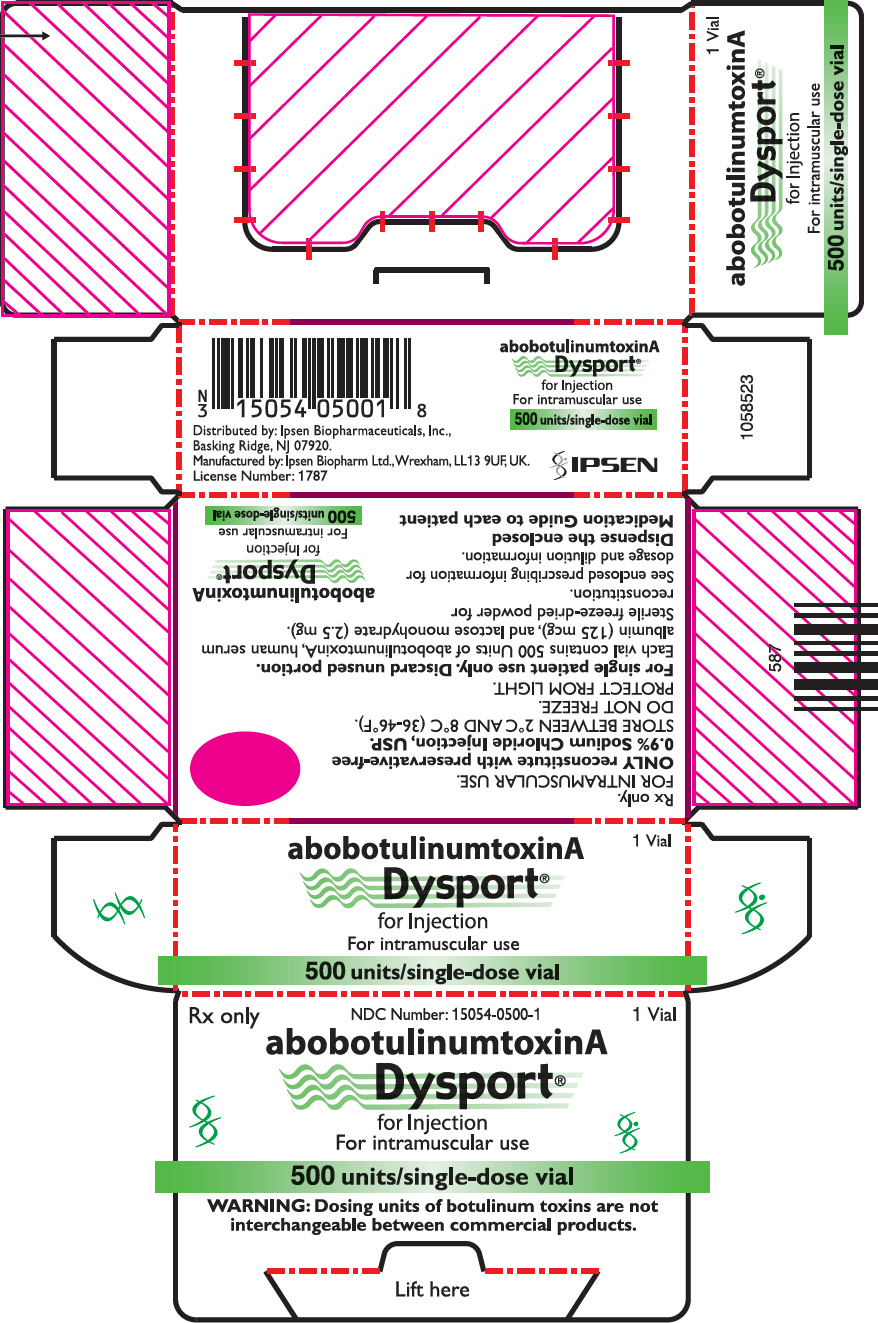
Each vial contains 500 Units of freeze-dried abobotulinumtoxinA.
Box containing 1 vial—NDC 15054-0500-1
Box containing 2 vials—NDC 15054-0500-2
300 Unit Vial
Each vial contains 300 Units of freeze-dried abobotulinumtoxinA.
Box containing 1 vial—NDC 15054-0530-6
Glabellar Lines
Each vial contains 300 Units of freeze-dried abobotulinumtoxinA.
Box containing 1 vial— NDC 0299-5962-30
Swallowing, Speaking, or Breathing Difficulties, or Other Unusual Symptoms
Advise patients to inform their doctor or pharmacist if they develop any unusual symptoms (including difficulty with swallowing, speaking or breathing), or if any known symptom persists or worsens [see Warnings and Precautions (5.1, 5.4)].
Dry Eye with the Treatment of Glabellar Lines
Inform patients that DYSPORT injection may cause eye dryness [see Warnings and Precautions (5.6)]. Advise patients to report symptoms of eye dryness (e.g., eye pain, eye irritation, photosensitivity, or changes in vision) to their doctor.
Ability to Operate Machinery or Vehicles
Inform patients that if loss of strength, muscle weakness, blurred vision or drooping eyelids occur, they should avoid driving a car or engaging in other potentially hazardous activities.
Manufactured by:
Ipsen Biopharm Ltd.
Wrexham, LL13 9UF, UK
U.S. License No. 1787
Distributed by:
Ipsen Biopharmaceuticals, Inc.
Cambridge, MA 02142
and
Galderma Laboratories, L.P.
Dallas, TX 75201 USA
DYSPORT is a registered trademark of Ipsen Biopharm Limited.
© 2023. All rights reserved.