Adults 16 Years And Older
In clinical trials, daily doses of 1000 mg, 2000 mg, and 3000 mg, given as twice-daily dosing were shown to be effective. Although in some studies there was a tendency toward greater response with higher dose [see Clinical Studies (14.1)], a consistent increase in response with increased dose has not been shown.
Treatment should be initiated with a daily dose of 1000 mg/day, given as twice-daily dosing (500 mg twice daily). Additional dosing increments may be given (1000 mg/day additional every 2 weeks) to a maximum recommended daily dose of 3000 mg. Doses greater than 3000 mg/day have been used in open-label studies for periods of 6 months and longer. There is no evidence that doses greater than 3000 mg/day confer additional benefit.
Pediatric Patients
Dosing information in pediatric patients less than 4 years of age as adjunctive therapy in the treatment of partial onset seizures is approved for UCB, Inc.'s levetiracetam oral solution. However, due to UCB, Inc.'s marketing exclusivity rights, this drug product is not labeled with that pediatric information.
4 Years To < 16 Years
Treatment should be initiated with a daily dose of 20 mg/kg in 2 divided doses (10 mg/kg twice daily). The daily dose should be increased every 2 weeks by increments of 20 mg/kg to the recommended daily dose of 60 mg/kg (30 mg/kg twice daily). If a patient cannot tolerate a daily dose of 60 mg/kg, the daily dose may be reduced. In the clinical efficacy trial, the mean daily dose was 44 mg/kg. The maximum daily dose was 3000 mg/day.
Levetiracetam Oral Solution, USP Weight-Based Dosing Calculation For Pediatric Patients
The following calculation should be used to determine the appropriate daily dose of oral solution for pediatric patients:
| Total daily dose (mL/day) = | Daily dose (mg/kg/day) × patient weight (kg) |
| 100 mg/mL |
Adults 16 Years And Older
Treatment should be initiated with a dose of 1000 mg/day, given as twice-daily dosing (500 mg twice daily). Dosage should be increased by 1000 mg/day every 2 weeks to the recommended daily dose of 3000 mg. The effectiveness of doses lower than 3000 mg/day has not been adequately studied.
Pediatric Patients Ages 6 To <16 Years
Treatment should be initiated with a daily dose of 20 mg/kg in 2 divided doses (10 mg/kg twice daily). The daily dose should be increased every 2 weeks by increments of 20 mg/kg to the recommended daily dose of 60 mg/kg (30 mg/kg twice daily). The effectiveness of doses lower than 60 mg/kg/day has not been adequately studied. Patients with body weight ≤ 20 kg should be dosed with oral solution. Patients with body weight above 20 kg can be dosed with either tablets or oral solution [see Dosage and Administration (2.1)].
Partial Onset Seizures
Adults
Minor, but statistically significant, decreases compared to placebo in total mean RBC count (0.03 × 10⁶/mm3), mean hemoglobin (0.09 g/dL), and mean hematocrit (0.38%), were seen in levetiracetam-treated patients in controlled trials.
A total of 3.2% of treated and 1.8% of placebo patients had at least one possibly significant (≤ 2.8 × 10⁹/L) decreased WBC, and 2.4% of treated and 1.4% of placebo patients had at least one possibly significant (≤ 1.0 × 10⁹/L) decreased neutrophil count. Of the treated patients with a low neutrophil count, all but one rose towards or to baseline with continued treatment. No patient was discontinued secondary to low neutrophil counts.
Pediatric Patients 4 Years To < 16 Years
Statistically significant decreases in WBC and neutrophil counts were seen in levetiracetam-treated patients as compared to placebo. The mean decreases from baseline in the levetiracetam-treated group were -0.4 × 10⁹/L and 0.3 × 10⁹/L, respectively, whereas there were small increases in the placebo group. Mean relative lymphocyte counts increased by 1.7% in levetiracetam-treated patients, compared to a decrease of 4% in placebo patients (statistically significant).
In the controlled trial, more levetiracetam-treated patients had a possibly clinically significant abnormally low WBC value (3.0% levetiracetam-treated versus 0% placebo), however, there was no apparent difference between treatment groups with respect to neutrophil count (5.0% levetiracetam-treated versus 4.2% placebo). No patient was discontinued secondary to low WBC or neutrophil counts.
In the controlled cognitive and neuropsychological safety study, two subjects (6.1%) in the placebo group and 5 subjects (8.6%) in the levetiracetam-treated group had high eosinophil count values that were possibly clinically significant (≥10% or ≥0.7×10⁹/L).
Juvenile Myoclonic Epilepsy
Although there were no obvious hematologic abnormalities observed in patients with JME, the limited number of patients makes any conclusion tentative. The data from the partial seizure patients should be considered to be relevant for JME patients.
Partial Onset Seizures
Adults
In controlled clinical studies in adults with partial onset seizures, the most frequently reported adverse reactions in patients receiving levetiracetam in combination with other AEDs were somnolence, asthenia, infection and dizziness. Of the most frequently reported adverse reactions in adults experiencing partial onset seizures, asthenia, somnolence and dizziness appeared to occur predominantly during the first 4 weeks of treatment with levetiracetam.
Table 3 lists adverse reactions that occurred in at least 1% of adult epilepsy patients treated with levetiracetam participating in placebo-controlled studies and were numerically more common than in patients treated with placebo. In these studies, either levetiracetam or placebo was added to concurrent AED therapy. Adverse reactions were usually mild to moderate in intensity.
Table 3: Incidence (%) Of Adverse Reactions In Placebo-Controlled, Add-On Studies In Adults Experiencing Partial Onset Seizures By Body System (Adverse Reactions Occurred In At Least 1% Of Levetiracetam-Treated Patients And Occurred More Frequently Than Placebo-Treated Patients)Body System/
Adverse Reaction | Levetiracetam
(N=769)
% | Placebo
(N=439)
% |
|---|
| Body as a Whole |
| Asthenia | 15 | 9 |
| Headache | 14 | 13 |
| Infection | 13 | 8 |
| Pain | 7 | 6 |
| Digestive System |
| Anorexia | 3 | 2 |
| Nervous System |
| Somnolence | 15 | 8 |
| Dizziness | 9 | 4 |
| Depression | 4 | 2 |
| Nervousness | 4 | 2 |
| Ataxia | 3 | 1 |
| Vertigo | 3 | 1 |
| Amnesia | 2 | 1 |
| Anxiety | 2 | 1 |
| Hostility | 2 | 1 |
| Paresthesia | 2 | 1 |
| Emotional Lability | 2 | 0 |
| Respiratory System |
| Pharyngitis | 6 | 4 |
| Rhinitis | 4 | 3 |
| Cough Increased | 2 | 1 |
| Sinusitis | 2 | 1 |
| Special Senses |
| Diplopia | 2 | 1 |
In controlled adult clinical studies, 15% of patients receiving levetiracetam and 12% receiving placebo either discontinued or had a dose reduction as a result of an adverse event. Table 4 lists the most common (>1%) adverse reactions that resulted in discontinuation or dose reduction and that occurred more frequently in levetiracetam-treated patients than in placebo-treated patients.
Table 4: Adverse Reactions That Most Commonly Resulted In Discontinuation Or Dose Reduction That Occurred More Frequently In Levetiracetam-Treated Patients In Placebo-Controlled Studies In Adult Patients Experiencing Partial Onset Seizures| Adverse Reaction | Levetiracetam
(N=769)
% | Placebo
(N=439)
% |
|---|
| Dizziness | 1 | 0 |
| Somnolence | 4 | 2 |
Pediatric Patients 4 Years To <16 Years
The adverse reaction data presented below was obtained from a pooled analysis of two controlled pediatric clinical studies in children 4 to 16 years of age with partial onset seizures. The adverse reactions most frequently reported with the use of levetiracetam in combination with other AEDs, not seen at an equivalent frequency among placebo-treated patients, were fatigue, aggression, nasal congestion, decreased appetite, and irritability.
Table 5 lists adverse reactions from the pooled pediatric controlled studies (4 to 16 years of age) that occurred in at least 2% of pediatric levetiracetam-treated patients and were numerically more common than in pediatric patients treated with placebo. In these studies, either levetiracetam or placebo was added to concurrent AED therapy. Adverse reactions were usually mild to moderate in intensity.
Table 5: Incidence (%) Of Adverse Reactions In Pooled Placebo-Controlled, Add-On Studies In Pediatric Patients Ages 4 to 16 Years Experiencing Partial Onset Seizures By Body System (Adverse Reactions Occurred In At Least 2% Of Levetiracetam-Treated Patients And Occurred More Frequently Than Placebo-Treated Patients)| Body System/ Adverse Reaction | Levetiracetam
(N=165) % | Placebo
(N=131) % |
|---|
| Ear and Labyrinth Disorders |
| Ear Pain | 2 | 1 |
| Eye Disorders |
| Conjunctivitis | 2 | 0 |
| Gastrointestinal Disorders |
| Vomiting | 15 | 12 |
| Abdominal Pain Upper | 9 | 8 |
| Diarrhea | 6 | 5 |
| Constipation | 3 | 1 |
| General Disorders and Administration Site Conditions |
| Fatigue | 11 | 5 |
| Infections and Infestations |
| Nasopharyngitis | 15 | 12 |
| Influenza | 3 | 1 |
| Gastroenteritis | 2 | 0 |
| Rhinitis | 2 | 0 |
| Injury, Poisoning and Procedural Complications |
| Head Injury | 4 | 0 |
| Contusion | 3 | 1 |
| Fall | 3 | 2 |
| Joint Sprain | 2 | 1 |
| Metabolism and Nutrition Disorders |
| Decreased Appetite | 8 | 2 |
| Anorexia | 4 | 3 |
| Musculoskeletal and Connective Tissue Disorders |
| Arthralgia | 2 | 0 |
| Neck Pain | 2 | 1 |
| Nervous System |
| Headache | 19 | 15 |
| Somnolence | 13 | 9 |
| Dizziness | 7 | 5 |
| Lethargy | 6 | 2 |
| Sedation | 2 | 1 |
| Psychiatric Disorders |
| Aggression | 10 | 5 |
| Abnormal Behavior | 7 | 4 |
| Irritability | 7 | 1 |
| Insomnia | 5 | 3 |
| Agitation | 4 | 1 |
| Depression | 3 | 1 |
| Mood Altered | 3 | 1 |
| Affect Lability | 2 | 1 |
| Anxiety | 2 | 1 |
| Confusional State | 2 | 0 |
| Mood Swings | 2 | 1 |
| Respiratory, Thoracic and Mediastinal Disorders |
| Cough | 9 | 5 |
| Nasal Congestion | 9 | 2 |
| Pharyngolaryngeal Pain | 7 | 4 |
In the well-controlled pooled pediatric clinical studies in patients 4 to 16 years of age, 7% of patients receiving levetiracetam and 9% receiving placebo discontinued as a result of an adverse event.
Adverse reaction information in pediatric patients less than 4 years of age as adjunctive therapy in the treatment of partial onset seizures is approved for UCB, Inc.'s levetiracetam oral solution. However, due to UCB, Inc.'s marketing exclusivity rights, this drug product is not labeled with that pediatric information.
Myoclonic Seizures
Although the pattern of adverse reactions in this study seems somewhat different from that seen in patients with partial seizures, this is likely due to the much smaller number of patients in this study compared to partial seizure studies. The adverse reaction pattern for patients with JME is expected to be essentially the same as for patients with partial seizures.
In the well-controlled clinical study that included both adolescent (12 to 16 years of age) and adult patients with myoclonic seizures, the most frequently reported adverse reactions in patients using levetiracetam in combination with other AEDs, not seen at an equivalent frequency among placebo-treated patients, were somnolence, neck pain, and pharyngitis.
Table 7 lists adverse reactions that occurred in at least 5% of juvenile myoclonic epilepsy patients experiencing myoclonic seizures treated with levetiracetam and were numerically more common than in patients treated with placebo. In this study, either levetiracetam or placebo was added to concurrent AED therapy. Adverse reactions were usually mild to moderate in intensity.
Table 7: Incidence (%) Of Adverse Reactions In A Placebo-Controlled, Add-On Study In Patients 12 Years Of Age And Older With Myoclonic Seizures By Body System (Adverse Reactions Occurred In At Least 5% Of Levetiracetam-Treated Patients And Occurred More Frequently Than Placebo-Treated Patients)Body System/
Adverse Reaction | Levetiracetam
(N=60)
% | Placebo
(N=60)
% |
|---|
| Ear and labyrinth disorders |
| Vertigo | 5 | 3 |
| Infections and infestations |
| Pharyngitis | 7 | 0 |
| Influenza | 5 | 2 |
| Musculoskeletal and connective tissue disorders |
| Neck pain | 8 | 2 |
| Nervous system disorders |
| Somnolence | 12 | 2 |
| Psychiatric disorders |
| Depression | 5 | 2 |
In the placebo-controlled study, 8% of patients receiving levetiracetam and 2% receiving placebo either discontinued or had a dose reduction as a result of an adverse reaction. The adverse reactions that led to discontinuation or dose reduction in the well-controlled study and occurred more frequently in levetiracetam-treated patients than in placebo-treated patients are presented in Table 8.
Table 8: Adverse Reactions That Resulted In Discontinuation Or Dose Reduction That Occurred More Frequently in Levetiracetam-Treated Patients In The Placebo-Controlled Study In Patients With Juvenile Myoclonic Epilepsy| Adverse Reaction | Levetiracetam
(N=60)
% | Placebo
(N=60)
% |
|---|
| Anxiety | 3 | 2 |
| Depressed Mood | 2 | 0 |
| Depression | 2 | 0 |
| Diplopia | 2 | 0 |
| Hypersomnia | 2 | 0 |
| Insomnia | 2 | 0 |
| Irritability | 2 | 0 |
| Nervousness | 2 | 0 |
| Somnolence | 2 | 0 |
Primary Generalized Tonic-Clonic Seizures
Although the pattern of adverse reactions in this study seems somewhat different from that seen in patients with partial seizures, this is likely due to the much smaller number of patients in this study compared to partial seizure studies. The adverse reaction pattern for patients with PGTC seizures is expected to be essentially the same as for patients with partial seizures.
In the well-controlled clinical study that included patients 4 years of age and older with primary generalized tonic-clonic (PGTC) seizures, the most frequently reported adverse reaction in patients using levetiracetam in combination with other AEDs, not seen at an equivalent frequency among placebo-treated patients, was nasopharyngitis.
Table 9 lists adverse reactions that occurred in at least 5% of idiopathic generalized epilepsy patients experiencing PGTC seizures treated with levetiracetam and were numerically more common than in patients treated with placebo. In this study, either levetiracetam or placebo was added to concurrent AED therapy. Adverse reactions were usually mild to moderate in intensity.
Table 9: Incidence (%) Of Adverse Reactions In A Placebo-Controlled, Add-On Study In Patients 4 Years Of Age And Older With PGTC Seizures By MedDRA System Organ Class (Adverse Reactions Occurred In At Least 5% Of Levetiracetam-Treated Patients And Occurred More Frequently Than Placebo-Treated Patients)Body System/
Adverse Reaction | Levetiracetam
(N=79)
% | Placebo
(N=84)
% |
|---|
| Gastrointestinal disorders |
| Diarrhea | 8 | 7 |
| General disorders and administration site conditions |
| Fatigue | 10 | 8 |
| Infections and infestations |
| Nasopharyngitis | 14 | 5 |
| Psychiatric disorders |
| Irritability | 6 | 2 |
| Mood Swings | 5 | 1 |
In the placebo-controlled study, 5% of patients receiving levetiracetam and 8% receiving placebo either discontinued or had a dose reduction during the treatment period as a result of an adverse reaction.
This study was too small to adequately characterize the adverse reactions that could be expected to result in discontinuation of treatment in this population. It is expected that the adverse reactions that would lead to discontinuation in this population would be similar to those resulting in discontinuation in other epilepsy trials (see tables 4 and 8).
In addition, the following adverse reactions were seen in other well-controlled adult studies of levetiracetam: balance disorder, disturbance in attention, eczema, memory impairment, myalgia, and vision blurred.
Comparison Of Gender, Age And Race
The overall adverse reaction profile of levetiracetam was similar between females and males. There are insufficient data to support a statement regarding the distribution of adverse experience reports by age and race.
Pregnancy Registry
To provide information regarding the effects of in utero exposure to levetiracetam, physicians are advised to recommend that pregnant patients taking levetiracetam enroll in the North American Antiepileptic Drug (NAAED) pregnancy registry. This can be done by calling the toll free number 1-888-233-2334, and must be done by the patients themselves. Information on the registry can also be found at the website http://www.aedpregnancyregistry.org/.
Effects on QTc Interval
The effect of levetiracetam on QTc prolongation was evaluated in a randomized, double-blind, positive-controlled (moxifloxacin 400 mg) and placebo-controlled crossover study of levetiracetam (1000 mg or 5000 mg) in 52 healthy subjects. The upper bound of the 90% confidence interval for the largest placebo-adjusted, baseline-corrected QTc was below 10 milliseconds. Therefore, there was no evidence of significant QTc prolongation in this study.
Absorption and Distribution
Absorption of levetiracetam is rapid, with peak plasma concentrations occurring in about an hour following oral administration in fasted subjects. The oral bioavailability of levetiracetam tablets is 100% and the tablets and oral solution are bioequivalent in rate and extent of absorption. Food does not affect the extent of absorption of levetiracetam but it decreases Cmax by 20% and delays Tmax by 1.5 hours. The pharmacokinetics of levetiracetam are linear over the dose range of 500 to 5000 mg. Steady state is achieved after 2 days of multiple twice-daily dosing. Levetiracetam and its major metabolite are less than 10% bound to plasma proteins; clinically significant interactions with other drugs through competition for protein binding sites are therefore unlikely.
Metabolism
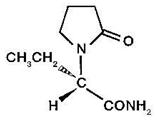
Levetiracetam is not extensively metabolized in humans. The major metabolic pathway is the enzymatic hydrolysis of the acetamide group, which produces the carboxylic acid metabolite, ucb L057 (24% of dose) and is not dependent on any liver cytochrome P450 isoenzymes. The major metabolite is inactive in animal seizure models. Two minor metabolites were identified as the product of hydroxylation of the 2-oxo-pyrrolidine ring (2% of dose) and opening of the 2-oxo-pyrrolidine ring in position 5 (1% of dose). There is no enantiomeric interconversion of levetiracetam or its major metabolite.
Elimination
Levetiracetam plasma half-life in adults is 7 ± 1 hour and is unaffected by either dose or repeated administration. Levetiracetam is eliminated from the systemic circulation by renal excretion as unchanged drug which represents 66% of administered dose. The total body clearance is 0.96 mL/min/kg and the renal clearance is 0.6 mL/min/kg. The mechanism of excretion is glomerular filtration with subsequent partial tubular reabsorption. The metabolite ucb L057 is excreted by glomerular filtration and active tubular secretion with a renal clearance of 4 mL/min/kg. Levetiracetam elimination is correlated to creatinine clearance. Levetiracetam clearance is reduced in patients with impaired renal function [see Use in Specific Populations (8.6) and Dosage and Administration (2.5)].
Specific Populations
Elderly
Pharmacokinetics of levetiracetam were evaluated in 16 elderly subjects (age 61 to 88 years) with creatinine clearance ranging from 30 to 74 mL/min. Following oral administration of twice-daily dosing for 10 days, total body clearance decreased by 38% and the half-life was 2.5 hours longer in the elderly compared to healthy adults. This is most likely due to the decrease in renal function in these subjects.
Pediatric Patients
Pharmacokinetics of levetiracetam were evaluated in 24 pediatric patients (age 6 to 12 years) after single dose (20 mg/kg). The body weight adjusted apparent clearance of levetiracetam was approximately 40% higher than in adults.
A repeat dose pharmacokinetic study was conducted in pediatric patients (age 4 to 12 years) at doses of 20 mg/kg/day, 40 mg/kg/day, and 60 mg/kg/day. The evaluation of the pharmacokinetic profile of levetiracetam and its metabolite (ucb L057) in 14 pediatric patients demonstrated rapid absorption of levetiracetam at all doses with a Tmax of about 1 hour and a t1/2 of 5 hours across the three dosing levels. The pharmacokinetics of levetiracetam in children was linear between 20 to 60 mg/kg/day. The potential interaction of levetiracetam with other AEDs was also evaluated in these patients. Levetiracetam had no significant effect on the plasma concentrations of carbamazepine, valproic acid, topiramate or lamotrigine. However, there was about a 22% increase of apparent clearance of levetiracetam when it was co-administered with an enzyme-inducing AED (e.g. carbamazepine).
Pharmacokinetics information in pediatric patients less than 4 years of age is approved for UCB, Inc.'s levetiracetam oral solution. However, due to UCB, Inc.'s marketing exclusivity rights, this drug product is not labeled with that pediatric information.
Population pharmacokinetic analysis showed that body weight was significantly correlated to the clearance of levetiracetam in pediatric patients; clearance increased with an increase in body weight.
Pregnancy
Levetiracetam levels may decrease during pregnancy.
Gender
Levetiracetam Cmax and AUC were 20% higher in women (N=11) compared to men (N=12). However, clearances adjusted for body weight were comparable.
Race
Formal pharmacokinetic studies of the effects of race have not been conducted. Cross study comparisons involving Caucasians (N=12) and Asians (N=12), however, show that pharmacokinetics of levetiracetam were comparable between the two races. Because levetiracetam is primarily renally excreted and there are no important racial differences in creatinine clearance, pharmacokinetic differences due to race are not expected.
Renal Impairment
The disposition of levetiracetam was studied in adult subjects with varying degrees of renal function. Total body clearance of levetiracetam is reduced in patients with impaired renal function by 40% in the mild group (CLcr = 50 to 80 mL/min), 50% in the moderate group (CLcr = 30 to 50 mL/min) and 60% in the severe renal impairment group (CLcr <30 mL/min). Clearance of levetiracetam is correlated with creatinine clearance.
In anuric (end stage renal disease) patients, the total body clearance decreased 70% compared to normal subjects (CLcr >80 mL/min).
Approximately 50% of the pool of levetiracetam in the body is removed during a standard 4- hour hemodialysis procedure.
Dosage should be reduced in patients with impaired renal function receiving levetiracetam, and supplemental doses should be given to patients after dialysis [see Dosage and Administration (2.5)].
Hepatic Impairment
In subjects with mild (Child-Pugh A) to moderate (Child-Pugh B) hepatic impairment, the pharmacokinetics of levetiracetam were unchanged. In patients with severe hepatic impairment (Child-Pugh C), total body clearance was 50% that of normal subjects, but decreased renal clearance accounted for most of the decrease. No dose adjustment is needed for patients with hepatic impairment.
Drug Interactions:
In vitro data on metabolic interactions indicate that levetiracetam is unlikely to produce, or be subject to, pharmacokinetic interactions.
Levetiracetam and its major metabolite, at concentrations well above Cmax levels achieved within the therapeutic dose range, are neither inhibitors of, nor high affinity substrates for, human liver cytochrome P450 isoforms, epoxide hydrolase or UDP-glucuronidation enzymes. In addition, levetiracetam does not affect the in vitro glucuronidation of valproic acid.
Potential pharmacokinetic interactions of or with levetiracetam were assessed in clinical pharmacokinetic studies (phenytoin, valproate, warfarin, digoxin, oral contraceptive, probenecid) and through pharmacokinetic screening in the placebo-controlled clinical studies in epilepsy patients.
Phenytoin
Levetiracetam (3000 mg daily) had no effect on the pharmacokinetic disposition of phenytoin in patients with refractory epilepsy. Pharmacokinetics of levetiracetam were also not affected by phenytoin.
Valproate
Levetiracetam (1500 mg twice daily) did not alter the pharmacokinetics of valproate in healthy volunteers. Valproate 500 mg twice daily did not modify the rate or extent of levetiracetam absorption or its plasma clearance or urinary excretion. There also was no effect on exposure to and the excretion of the primary metabolite, ucb L057.
Other Antiepileptic Drugs
Potential drug interactions between levetiracetam and other AEDs (carbamazepine, gabapentin, lamotrigine, phenobarbital, phenytoin, primidone and valproate) were also assessed by evaluating the serum concentrations of levetiracetam and these AEDs during placebo-controlled clinical studies. These data indicate that levetiracetam does not influence the plasma concentration of other AEDs and that these AEDs do not influence the pharmacokinetics of levetiracetam.
Effect Of AEDs In Pediatric Patients
There was about a 22% increase of apparent total body clearance of levetiracetam when it was co-administered with enzyme-inducing AEDs. Dose adjustment is not recommended. Levetiracetam had no effect on plasma concentrations of carbamazepine, valproate, topiramate, or lamotrigine.
Oral Contraceptives
Levetiracetam (500 mg twice daily) did not influence the pharmacokinetics of an oral contraceptive containing 0.03 mg ethinyl estradiol and 0.15 mg levonorgestrel, or of the luteinizing hormone and progesterone levels, indicating that impairment of contraceptive efficacy is unlikely. Coadministration of this oral contraceptive did not influence the pharmacokinetics of levetiracetam.
Digoxin
Levetiracetam (1000 mg twice daily) did not influence the pharmacokinetics and pharmacodynamics (ECG) of digoxin given as a 0.25 mg dose every day. Coadministration of digoxin did not influence the pharmacokinetics of levetiracetam.
Warfarin
Levetiracetam (1000 mg twice daily) did not influence the pharmacokinetics of R and S warfarin. Prothrombin time was not affected by levetiracetam. Coadministration of warfarin did not affect the pharmacokinetics of levetiracetam.
Probenecid
Probenecid, a renal tubular secretion blocking agent, administered at a dose of 500 mg four times a day, did not change the pharmacokinetics of levetiracetam 1000 mg twice daily. Css max of the metabolite, ucb L057, was approximately doubled in the presence of probenecid while the fraction of drug excreted unchanged in the urine remained the same. Renal clearance of ucb L057 in the presence of probenecid decreased 60%, probably related to competitive inhibition of tubular secretion of ucb L057. The effect of levetiracetam on probenecid was not studied.
Carcinogenesis
Rats were dosed with levetiracetam in the diet for 104 weeks at doses of 50, 300 and 1800 mg/kg/day. The highest dose is 6 times the maximum recommended daily human dose (MRHD) of 3000 mg on a mg/m2 basis and it also provided systemic exposure (AUC) approximately 6 times that achieved in humans receiving the MRHD. There was no evidence of carcinogenicity. In mice, oral administration of levetiracetam for 80 weeks (doses up to 960 mg/kg/day) or 2 years (doses up to 4000 mg/kg/day, lowered to 3000 mg/kg/day after 45 weeks due to intolerability) was not associated with an increase in tumors. The highest dose tested in mice for 2 years (3000 mg/kg/day) is approximately 5 times the MRHD on a mg/m2 basis.
Mutagenesis
Levetiracetam was not mutagenic in the Ames test or in mammalian cells in vitro in the Chinese hamster ovary/HGPRT locus assay. It was not clastogenic in an in vitro analysis of metaphase chromosomes obtained from Chinese hamster ovary cells or in an in vivo mouse micronucleus assay. The hydrolysis product and major human metabolite of levetiracetam (ucb L057) was not mutagenic in the Ames test or the in vitro mouse lymphoma assay.
Impairment Of Fertility
No adverse effects on male or female fertility or reproductive performance were observed in rats at oral doses up to 1800 mg/kg/day (6 times the maximum recommended human dose on a mg/m2 or systemic exposure [AUC] basis).
Effectiveness In Partial Onset Seizures In Adults With Epilepsy
The effectiveness of levetiracetam as adjunctive therapy (added to other antiepileptic drugs) in adults was established in three multicenter, randomized, double-blind, placebo-controlled clinical studies in patients who had refractory partial onset seizures with or without secondary generalization. The tablet formulation was used in all these studies. In these studies, 904 patients were randomized to placebo, 1000 mg, 2000 mg, or 3000 mg/day. Patients enrolled in Study 1 or Study 2 had refractory partial onset seizures for at least two years and had taken two or more classical AEDs. Patients enrolled in Study 3 had refractory partial onset seizures for at least 1 year and had taken one classical AED. At the time of the study, patients were taking a stable dose regimen of at least one and could take a maximum of two AEDs. During the baseline period, patients had to have experienced at least two partial onset seizures during each 4-week period.
Study 1
Study 1 was a double-blind, placebo-controlled, parallel-group study conducted at 41 sites in the United States comparing levetiracetam 1000 mg/day (N=97), levetiracetam 3000 mg/day (N=101), and placebo (N=95) given in equally divided doses twice daily. After a prospective baseline period of 12 weeks, patients were randomized to one of the three treatment groups described above. The 18-week treatment period consisted of a 6-week titration period, followed by a 12-week fixed dose evaluation period, during which concomitant AED regimens were held constant. The primary measure of effectiveness was a between group comparison of the percent reduction in weekly partial seizure frequency relative to placebo over the entire randomized treatment period (titration +evaluation period). Secondary outcome variables included the responder rate (incidence of patients with ≥50% reduction from baseline in partial onset seizure frequency). The results of the analysis of Study 1 are displayed in Table 10.
Table 10: Reduction In Mean Over Placebo In Weekly Frequency Of Partial Onset Seizures In Study 1 | Placebo
(N=95) | Levetiracetam
1000 mg/day
(N=97) | Levetiracetam
3000 mg/day
(N=101) |
|---|
| Percent reduction in partial seizure frequency over placebo | ___ | 26.1% statistically significant versus placebo | 30.1% |
The percentage of patients (y-axis) who achieved ≥50% reduction in weekly seizure rates from baseline in partial onset seizure frequency over the entire randomized treatment period (titration + evaluation period) within the three treatment groups (x-axis) is presented in Figure 1.
| *statistically significant versus placebo |
| Figure 1: Responder Rate (≥50% Reduction From Baseline) In Study 1 |
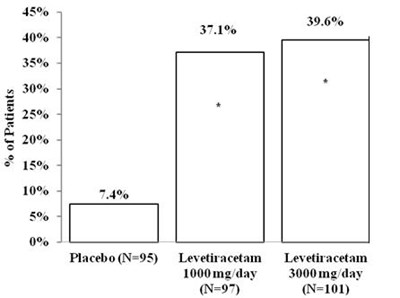 Figure 1 (Levetiracetam 02) |
Study 2
Study 2 was a double-blind, placebo-controlled, crossover study conducted at 62 centers in Europe comparing levetiracetam 1000 mg/day (N=106), levetiracetam 2000 mg/day (N=105), and placebo (N=111) given in equally divided doses twice daily.
The first period of the study (Period A) was designed to be analyzed as a parallel-group study. After a prospective baseline period of up to 12 weeks, patients were randomized to one of the three treatment groups described above. The 16-week treatment period consisted of the 4-week titration period followed by a 12-week fixed dose evaluation period, during which concomitant AED regimens were held constant. The primary measure of effectiveness was a between group comparison of the percent reduction in weekly partial seizure frequency relative to placebo over the entire randomized treatment period (titration + evaluation period). Secondary outcome variables included the responder rate (incidence of patients with ≥50% reduction from baseline in partial onset seizure frequency). The results of the analysis of Period A are displayed in Table 11.
Table 11: Reduction In Mean Over Placebo In Weekly Frequency Of Partial Onset Seizures In Study 2: Period A | Placebo
(N=111) | Levetiracetam
1000 mg/day
(N=106) | Levetiracetam
2000 mg/day
(N=105) |
|---|
| Percent reduction in partial seizure frequency over placebo | ___ | 17.1% statistically significant versus placebo | 21.4% |
The percentage of patients (y-axis) who achieved ≥50% reduction in weekly seizure rates from baseline in partial onset seizure frequency over the entire randomized treatment period (titration + evaluation period) within the three treatment groups (x-axis) is presented in Figure 2.
| *statistically significant versus placebo |
| Figure 2: Responder Rate (≥50% Reduction From Baseline) In Study 2: Period A |
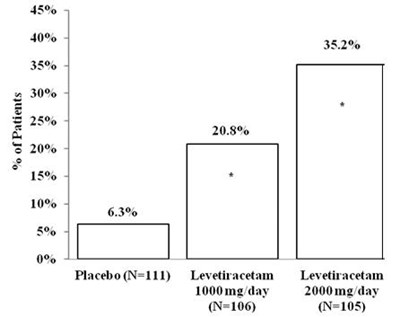 Figure 2 (Levetiracetam 03) |
The comparison of levetiracetam 2000 mg/day to levetiracetam 1000 mg/day for responder rate was statistically significant (P=0.02). Analysis of the trial as a cross-over yielded similar results.
Study 3
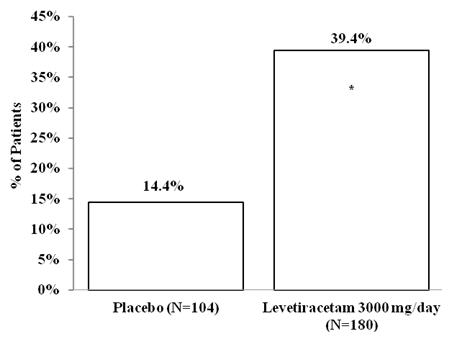
Study 3 was a double-blind, placebo-controlled, parallel-group study conducted at 47 centers in Europe comparing levetiracetam 3000 mg/day (N=180) and placebo (N=104) in patients with refractory partial onset seizures, with or without secondary generalization, receiving only one concomitant AED. Study drug was given in two divided doses. After a prospective baseline period of 12 weeks, patients were randomized to one of two treatment groups described above. The 16-week treatment period consisted of a 4-week titration period, followed by a 12-week fixed dose evaluation period, during which concomitant AED doses were held constant. The primary measure of effectiveness was a between group comparison of the percent reduction in weekly seizure frequency relative to placebo over the entire randomized treatment period (titration + evaluation period). Secondary outcome variables included the responder rate (incidence of patients with ≥50% reduction from baseline in partial onset seizure frequency). Table 12 displays the results of the analysis of Study 3.
Table 12: Reduction In Mean Over Placebo In Weekly Frequency Of Partial Onset Seizures In Study 3 | Placebo
(N=104) | Levetiracetam
3000 mg/day
(N=180) |
|---|
| Percent reduction in partial seizure frequency over placebo | – | 23.0% statistically significant versus placebo |
The percentage of patients (y-axis) who achieved ≥50% reduction in weekly seizure rates from baseline in partial onset seizure frequency over the entire randomized treatment period (titration + evaluation period) within the two treatment groups (x-axis) is presented in Figure 3.
| *statistically significant versus placebo |
| Figure 3: Responder Rate (≥50% Reduction From Baseline) In Study 3 |
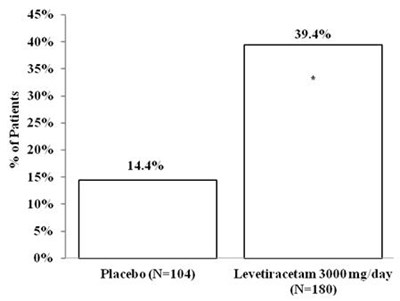 Figure 3 (Levetiracetam 04) |
Effectiveness In Partial Onset Seizures In Pediatric Patients 4 Years To 16 Years With Epilepsy
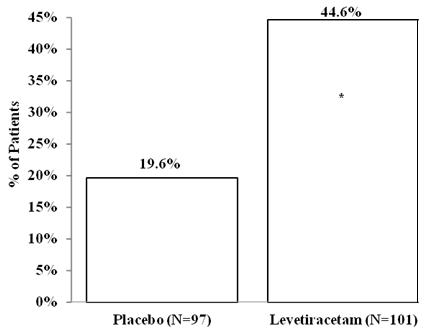
The effectiveness of levetiracetam as adjunctive therapy (added to other antiepileptic drugs) in pediatric patients was established in one multicenter, randomized double-blind, placebo-controlled study, conducted at 60 sites in North America, in children 4 to 16 years of age with partial seizures uncontrolled by standard antiepileptic drugs (AEDs). Eligible patients on a stable dose of 1 to 2 AEDs, who still experienced at least 4 partial onset seizures during the 4 weeks prior to screening, as well as at least 4 partial onset seizures in each of the two 4-week baseline periods, were randomized to receive either levetiracetam or placebo. The enrolled population included 198 patients (levetiracetam N=101, placebo N=97) with refractory partial onset seizures, whether or not secondarily generalized. The study consisted of an 8-week baseline period and 4-week titration period followed by a 10week evaluation period. Dosing was initiated at a dose of 20 mg/kg/day in two divided doses. During the treatment period, levetiracetam doses were adjusted in 20 mg/kg/day increments, at 2-week intervals to the target dose of 60 mg/kg/day. The primary measure of effectiveness was a between group comparison of the percent reduction in weekly partial seizure frequency relative to placebo over the entire 14-week randomized treatment period (titration + evaluation period). Secondary outcome variables included the responder rate (incidence of patients with ≥50% reduction from baseline in partial onset seizure frequency per week). Table 13 displays the results of this study.
Table 13: Reduction In Mean Over Placebo In Weekly Frequency Of Partial Onset Seizures | Placebo
(N=97) | Levetiracetam
(N=101) |
|---|
| Percent reduction in partial seizure frequency over placebo | - | 26.8% statistically significant versus placebo |
The percentage of patients (y-axis) who achieved ≥50% reduction in weekly seizure rates from baseline in partial onset seizure frequency over the entire randomized treatment period (titration + evaluation period) within the two treatment groups (x-axis) is presented in Figure 4.
| *statistically significant versus placebo |
| Figure 4: Responder Rate (≥ 50% Reduction From Baseline) |
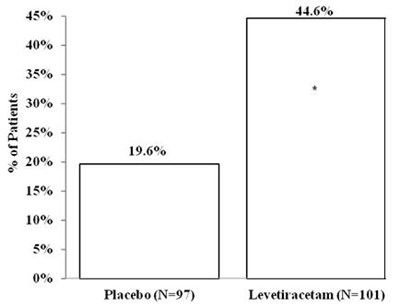 Figure 4 (Levetiracetam 05) |
Clinical trial information in pediatric patients less than 4 years of age as adjunctive therapy in the treatment of partial onset seizures is approved for UCB, Inc.'s levetiracetam oral solution. However, due to UCB, Inc.'s marketing exclusivity rights, this drug product is not labeled with that pediatric information.
Effectiveness Of Myoclonic Seizures In Patients ≥12 Years Of Age With Juvenile Myoclonic Epilepsy (JME)
The effectiveness of levetiracetam as adjunctive therapy (added to other antiepileptic drugs) in patients 12 years of age and older with juvenile myoclonic epilepsy (JME) experiencing myoclonic seizures was established in one multicenter, randomized, double-blind, placebo-controlled study, conducted at 37 sites in 14 countries. Of the 120 patients enrolled, 113 had a diagnosis of confirmed or suspected JME. Eligible patients on a stable dose of 1 antiepileptic drug (AED) experiencing one or more myoclonic seizures per day for at least 8 days during the prospective 8-week baseline period were randomized to either levetiracetam or placebo (levetiracetam N=60, placebo N=60). Patients were titrated over 4 weeks to a target dose of 3000 mg/day and treated at a stable dose of 3000 mg/day over 12 weeks (evaluation period). Study drug was given in 2 divided doses.
The primary measure of effectiveness was the proportion of patients with at least 50% reduction in the number of days per week with one or more myoclonic seizures during the treatment period (titration + evaluation periods) as compared to baseline. Table 14 displays the results for the 113 patients with JME in this study.
Table 14: Responder Rate (≥50% Reduction From Baseline) In Myoclonic Seizure Days Per Week for Patients with JME | Placebo
(N=59) | Levetiracetam
(N=54) |
|---|
| Percentage of responders | 23.7% | 60.4% statistically significant versus placebo |
Effectiveness In Primary Generalized Tonic-Clonic Seizures In Patients ≥6 Years Of Age
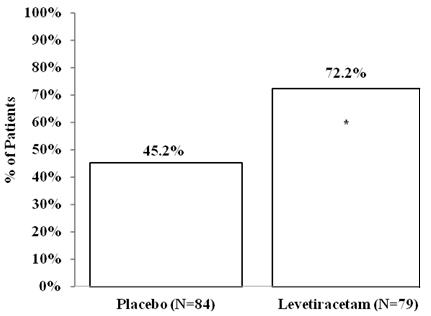
The effectiveness of levetiracetam as adjunctive therapy (added to other antiepileptic drugs) in patients 6 years of age and older with idiopathic generalized epilepsy experiencing primary generalized tonic-clonic (PGTC) seizures was established in one multicenter, randomized, double-blind, placebo-controlled study, conducted at 50 sites in 8 countries. Eligible patients on a stable dose of 1 or 2 antiepileptic drugs (AEDs) experiencing at least 3 PGTC seizures during the 8-week combined baseline period (at least one PGTC seizure during the 4 weeks prior to the prospective baseline period and at least one PGTC seizure during the 4-week prospective baseline period) were randomized to either levetiracetam or placebo. The 8-week combined baseline period is referred to as "baseline" in the remainder of this section. The population included 164 patients (levetiracetam N=80, placebo N=84) with idiopathic generalized epilepsy (predominately juvenile myoclonic epilepsy, juvenile absence epilepsy, childhood absence epilepsy, or epilepsy with Grand Mal seizures on awakening) experiencing primary generalized tonic-clonic seizures. Each of these syndromes of idiopathic generalized epilepsy was well represented in this patient population. Patients were titrated over 4 weeks to a target dose of 3000 mg/day for adults or a pediatric target dose of 60 mg/kg/day and treated at a stable dose of 3000 mg/day (or 60 mg/kg/day for children) over 20 weeks (evaluation period). Study drug was given in 2 equally divided doses per day.
The primary measure of effectiveness was the percent reduction from baseline in weekly PGTC seizure frequency for levetiracetam and placebo treatment groups over the treatment period (titration + evaluation periods). There was a statistically significant decrease from baseline in PGTC frequency in the levetiracetam-treated patients compared to the placebo-treated patients.
Table 15: Median Percent Reduction From Baseline In PGTC Seizure Frequency Per Week | Placebo
(N=84) | Levetiracetam
(N=78) |
|---|
| Percent reduction in PGTC seizure frequency | 44.6% | 77.6% statistically significant versus placebo |
The percentage of patients (y-axis) who achieved ≥50% reduction in weekly seizure rates from baseline in PGTC seizure frequency over the entire randomized treatment period (titration + evaluation period) within the two treatment groups (x-axis) is presented in Figure 6.
| *statistically significant versus placebo |
| Figure 6: Responder Rate (≥50% Reduction From Baseline) In PGTC Seizure Frequency Per Week |
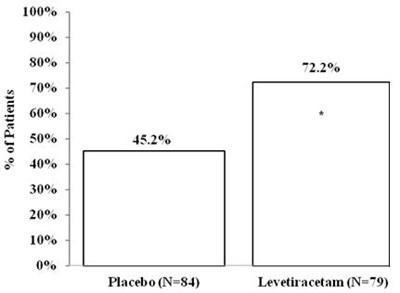 Figure 6 (Levetiracetam 06) |
Manufactured by:
Silarx Pharmaceuticals, Inc.
Spring Valley, NY 10977
Distributed by:
Orit Laboratories LLC
West Caldwell, NJ 07006
Rev. 03/13
Manufactured by:
Silarx Pharmaceuticals, Inc. Spring Valley, NY 10977
Distributed by:
Orit Laboratories LLC West Caldwell, NJ 07006
Rev. 03/13