Itraconazole Capsule
Product Images NDC 16571-245

View Photos of Packaging, Regulatory Labels, and Product Appearance

Product Visual Gallery

This gallery contains 8 technical images submitted to the FDA as part of the official labeling for Itraconazole (NDC 16571-245). Unlike standard consumer photos, these assets often include clinical data figures, molecular chemical structures, and official manufacturer packaging layouts.

As provided by Rising Pharma Holdings, Inc., these visuals offer a comprehensive scientific overview of the product's physical and chemical identity, aiding pharmacists and researchers in product verification and study.

FDA Label Image

Label-30s (Label 30s)
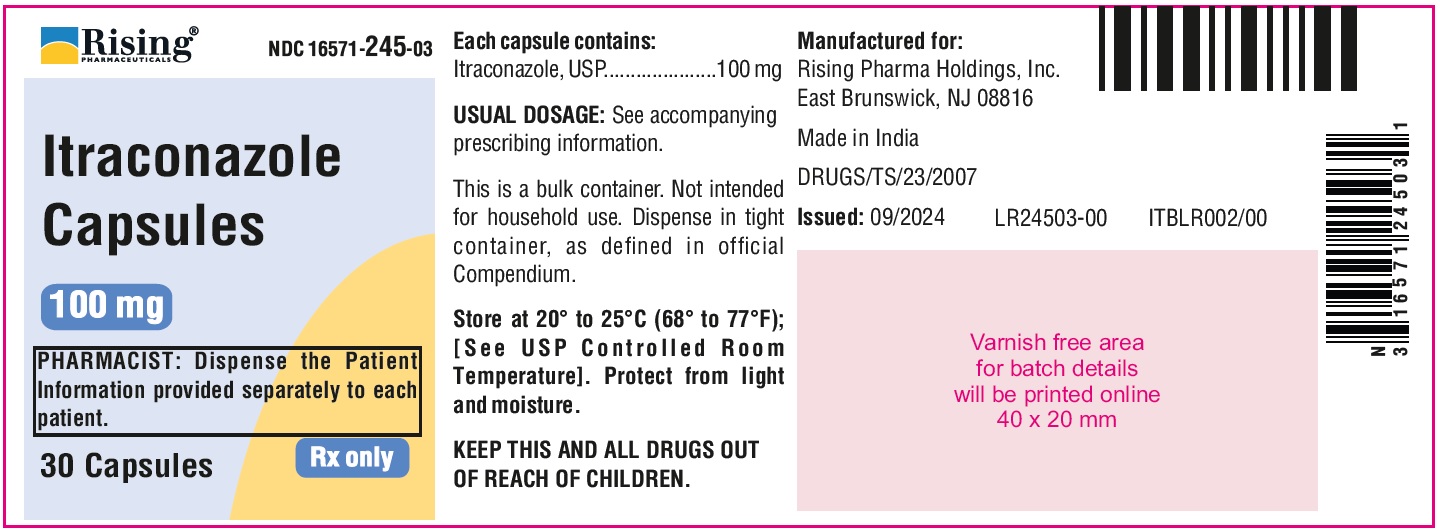
Label-30s (Label 30s)
This text contains information about the medication Itraconazole, with each capsule containing 100mg of the active ingredient. It is manufactured for Rising Pharma Holdings, Inc. in East Brunswick, NJ. The usual dosage and prescribing information can be found accompanying the product. The drug should be stored at 20° to 25°C (68° to 77°F) in a tight, light, and moisture-protected container. This is a bulk container not intended for household use and should be dispensed under proper pharmaceutical guidelines. It is advised to keep this and all drugs out of reach of children.*
FDA Label Image

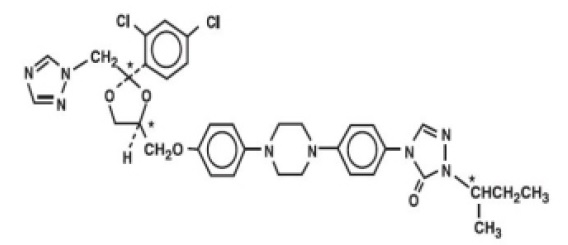
Structure (Structure)

FDA Label Image

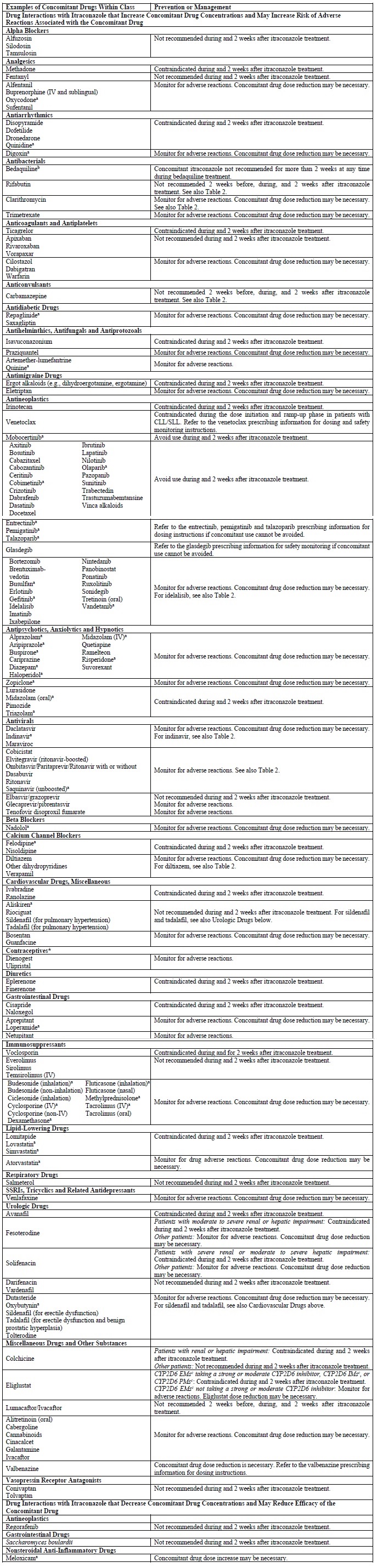
Table 1 (Table 1)

Table 1 (Table 1)
The text provides a detailed list of various drugs and their interactions with Itraconazole, a medication used to treat fungal infections. It outlines specific concomitant drugs within classes such as alpha blockers, analgesics, antibiotics, cardiovascular drugs, and more. The information includes recommendations for prevention or management of drug interactions, highlighting instances when certain drugs are contraindicated or not recommended before, during, or after Itraconazole treatment. Additionally, the text advises on monitoring for adverse reactions and the potential need for dose reductions of concomitant drugs to avoid risks of adverse effects.*
FDA Label Image

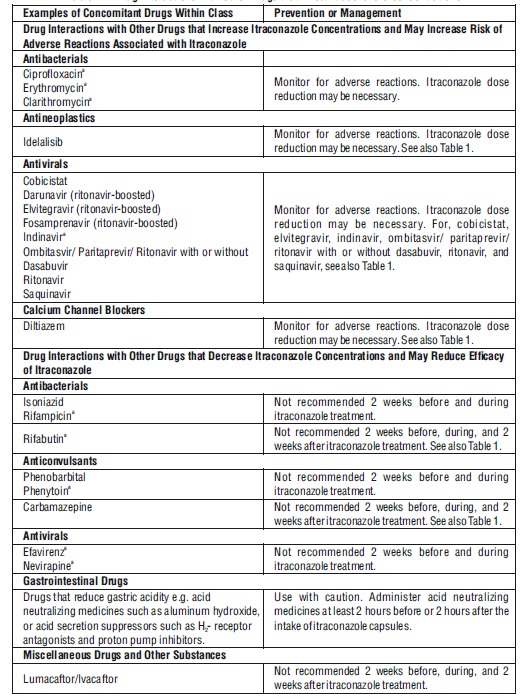
Table 2 (Table 2)

Table 2 (Table 2)
The text provides examples of drug interactions with itraconazole, a medication used to prevent or manage adverse reactions. It includes information on drugs that can increase or decrease the efficacy of itraconazole, such as antiretrovirals, anticonvulsants, calcium channel blockers, and gastrointestinal drugs. For each drug class, specific recommendations on timing and dosage adjustments are given to avoid potential adverse reactions. Overall, this information can help healthcare professionals better understand how to manage concomitant drug therapy with itraconazole to ensure optimal treatment outcomes.*
FDA Label Image

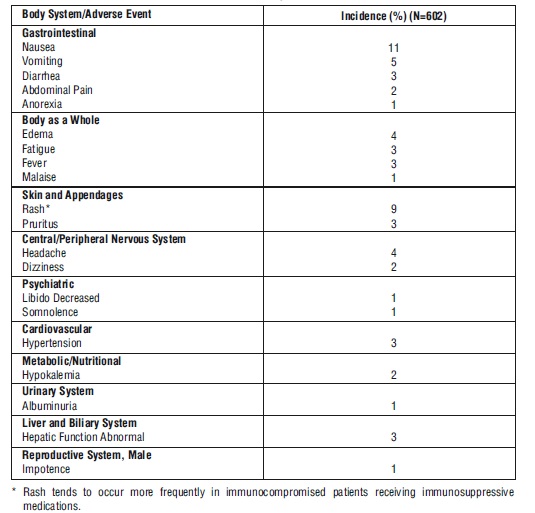
Table 3 (Table 3)

Table 3 (Table 3)
This information provides a breakdown of adverse events and their corresponding percentages (N=602) within different body systems. It includes details on gastrointestinal issues such as nausea, vomiting, diarrhea, abdominal pain, and anorexia. Body as a Whole section covers edema and malaise. Skin and Appendages list rash and pruritus. Central and Peripheral Nervous System mention headache and dizziness. Psychiatric system includes libido decreased and somnolence. Cardiovascular system notes hypertension. Metabolic/Nutritional system documents hypokalemia. Urinary system mentions albuminuria. Liver and Biliary system includes abnormal hepatic function. Reproductive System, Male specifies impotence. Additionally, it mentions that rash occurrences are more frequent in immunocompromised patients receiving immunosuppressive medications.*
FDA Label Image

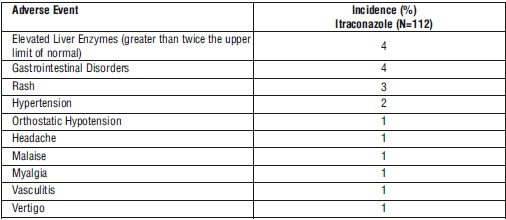
Table 4 (Table 4)

FDA Label Image

Table 5 (Table 5)

FDA Label Image

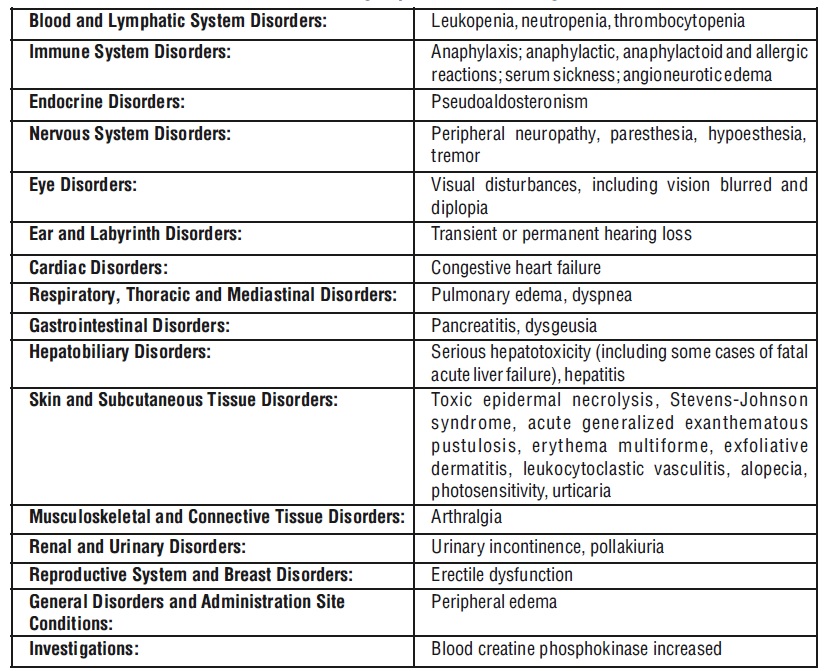
Table 6 (Table 6)

Table 6 (Table 6)
This is a list of potential adverse effects associated with a specific medication. These effects cover a range of systems in the body, including blood, immune, endocrine, nervous, eye, ear, cardiac, respiratory, gastrointestinal, hepatobiliary, skin, musculoskeletal, renal, urinary, reproductive, and general body conditions. Some notable effects include blood disorders such as leukopenia and thrombocytopenia, immune system disorders like anaphylaxis, endocrine disorders, cardiac disorders like congestive heart failure, skin disorders including toxic epidermal necrolysis, and musculoskeletal disorders like arthralgia. Additionally, effects related to different organs such as vision disturbances, hearing loss, and urinary incontinence are mentioned.*

* These product label images have been analyzed using experimental machine learning. Please verify findings with the primary label text.