Description
Glycopyrrolate Tablets, USP contain the synthetic anticholinergic, glycopyrrolate. Glycopyrrolate is a quaternary ammonium compound with the following chemical name: 3-[(cyclopentylhydroxyphenylacetyl)oxy]-1, 1- dimethylpyrrolidinium bromide.
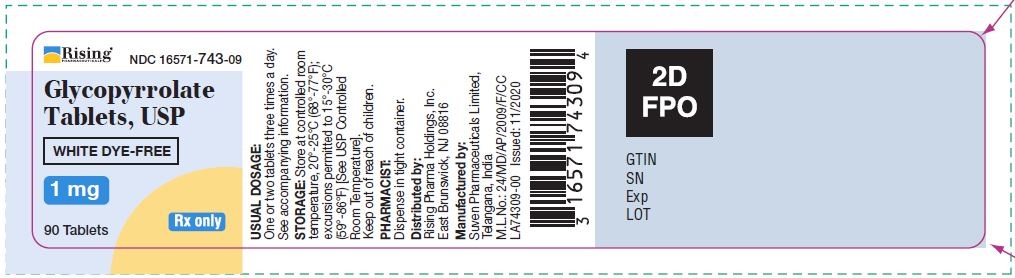
Glycopyrrolate Tablets USP, 1 mg are white, round, flat-faced, beveled edge tablet, debossed "CS" and "007" on one side and scored on the other side.
Each tablet contains: Glycopyrrolate, USP ........................................... 1 mg
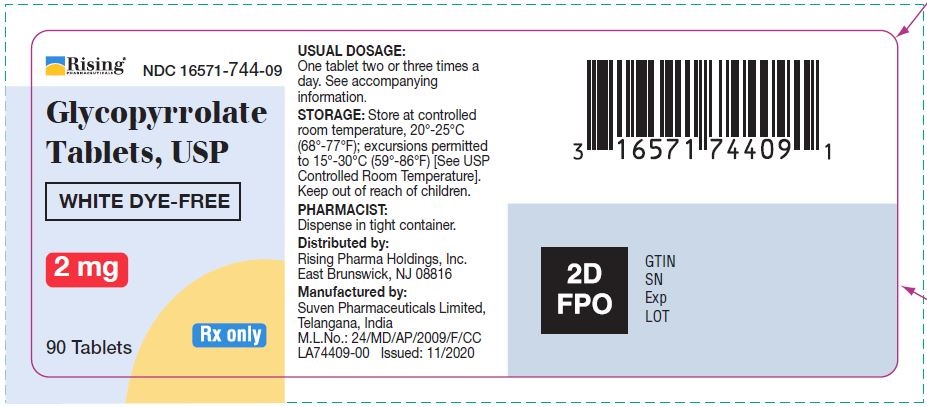
Glycopyrrolate Tablets USP, 2 mg are white, round, flat-faced, beveled edge tablet, debossed "CS" score "008" on one side and plain on the other side.
Each tablet contains: Glycopyrrolate, USP............................................ 2 mg
Inactive Ingredients: Dibasic Calcium Phosphate, Lactose Monohydrate, Magnesium Stearate, Povidone, Sodium Starch Glycolate.
ACTIONS
Glycopyrrolate, like other anticholinergic (antimuscarinic) agents, inhibits the action of acetylcholine on structures innervated by postganglionic cholinergic nerves and on smooth muscles that respond to acetylcholine but lack cholinergic innervation. These peripheral cholinergic receptors are present in the autonomic effector cells of smooth muscle, cardiac muscle, the sino-atrial node, the atrioventricular node, exocrine glands, and, to a limited degree, in the autonomic ganglia. Thus, it diminishes the volume and free acidity of gastric secretions and controls excessive pharyngeal, tracheal, and bronchial secretions.
Glycopyrrolate antagonizes muscarinic symptoms (e.g., bronchorrhea, bronchospasm, bradycardia, and intestinal hypermotility) induced by cholinergic drugs such as the anticholinesterases.
The highly polar quaternary ammonium group of glycopyrrolate limits its passage across lipid membranes, such as the blood-brain barrier, in contrast to atropine sulfate and scopolamine hydrobromide, which are non-polar tertiary amines which penetrate lipid barriers easily.