Dexamethasone Sodium Phosphate
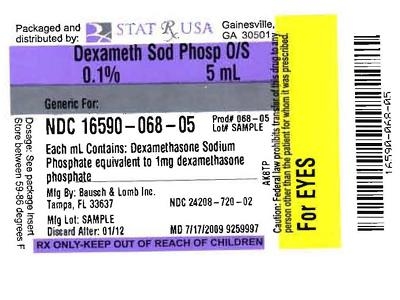
FDA Label NDC 16590-068

Full FDA labeling including Indications, Dosage, Usage, and Precautions

Structured Product Label

The following Structured Product Label (SPL) was submitted to the FDA by Stat Rx Usa for the product Dexamethasone Sodium Phosphate (NDC 16590-068). This document serves as the official prescribing information, containing essential scientific data and clinical materials required for healthcare providers and patients.

This specific version of the label includes detailed information regarding description, clinical pharmacology, indications & usage, contraindications, warnings, precautions, adverse reactions, dosage & administration, and other regulatory disclosures. Use the navigation below to review specific sections of the FDA submission.

Description

DESCRIPTION

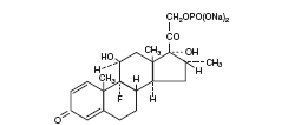
Dexamethasone Sodium Phosphate Ophthalmic Solution USP, is a sterile, topical steroid solution. The active ingredient is represented by the following structural formula:

                                                                                                   
Structure Image (Dexamethsodphosp Structure)

Structure Image (Dexamethsodphosp Structure)


C22H28FNa2O8P

Mol. wt. 516.41

Chemical Name: 9-fluoro-11β, 17-dihydroxy-16α-methyl-21-[phosphonooxy]pregna-1, 4-diene-3,20-dione disodium salt.

Glucocorticoids are adrenocortical steroids, both naturally occurring and synthetic. Dexamethasone is a synthetic analog of naturally occurring glucocorticoids (hydrocortisone and cortisone). Dexamethasone sodium phosphate is a water soluble, inorganic ester of dexamethasone. It is approximately three thousand times more soluble at 25°C than hydrocortisone.

Each mL Contains: ACTIVE: Dexamethasone Sodium Phosphate, [equivalent to 1 mg (0.1%) Dexamethasone Phosphate]. INACTIVES: Sodium Citrate, Sodium Borate, Creatinine, Polysorbate 80, Edetate Disodium Dihydrate, Purified Water. Hydrochloric Acid may be added to adjust pH (6.6 - 7.8). PRESERVATIVES ADDED: Sodium Bisulfite 0.1%, Phenylethyl Alcohol 0.25%, Benzalkonium Chloride 0.02%.

Indications & Usage

Warnings

Adverse Reactions

ADVERSE REACTIONS

Glaucoma with optic nerve damage, visual acuity and field defects, posterior subcapsular cataract formation, secondary ocular infection from pathogens including herpes simplex, perforation of the globe.

Rarely, filtering blebs have been reported when topical steroids have been used following cataract surgery.

Rarely, stinging or burning may occur.

Dosage & Administration

DOSAGE AND ADMINISTRATION

The duration of treatment will vary with the type of lesion and may extend from a few days to several weeks, according to therapeutic response. Relapses, more common in chronic active lesions than in self-limited conditions, usually respond to retreatment.

Eye

Instill one or two drops of solution into the conjunctival sac every hour during the day and every two hours during the night as initial therapy. When a favorable response is observed, reduce dosage to one drop every four hours. Later, further reduction in dosage to one drop three or four times daily may suffice to control symptoms.

Ear

Clean the aural canal thoroughly and sponge dry. Instill the solution directly into the aural canal. A suggested initial dosage is three or four drops two or three times a day. When a favorable response is obtained, reduce dosage gradually and eventually discontinue.

If preferred, the aural canal may be packed with a gauze wick saturated with solution. Keep the wick moist with the preparation and remove from the ear after 12 to 24 hours. Treatment may be repeated as often as necessary at the discretion of the physician.

Information For Patients

INFORMATION FOR PATIENTS

Patients should be instructed to avoid allowing the tip of the dispensing container to contact the eye or surrounding structures.

Patients should also be instructed that ocular preparations, if handled improperly, can become contaminated by common bacteria known to cause ocular infections. Serious damage to the eye and subsequent loss of vision may result from using contaminated solutions. (See PRECAUTIONS, General.)

Patients should also be advised that if they develop an intercurrent ocular condition (e.g., trauma, ocular surgery or infection), they should immediately seek their physician's advice concerning the continued use of the present multidose container.

One of the preservatives in dexamethasone sodium phosphate ophthalmic solution, benzalkonium chloride, may be absorbed by soft contact lenses. Patients wearing soft contact lenses should be instructed to wait at least 15 minutes after instilling dexamethasone sodium phosphate ophthalmic solution before they insert their lenses.

Carcinogenesis, mutagenesis, impairment of fertility

Long-term animal studies have not been performed to evaluate the carcinogenic potential or the effect on fertility of dexamethasone sodium phosphate ophthalmic solution.

PregnancyPregnancy Category C

Dexamethasone has been shown to be teratogenic in mice and rabbits following topical ophthalmic application in multiples of the therapeutic dose.

In the mouse, corticosteroids produce fetal resorptions and a specific abnormality, cleft palate. In the rabbit, corticosteroids have produced fetal resorptions and multiple abnormalities involving the head, ears, limbs, palate, etc.

There are no adequate or well-controlled studies in pregnant women. Dexamethasone sodium phosphate ophthalmic solution should be used during pregnancy only if the potential benefit to the mother justifies the potential risk to the embryo or fetus. Infants born of mothers who have received substantial doses of corticosteroids during pregnancy should be observed carefully for signs of hypoadrenalism.

Nursing mothers

Topically applied steroids are absorbed systemically. Therefore, because of the potential for serious adverse reactions in nursing infants from dexamethasone sodium phosphate, a decision should be made whether to discontinue nursing or discontinue the drug, taking into account the importance of the drug to the mother.

Pediatric use

Safety and effectiveness in pediatric patients have not been established.
* Please review the disclaimer below.