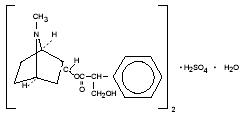
OVERDOSAGERECOMMENDED DOSAGE SCHEDULES SHOULD BE STRICTLY FOLLOWED. THIS
MEDICATION SHOULD BE KEPT IN A CHILD-RESISTANT CONTAINER AND OUT OF THE REACH OF
CHILDREN, SINCE AN OVERDOSAGE MAY RESULT IN SEVERE, EVEN FATAL, RESPIRATORY
DEPRESSION.
DiagnosisInitial signs of overdosage may include dryness of the skin and
mucous membranes, mydriasis, restlessness, flushing, hyperthermia, and
tachychardia followed by lethargy or coma, hypotonic reflexes, nystagmus,
pinpoint pupils, and respiratory depression. Respiratory depression may be
evidenced as late as 30 hours after ingestion and may recur in spite of an
initial response to narcotic antagonists. TREAT ALL POSSIBLE DIPHENOXYLATE HCl
AND ATROPINE SULFATE OVERDOSAGES AS SERIOUS AND MAINTAIN MEDICAL OBSERVATION FOR
AT LEAST 48 HOURS, PREFERABLY UNDER CONTINUOUS HOSPITAL CARE.
TreatmentIn the event of overdosage, induction of vomiting, gastric
lavage, establishment of a patent airway, and possibly mechanically assisted
respiration are advised. In vitro and animal studies
indicate that activated charcoal may significantly decrease the bioavailability
of diphenoxylate. In noncomatose patients, a slurry of 100 g of activated
charcoal can be administered immediately after the induction of vomiting or
gastric lavage.
A pure narcotic antagonist (e.g., naloxone) should be used in the treatment
of respiratory depression caused by diphenoxylate HCl and atropine sulfate. When
a narcotic antagonist is administered intravenously, the onset of action is
generally apparent within two minutes. It may also be administered
subcutaneously or intramuscularly, providing a slightly less rapid onset of
action but a more prolonged effect.
To counteract respiratory depression caused by diphenoxylate/atropine
overdosage, the following dosage schedule for the narcotic antagonist naloxone
hydrochloride should be followed:
Adult dosage
An initial dose of 0.4 mg to 2 mg of naloxone hydrochloride may
be administered intravenously. If the desired degree of counteraction and
improvement in respiratory functions is not obtained, it may be repeated at 2 to
3 minute intervals. If no response is observed after 10 mg of naloxone
hydrochloride has been administered, the diagnosis of narcotic-induced or
partial narcotic-induced toxicity should be questioned. Intramuscular or
subcutaneous administration may be necessary if the intravenous route is not
available.
Children
The usual initial dose in children is 0.01 mg/kg body weight
given I.V. If this dose does not result in the desired degree of clinical
improvement, a subsequent dose of 0.1 mg/kg body weight may be administered. If
an I.V. route of administration is not available, naloxone hydrochloride may be
administered I.M. or S.C. in divided doses. If necessary, naloxone hydrochloride
can be diluted with sterile water for injection.
Following initial improvement of respiratory function, repeated doses of
naloxone hydrochloride may be required to counteract recurrent respiratory
depression. Supplemental intramuscular doses of naloxone hydrochloride may be
utilized to produce a longer-lasting effect.
Since the duration of action of diphenoxylate hydrochloride, is longer than
that of naloxone hydrochloride, improvement of respiration following
administration may be followed by recurrent respiratory depression.
Consequently, continuous observation is necessary until the effect of
diphenoxylate hydrochloride on respiration has passed. This effect may persist
for many hours. The period of observation should extend over at least 48 hours,
preferably under continuous hospital care. Although signs of overdosage and
respiratory depression may not be evident soon after ingestion of diphenoxylate
hydrochloride, respiratory depression may occur from 12 to 30 hours later.