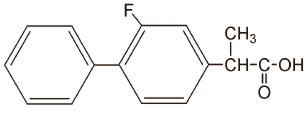
WARNINGSCardiovascular EffectsCardiovascular Thrombotic Events
Clinical trials of several COX-2 selective and nonselective
NSAIDs of up to three years duration have shown an increased risk of serious
cardiovascular (CV) thrombotic events, myocardial infarction, and stroke, which
can be fatal. All NSAIDs, both COX-2 selective and nonselective, may have a
similar risk. Patients with known CV disease or risk factors for CV disease may
be at greater risk. To minimize the potential risk for an adverse CV event in
patients treated with an NSAID, the lowest effective dose should be used for the
shortest duration possible. Physicians and patients should remain alert for the
development of such events, even in the absence of previous CV symptoms.
Patients should be informed about the signs and/or symptoms of serious CV events
and the steps to take if they occur.
There is no consistent evidence that concurrent use of aspirin mitigates the
increased risk of serious CV thrombotic events associated with NSAID use. The
concurrent use of aspirin and an NSAID does increase the risk of serious GI
events (see WARNINGS: Gastrointestinal Effects).
Two large, controlled, clinical trials of a COX-2 selective NSAID for the
treatment of pain in the first 10 to 14 days following CABG surgery found an
increased incidence of myocardial infarction and stroke (see CONTRAINDICATIONS).
Hypertension
NSAIDs, including flurbiprofen, can lead to onset of new
hypertension or worsening of preexisting hypertension, either of which may
contribute to the increased incidence of CV events. Patients taking thiazides or
loop diuretics may have impaired response to these therapies when taking NSAIDs.
NSAIDs, including flurbiprofen, should be used with caution in patients with
hypertension. Blood pressure (BP) should be monitored closely during the
initiation of NSAID treatment and throughout the course of therapy.
Congestive Heart Failure and Edema
Fluid retention and edema have been observed in some patients
taking NSAIDs. Flurbiprofen should be used with caution in patients with fluid
retention or heart failure.
Gastrointestinal EffectsRisk of Ulceration, Bleeding, and Perforation
NSAIDs, including flurbiprofen, can cause serious
gastrointestinal (GI) adverse events including inflammation, bleeding,
ulceration, and perforation of the stomach, small intestine, or large intestine,
which can be fatal. These serious adverse events can occur at any time, with or
without warning symptoms, in patients treated with NSAIDs. Only one in five
patients, who develop a serious upper GI adverse event on NSAID therapy is
symptomatic. Upper GI ulcers, gross bleeding, or perforation caused by NSAIDs
occur in approximately 1% of patients treated for 3 to 6 months, and in about 2
to 4% of patients treated for one year. These trends continue with longer
duration of use, increasing the likelihood of developing a serious GI event at
some time during the course of therapy. However, even short-term therapy is not
without risk.
NSAIDs should be prescribed with extreme caution in those with a prior
history of ulcer disease or gastrointestinal bleeding. Patients with a prior history of peptic ulcer disease and/or gastrointestinal
bleeding who use NSAIDs have a greater than 10-fold increased risk for
developing a GI bleed compared to patients treated with neither of these risk
factors. Other factors that increase the risk of GI bleeding in patients treated
with NSAIDs include concomitant use of oral corticosteroids or anticoagulants,
longer duration of NSAID therapy, smoking, use of alcohol, older age, and poor
general health status. Most spontaneous reports of fatal GI events are in
elderly or debilitated patients and therefore, special care should be taken in
treating this population.
To minimize the potential risk for an adverse GI event in patients treated
with an NSAID, the lowest effective dose should be used for the shortest
possible duration. Patients and physicians should remain alert for signs and
symptoms of GI ulcerations and bleeding during NSAID therapy and promptly
initiate additional evaluation and treatment if a serious GI event is suspected.
This should include discontinuation of the NSAID until a serious GI adverse
event is ruled out. For high risk patients, alternate therapies that do not
involve NSAIDs should be considered.
Renal Effects
Long-term administration of NSAIDs has resulted in renal
papillary necrosis and other renal injury. Renal toxicity has also been seen in
patients in whom renal prostaglandins have a compensatory role in the
maintenance of renal perfusion. In these patients, administration of a
non-steroidal anti-inflammatory drug may cause a dose dependent reduction in
prostaglandin formation and, secondarily, in renal blood flow, which may
precipitate overt renal decompensation. Patients at greatest risk of this
reaction are those with impaired renal function, heart failure, liver
dysfunction, those taking diuretics and ACE inhibitors, and the elderly.
Discontinuation of NSAID therapy is usually followed by recovery to the
pretreatment state.
Advanced Renal Disease
In clinical studies, the elimination half-life of flurbiprofen
was unchanged in patients with renal impairment. Flurbiprofen metabolites are
eliminated primarily by the kidneys. Elimination of 4'-hydroxy-flurbiprofen was
reduced in patients with moderate to severe renal impairment. Therefore,
treatment with flurbiprofen is not recommended in these patients with advanced
renal disease. If flurbiprofen therapy must be initiated, close monitoring of
the patients renal function is advisable (see CLINICAL
PHARMACOLOGY).
Anaphylactoid Reactions
As with other NSAIDs, anaphylactoid reactions may occur in
patients without known prior exposure to flurbiprofen. Flurbiprofen should not
be given to patients with the aspirin triad. This symptom complex typically
occurs in asthmatic patients who experience rhinitis with or without nasal
polyps, or who exhibit severe, potentially fatal bronchospasm after taking
aspirin or other NSAIDs (see CONTRAINDICATIONS and PRECAUTIONS: General: Preexisting Asthma). Emergency
help should be sought in cases where an anaphylactoid reaction occurs.
Pregnancy
In late pregnancy, as with other NSAIDs, flurbiprofen should be
avoided because it may cause premature closure of the ductus arteriosus.
PRECAUTIONSGeneral
Flurbiprofen cannot be expected to substitute for corticosteroids
or to treat corticosteroid insufficiency. Abrupt discontinuation of
corticosteroids may lead to disease exacerbation. Patients on prolonged
corticosteroid therapy should have their therapy tapered slowly if a decision is
made to discontinue corticosteroids.
The pharmacological activity of flurbiprofen in reducing fever and
inflammation may diminish the utility of these diagnostic signs in detecting
complications of presumed noninfectious, painful conditions.
Hepatic Effects
Borderline elevations of one or more liver tests may occur in up
to 15% of patients taking non-steroidal anti-inflammatory drugs, including
flurbiprofen. These laboratory abnormalities may progress, may remain unchanged,
or may be transient with continuing therapy. Notable elevations of ALT or AST
(approximately three or more times the upper limit of normal) have been reported
in approximately 1% of patients in clinical trials with non-steroidal
anti-inflammatory drugs. In addition, rare cases of severe hepatic reactions,
including jaundice, fulminant hepatitis, liver necrosis, and hepatic failure,
some of them with fatal outcomes have been reported.
A patient with symptoms and/or signs suggesting liver dysfunction, or with
abnormal liver test values, should be evaluated for evidence of the development
of a more severe hepatic reaction while on therapy with flurbiprofen. If
clinical signs and symptoms consistent with liver disease develop, or if
systemic manifestations occur (e.g., eosinophilia, rash, etc.), flurbiprofen
should be discontinued.
Hematological Effects
Anemia is sometimes seen in patients receiving non-steroidal
anti-inflammatory drugs, including flurbiprofen. This may be due to fluid
retention, GI blood loss, or an incompletely described effect upon
erythropoiesis. Patients on long-term treatment with non-steroidal
anti-inflammatory drugs, including flurbiprofen, should have their hemoglobin or
hematocrit checked periodically even if they do not exhibit any signs or
symptoms of anemia.
Non-steroidal anti-inflammatory drugs inhibit platelet aggregation and have
been shown to prolong bleeding time in some patients. Unlike aspirin, their
effect on platelet function is quantitatively less, of shorter duration, and
reversible. Flurbiprofen does not generally affect platelet counts, prothrombin
time (PT), or partial thromboplastin time (PTT). Patients receiving flurbiprofen
who may be adversely affected by alterations in platelet function, such as those
with coagulation disorders or patients receiving anticoagulants, should be
carefully monitored.
Preexisting Asthma
Patients with asthma may have aspirin-sensitive asthma. The use
of aspirin in patients with aspirin-sensitive asthma has been associated with
severe bronchospasm which can be fatal. Since cross-reactivity, including
bronchospasm, between aspirin and other non-steroidal anti-inflammatory drugs
has been reported in such aspirin-sensitive patients, flurbiprofen should not be
administered to patients with this form of aspirin sensitivity and should be
used with caution in patients with preexisting asthma.
Vision Changes
Blurred and/or diminished vision has been reported with the use
of flurbiprofen and other non-steroidal anti-inflammatory drugs. Patients
experiencing eye complaints should have ophthalmologic examinations