1 Indications And Usage
Phentermine hydrochloride is indicated as a short-term (a few weeks) adjunct in a regimen of weight reduction based on exercise, behavioral modification and caloric restriction in the management of exogenous obesity for patients with an initial body mass index ≥ 30 kg/m2, or ≥ 27 kg/m2 in the presence of other risk factors (e.g., controlled hypertension, diabetes, hyperlipidemia).
Below is a chart of body mass index (BMI) based on various heights and weights.
BMI is calculated by taking the patient's weight, in kilograms (kg), divided by the patient's height, in meters (m), squared. Metric conversions are as follows:
pounds ÷ 2.2 = kg; inches × 0.0254 = meters.
| BODY MASS INDEX (BMI), kg/m2 |
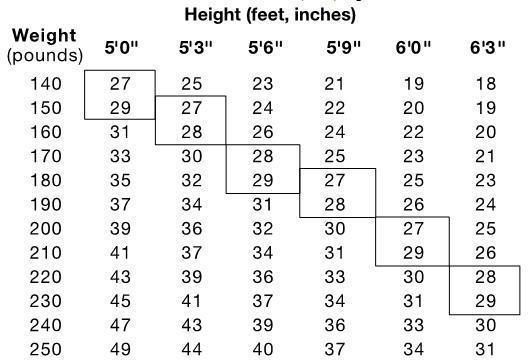 Bmi Figure (Phentermine 01) |
The limited usefulness of agents of this class, including phentermine hydrochloride tablets, [see Clinical Pharmacology (12.1, 12.2)] should be measured against possible risk factors inherent in their use such as those described below.