PRECAUTIONSTolerance and Physical Dependence
Tolerance is the need for increasing doses of opioids to maintain
a defined effect such as analgesia (in the absence of disease progression or
other external factors). Physical dependence is manifested by withdrawal
symptoms after abrupt discontinuation of a drug or upon administration of an
antagonist. Physical dependence and tolerance are not unusual during chronic
opioid therapy.
The opioid abstinence or withdrawal syndrome is characterized by some or all
of the following: restlessness, lacrimation, rhinorrhea, yawning, perspiration,
chills, myalgia and mydriasis. Other symptoms also may develop, including:
irritability, anxiety, backache, joint pain, weakness, abdominal cramps,
insomnia, nausea, anorexia, vomiting, diarrhea, or increased blood pressure,
respiratory rate or heart rate. In general, opioids should not be abruptly
discontinued (see DOSAGE AND
ADMINISTRATION: Cessation of Therapy).
If propoxyphene is abruptly discontinued in a physically dependent patient,
an abstinence syndrome may occur (see DRUG ABUSE
AND DEPENDENCE). If signs and symptoms of withdrawal occur, patients should
be treated by reinstitution of opioid therapy followed by gradual tapered dose
reduction of propoxyphene combined with symptomatic support (see DOSAGE AND
ADMINISTRATION: Cessation of Therapy).
Use in Pancreatic/Biliary Tract Disease
Propoxyphene may cause spasm of the sphincter of Oddi and should
be used with caution in patients with biliary tract disease, including acute
pancreatitis. Opioids like propoxyphene may cause increases in the serum amylase
level.
Hepatic or Renal Impairment
Insufficient information exists to make appropriate dosing
recommendations regarding the use of either propoxyphene in patients with
hepatic or renal impairment as a function of degree of impairment. Higher plasma
concentrations and/or delayed elimination may occur in case of impaired hepatic
function and/or impaired renal function (see CLINICAL
PHARMACOLOGY).
If the drug is used in these patients, it should be used with caution because
of the hepatic metabolism and renal excretion of propoxyphene metabolites.
Information for Patients/Caregivers
- Patients should be advised to report pain and adverse experiences occurring
during therapy. Individualization of dosage is essential to make optimal use of
this medication.
- Patients should be advised not to adjust the dose of propoxyphene without
consulting the prescribing professional.
- Patients should be advised that propoxyphene may impair mental and/or
physical ability required for the performance of potentially hazardous tasks
(e.g., driving, operating heavy machinery).
- Patients should not combine propoxyphene with central nervous system
depressants (e.g., sleep aids, tranquilizers) except by the orders of the
prescribing physician, because additive effects may occur.
- Patients should be instructed not to consume alcoholic beverages, including
prescription and over-the-counter medications that contain alcohol, while using
propoxyphene because of risk of serious adverse events including death.
- Women of childbearing potential who become, or are planning to become,
pregnant should be advised to consult their physician regarding the effects of
analgesics and other drug use during pregnancy on themselves and their unborn
child.
- Patients should be advised that propoxyphene is a potential drug of abuse.
They should protect it from theft, and it should never be given to anyone other
than the individual for whom it was prescribed.
- Patients should be advised that if they have been receiving treatment with
propoxyphene for more than a few weeks and cessation of therapy is indicated, it
may be appropriate to taper the propoxyphene dose, rather than abruptly
discontinue it, due to the risk of precipitating withdrawal symptoms. Their
physician can provide a dose schedule to accomplish a gradual discontinuation of
the medication.
Drug Interactions with PropoxyphenePropoxyphene is metabolized mainly via the human cytochrome P450
3A4 isoenzyme system (CYP3A4), therefore potential interactions may occur when
propoxyphene is administered concurrently with agents that affect CYP3A4
activity.
The metabolism of propoxyphene may be altered by strong CYP3A4 inhibitors
(such as ritonavir, ketoconazole, itraconazole, troleandomycin, clarithromycin,
nelfinavir, nefazadone, amiodarone, amprenavir, aprepitant, diltiazem,
erythromycin, fluconazole, fosamprenavir, grapefruit juice and verapamil)
leading to enhanced propoxyphene plasma levels. Coadministration with agents
that induce CYP3A4 activity may reduce the efficacy of propoxyphene. Strong
CYP3A4 inducers such as rifampin may lead to enhanced metabolite
(norpropoxyphene) levels.
Propoxyphene is also thought to possess CYP3A4 and CYP2D6 enzyme inhibiting
properties and coadministration with drugs that rely on either of these enzymes
for metabolism may result in increased pharmacologic or adverse effects of that
drug. Severe neurologic signs, including coma, have occurred with concurrent use
of carbamazepine (metabolized by CYP3A4).
Increased risk of bleeding has been observed with warfarin-like agents when
given along with propoxyphene; however, the mechanistic basis of this
interaction is unknown.
CNS DepressantsPatients receiving narcotic analgesics, general anesthetics,
phenothiazines, other tranquilizers, sedative-hypnotics or other CNS depressants
(including alcohol) concomitantly with propoxyphene may exhibit an additive CNS
depression. Interactive effects resulting in respiratory depression,
hypotension, profound sedation or coma may result if these drugs are taken in
combination with the usual dosage of propoxyphene. When such combined therapy is
contemplated, the dose of one or both agents should be reduced.
Mixed Agonist/Antagonist Opioid AnalgesicsAgonist/antagonist analgesics (i.e., pentazocine, nalbuphine,
butorphanol and buprenorphine) should be administered with caution to patients
who have received or are receiving a course of therapy with a pure opioid
agonist analgesic such as propoxyphene. In this situation, mixed
agonist/antagonist analgesics may reduce the analgesic effect of propoxyphene
and/or may precipitate withdrawal symptoms in these patients.
Monoamine Oxidase Inhibitors (MAOIs)MAOIs have been reported to intensify the effects of at least one
opioid drug causing anxiety, confusion and significant depression of respiration
or coma. The use of propoxyphene is not recommended for patients taking MAOIs or
within 14 days of stopping such treatment.
Carcinogenesis, Mutagenesis, Impairment of
FertilityThe mutagenic and carcinogenic potential of propoxyphene has not
been evaluated.
In animal studies there was no effect of propoxyphene on mating behavior,
fertility, duration of gestation or parturition when rats were fed propoxyphene
as a component of their daily diet at estimated daily propoxyphene intake up to
8-fold greater than the maximum human equivalent dose (HED) based on body
surface area comparison. At this highest dose, fetal weight and survival on
postnatal day 4 was reduced
PregnancyRisk SummaryPregnancy Category CThere are no adequate and well controlled studies of propoxyphene
in pregnant women. While there are limited data in the published literature,
adequate animal reproduction studies have not been conducted with propoxyphene.
Therefore, it is not known whether propoxyphene can affect reproduction or cause
fetal harm when administered to a pregnant woman. Propoxyphene should be given
to a pregnant woman only if clearly needed.
Clinical ConsiderationsPropoxyphene and its major metabolite, norpropoxyphene, cross the
human placenta. Neonates whose mothers have taken opiates chronically may
exhibit respiratory depression or withdrawal symptoms.
DataIn published animal reproduction studies, no teratogenic effects
occurred in offspring born to pregnant rats or rabbits that received
propoxyphene during organogenesis. Pregnant animals received propoxyphene doses
approximately 10-fold (rats) and 4-fold (rabbits) the maximum recommended human
dose (based on mg/m2 body surface area comparison).
Nursing MothersPropoxyphene, norpropoxyphene (major metabolite), are excreted in
human milk. Published studies of nursing mothers using propoxyphene detected no
adverse effects in nursing infants. Based on a study of six mother-infant pairs,
an exclusively breastfed infant receives approximately 2% of the maternal
weight-adjusted dose. Norpropoxyphene is renally excreted and renal clearance is
lower in neonates than in adults. Therefore, it is possible that prolonged
maternal propoxyphene use could result in norpropoxyphene accumulation in a
breastfed infant. Watch breast-feeding infants for signs of sedation including
poor feeding, somnolence or respiratory depression. Caution should be exercised
when propoxyphene is administered to a nursing woman.
Pediatric UseSafety and effectiveness in pediatric patients have not been
established.
Elderly PatientsClinical studies of propoxyphene did not include sufficient
numbers of subjects aged 65 and over to determine whether they respond
differently from younger subjects. However, post-marketing reports suggest that
patients over the age of 65 may be more susceptible to CNS-related side effects.
Therefore, dose selection for an elderly patient should be cautious, usually
starting at the low end of the dosing range, reflecting the greater frequency of
decreased hepatic, renal or cardiac function, and of concomitant disease or
other drug therapy. Decreased total daily dosage should be considered (see DOSAGE AND
ADMINISTRATION).
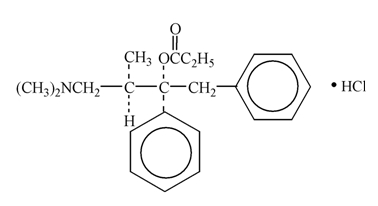
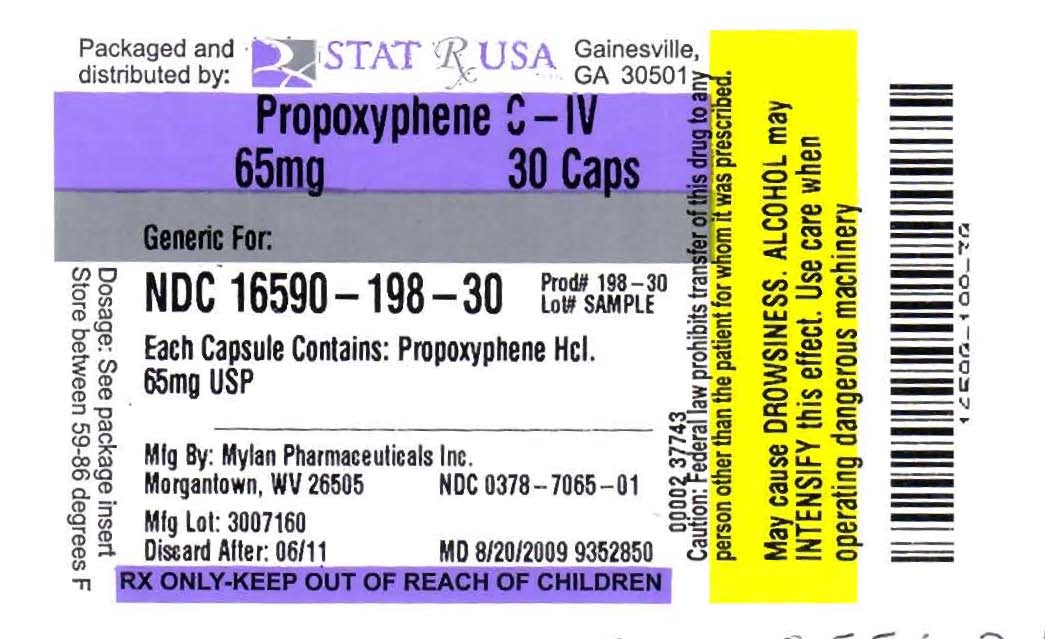
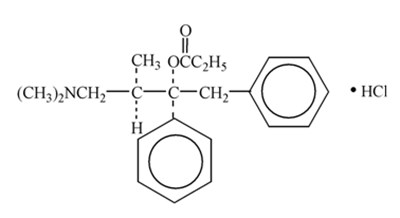 Each capsule contains 65 mg (172.9 μmol) propoxyphene hydrochloride. It also
contains the following inactive ingredients: anhydrous lactose, magnesium
stearate, microcrystalline cellulose, pregelatinized starch and sodium lauryl
sulfate. The empty hard-shell hypromellose capsule shells contain carnauba wax,
carrageenan, hypromellose, potassium chloride, synthetic red iron oxide and
titanium dioxide. In addition, the imprinting ink contains black iron oxide,
potassium hydroxide, propylene glycol, shellac and strong ammonia solution.
Each capsule contains 65 mg (172.9 μmol) propoxyphene hydrochloride. It also
contains the following inactive ingredients: anhydrous lactose, magnesium
stearate, microcrystalline cellulose, pregelatinized starch and sodium lauryl
sulfate. The empty hard-shell hypromellose capsule shells contain carnauba wax,
carrageenan, hypromellose, potassium chloride, synthetic red iron oxide and
titanium dioxide. In addition, the imprinting ink contains black iron oxide,
potassium hydroxide, propylene glycol, shellac and strong ammonia solution.