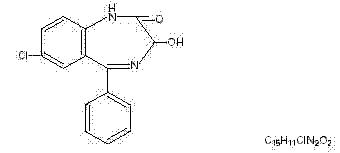
WARNINGS
As with other CNS-acting drugs, patients should be cautioned
against driving automobiles or operating dangerous machinery until it is known
that they do not become drowsy or dizzy on oxazepam therapy.
Patients should be warned that the effects of alcohol or other CNS-depressant
drugs may be additive to those of Oxazepam, possibly requiring adjustment of
dosage or elimination of such agents.
Withdrawal symptoms of the barbiturate type have occurred after the
discontinuation of benzodiazepines (see DRUG ABUSE AND
DEPENDENCE section).
Use in Pregnancy:
An increased risk of congenital malformations
associated with the use of minor tranquilizers (chlordiazepoxide, diazepam, and
meprobamate) during the first trimester of pregnancy has been suggested in
several studies. Oxazepam, a benzodiazepine derivative, has not been studied
adequately to determine whether it, too, may be associated with an increased
risk of fetal abnormality. Because use of these drugs is rarely a matter of
urgency, their use during this period should almost always be avoided. The
possibility that a woman of childbearing potential may be pregnant at the time
of institution of therapy should be considered. Patients should be advised that
if they become pregnant during therapy or intend to become pregnant they should
communicate with their physician about the desirability of discontinuing the
drug.
PRECAUTIONSGeneral
Although hypotension has occurred only rarely, oxazepam should be
administered with caution to patients in whom a drop in blood pressure might
lead to cardiac complications. This is particularly true in the elderly
patient.
Information for Patients
To assure the safe and effective use of oxazepam, patients should
be informed that, since benzodiazepines may produce psychological and physical
dependence, it is advisable that they consult with their physician before either
increasing the dose or abruptly discontinuing this drug.
Pediatric Use
Safety and effectiveness in pediatric patients under 6 years of
age have not been established. Absolute dosage for pediatric patients 6 to 12
years of age is not established.
Geriatric Use
Clinical studies of oxazepam were not adequate to determine
whether subjects aged 65 and over respond differently than younger subjects. Age
(less than 80 years old) does not appear to have a clinically significant effect on
oxazepam kinetics (see CLINICAL PHARMACOLOGY).
Clinical circumstances, some of which may be more common in the elderly, such
as hepatic or renal impairment, should be considered. Greater sensitivity of
some older individuals to the effects of oxazepam (e.g., sedation, hypotension,
paradoxical excitation) cannot be ruled out (see PRECAUTIONS, General; see ADVERSE
REACTIONS). In general, dose selection for oxazepam for elderly patients
should be cautious, usually starting at the lower end of the dosing range (see
DOSAGE AND ADMINISTRATION).