12 CLINICAL PHARMACOLOGY
12.1 Mechanism of Action
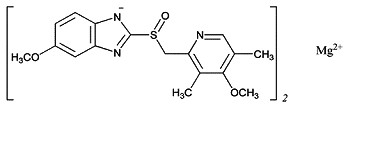
Omeprazole belongs to a class of antisecretory compounds, the
substituted benzimidazoles, that suppress gastric acid secretion by specific
inhibition of the H+/K+ ATPase
enzyme system at the secretory surface of the gastric parietal cell. Because
this enzyme system is regarded as the acid (proton) pump within the gastric
mucosa, omeprazole has been characterized as a gastric acid-pump inhibitor, in
that it blocks the final step of acid production. This effect is dose-related
and leads to inhibition of both basal and stimulated acid secretion irrespective
of the stimulus. Animal studies indicate that after rapid disappearance from
plasma, omeprazole can be found within the gastric mucosa for a day or
more.
12.2 Pharmacodynamics
Antisecretory Activity
After oral administration, the onset of the antisecretory effect of
omeprazole occurs within one hour, with the maximum effect occurring within two
hours. Inhibition of secretion is about 50% of maximum at 24 hours and the
duration of inhibition lasts up to 72 hours. The antisecretory effect thus lasts
far longer than would be expected from the very short (less than one hour)
plasma half-life, apparently due to prolonged binding to the parietal H+/K+ ATPase enzyme. When the drug is
discontinued, secretory activity returns gradually, over 3 to 5 days. The
inhibitory effect of omeprazole on acid secretion increases with repeated
once-daily dosing, reaching a plateau after four days.
Results from numerous studies of the antisecretory effect of multiple doses
of 20 mg and 40 mg of omeprazole in normal volunteers and patients are shown
below. The “max” value represents determinations at a time of maximum effect
(2-6 hours after dosing), while “min” values are those 24 hours after the last
dose of omeprazole.
Single daily oral doses of omeprazole ranging from a dose of 10 mg to 40 mg
have produced 100% inhibition of 24-hour intragastric acidity in some
patients.
Serum Gastric Effects
In studies involving more than 200 patients, serum gastrin levels increased
during the first 1 to 2 weeks of once-daily administration of therapeutic doses
of omeprazole in parallel with inhibition of acid secretion. No further increase
in serum gastrin occurred with continued treatment. In comparison with histamine
H2-receptor antagonists, the median increases produced by
20 mg doses of omeprazole were higher (1.3 to 3.6 fold vs. 1.1 to 1.8 fold
increase). Gastrin values returned to pretreatment levels, usually within 1 to 2
weeks after discontinuation of therapy.
Enterochromaffin-like (ECL) Cell Effects
Human gastric biopsy specimens have been obtained from more than 3000
patients treated with omeprazole in long-term clinical trials. The incidence of
ECL cell hyperplasia in these studies increased with time; however, no case of
ECL cell carcinoids, dysplasia, or neoplasia has been found in these patients.
[See Clinical
Pharmacology (12 ] However, these studies are of insufficient
duration and size to rule out the possible influence of long-term administration
of omeprazole on the development of any premalignant or malignant conditions.
Other Effects
Systemic effects of omeprazole in the CNS, cardiovascular and respiratory
systems have not been found to date. Omeprazole, given in oral doses of 30 or 40
mg for 2 to 4 weeks, had no effect on thyroid function, carbohydrate metabolism,
or circulating levels of parathyroid hormone, cortisol, estradiol, testosterone,
prolactin, cholecystokinin or secretin.
No effect on gastric emptying of the solid and liquid components of a test
meal was demonstrated after a single dose of omeprazole 90 mg. In healthy
subjects, a single I.V. dose of omeprazole (0.35 mg/kg) had no effect on
intrinsic factor secretion. No systematic dose-dependent effect has been
observed on basal or stimulated pepsin output in humans.
However, when intragastric pH is maintained at 4.0 or above, basal pepsin
output is low, and pepsin activity is decreased.
As do other agents that elevate intragastric pH, omeprazole administered for
14 days in healthy subjects produced a significant increase in the intragastric
concentrations of viable bacteria. The pattern of the bacterial species was
unchanged from that commonly found in saliva. All changes resolved within three
days of stopping treatment.
The course of Barrett’s esophagus in 106 patients was evaluated in a U.S.
double-blind controlled study of PRILOSEC 40 mg twice daily for 12 months
followed by 20 mg twice daily for 12 months or ranitidine 300 mg twice daily for
24 months. No clinically significant impact on Barrett’s mucosa by antisecretory
therapy was observed. Although neosquamous epithelium developed during
antisecretory therapy, complete elimination of Barrett’s mucosa was not
achieved. No significant difference was observed between treatment groups in
development of dysplasia in Barrett’s mucosa and no patient developed esophageal
carcinoma during treatment. No significant differences between treatment groups
were observed in development of ECL cell hyperplasia, corpus atrophic gastritis,
corpus intestinal metaplasia, or colon polyps exceeding 3 mm in diameter [See Clinical Pharmacology
(12)].
12.3 Pharmacokinetics
Absorption
PRILOSEC Delayed-Release Capsules contain an enteric-coated granule
formulation of omeprazole (because omeprazole is acid-labile), so that
absorption of omeprazole begins only after the granules leave the stomach.
Absorption is rapid, with peak plasma levels of omeprazole occurring within 0.5
to 3.5 hours. Peak plasma concentrations of omeprazole and AUC are approximately
proportional to doses up to 40 mg, but because of a saturable first-pass effect,
a greater than linear response in peak plasma concentration and AUC occurs with
doses greater than 40 mg. Absolute bioavailability (compared with intravenous
administration) is about 30-40% at doses of 20-40 mg, due in large part to
presystemic metabolism. In healthy subjects the plasma half-life is 0.5 to 1
hour, and the total body clearance is 500-600 mL/min.
Based on a relative bioavailability study, the AUC and Cmax of PRILOSEC (omeprazole magnesium) for Delayed-Release Oral
Suspension were 87% and 88% of those for PRILOSEC Delayed-Release Capsules,
respectively.
The bioavailability of omeprazole increases slightly upon repeated
administration of PRILOSEC Delayed-Release Capsules.
PRILOSEC Delayed-Release Capsule 40 mg was bioequivalent when administered
with and without applesauce. However, PRILOSEC Delayed-Release Capsule 20 mg was
not bioequivalent when administered with and without applesauce. When
administered with applesauce, a mean 25% reduction in Cmax was observed without a significant change in AUC for
PRILOSEC Delayed-Release Capsule 20 mg. The clinical relevance of this finding
is unknown.
Distribution
Protein binding is approximately 95%.
Metabolism
Omeprazole is extensively metabolized by the cytochrome P450 (CYP) enzyme
system.
Excretion
Following single dose oral administration of a buffered solution of
omeprazole, little if any unchanged drug was excreted in urine. The majority of
the dose (about 77%) was eliminated in urine as at least six metabolites. Two
were identified as hydroxyomeprazole and the corresponding carboxylic acid. The
remainder of the dose was recoverable in feces. This implies a significant
biliary excretion of the metabolites of omeprazole. Three metabolites have been
identified in plasma — the sulfide and sulfone derivatives of omeprazole, and
hydroxyomeprazole. These metabolites have very little or no antisecretory
activity.
Combination Therapy with Antimicrobials
Omeprazole 40 mg daily was given in combination with clarithromycin 500 mg
every 8 hours to healthy adult male subjects. The steady state plasma
concentrations of omeprazole were increased (Cmax,
AUC0-24, and T1/2 increases of
30%, 89% and 34% respectively) by the concomitant administration of
clarithromycin. The observed increases in omeprazole plasma concentration were
associated with the following pharmacological effects. The mean 24-hour gastric
pH value was 5.2 when omeprazole was administered alone and 5.7 when
co-administered with clarithromycin.
The plasma levels of clarithromycin and 14-hydroxy-clarithromycin were
increased by the concomitant administration of omeprazole. For clarithromycin,
the mean Cmax was 10% greater, the mean Cmin was 27% greater, and the mean AUC0-8
was 15% greater when clarithromycin was administered with omeprazole than when
clarithromycin was administered alone. Similar results were seen for
14-hydroxy-clarithromycin, the mean Cmax was 45% greater,
the mean Cmin was 57% greater, and the mean AUC0-8 was 45% greater. Clarithromycin concentrations in the
gastric tissue and mucus were also increased by concomitant administration of
omeprazole.
Special Populations
Geriatric Population
The elimination rate of omeprazole was somewhat decreased in the elderly, and
bioavailability was increased. Omeprazole was 76% bioavailable when a single 40
mg oral dose of omeprazole (buffered solution) was administered to healthy
elderly volunteers, versus 58% in young volunteers given the same dose. Nearly
70% of the dose was recovered in urine as metabolites of omeprazole and no
unchanged drug was detected. The plasma clearance of omeprazole was 250 mL/min
(about half that of young volunteers) and its plasma half-life averaged one
hour, about twice that of young healthy volunteers.
Pediatric Use
The pharmacokinetics of omeprazole have been investigated in pediatric
patients 2 to 16 years of age:
Following comparable mg/kg doses of omeprazole, younger children (2 to 5
years of age) have lower AUCs than children 6 to16 years of age or adults; AUCs
of the latter two groups did not differ. [See Dosage and Administration (2) ]
Hepatic Impairment
In patients with chronic hepatic disease, the bioavailability increased to
approximately 100% compared with an I.V. dose, reflecting decreased first-pass
effect, and the plasma half-life of the drug increased to nearly 3 hours
compared with the half-life in normals of 0.5-1 hour. Plasma clearance averaged
70 mL/min, compared with a value of 500-600 mL/min in normal subjects. Dose
reduction, particularly where maintenance of healing of erosive esophagitis is
indicated, for the hepatically impaired should be considered.
Renal Impairment
In patients with chronic renal impairment, whose creatinine clearance ranged
between 10 and 62 mL/min/1.73 m2, the disposition of
omeprazole was very similar to that in healthy volunteers, although there was a
slight increase in bioavailability. Because urinary excretion is a primary route
of excretion of omeprazole metabolites, their elimination slowed in proportion
to the decreased creatinine clearance. No dose reduction is necessary in
patients with renal impairment.
Asian Population
In pharmacokinetic studies of single 20 mg omeprazole doses, an increase in
AUC of approximately four-fold was noted in Asian subjects compared with
Caucasians. Dose reduction, particularly where maintenance of healing of erosive
esophagitis is indicated, for Asian subjects should be considered.
12.4 Microbiology
Omeprazole and clarithromycin dual therapy and omeprazole,
clarithromycin and amoxicillin triple therapy have been shown to be active
against most strains of Helicobacter pylori in vitro
and in clinical infections as described in the Indications and Usage section (1.1).
Helicobacter
Helicobacter pylori- Pretreatment Resistance
Clarithromycin pretreatment resistance rates were 3.5% (4/113) in the
omeprazole/clarithromycin dual therapy studies (4 and 5) and 9.3% (41/439) in
omeprazole/clarithromycin/amoxicillin triple therapy studies (1, 2, and 3).
Amoxicillin pretreatment susceptible isolates (≤ 0.25 µg/mL) were found in
99.3% (436/439) of the patients in the omeprazole/clarithromycin/amoxicillin
triple therapy studies (1, 2, and 3). Amoxicillin pretreatment minimum
inhibitory concentrations (MICs) > 0.25 µg/mL occurred in 0.7% (3/439) of the
patients, all of whom were in the clarithromycin and amoxicillin study arm. One
patient had an unconfirmed pretreatment amoxicillin minimum inhibitory
concentration (MIC) of > 256 µg/mL by Etest®.
Patients not eradicated of H. pylori following
omeprazole/clarithromycin/amoxicillin triple therapy or
omeprazole/clarithromycin dual therapy will likely have clarithromycin resistant
H. pylori isolates. Therefore, clarithromycin
susceptibility testing should be done, if possible. Patients with clarithromycin
resistant H. pylori should not be treated with any of
the following: omeprazole/clarithromycin dual therapy,
omeprazole/clarithromycin/amoxicillin triple therapy, or other regimens which
include clarithromycin as the sole antimicrobial agent.
Amoxicillin Susceptibility Test Results and
Clinical/Bacteriological Outcomes
In the triple therapy clinical trials, 84.9% (157/185) of the patients in the
omeprazole/clarithromycin/amoxicillin treatment group who had pretreatment
amoxicillin susceptible MICs (≤ 0.25 µg/mL) were eradicated of H. pylori and 15.1% (28/185) failed therapy. Of the 28
patients who failed triple therapy, 11 had no post-treatment susceptibility test
results and 17 had post-treatment H. pylori isolates
with amoxicillin susceptible MICs. Eleven of the patients who failed triple
therapy also had post-treatment H. pylori isolates
with clarithromycin resistant MICs.
Susceptibility Test for Helicobacter pylori
The reference methodology for susceptibility testing of H. pylori is agar dilution MICs1.
One to three microliters of an inoculum equivalent to a No. 2 McFarland standard
(1 x 10⁷ - 1 x 10⁸ CFU/mL for
H. pylori) are inoculated directly onto freshly
prepared antimicrobial containing Mueller-Hinton agar plates with 5% aged
defibrinated sheep blood (≥ 2 weeks old). The agar dilution plates are incubated
at 35°C in a microaerobic environment produced by a gas generating system
suitable for campylobacters. After 3 days of incubation, the MICs are recorded
as the lowest concentration of antimicrobial agent required to inhibit growth of
the organism. The clarithromycin and amoxicillin MIC values should be
interpreted according to the following criteria: